'Whistle' Director Corin Hardy on The Ancient and Personal Roots of His Deadly New Horror
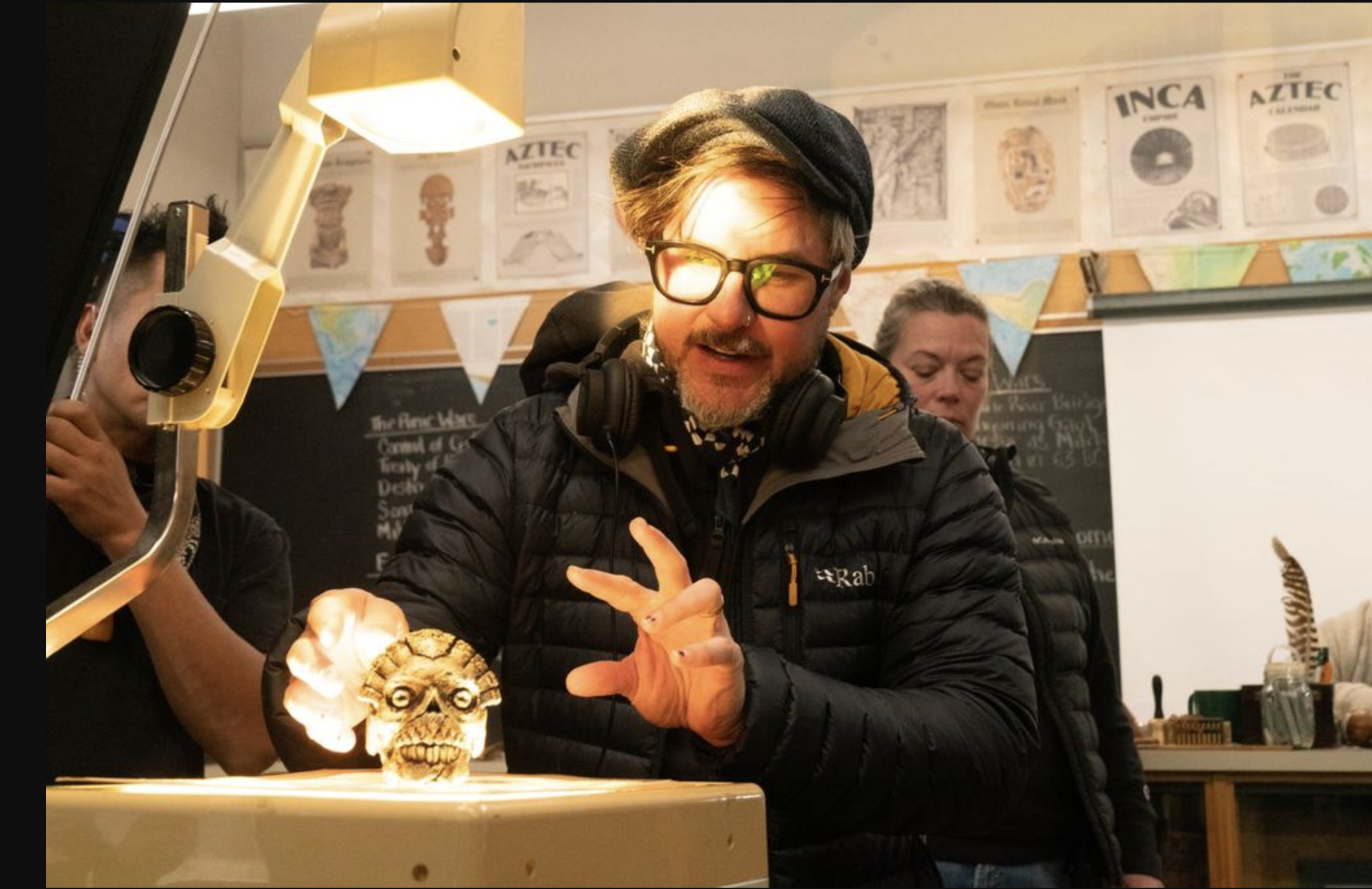
the horror veteran discusses his latest feature
Director Corin Hardy has his roots in the horror genre, from making monster films as a kid, to producing many horror screenplays that attracted attention from genre greats, to becoming a full-fledged horror filmmaker in his own right with the blockbuster spinoff The Nun. His latest, Whistle, a Irish-Canadian co-production, blends the horror and coming-of-age genres, following a group of high school students in detention whose fates are forever changed by an Aztec death whistle haunting their school. The film is reminiscent of both teen-classics of old and the darker, more fate-based fears of Final Destination, sporting some truly unique horror visuals of its own, courtesy of Corin Hardy and his creative team. Hardy spoke to FilmSpeak about the processes of crafting Whistle.
Check out the full interview below, or continuing scrolling for the remainder of the article.
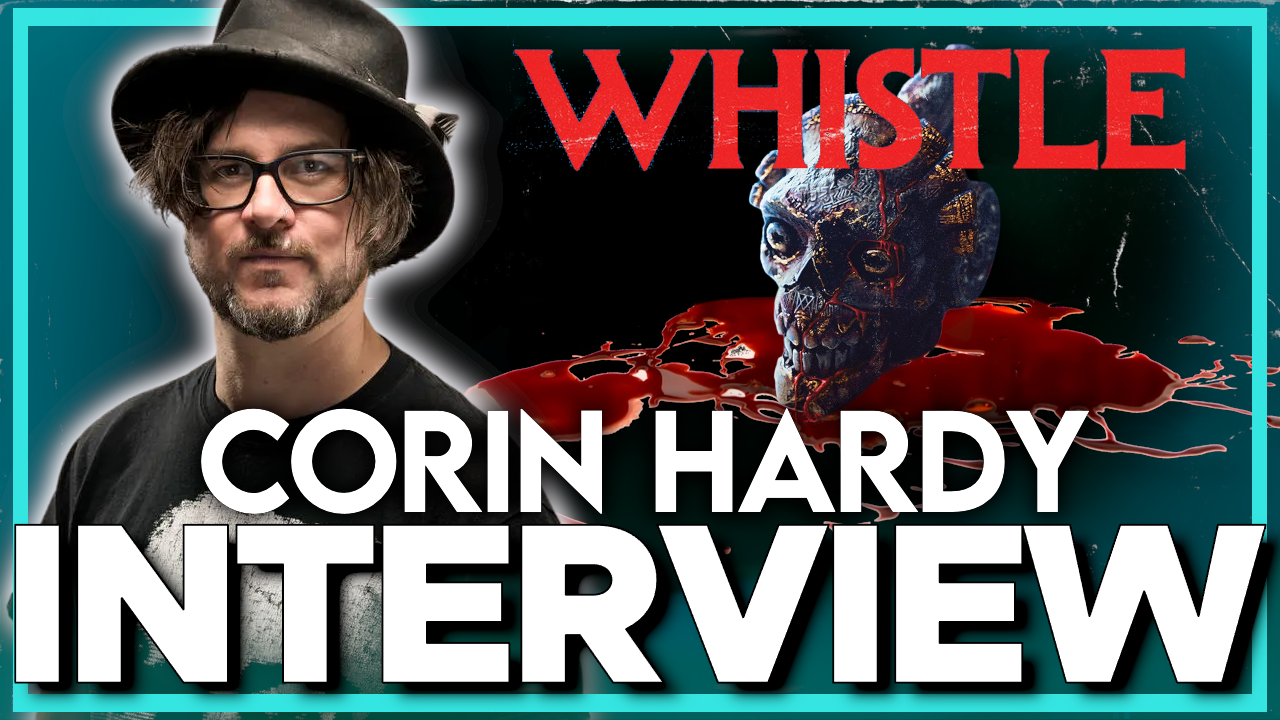
FS: I wanted to start by asking about the research process of this film, because the Aztec Death Whistle, is conceptually unlike a lot of other horror macguffins that we usually see, and I was wondering what it was like researching this concept with the film’s writer, Owen Egerton, and then how you added your visual stamp to this Aztec iconography?
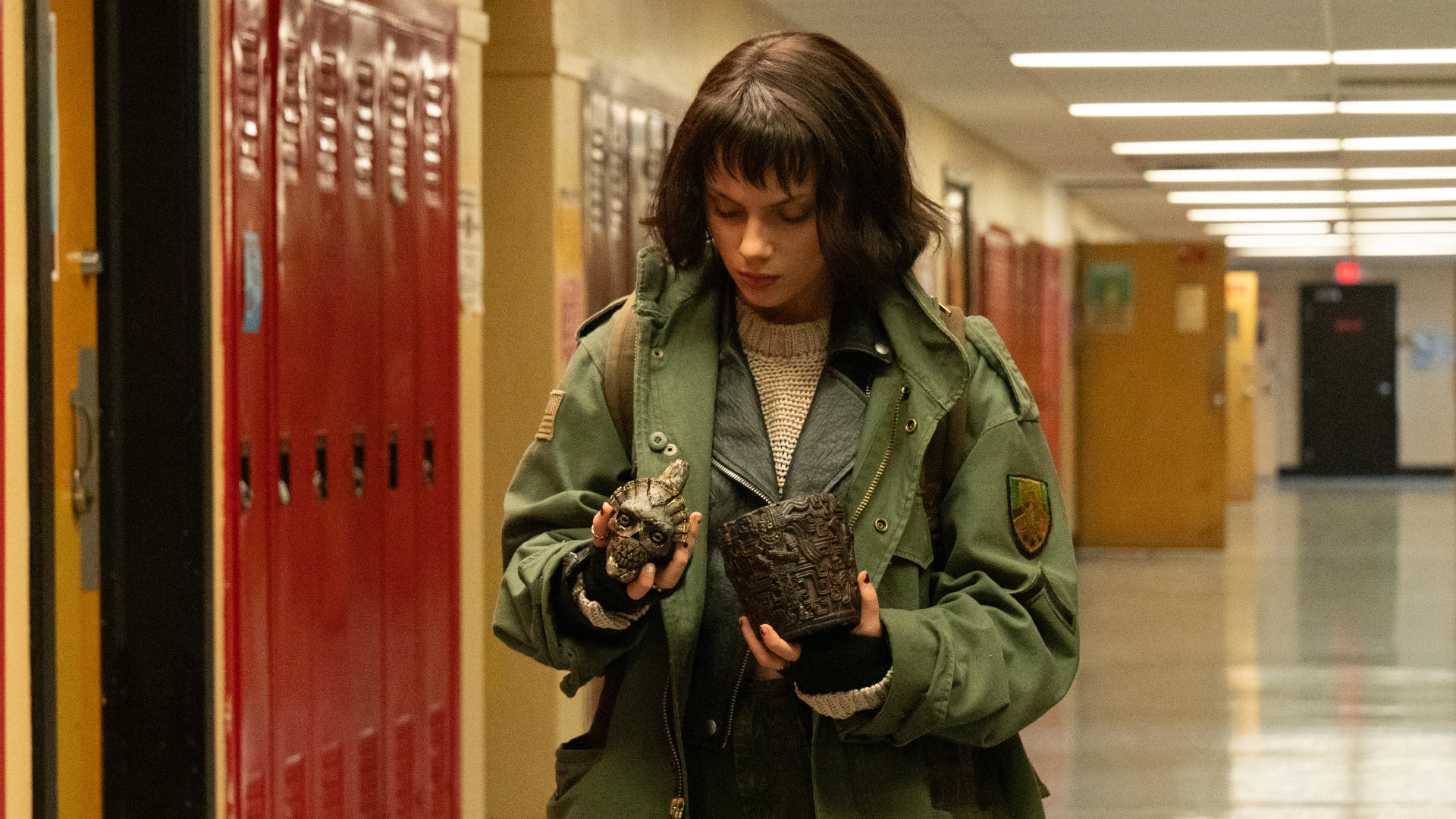
CH: “I had gotten Owen’s script, which was an adaptation of his short story Untimely, and when I read it, three things kind of popped out to me. The first was this simple, elegant, effective and scary mythology surrounding a thing which I had heard about, but wasn’t even sure existed, called the Death Whistle. I was immediately captivated, thinking, wow, I haven’t seen a movie based around this object before. I think it’s mentioned in a Ghostbusters movie, so that was really exciting. When I researched it, I was even more excited and drawn in, because it is a real ancient object, but it has this very mysterious mythology itself, in real life, of what it was used for. I did a lot of research and I’d been to Mexico three or four times, one of my favourite places. I’d been to a place called Coba, where they had these incredible ruins, so I’d gone out into the jungles. Before I read Whistle, I thought, oh, I’d really love to make a movie here, about something here, and still would like to. In fact, if there were more Whistle tales to tell, I’d love to go there for real. Researching the mythology was fascinating, and there were lots of different stories of what [Aztec Death Whistles] were used for, whether they were used for sacrifice, and there’s images of death whistles being held in the hands of skeletons, and there’s ideas that they may have been used to deliver battle cries, and lots of different meanings of the sound, and why it’s a whistle with the wind that carries through it. All of that inspired Owen’s story, and the the death whistle itself, something that made a sound, that calls upon your future death to hunt you down, and that was also kind of a simple yet scary concept that got to me. Also, Owen’s script had this sort of tragic, romantic story flowing through it, the heart felt of teenage angst and romance, and I suppose I’d always wanted to do an American high-school movie at some point. The deaths themselves, became something that I knew I could put my visual stamp on, creating a series of elaborate and outrageous death sequences.”
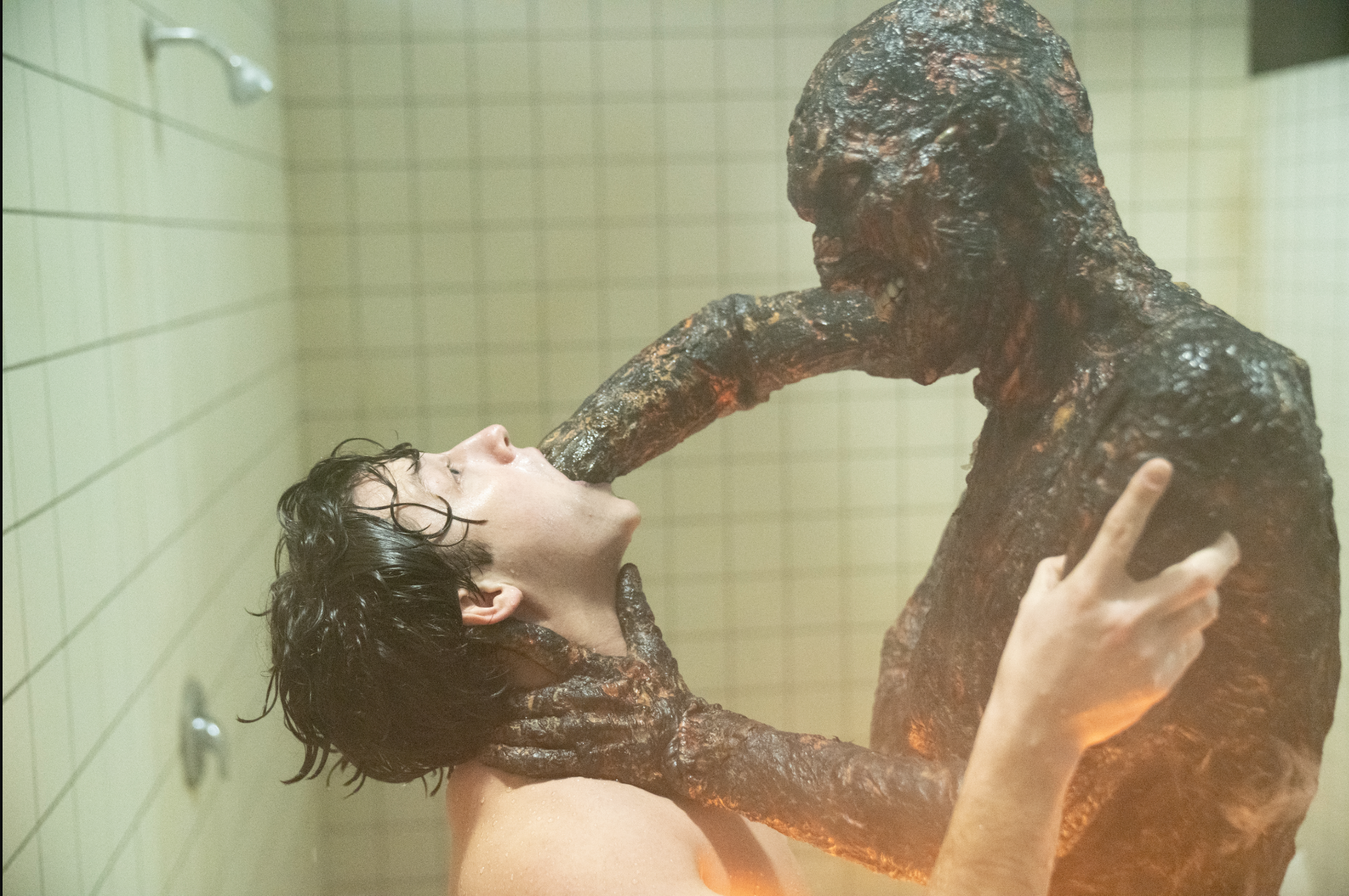
Hardy further described what it was like to have the creative freedom as a horror filmmaker with such a unique concept, and how the different manifestations of the death whistle’s curse allowed for different visual concepts, and pairing these with the film’s overall theme of fixed destinies, used by the film as a stipulation of the death whistle.
“That was a big thrill of reading the script that Owen had come up with, and taking the proverbial bull by the horns, and running with it, and thinking, well, I love monsters, and I love effects, and I don’t want to show you something that you’ve seen before. So each one of these deaths can almost reflect a different subgenre of horror, of mixture of techniques, I wanted to put in lots of practical effects and stunts, prosthetics, animatronics, puppetry, visual effects… just trying to present you with these kinds of illusions, which could shock you, or move you, or horrify you. This idea that when you’re born, your death is born, it’s out there, because we know that every one of us, we’re going to die at some point, and this idea that the whistle knows what your death looks like, that was quite a chilling idea that I hadn’t seen. You think of a movie like The Ring, with a cursed videotape that you watch, you’re just going to die in seven days after watching it, or Hellraiser will call upon some demons from hell, but this idea that death is out there for all of us, sort of waiting, and if you’re lucky enough to live a long life, you won’t be visited by it until then. But then, if you hear the whistle, it will pull that future down to an immediate death, however that might look, or may be, giving that death to you in the next couple of days. That was a chilling idea that I think was also a special part of Whistle.”
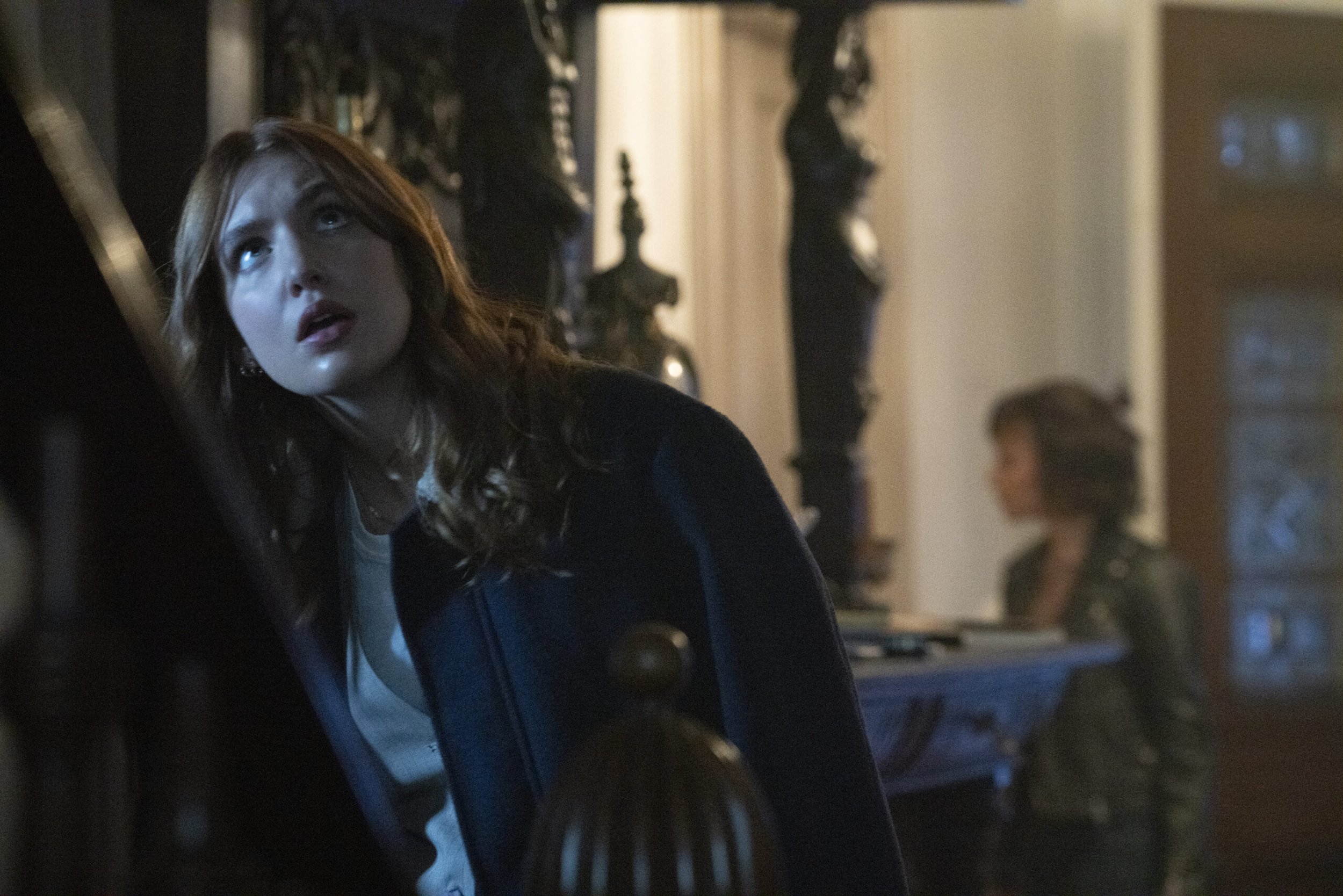
The film’s protagonists, Chrysanthemum (Chrys) and Ellie, played by Dafne Keen and Sophie Nélisse, originated in Owen Egerton’s original script, but also took loose inspiration from figures in Hardy’s life. Hardy further discussed what it was like to use the film as a vehicle to pay tribute to them, and how the relationship in the film serves as a driving force of the story.
“When I read [Whistle] I was able to tap into particularly for Chrys and Ellie, this sense of portraying them truthfully. My cousin Poppy, and her girlfriend Amy, both of them sadly died a few years ago, but I was able to sort of put my knowledge of my cousin’s character and their relationship, and who they were, as two people in love, into the characters of Chrys and Ellie, and in a way, it was my kind of barometer of tell those two characters and their love authentically.”