
‘When You Close Your Eyes’ Playwright Jessa Richer And Director Jacqui Sirois Discuss Crafting A Musical For Horror Fans
FilmSpeak sits down with Jessa Richer and Jacqui Sirois to discuss how horror and musical theatre can coexist ahead of the Toronto premiere of their new musical.
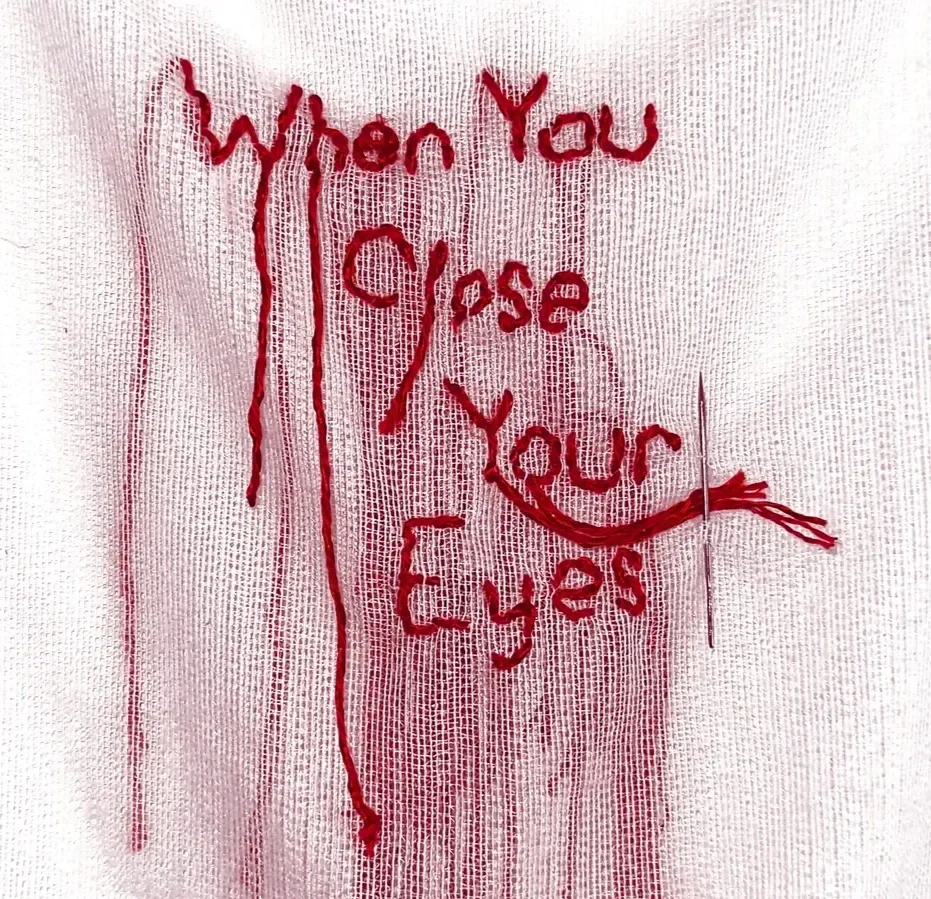
The intersection of horror and musical theater has, historically, been quite slim. Shows that lean into horror elements often lend themselves to a more comedic or dramatic side, rather than leaning into the unnerving core of what sets horror apart. Playwright Jessa Richer and director Jacqui Sirois are looking to challenge that with When You Close Your Eyes, which is described as a musical for horror fans. The original sapphic horror musical is running at Toronto’s VideoCabaret (Deanne Taylor Theatre) from November 5th to 15th. FilmSpeak had a chance to sit down with its creators to discuss horror’s place in the musical genre.
FilmSpeak: This is a question I love to ask, but what is it about this genre that excites you?
Jessa Richer: For me, I think that horror is the most political genre, because it can get away with it, because it can be so abstract. I think the genre itself just allows for such full creative expression and the weirdest possible things go. I think if you look back in history, something crazy happens in the political sphere around the world and, within two years, there's movies about it. It's something that you wouldn't necessarily clock, like Nosferatu being about the fear of immigrants, or we got all of those immaculate conception movies two years after Roe v. Wade was overturned. I think it’s really cool, to me, how much you can explore things without people [dismissing it as] a political piece.
Jacqui Sirois: Horror is a newer genre for me! For a really long time, I was such a scaredy cat. But then, I started dating a horror freak who got me into it, and I really enjoy watching horror now. I've learned a lot about what the point of horror is, and it is to really raise that mirror up to society and what’s happening in that moment. It makes me think in different ways, and I think that's what's drawing me in more. Watching horror gives me the same feeling as watching a piece of theater, which is like the genre I love! I love going to the theater, I love watching plays and [watching] actors work, but I feel like when I watch horror, I get that same experience. It hits an emotional core in a different way. It makes me feel things deeply in an exciting way, and process things in ways other genres don’t necessary [do].
FS: Horror and theater are not usually paired, and their intersection is a very small niche. Recently, we’ve seen it become utilized a bit more, with the obvious example being Paranormal Activity. What made you want to tell this story through live theater?
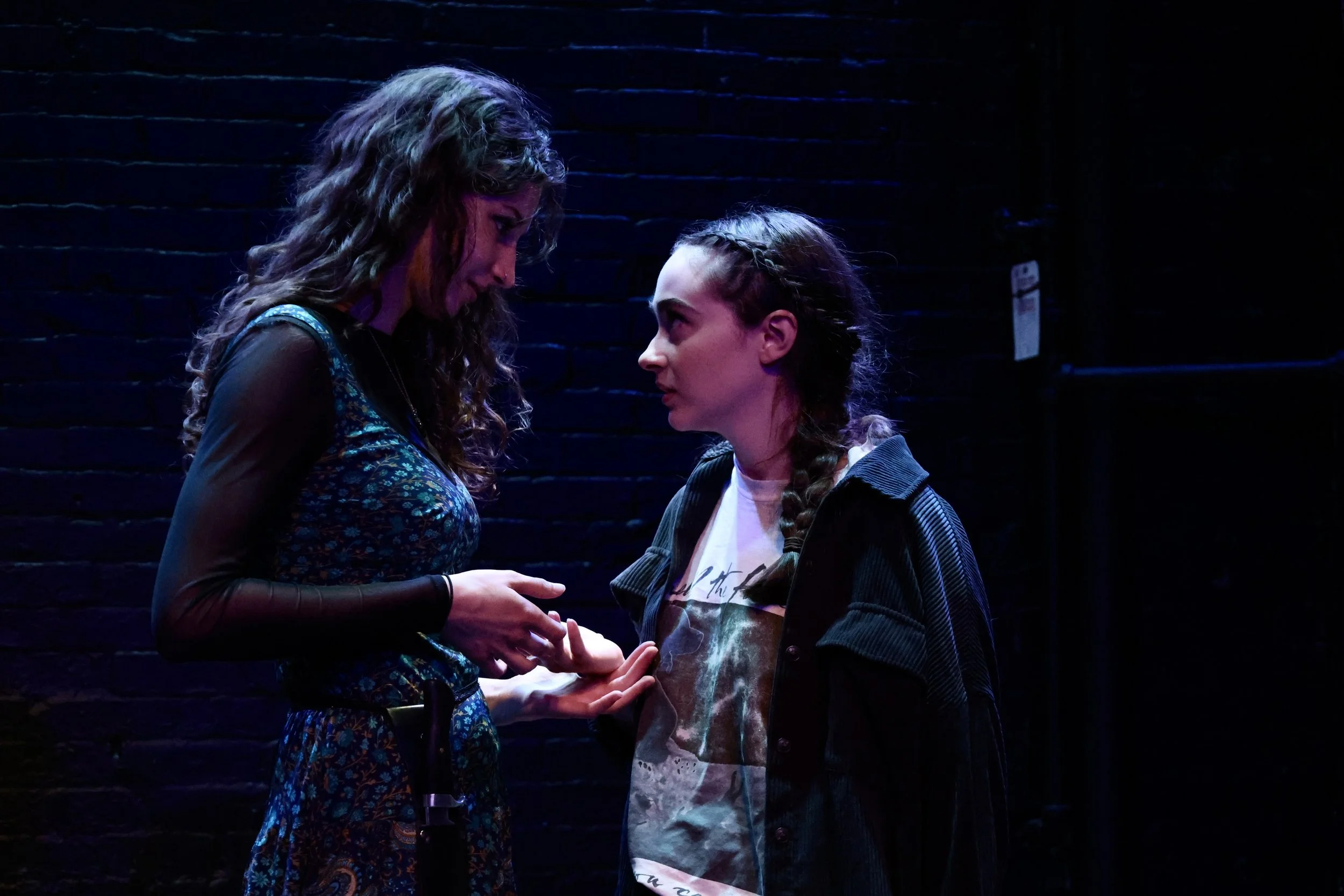
JR: It’s so exciting to see people take bigger swings! My first musical was a folk musical for kids about climate change, but it was a really dark fable with a lot of death. My co-writer, who is a much more “sunshine” person than I am, kind of balanced it out to make it kid-appropriate. But I was really intrigued when I was working on that, about the possibility of actually fully exploring dark themes with music. I really love writing dissonant stuff, and while horror is the genre that allows films to be experimental, I think it also allows music to be so experimental. And that was really exciting to me. I grew up watching horror. My dad showed me An American Werewolf In London when I was six, and I watched a bunch of stuff I should not have seen at a young age. I've always just kind of wondered what that would look like, and it felt like this was the way to find out, was just to try it!
JS: I think it's been really fun exploring where horror and musical theater intersect, and specifically exploring what that Venn diagram looks like with them. In some aspects, there are similarities, but others you're like, “Wait, how does a character versing out into song make sense in horror?” Because usually a lot of the thoughts and things that people are experiencing are very internal, and happen in a more quiet way.
In a musical, it's very expressive. You start singing because you can't emote with just spoken words anymore. So you sing about it and the music is sort of what's happening on the inside of the person. It's been fun to explore how those actually connect in a show. Some of the campiness that can happen in horror and a musical theater, we explore the range of that in this show. We’re trying to tap into what it means to experience a horror story in front of you. With something like Paranormal Activity, obviously there's a hunger for it! People flocked to that show. I've heard of [people] seeing that show because they wanted to know what was on stage, what it looked like, and what it felt like. They want to be tested. They want to experience something that a screen can't give them.
So, I wanted to really lean into that. We’re doing our show in the round, so there's an audience surrounding the stage, and [they] will be pretty immersed in the story. People are going to be singing around you, they're going to come from anywhere in the space. So that's an exciting thing to explore as we're building this space together, you don't know what's going to happen next.
FS: In that unique interception of genres, what was a big surprise that stood out while you were putting the show together?
JR: I think how well it works was really surprising. There were a couple points when I was working on this where I wasn't sure it was going to [work]. I think that the playing field of noise that we've worked out and plot structure, I think it manages to come together in a way that is truly an homage and also unlike any other theaters that you're going to see. I think it will actually be very disturbing! We did a table read of this [on the] first day of rehearsal, and just reading it, the room was so heavy when we finished. That surprised me, but it's also what I hoped for!
FS: We’ve seen the classic scares done countless times on film, but doing it live is a whole other ballpark. How do you go about crafting a scare for a live audience?
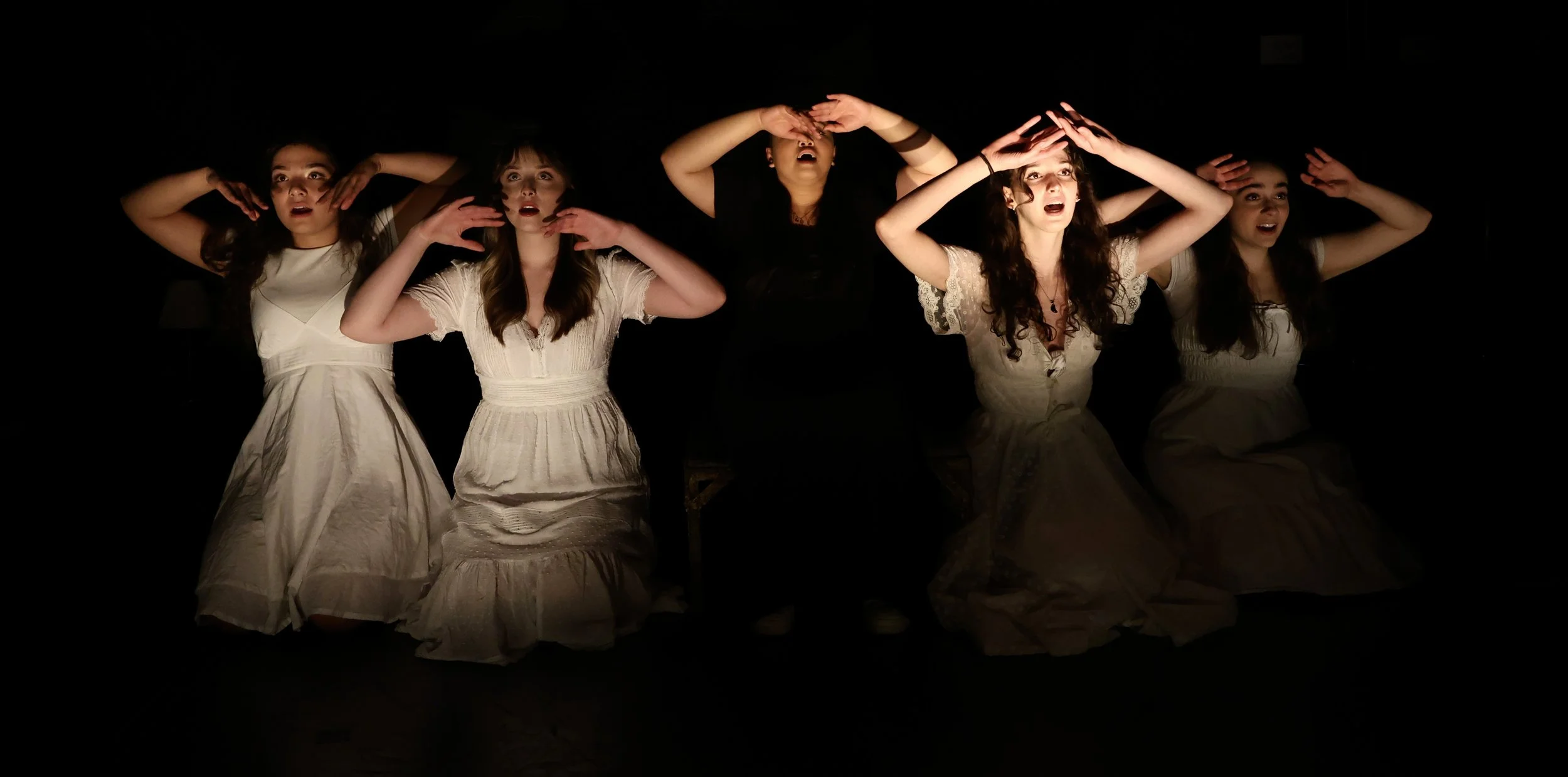
JS: You have a lot more variables at stake when you're working on film. You have the camera which is the biggest difference. Something we talked about quite early on on this project was how do we tell this story without a camera? Because you have focus, you can use different lenses, you can edit it, you have so much! When you're doing live theater, it's more about where you are directing people's eyes and focus. You can only control that to a point, because people are going to look where they're going to look, so where can you play with that? A lot of that is coming from working with other creatives on this team. Lighting is a massive thing. We talked about how we can use light lighting as our camera in this. Where are we shifting the audience’s focus? Sound design, of course, and how loud can we make the space? How do we build tension and pacing? All of that stuff. That's really the biggest thing, is how do we sort of control the audience's breath, which is interesting in a musical. You get a release in a different way with a song as opposed to a film that's going to build it with pacing, sound, and cameras. We have a different paint palette, but it's one I'm super familiar with.
FS: To wrap up, what are you most excited for people to take away from this show?
JR: I wrote this show between the ages of 23 and 25. To me, it was a response to the way that a lot of people our age feel. Leaving university now, when my parents were my age, they were married and they had their own apartments and careers. Even my friends who aren't in the arts don't have that. No one has that. There kind of isn't a path to follow. COVID happened, isolation is on a rise, mental health is spiraling down. I think the idea of just not knowing what the fuck to do with your life, how scary that can be, and how the second adolescence feels like we're teenagers again, but we're out in the world. That's basically it. I hope that people kind of feel some of the feelings that they've maybe kept locked away when they watch this and let them go.
When You Close Your Eyes is running at Toronto’s VideoCabaret (Deanne Taylor Theatre) from November 5th to 15th, and is looking to satiate fans of horror and musical theater alike.