
Hamza Haq Talks Inhabiting A New Kind Of Criminal Character In 'The Borderline'
the three time canadian screen award winner discusses his latest, and radically different role in the new ctv crime thriller.
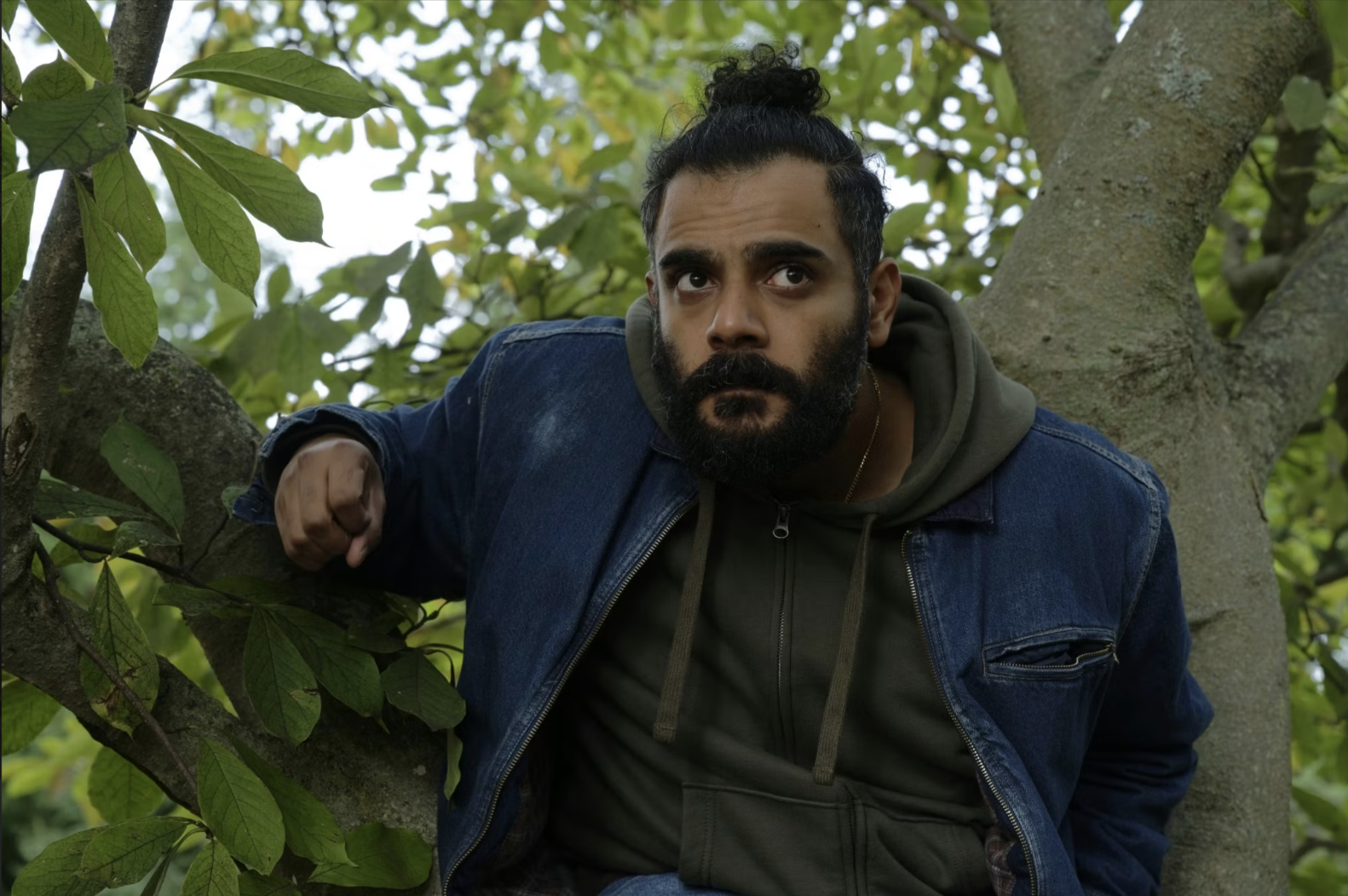
Hamza Haq in Episode Three of ‘The Borderline,’ courtesy of Bell Media.
The success of actor Hamza Haq has been a great thing for the Canadian media landscape. After many years of smaller roles in various projects, Haq stepped into his breakout role in CTV’s Transplant, where he played the role of Bashir Hamed, a Syrian doctor who finds refuge in Canada, and rebuilds his life as a medical resident. Transplant was a big success for both Haq and the network in tandem, embarking on a four season journey that would see Haq win three Canadian Screen Awards in the Best Actor - Drama category, and strong international sales for the show. 2 years after Transplant' s final season, Haq makes his return to the network with The Borderline, a crime thriller miniseries set around the Thousand Islands region surrounding the Canada-United States border, involving a classic series of murders, secrets, and double-crosses. In the series, Hamza Haq steps into the role of Tommy Hawley, an enigmatic criminal with a personal history with one of the region’s lead detectives, Henry Roland (Stephen Ammell). Tommy acts as one of the series’ central players, and his erratic nature and complicated past make for a meaty new role for Haq to step into. Hamza joined FilmSpeak for an in-depth conversation about inhabiting the role of Tommy Hawley, performance decisions, and how the character proves unique within the larger genre.
Click below for the full, in-depth video interview, or continue scrolling for the remainder of the article:
As mentioned, Haq’s role in The Borderline is unlike any other in his career, and he reflected on what it was like to tackle such a volatile new character from a performance standpoint. Haq also reflected on what it meant to play a criminal character as a South Asian-Canadian and Muslim actor in a brand new way, unbound by harmful stereotypes or cultural representation.
HH: “Yes, I was hoping to play something dramatically different, but I had no idea that [The Borderline] would be that. Robert Budreau, who directed all of The Borderline, I worked with him several years ago on a project called Delia’s Gone, and he called me up and said, ‘Hey, I’m working on a project, and I think you would be a very interesting casting in this very typical, small town, two friends growing up on opposite sides of the law kind of thing, and I think you would throw a wrench in how normal this story is, would you be interested?’. I read it, and I thought it was great, there wasn’t this burden of carrying an entire population or entire diaspora, and getting to play this story about flawed men and by my very casting, [Tommy] does become a person of colour. He does belong to that diaspora without having to be blatantly obvious or spoonfeeding the audience with it, it was a great treat to be considered for the role just on the merits of my acting, and then to be able to fold in parts of my culture and background, just as a part of my casting, was cool.”
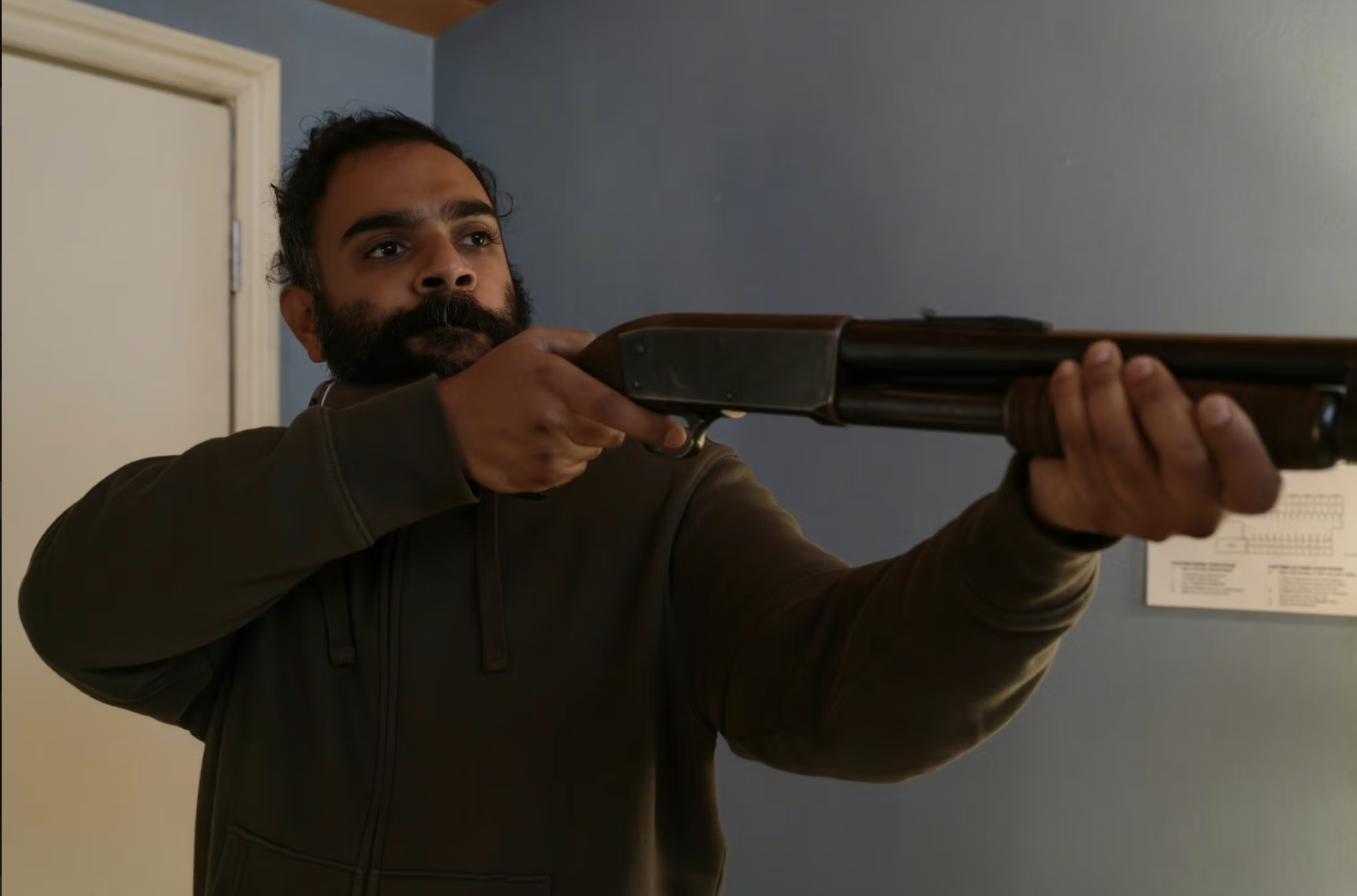
Hamza Haq in Episode Four of ‘The Borderline,’ courtesy of Bell Media.
FS: What I find really interesting about Tommy is how he’s kind of a subversion of the ‘wildcard,’ rogue criminal archetypes we often see in crime shows like this, & he’s not purely an enigma either. There’s this sense of controlled chaos about him, and I’m wondering, what kind of conversations were had with shaping his demeanour?
HH: “One of the beautiful things about it is that there wasn’t much conversation had. I think everybody agreed, we were ready to take a big swing… I had an idea to play someone who was kind of removed from the danger of it all. [Tommy] doesn’t really feel like he’s in danger, because he kind of ignores in a way. There are terrible things happening, and he kind of ignores it all, in a way. The only real preparation that I did for it was an acting method where you do the embodiment of an animal. You have this sort of animal exercise, where you attribute the characteristics of a certain animal to your character, and I chose raccoon, because he’s sort of this Toronto survivalist, and the wardrobe reflected that… racoons exist in chaos, they can be dangerous, and if left alone, they’re kind of adorable. But, when you get into it with them, they’re not afraid to strike back, and I thought embodied Tommy’s personality really well.”
Haq further divulged details on his backstory process, and made connections between Tommy’s struggle as a foster child joining a competitive family to his own journey as an immigrant, and talked about how the commonality in work ethic informed the performance we see in the series.
HH: “When we were doing a backstory on Tommy, and his crimes, they just mentioned that he landed with the Hawley family through the foster system. That covered everything. It immediately established him as an outsider trying to find his own place. As an immigrant, you don’t really have to stretch too far to find common ground there. There is this chip on Tommy’s shoulder as a result of working against his heart, getting in more trouble in order to prove yourself, despite really doing what everyone else is doing.”
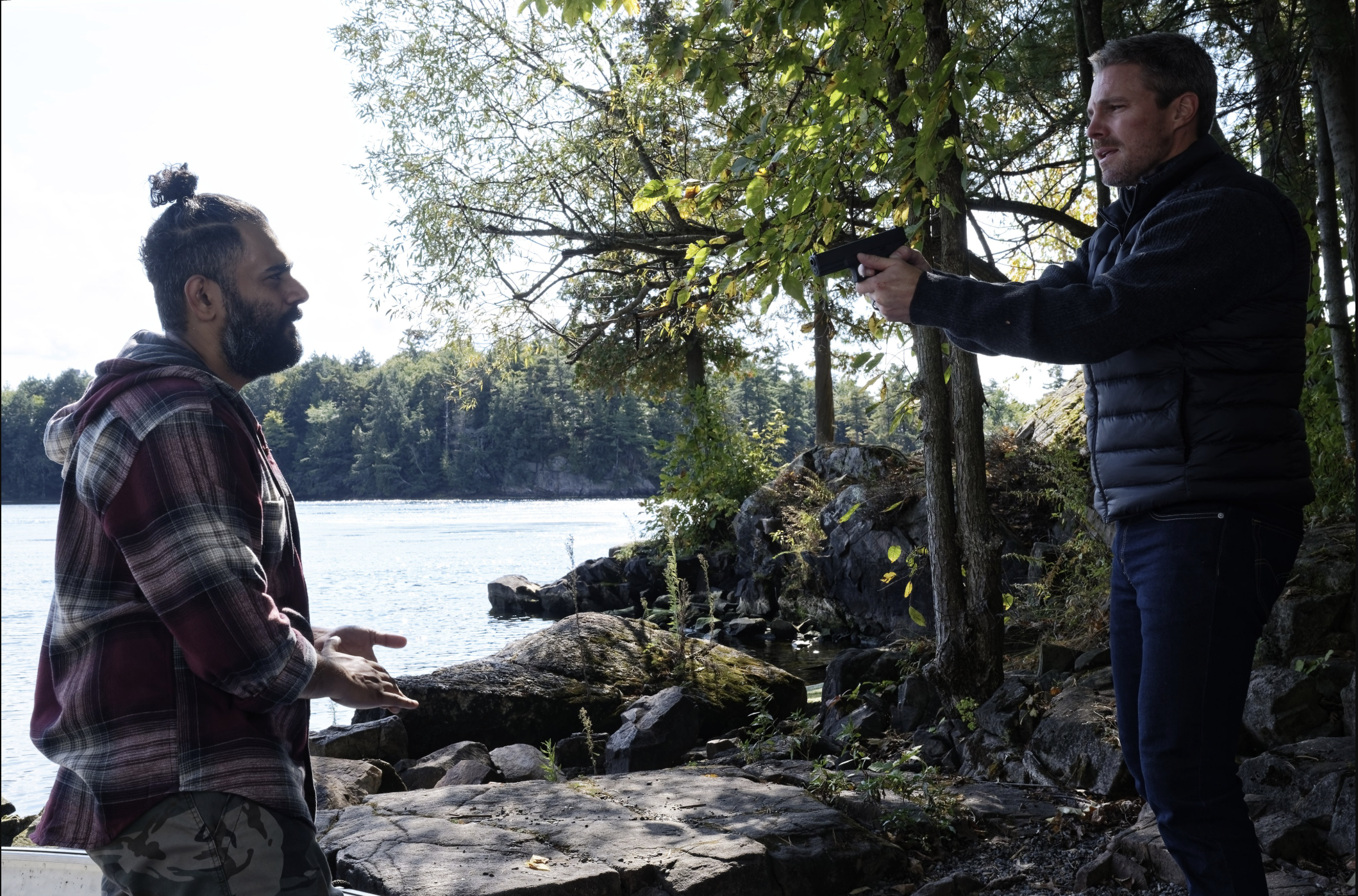
Hamza Haq and Stephen Ammell in Episode Two of ‘The Borderline,’ courtesy of Bell Media.
Like any effective thriller, The Borderline relies on secrets and elusive pasts between characters for tension. Haq’s Tommy Hawley shares a complicated relationship with local cop Henry Roland (Stephen Ammell), one that unfolds slowly throughout flashbacks, and due to the series being a limited one, Haq explains how this affected his backstory work revolving around the series’ central relationship, and beyond.
HH: “The good thing about it is, [The Borderline] is a limited series, so all the episodes had to be written beforehand, so, we all went into it, and because we were block-shooting, we knew everything. The beautiful thing is, we knew the ending on day two… so, we had the bookends of the entire performance on the first two days. So, the rest of it, with how that informed my performance, was really [thinking], ‘Alright, you can go big, but if you go big, you have to go big right in the middle, because it ends in a very particular way,’ so I had to find my way back home. You work with someone as inherently cool as Stephen Ammell is, you want to be his friend, and because we didn’t have a lot of time beforehand, as he’s a really busy dude, we didn’t get to hang out that much, we only had three weeks of filming before he had to head back to Los Angeles to shoot another project. So, the most information that I could possibly have about any given character, is my own experience, and trying to tie any of my own experience to that. So, to constantly be looking for approval, in the same way I think Tommy looks at Henry for approval, was interesting.”
Haq reflected on the intent of himself and the series’ creative team, wanting for The Borderline to be kind of tonally silly and middle-brow, and talks about his appreciation for how the series pays homage to other small-town crime thrillers and similar sorts of miniseries from the UK, all while representing something kind of new in the Canadian television landscape.
HH: “It’s not a show that takes itself very seriously, and not in a bad way, more in the sense that terrible things happen all the time, and they’re not really that dramatic. That’s something that’s very common in British thrillers, or something like Fargo, or anything where it isn’t as dramatized. I think the big question for a lot of us was, is that tone really going to hit for Canadian audiences? We’re used to thinking, okay, cool, is this a True Detective style prestige cop thriller? The truth is, it just isn’t, and that’s not a bad thing, I don’t think it was ever meant to be. I think there’s a small town, where terrible things happen, and in true Canadian small town fashion, people shrug it off and move on with their lives, and I think [The Borderline] is just a little capsule of a couple of people trying to move on with their lives, and shrug off horrible things that are happening and the crimes that they’re committing. There’s no grand scheme. It’s about trying to go, ‘I’m just trying to survive, trying to get back to being able to go for a drive, have a coffee, and have an easy life’. It’s not Narcos. Bad things are happening, and people are trying to move on with their lives.”