'Primate' Director Johannes Roberts Talks Tackling Tone and Practicality of New Creature Romp
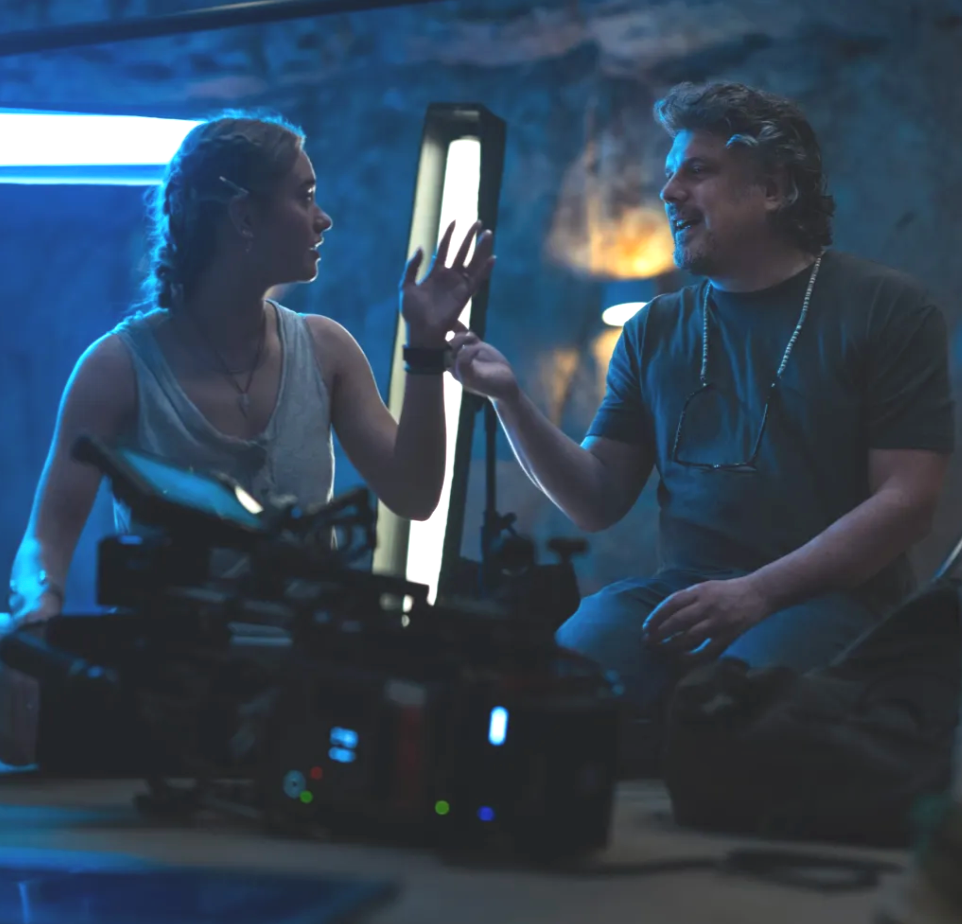
Director Johannes Roberts (right) and actor Johnny Sequoyah (left) on the set of Primate.
the genre veteran spoke to filmspeak about creating his latest thriller
Johannes Roberts has carved out a career for himself in the genre film space, starting off by writing and directing his own independent horror-thrillers, such as ‘F’ and ‘Storage 24’. In the 2010’s, Roberts came stateside, and helmed the likes of the ‘47 Metres Down’ franchises, as well as instalments of other horror-thriller franchises like ‘The Strangers’ and ‘Resident Evil’.
With his latest, ‘Primate’, Roberts steps into the ‘creature feature’ sub-category of horror. The film follows a family’s tropical vacation home as it becomes a site of carnage when their chimpanzee cohabitant goes feral. What entails is a 90 minute thriller with ample monkey business, and one that’s sure to rile up crowds of horror fans everywhere.
Primate premiered at Fantastic Fest, and made its way to the Toronto After Dark Film Festival, where Roberts generously took the time to sit down and talk about the process of creating Primate.
The conversation spanned topics of tonal challenges, practical effects, emotional resonance, both literal and cinematic inspirations, and many more specifics about Primate.
Roberts spoke extensively about his desire to emphasize practical effects in Primate, opting to have the central chimpanzee, Ben, be portrayed by a human being inside of a elaborate prosthetic chimpanzee, with different augmentations, and further spoke about the struggle between having a design scary enough for the film’s gory turns, and making sure it would work practically.
“It was tricky, there’s a lot of things that you had to balance there. We wanted to go practical, and that’s fine, cool, but the basis is that we need a guy to do that, and then it needs to be small enough, but also equally powerful enough. It needs to be small enough for the audience to go, ‘Oh, why have they got a 6-foot chimpanzee around the place, but powerful enough so that you feel genuinely terrified.’ Once we found Miguel, (performer Miguel Torres Umba) he was just a lunatic, (laughs) he went full chimp in the movie. Once we found him, we could just build around him, and it was beautiful. We had built multiple different puppet heads, different sequences, you know, I had a team of puppet and animatronic people doing the facial expressions and all sorts of stuff like that. Miguel would have different contact lenses for different stages of rabies and all that stuff. Chimpanzees obviously have longer arms and body proportions, so we would have different arms for doing different things, and for the legs, we would have different ones for walking and different extensions, different hands for holding on to things. We show at one point, Ben’s feet holding onto something, and when I was watching it last night, at the Toronto After Dark Festival, I was noticing, ‘God, how did we do that?’ (laughs). Millennium Effects created the feet, but they were operated by hands, because chimpanzee feet are just like hands. I’m just a huge Cujo fan, and when I started to understand how they did that, you realize how many different things and techniques they used to bring that movie to life, and I got so excited with all of the practical probabilities of all these sorts of things. There was a whole armoury of different things.”
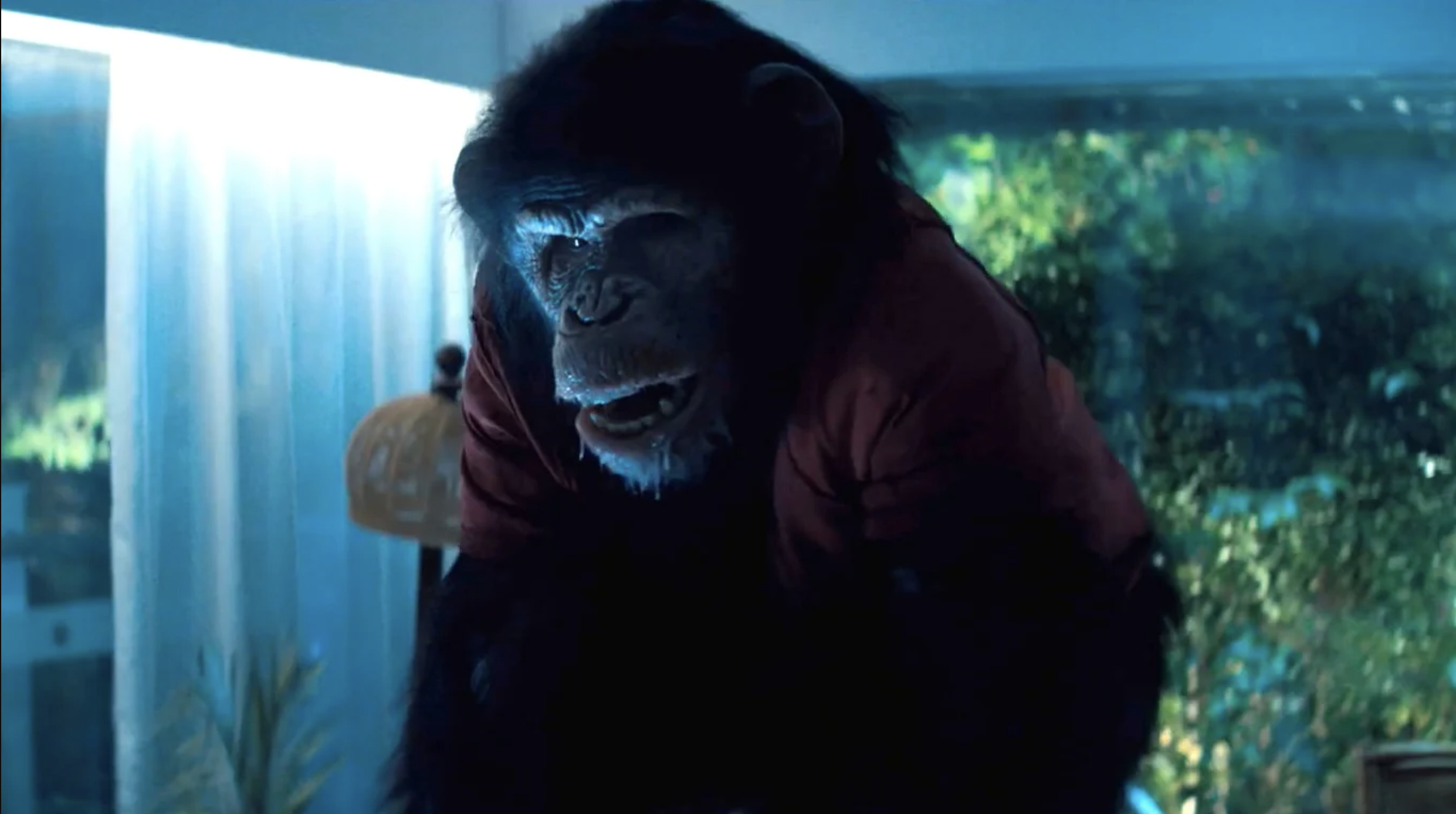
FS: It’s got to be tough to establish that balance with Ben, because even amidst the rampage, he’s still someone that these girls have had a relationship and childhood with, he means something to them, he means something to the audience. How do you operate within that grey area there, while maintaining tension?
JR: “It was fun. When you look at this movie, and it lands really well now, and I can feel how successful it is when I watch it with an audience, it feels simple, but I will say that this film, as a tonal piece, was an absolute f*cking nightmare. It wasn’t a straight creature feature, we wanted to create sympathy, but we also didn’t want people to feel bad for Ben, we wanted people to have fun. It was really great, creating the sympathy and the family, and having the concept of the evil coming from the thing that they most love within the family. Equally, I wanted to have this kind of Freddy Krueger-esque craziness that goes in the film, so it was really tricky to have a tonal balance for where the movie goes, to make sure the audience comes along with you and have fun with it while feeling terrified and sympathetic. I particularly love some of those moments at the beginning, where he’s there, and then he’s not there, where you can feel him slipping, the scales tipping into madness. Some of those moments, I probably enjoy the most out of the whole movie. There’s this moment where Ben hugs Lucy (Johnny Sequoyah) and I feel that moment, yeah.”
Primate finds a new niche in the creature feature subgenre, with an emphasis on linguistics and communication technologies throughout, both as a narrative means for Ben to communicate with his cohabitants, and as a literal means of communication for father Adam (Oscar winner Troy Kotsur) and his daughters. These elements also let the film become more silent on a dialogue front, and Roberts explained how he used the element of silence to enhance the tension of Ben’s rampage.
“It’s weird how these things start coming together, because Troy Kotsur’s character was never in the initial script. When things happen, and they sort of just connected with each other with this whole idea of linguistics, and communication, the idea of the late mother being a communications expert, looking at how chimps speak with humans, and then Troy is deaf. So there are these different relationships of communication with Adam, him and the chimp, him and the family. It was weird, how it just sort of grew its own life, all I can say is that I kind of shepherded it. It wasn’t like we were specifically trying to make a point on anything, it just connected each way and worked so well. I enjoy it so much. It’s a loud movie in terms of carnage, but quiet in terms of dialogue, so it’s pretty strict.”
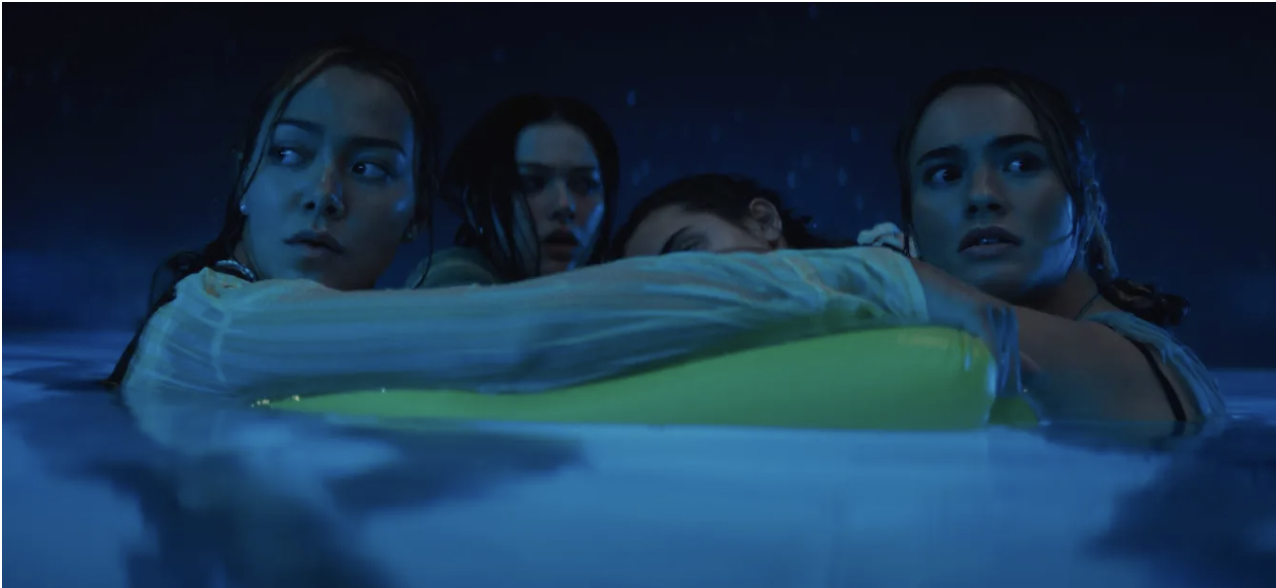
Water has proved as a interesting throughline in Roberts’ filmography, serving as the terrifying, lonely space of danger that allows the 47 Metres Down films to work as they do, and Roberts dives back into the water with Primate, with our protagonists marooned in a cliffside pool, facing a rabid chimpanzee. Roberts explained what drew him back to water in Primate from a logistic perspective.
“When I initially wrote [Primate], it was fifteen years ago, before I had done the 47 Metres Down movies, (Roberts’ previous aquatic thrillers) and I’d wrote it about a dog. My mom had a swimming pool, and I’d been sitting in England, just one summer day, seeing my Mom’s dog running around the swimming pool. I was thinking like, ‘there is something in there,’ (laughs). What if you couldn’t get out of the pool, and the pool had no shallow end? That sort of became a thing. I was obviously a big Cujo fan and Stephen King fan, so I was thinking, ‘What if the dog had rabies?’. Rabies is hydrophobia, and the water is driving the dog out, so it call connected there. Then, when it became a chimpanzee in the script’s final form, it was then super exciting to add this element of seeing how the chimpanzee can physically get wherever. The protagonists are trapped in the pool, which is a safe space, but it’s not really a safe space, because you can be grabbed by the front, by the side, you have to swim to keep yourself going, so it just became this great, great device. I love water. I love shooting in water, for some reason. I directed in the pool, I had a monitor and I’d just sit in the water with the actors, I loved it. The producers thought it was pretty weird, (laughs) but I had some great camera operators, and we had fun with it.”