
‘Victorian Psycho’ Review: A Fun, Tonally-Diverse, But Narratively Thin Star Vehicle
Cannes-darling ‘Victorian Psycho’ is finally hitting theatres, mixing elements of dark comedy with wonderful performances that is sure to leave horror fans satisfied.
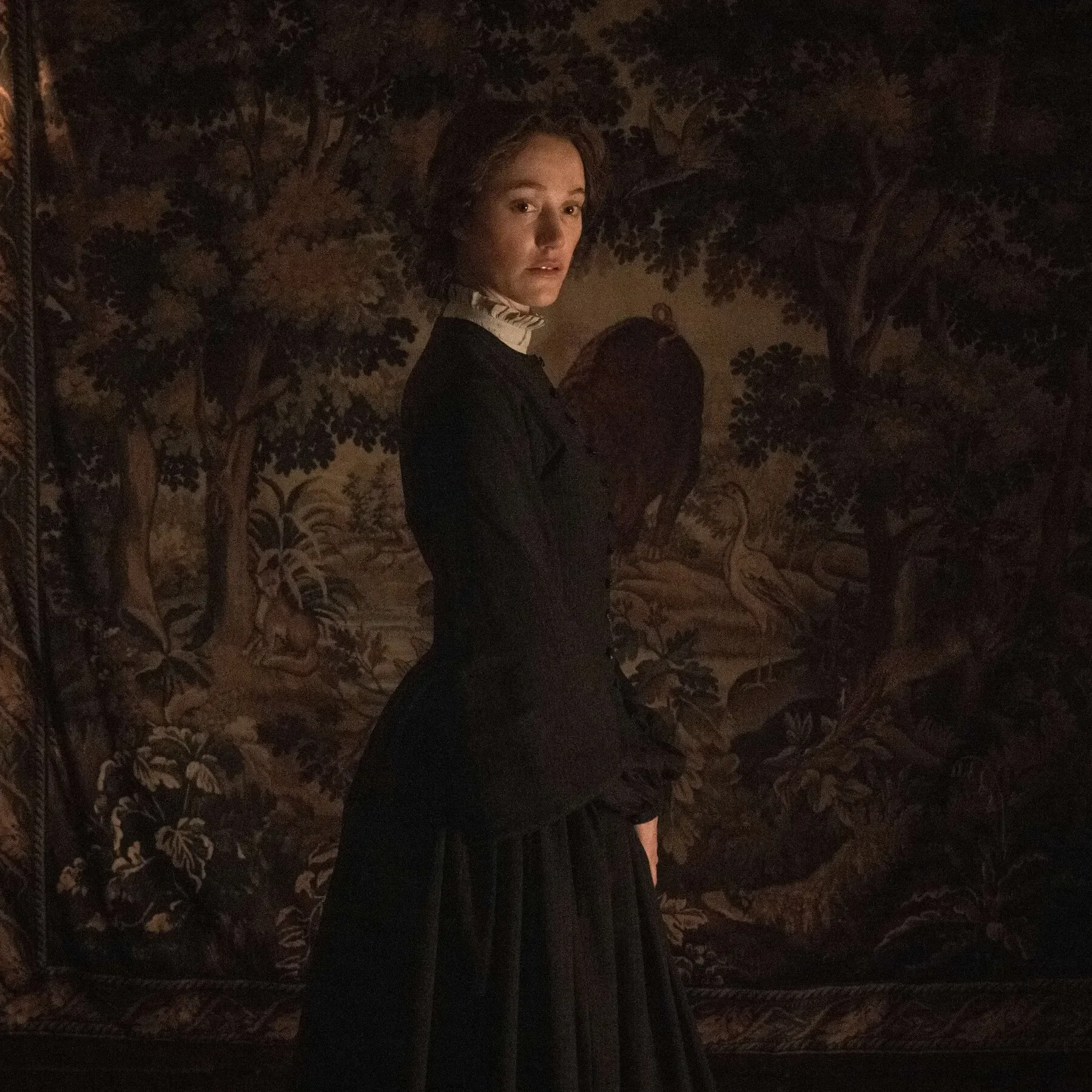
Gothic horror is far from a new concept. From classic stories to modern remixes, the aesthetics of Victorian-era English literature have stood the test of time across the genre. Directed by Zachary Wigon (Sanctuary), ‘Victorian Psycho’ is an adaptation written by Virginia Feito of her novel of the same name. The film sets out to balance a classic feel with a more current sense of humor, blending poignant dark comedy with a traditional approach to narrative. Maika Monroe stars as Winifred Notty, a governess tasked with teaching the children of the wealthy Pounds family, which is headed by parents Jason Isaacs and Ruth Wilson. Throughout the film’s runtime, peril ensues, as Notty begins to fall victim to a malevolent force inside her. The film is equal parts funny as it is twisted, but although not all tonal balances work, it stands out as one of this year’s most unique efforts.
For Victorian Psycho’s many strengths, its most prominent is its cast. Spearheaded by a balanced and thoroughly entertaining performance by Maika Monroe, the cast helps cement the film’s humorous elements. Monroe plays the role like she’s having the most fun she’s ever had on a film set. giving many unforgettable line deliveries and facial expressions. Although the character of Winifred Notty can sometimes feel tailor made for Instagram clips, the elements that work give the film an enjoyable comedic edge. The film’s structure is setup in a way to bolster a central performance from Monroe, and without her, it simply would not work. It’s clear that Monroe has cemented herself as one of horror’s most reliable actors, and her performance as Winifred only further strengthens that status.
Alongside Maika Monroe are Jason Isaacs and Ruth Wilson, who play Mr. and Mrs. Pounds to an equally absurd comedic degree. Isaacs is no stranger to wonderful line deliveries, and his performance in this had our small press crowd erupting in synchronized laughter on multiple occasions. Wilson, however, is a lot more stern in her approach, and ultimately acts as the film’s dramatic anchor. As the patriarch, Isaacs replaces stereotypical strength for whimsy and disarray, paving the way for some of the film’s most memorable moments. Alongside Monroe, their polarity as a trifecta of different characters plays immensely well, with their chemistry working to serve both comedy and tension. Other standouts include Thomasin McKenzie and Jacobi Jupe, who further intensify the film’s tonal balance. Although some performance choices are often inappropriate for certain scenes, the moments when they work more than make up for the rest.
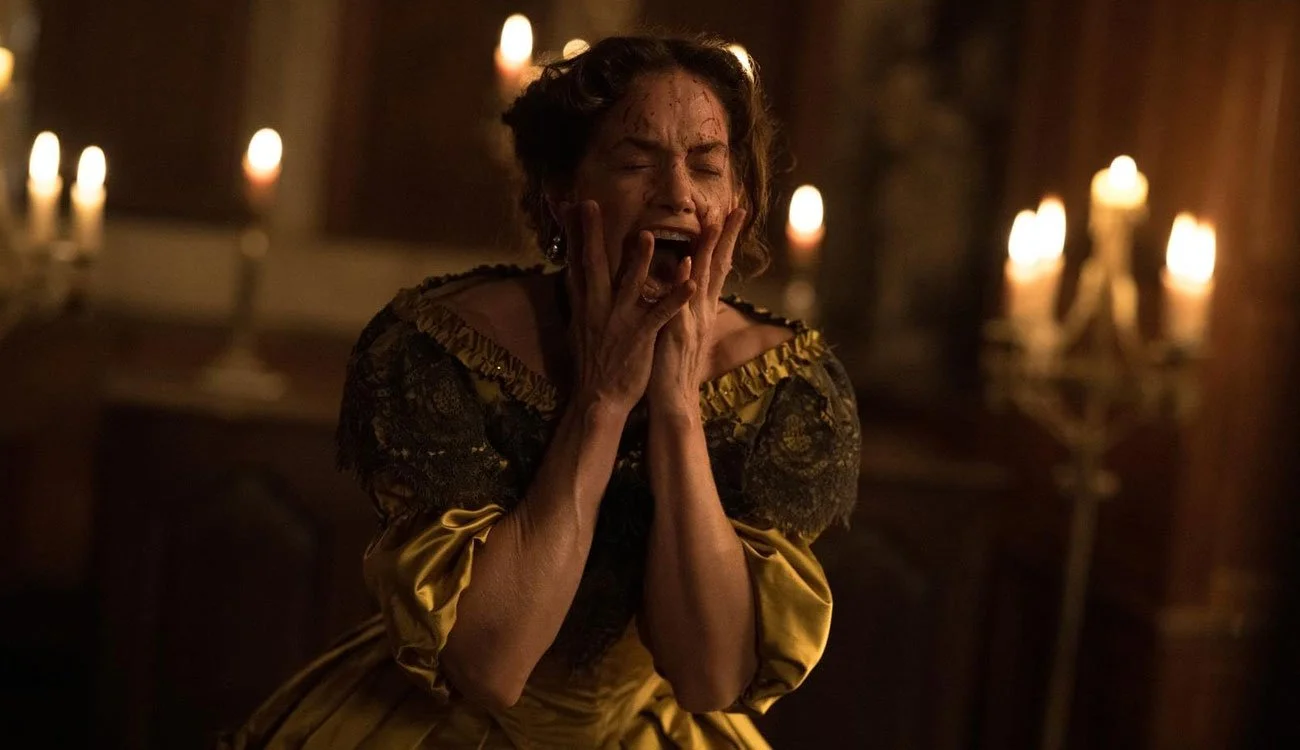
Tonally, Victorian Psycho is reminiscent of a few other recent horror entries. Notes of Lisa Frankenstein and Forbidden Fruits echo through the film, and it’s clear that many lessons were taken from the same horror comedies that inspired those films. Highly-stylized sets and striking photography accompany an almost absurdist script, crafting a unique narrative identity throughout. Namely, night photography employs a mix of techniques to showcase vivid blues while giving each space a stunning low light. The film’s story, however, is its weakest link. A specific element is established before the opening credits and is never paid off. Conversely, the film’s ending feels wildly abrupt, and is akin to the same feeling you’d get watching Regina George get hit by a bus. It almost feels like the ending to a different film altogether.
Although lacking in any consistent storytelling, a beautiful mix of narrative tones, stunning photography, and unique performances from Maika Monroe and the rest of the cast make Victorian Psycho a worthy watch for horror fans. The film is equal parts funny as it is impressive in its filmmaking, and will hopefully leave a lasting impression on its viewers.