
‘Dreams’ Review: A Profoundly Misguided Erotic Drama
Michel Franco’s ‘Dreams’ fails to meet the moment with a mostly empty erotic drama that takes a repulsive turn near its allegedly shocking denouement.
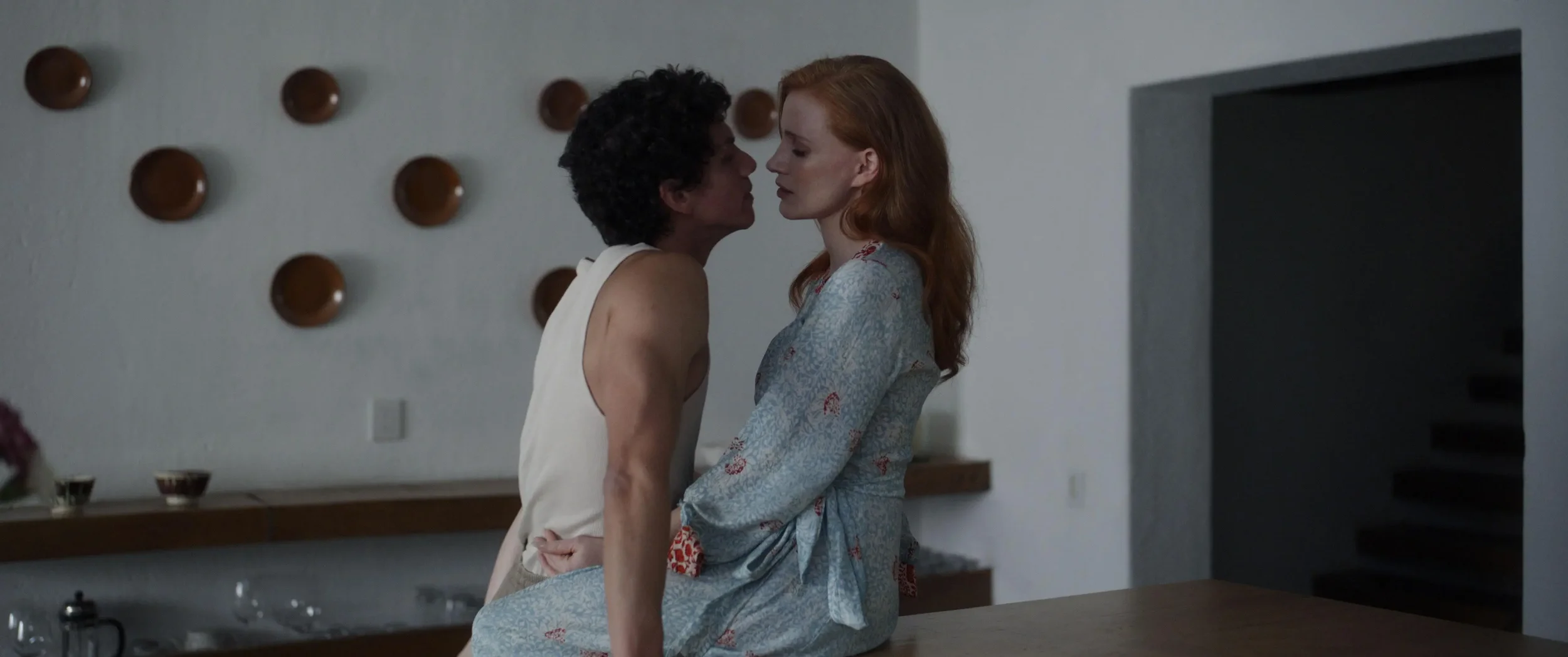
In the current, fascistic times the United States lives in, a film like Michel Franco’s ‘Dreams’ could very well serve as a parallel to what is unfolding. An undocumented immigrant has a secret affair with a prominent socialite at a time when the U.S. government is persecuting anyone who crosses the border illegally and is sending ICE agents to each corner of the country to catch them? If the latter part of the previous sentence is not the most accurate mirror of contemporary society, then I truly don’t know what is.
The film opens with Fernando (Isaac Hernández) crossing the border to San Francisco, where he arrives at the home of Jennifer McCarthy (Jessica Chastain). The two have known each other for a long time and immediately have intense, passionate sex. I’ll give credit to Franco for a few things in this film, one of them being how unafraid he is at staging drawn-out and profoundly erotic sex, the likes of which few seem willing to do in mainstream cinema, especially one starring Academy Award-winning actors.

The other is how controlled cinematographer Yves Cape’s visual style is. Its static, tripod-moving camera quickly envelops us into a world of forbidden lust and hidden gestures, where the two don’t want to see each other in public, but do as much as they can to make up excuses to be together. Franco’s choice to only have diegetic music exacerbates a sense of latent sexual tension that feels immensely palpable as he dresses Chastain in a bevy of great gowns, beautiful gowns, and consistently allures Fernando’s gaze towards her body.
Chastain is also incredible in this, her best collaboration with Franco since their first work together on 2023’s Memory. It’s the finest performance she’s given in a long time, at least since Kathryn Bigelow’s Zero Dark Thirty. There’s a controlled poise to her demeanor that immediately attracts anyone in front of her, and she is always in complete dominance of any given situation, until the story takes a sharp turn and never recovers, making us wonder exactly what Franco had to say in the first place. It’s a shame, because Chastain and Hernández have palpable alchemy together and develop a complex, often heartbreaking relationship, as Fernando’s plight prevents them from truly ever being in love with one another.
Had the film stayed in this direction and ultimately depicted the inevitable, it wouldn’t have been the profoundly misguided soap opera it becomes in its final sections, despite consistently rote dialogue that makes each character (Chastain included) sound like an emotionless robot. Conversations Jennifer has with her father (played by Marshall Bell) or her brother (Rupert Friend) don’t feel natural and hamper much of the unspoken friction that deliberately unfolds.
Without spoiling anything, what progressively unfolds becomes more reprehensible as the film progresses, leading to a final sequence of downright exploitative sexual violence that, in all honesty, comes out of nowhere and leaves audiences with a bad taste in the mouth. Subsequent events are also depicted with the subtlety of a sledgehammer, which makes the overall message Franco wants to imbue within the relationship feel rote and particularly distasteful, especially given the times the country lives in.
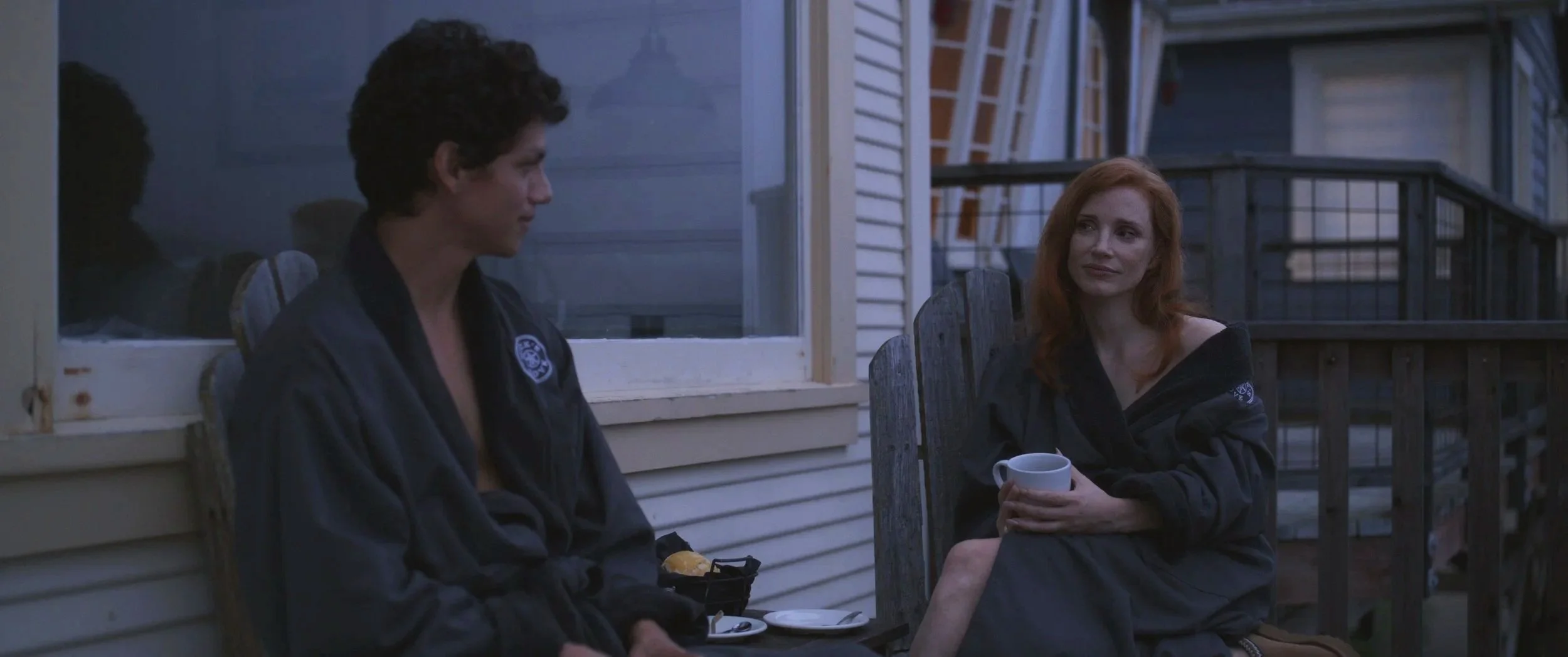
Of course, when Dreams was made (and ultimately premiered at Berlin), Donald Trump’s second presidency was not necessarily the world's focus. Having been released a year after its Berlinale premiere, the world (and politics) has taken a different, darker direction. The politics being depicted in Franco’s film are regressive at best, deeply xenophobic at worst, which feels strange given that the filmmaker is of Mexican origin, yet gives us one of the most offensive depictions of an immigrant story you’ll likely see in recent memory.
Why must the audience suffer through a gratuitous, sexually violent third act (Emerald Fennell must have ghost-directed this) if you’re not going to say anything about the people you depict, let alone the class relationship at the heart of the movie? Most importantly, why aren’t you saying something about Fernando’s sudden urges to exploit Jennifer’s vulnerabilities once he learns a piece of crucial importance to her? It all feels profoundly ill-advised, and culminates in a last scene of racist violence that is so unneeded one wonders exactly what Franco wanted audiences to impart in the first place.
One still wonders, but something is clear: Michel Franco is not a very good filmmaker, and maybe he should stop before he makes something even more offensive down the line.