‘The AI Doc: Or How I Became an Apocaloptimist’ Review: The End is Near
Directors Daniel Roher and Charlie Tyrrell offer a pragmatic vision of our potential Artificial Intelligence-dominated future with The AI Doc: Or How I Became an Apocaloptimist, even if it doesn’t go deep enough.
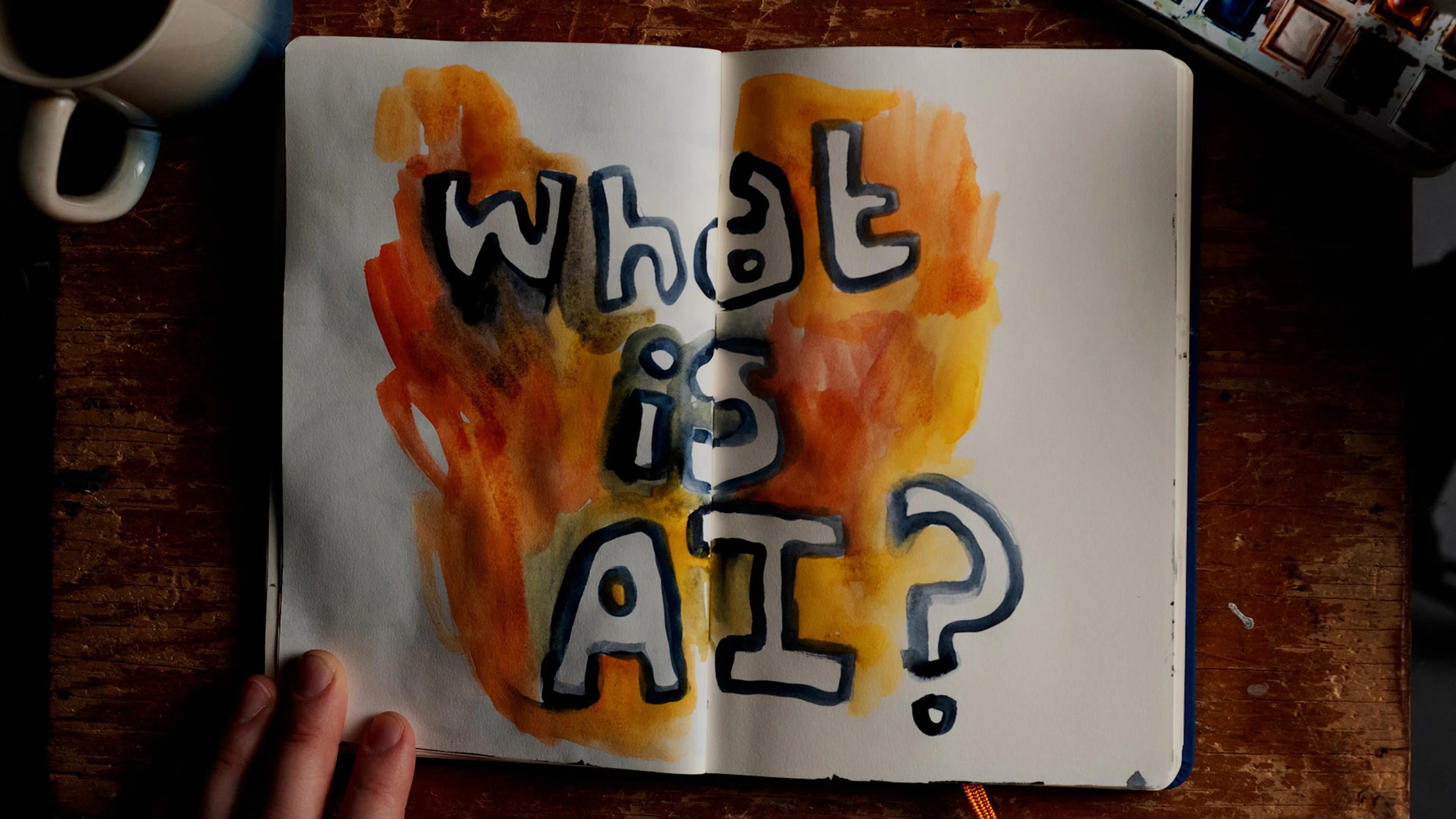
“AI is here to stay,” is what the snake oil salesman of Artificial Intelligence would want you to believe. But the AI bubble worldwide is popping. Or is it? At the very least, OpenAI’s Sora is shutting down at the end of next month. Most AI startups and significant companies focused on the technology are operating at major losses. Meanwhile, its CEOs are trying to convince the public that this is a technology to adopt and integrate into our everyday lives, even as its benefits are still being questioned. We’re promised the moon with such technology, yet most are using it for all the wrong reasons. Are we doomed, or will humanity flourish with the advent of AI?
This is the question at the heart of Daniel Roher and Charlie Tyrell’s The AI Doc: Or How I Became an Apocaloptimist, and – spoiler alert – it is not answered by the time the film ends. It’s such a complex subject in constant evolution that, even if its filmmakers were to meaningfully take a stance, one way or another, that conclusion would be dated by the time the movie’s released. Case in point: there’s an entire segment about Generative AI and the potential it offers to create anything you want with such software (i.e., Sora), but that app will no longer be on the web sooner or later. That segment no longer applies (for now).
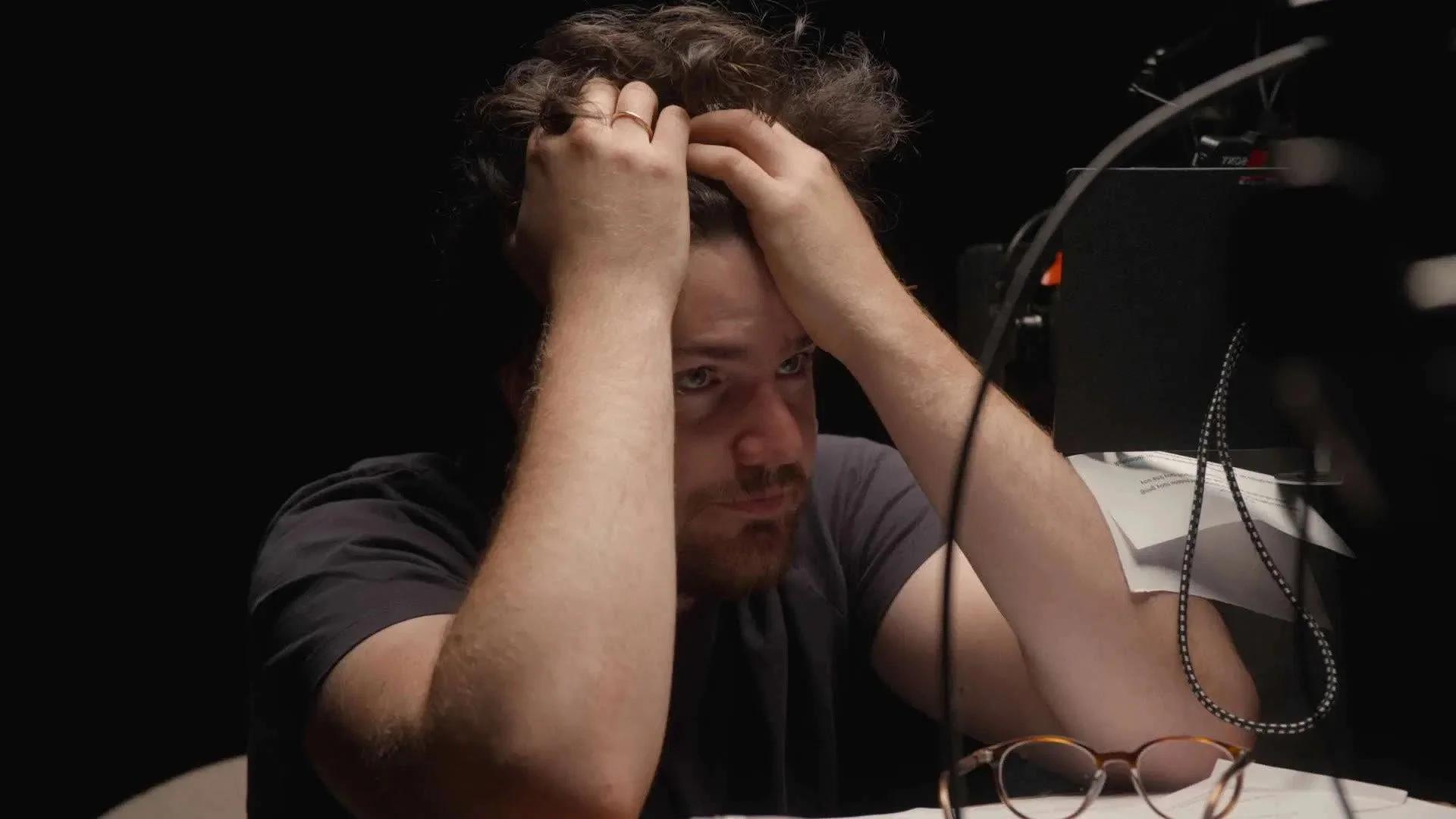
Conclusively saying “AI bad” or “AI good” when we don’t know what will happen in a few months from now is a fool’s errand. Maybe that’s why some audience members were eager to label the AI doc “spineless,” since it doesn’t dare take a position on the subject. However, Roher himself states that he doesn’t understand it. No one does. Why would he take a stance on a topic whose future is so uncertain that not even the biggest leaders can accurately predict what AI will do to humanity? With his wife, Caroline Lindy, he’s about to welcome a baby into an ever-shifting world, where the prospect of having kids doesn’t seem as tantalizing as it did just a decade ago. All he wants to figure out is, “What the hell are we doing?”
The thing is, none of the people he interviews has a genuine clue. Figures like Sam Altman, Peter Diamandis, Dario and Daniela Amodei, Demis Hassabis, and Guillaume Verdon seem to be pretty positive about where AI is going. However, they’ve essentially gambled on the technology working in their favor while corrupt forces develop Artificial General Intelligence (AGI) software that could topple the human race as we know it. AGI is built to surpass human intelligence. If you’ve seen one movie on that subject, it never ends well, yet so many developers seem pretty eager about shoving it all down our throats before even asking, “What the hell are we doing?”
This seems like an easy question to ask, but it’s more complicated when no one agrees on AI. Roher does a good job of balancing the potential benefits and risks of integrating such a technology into our everyday lives and offers no easy answers in that regard. It’s basically a game of “this could happen, and that would be bad” or “man, if we get this right, we may change the world.” There’s no certainty in anyone’s answers. We won’t know what will come of this until it happens, which isn’t a good way to sell anything to any consumer.
Still, Roher and Tyrell offer varied perspectives on the subject and don’t limit their talking heads to pro- or anti-AI activists. Renowned figures like Yoshua Bengio, Sneha Revanur, Eliezer Yudkowsky, and Yuval Noah Harari offer more nuanced perspectives on a technology that few seem to actually want to understand before selling it to the world. We’re trying to shove AI down everyone’s throats already to make a quick buck, but what if it retaliates against humans? What if it starts a war? What if AGI unleashes a deadly bioweapon into the world? These possible scenarios are here – and they’re terrifying.
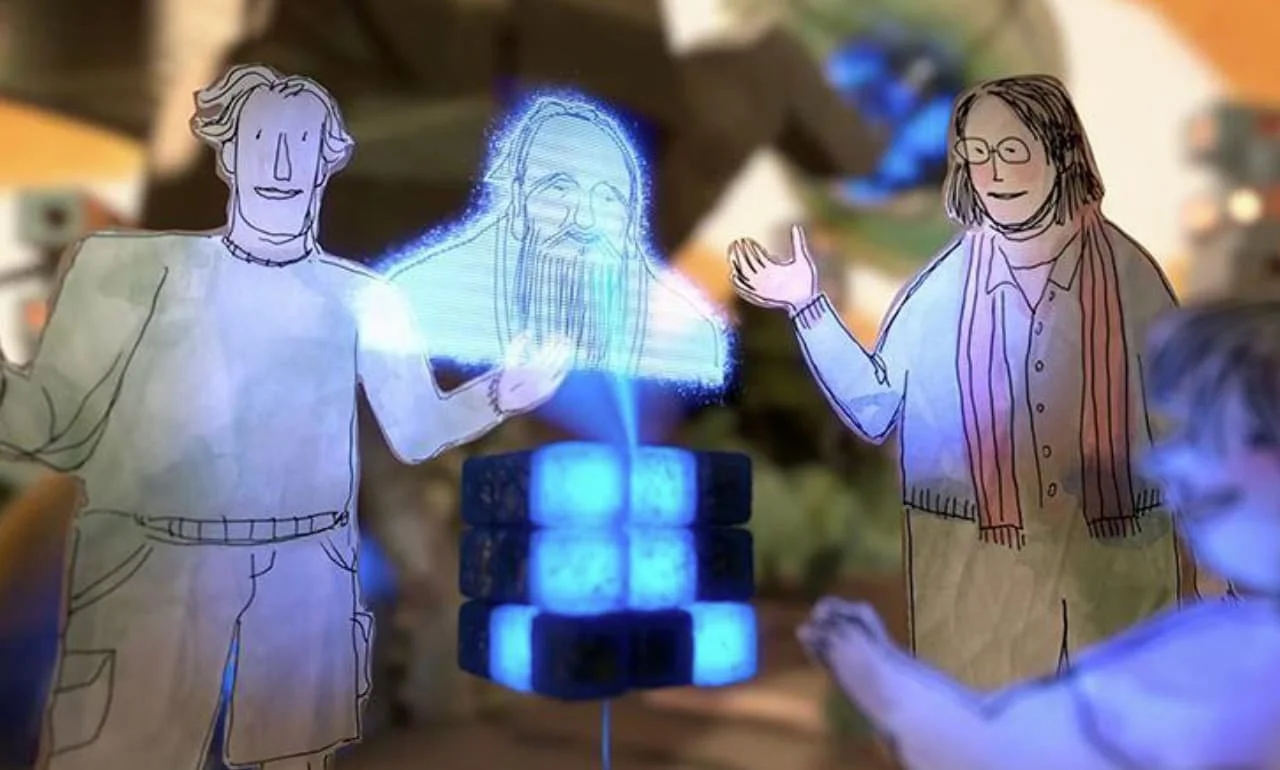
Roher and Tyrell will smartly vulgarize this information through paper drawings, stop-motion animation, and CGI to represent the AI overlords at the top of a “mountain of anxiety.” In that regard, the editing by Davis Coombe and Daysha Broadway is constantly propulsive and fast-paced, as rapid as the growth (and telegraphed decline) of AI. For better or worse, The AI Doc is Roher’s messiest movie, and purposefully so. To the best of his ability, he’s trying to make sense of something that’s far too big to isolate in a movie. People are fascinated by it. Others are repelled at the mere thought of AI. But when one bubble pops, another opens. It’s inevitable. It will happen. Is it the future? Probably not, but lying your head in the sand and pretending that AI can be defeated seems futile…
The main problem with Roher’s approach is his lack of challenge to any of his interlocutors. Allowing academics to speak freely to help audiences understand the heart of the problem is one thing; attempting to be best buddies with one of the world's most evil people is another. While Mark Zuckerberg and Elon Musk refused to be a part of the documentary (Musk allegedly accepted, but got “too busy” – sure, sure), Roher and Tyrell still managed to get Sam Altman to be interviewed. They have the golden opportunity to do something meaningful with him — but his vision of the world never gets challenged.
Roher won an Oscar for his gut-wrenching portrait of Alexei Navalny. You would think such a documentarian would have his guest say something about the multiple controversies surrounding OpenAI – his ties to the Trump administration and other autocratic governments, the wrongful death lawsuit following a 16-year-old who took his own life after he was advised by ChatGPT to commit suicide, his data centers draining critical water supply, allegations of sexual harassment and psychological abuse – something, anything to make him sound less sympathetic. It never arrives. Roher paints Altman as a would-be dad, excited about the future of AI. That’s it. And that’s all we’ll get from him. It’s embarrassing, and the closest the filmmaker gets to “spinelessness.”
Were it not for this stain, The AI Doc: Or How I Became an Apocaloptimist is a fairly effective documentary on a rather complicated subject. It doesn’t seek to take any position, which does hamper some sections of the film, but Roher’s filmmaking is intelligent enough to overcome at least some of its significant hurdles. Some audience members may not like that it has no answers, but that’s the point. We’re entering a world where developers are essentially throwing AI at a wall to see what sticks, and the results may not be pretty…