
‘Is God Is’ Review: The Year’s Best Directorial Debut
Aleshea Harris deconstructs the traditional tropes of revenge cinema through an adaptation of her own work in Is God Is, and intelligently prompts us to reflect on what this unnecessary bloodletting means in the eyes of her two tormented twins.
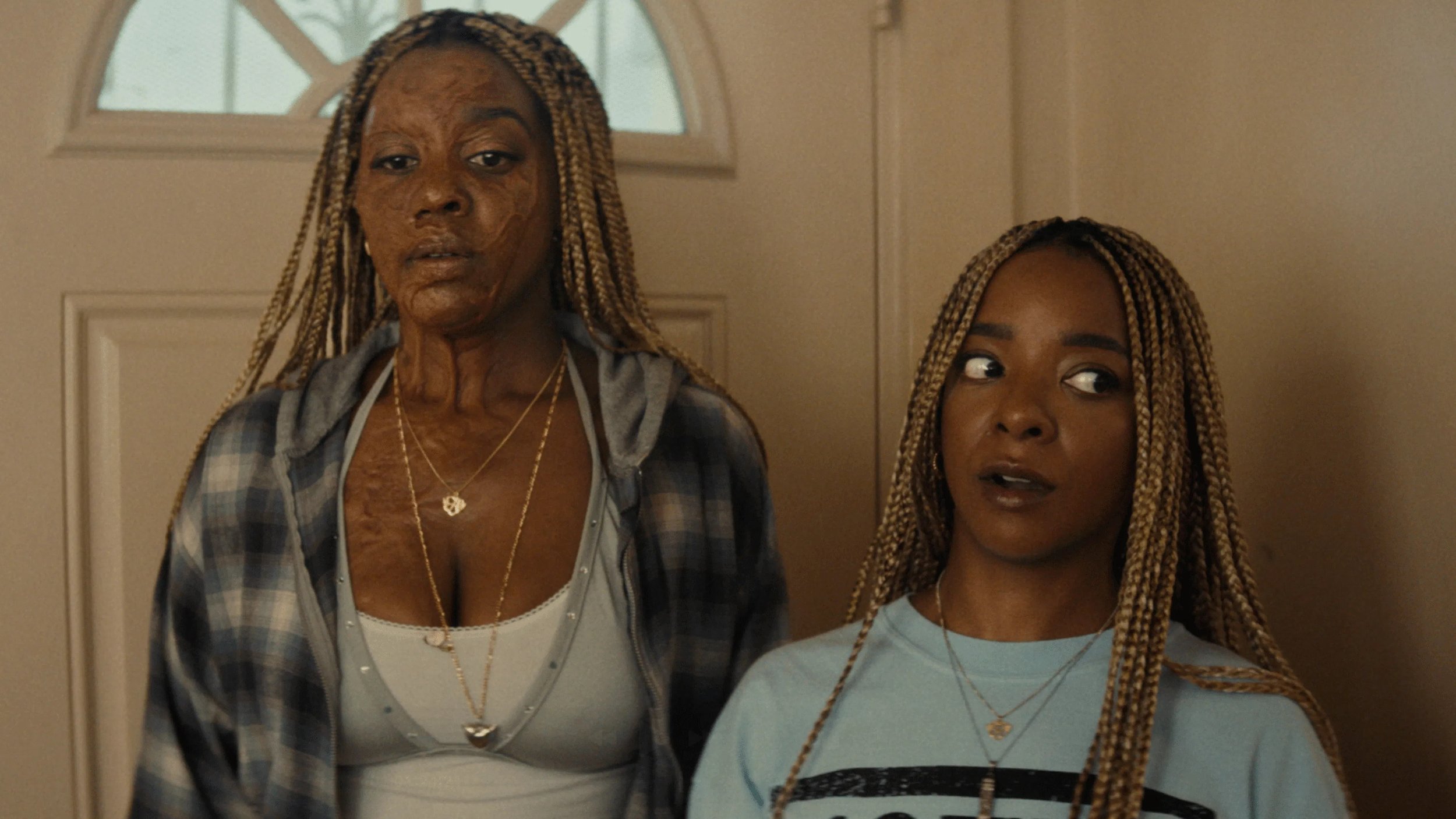
There’s something so intelligent about the way Aleshea Harris structures Is God Is that you almost don’t realize you’re witnessing a total reinvention of the form until about halfway through its 100-minute runtime. In a specific moment of hyperclarity, Harris shifts tones immediately when twin sister Racine (Kara Young) confronts her father’s (Sterling K. Brown) new wife (Janelle Monáe) on the choices she made upon learning of the criminal act that changed Racine and sister Anaia’s (Mallory Johnson) life forever.
Nothing significant will be revealed in this review, dear reader, but this change in atmosphere happens quite abruptly, as Racine understands there will be a cost to the violence she wants to enact on her father’s newfound family, after he left his twin daughters and wife (Vivica A. Fox) to die at his monstrous hands. Yet, such a pivot begins to refresh a sub-genre of cinema that has mostly defined Black art in the 1970s and had a significant period of dormancy after they became less profitable to make us rethink about its moral values and codes in an era that has grown more polarizing by the day.
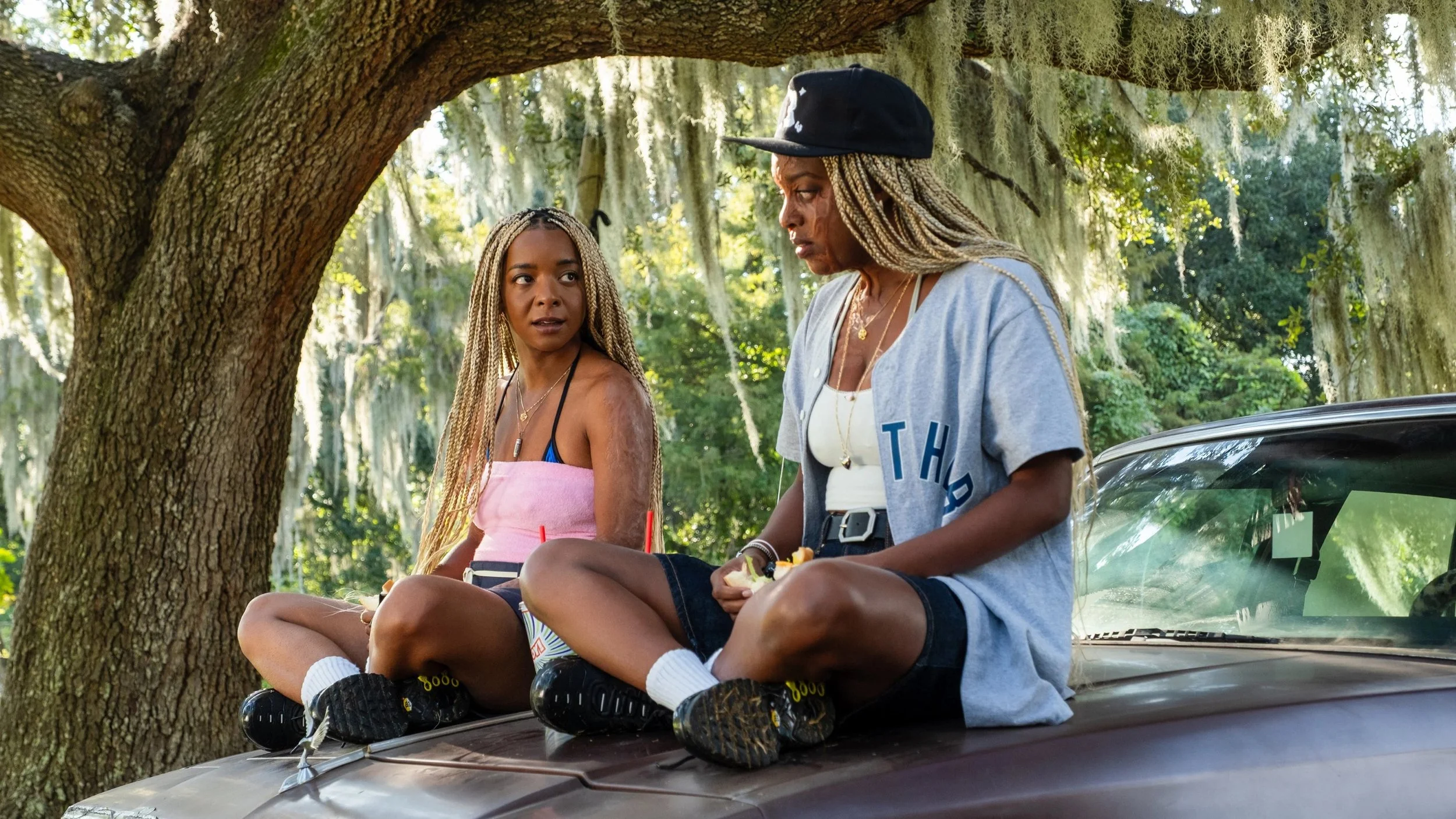
Such reinvention doesn’t happen everyday, but it certainly helps when Harris has something to say. After all, she adapts from her own play of the same name and makes the audience aware of the true cost of violence after a comedic introductory half introduces us to the protagonists and the stylistic flourishes its filmmaker will play with throughout the runtime. Both Racine and Anaia believe that God is their mother, who was thought dead after a dangerous fire permanently damaged their bodies. They reunite with her, on her deathbed, who tells them of the story that caused the fire, and asks the twins to kill their father, dubbed “The Monster,” for him. Embarking on a cross-country trip, they accept the job of enacting revenge for her after they find out the Monster is still alive.
In sepia toned flashbacks (minus bright red blood), Harris gives us an idea of who this monster is before we even get to see his face. Brown’s performance, likely his career-best, immediately posits the Monster as more than simply dangerous, but deeply cruel, as if the evil he carries was part of his own nature right from his inception. He’ll never take no for an answer. He wants to control every aspect – and person – in his life. When God places a restraining order against him and wants to separate, he does the unthinkable. We’ll find out that, even if he was in a brief relationship with a “Healer” named Divine (Erika Alexander), to atone for his sins, he’s never felt remorse. To him, burning his wife alive was a necessary act of retribution.

The funny and carefree opening sections of Is God Is are immediately hampered by a moment of violent carnage that, at first glance, may seem like the culmination of Racine’s emotional torment, as someone who has lived through hell ever since her life changed along with her sister. However, the way Harris frames the film’s killings speaks otherwise. Revenge films are often built on an emotional buildup that leads to the catharsis the characters have been seeking, and to a sense of satisfaction in the audience as they observe protagonists in the margins pursuing oppressive forces of control and successfully dispatching them.
There’s no catharsis to be found in Racine and Anaia’s quest for vengeance, even when they get to their ultimate goal. The bloodshed seems futile and unnecessary, especially when the two characters are confronted with other figures they didn’t factor in when their trip to the Monster’s castle-like home complex began. The camera never lingers on the violence. In fact, cinematographer Alexander Dynan consistently moves away from it. Yet, we can’t help but feel a certain sense of unease as we see Racine grow increasingly volatile in the face of the people responsible for having permanently damaged her life, even more so when the Monster fully arrives at the picture.
The road trip bit acclimates us to the twins’ specific traits and their inseparable bond, which is necessary for us to understand how the two couldn’t be more apart when Racine takes matters into her own hands and believes vengeance is the only possible outcome to heal their internal and external torments. The twins have been looking to overcome their shared trauma ever since the Monster’s horrifying abuse left them scarred and “ugly,” but none of the eventual brutality feels necessary. Violence only begets more violence and pain, which they will sadly learn the hard way after believing revenge is an act of righteousness, to undo the wrongs that were done to them.
In that regard, Harris draws a complex and multifaceted portrait of two Black women who refuse to be defined by their shared anguish but also recognize that their lives could be further healed by the wishes of the higher power they believe in. The realization that their act of payback will lead to nothing but pain comes too late, and what follows is simply devastating. The entire climax, in fact, contains the most astonishing demonstration of directorial control I’ve seen all year. The way the camera is blocked, revealing only parts of the Monster as he stands atop a pile of dead bodies and decides to make himself a ham sandwich with a bit of chips on the side, already puts a lump in our throats.
Before he even utters a word, it will slowly move towards his large mouth as he takes a bite out of the crunchy chip. The tension is already at its highest, considering the violence that came before, but the contrasting sotto voce tone of the Monster’s voice feels more terrifying than the imposing nature that has fomented in our minds up until this pivotal moment. Brown commands the screen with such a glacial demeanor that it becomes hard to look away, even when we fully know (and have been conditioned) not to trust a man who doesn’t even believe in the words he’s saying.
It makes the twins’ eventual confrontation feel all the more intense, even if it leads to a sobering conclusion we all saw coming. That said, to express such rage like this wouldn’t have been possible without Young and Johnson at their side, who imbue their respective twin protagonists with so much textured pain that we immediately know that it will not, in any way, be healed by more violence. But it doesn’t make the film’s final scene, a collage of past, present, and future connections the twins have had or are going to have, any less overwhelming.
This is a major directorial debut. It immediately positions Aleshea Harris as a force to be reckoned with in contemporary Black cinema, and Kara Young and Mallori Johnson as genuine talents with a bright future ahead of them following this movie’s incredible critical success. If it isn’t for their note-perfect line deliveries and mastery of shifts in tonal registers, Is God Is would’ve fallen completely flat. But Harris knows exactly what she wants out of her actors, and, most importantly, what she wants to say. It will linger in your mind long after the film’s final montage of pure poetic power because of how it repurposes our understanding of “revenge” as a concept and how it’s been treated throughout cinema history. By the time you’ll leave the theater, the thought of forgetting such an astonishing feature debut will be impossible.