‘Backrooms’ Review: A New, New Hollywood Is Here
Kane Parsons breaks into the Hollywood scene by adapting his own Backrooms YouTube series into a surprisingly intelligent and aesthetically thoughtful feature film.
For some reason, many critics have already dismissed the YouTuber-to-filmmaker pipeline, which has grown in popularity since Danny and Michael Philippou broke into the indie scene with Talk to Me and Bring Her Back. Of course, Shelby Oaks gave this latest Hollywood trend a bad name, but who are we to reject an entire crop of burgeoning directors because of one bad apple? YouTube is a platform that allows creators to express their ideas to the world. Creators can create an entire series with their own language and unwieldy ideas, which, in turn, prepares them for the world of filmmaking. This is no different from Sam Raimi making Super-8 films with Bruce Campbell before the two broke into the genre scene with 1981’s The Evil Dead.
At the age of 16, Kane Parsons began to conceive an entire web series based on the Backrooms creepypasta, conceiving liminal spaces on Blender and creating his own mythology related to an image he saw on reddit. It could’ve been a frivolous internet trend with no substance behind the images, but the twenty-two-episode series features striking images that conceive an entire world based on spaces that a research company fails to understand. We may be right to scoff at Harmony Korine when he boldly states that “IShowSpeed and Kai Cenat are the new Tarkovsky,” especially when he’s been making unwatchable garbage for a while, but why are critics so eager to reject YouTube filmmaking as legitimate?
The Backrooms was a major achievement for Parsons, not as a creator but as an artist. Not only does he know exactly when the creature that populates these backrooms, but he also possesses a masterful sense of tension building and knows what makes the spaces of our nightmares so terrifying: the ambient noises, the flickering lights, the sounds of the HVAC systems brewing in the background, and the imperceptible negative space that shapes a seemingly innocuous picture of Arnold Schwarzenegger as a monster.
Adapting that language to fit large-scale filmmaking conventions, with two Oscar nominees headlining (one whose recent film just won the Palme d’Or at Cannes), seems like no easy task. But Parsons knows exactly what he’s doing. Creating an entire world through one short film primes him to thoughtfully expand it in Hollywood, with A24 fully backing his vision. There will be jealous cynics who think that producers Shawn Levy, Oz Perkins, or James Wan actually ghost-directed the picture, but let me be clear. None of these directors could ever come up with the language Parsons has developed in his videos, which he brings to frightening effect on the big screen in the simply titled Backrooms.
It’s hard to discuss one of the most staggering examples of modern-day mythopoeia without revealing a single thing. After all, most of what’s in the backrooms is shrouded in secrecy, and Parsons would rather that a receptive audience follow his immersive camera by knowing as much as the researchers of the Async institute know: nothing. Or how the movie’s protagonist, former architect turned furniture store owner Clark (Chiwetel Ejiofor), attempts to understand a place beyond understanding. When he discovers the backrooms in his decrepit store, he genuinely believes he’s dreaming. When he tells his therapist, Dr. Mary Kline (Renate Reinsve), about it, she scoffs and believes he’s suffering from withdrawal symptoms related to the alcohol addiction he’s trying to kick.
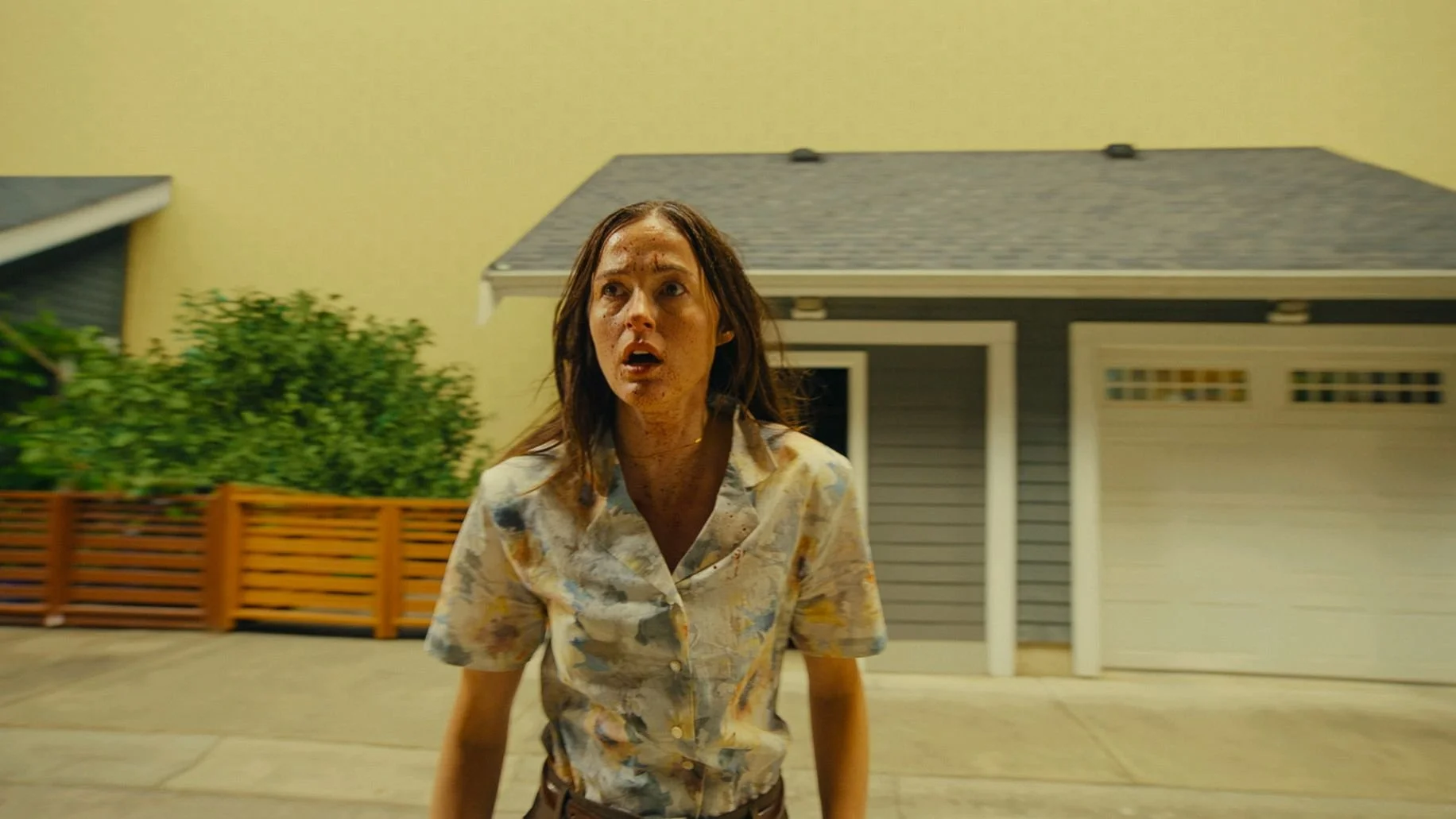
Kline will soon find out that the backrooms are real and hold a secret that no one is ready even to assimilate. I refuse to go any further in summing up the synopsis of Backrooms, an adaptation that’s far more intelligent than cynics will have you believe in trying to treat the term “YouTuber cinema” as derogatory when not all horror films made by YouTubers will result in the same disasters found in Chris Stuckmann’s dreadful Shelby Oaks.
Unlike that movie, Parsons has developed an actual language that’s slightly inspired by the films (and video games) he consumed when he was younger, but that also reflects his own conception of what horror should strive for, shaped by the influences he wears on his sleeve. In that regard, he thoughtfully expands on the mythology he created through his videos and finally realizes the language he’s developed in Blender in practical settings. It may not reinvent the formal wheel, but it is certainly effective, especially when the space is so vast and ever-changing that literally anyone can show up at any second.
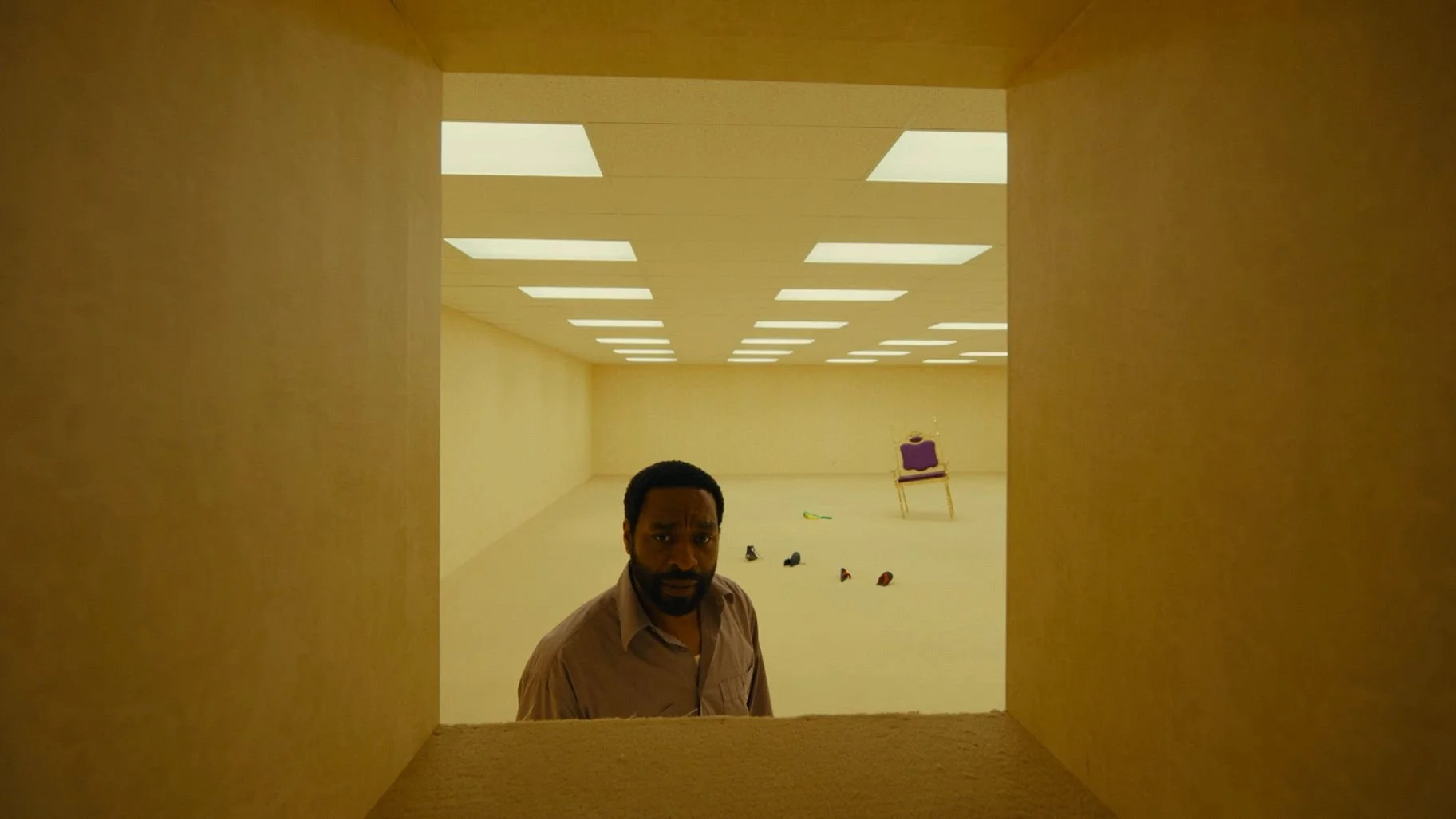
The film’s cold open is a genuine masterpiece. It effectively recreates the liminal horrors of the videos, but primes the audience in the film’s textures before they get a chance to meet anyone they’ll connect with. The best jumpscares lie in the atmospheric thrills of any given horror picture, not as a “gotcha!” moment. They should always occur in the most unpredictable places, to genuinely shock the audience where they least expect it. Parsons has developed that knack in his videos, and he carries it over to the big screen.
What’s smart about his filmmaking is how he knows he doesn’t need to show everything. In his series of videos, the creature in the backrooms appears exactly three times, in the three “found footage” segments. The simple idea that it’s there automatically scares us. Knowing that there’s something in those backrooms, while the film begins, is enough to ratchet our heart rates to unhealthy – potentially dangerous – places.
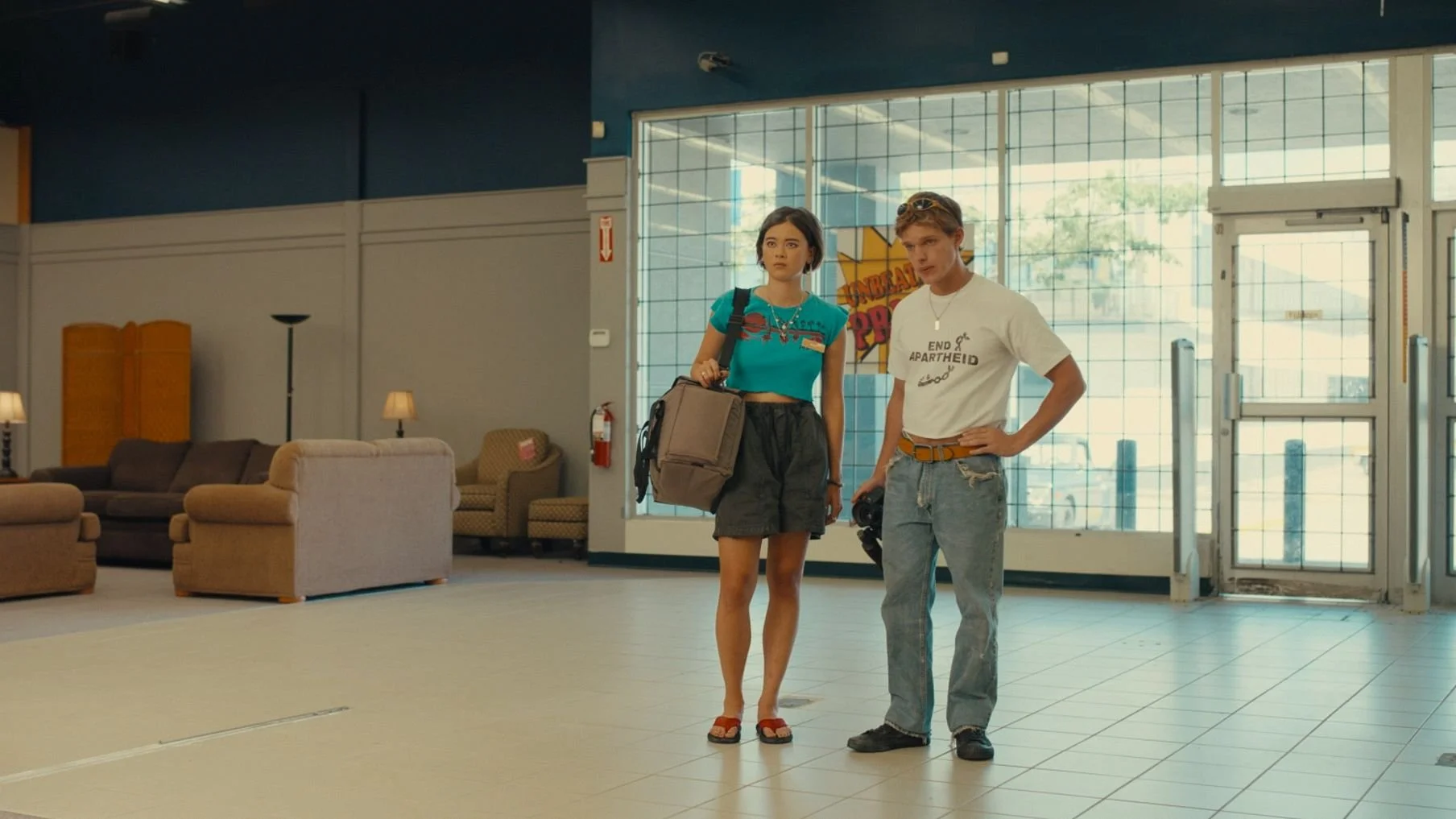
In a similar vein, the film’s midsection, where Clark explores the backrooms with his employees Kat (Lukita Maxwell) and Bobby (Finn Bennett), visualizes something cursed, as if you’re watching something you’re not supposed to view. Like the videos, Parsons takes his time, and that’s his greatest asset. We know there’s something there. He doesn’t want to show it to us until the tension is so palpable that the only release is a slight glimpse of a thing no one actually knows what it is, because of its changing shape and demeanor. It’s only when Backrooms begins to develop its archetypal characters that the movie slightly loses momentum, but not enough to make the film’s images feel unshakeable.
With the aid of cinematographer Jeremy Cox, Parsons is in complete control of his camera and crafts frames of vivid, imaginative power. He knows exactly where to place, block, and move his device, whether it's an ARRI 65 or a DV-esque camera that emulates the VHS format we grew up with, viewing scuzzy home videos of ourselves now lost in the ether of technological progress. The film is also a marvel of production design and visual effects, consistently blurring the lines between what’s a tactile environment and a fully virtual one. Were it not for the 3D-rendered characters that pop in and out of Parsons’ videos, I’d be fully convinced that the Backrooms exist as real spaces waiting for all of us to explore and be trapped in.
Having Ejiofor and Reinsve as leads also helps give this internet mythology some real legitimacy on the big screen. The two are highly expressive (and theatrical) performers whom Parsons knows exactly how to employ. Ejiofor has always thrived on giving his characters emotional depth through precise gestures, while Reinsve’s face conveys a litany of complex feelings in a single subtle inflection. Neither actor has much to work with (the screenplay doesn’t make much narrative sense, and it shouldn't). Yet, they’re able to transcend Will Soodik’s paper-thin characterizations into fully-fledged, three-dimensional human beings.
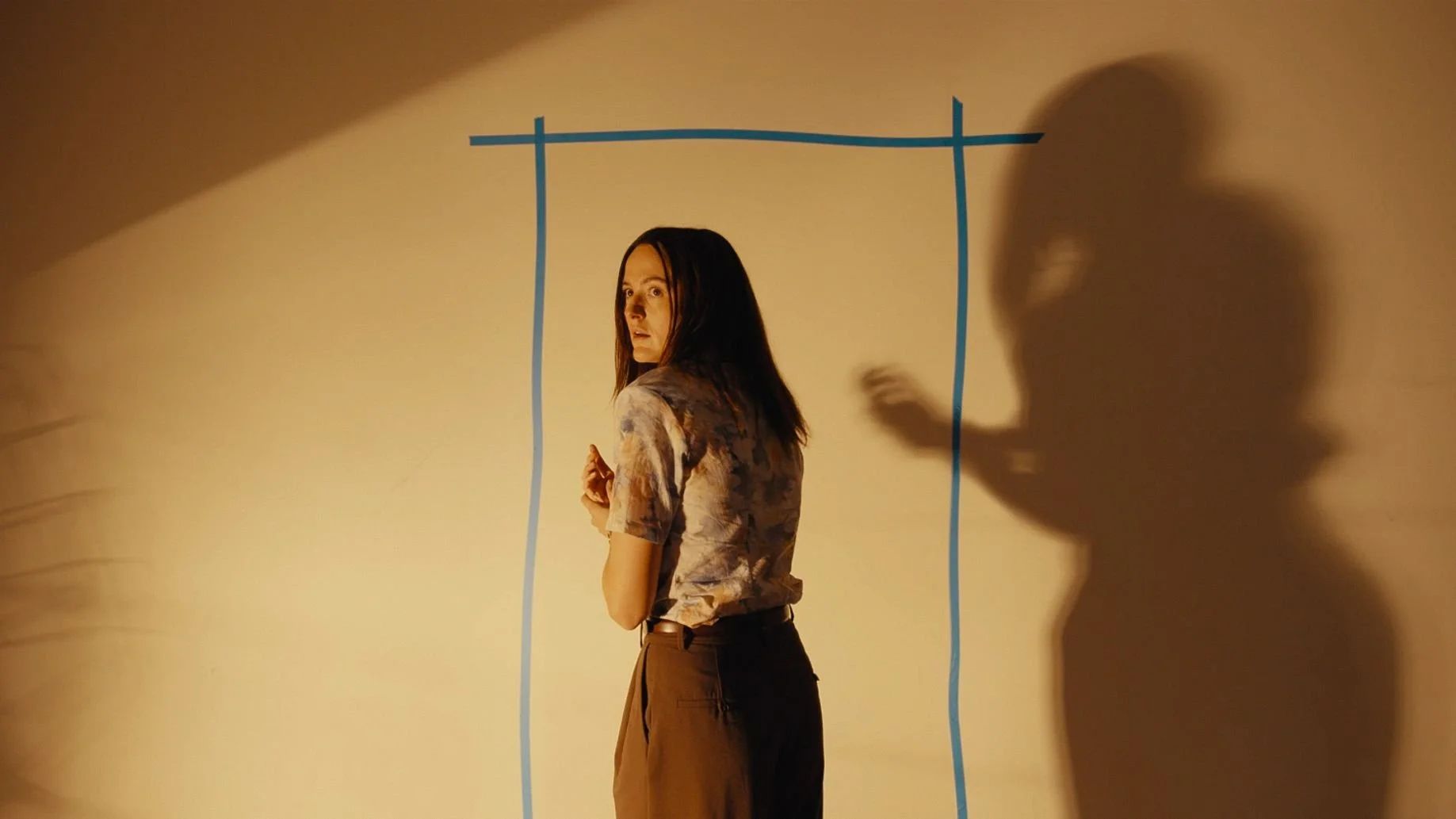
If Parsons weren’t so keen on staging a late-stage soliloquy from Ejiofor that comes out of nowhere, this transition to filmmaking would’ve been pitch-perfect. No one can deny his prodigious mastery of tension-building and atmosphere, a purely visual (and aural) technique that the best formalists will perfect over the course of decades. Parsons was sixteen when he made his first Backrooms short. He’s now twenty. He’s developed enough of a foundation for the film to be one of the year’s most playful genre exercises, not only in the images he’s crafted but in the music he composed for the picture. It’s all confidently expressed in ways that few burgeoning directors of that age can accomplish.
Most “young” filmmakers aim to passively imitate others and never carve out their own artistic identity in the people they look up to. Parsons isn’t one of those people. His Backrooms is one of the rare examples of modern mythmaking that actually works because it seeks to create its own universe and offers its audience little to no answers in the process. The people at Async are as confused and terrified as we are. They have no idea what they’re dealing with. We have no idea what we’re looking at. That’s the scariest part about this movie. Never again will “YouTuber cinema” be used in a derogatory way, because a New Hollywood 2.0 is brewing. Studios are in for one of the most significant reckonings of this generation, following the successes of Mark Fischbach’s Iron Lung and Curry Barker’s Obsession. I’m not quite sure they’re ready for it.