
'Her Private Hell' Review: Refn's Latest Confounds Like Only He Can
the renowned danish auteur’s first feature film in a decade is a return to his signature impressionism, with glimpses into his own private hell
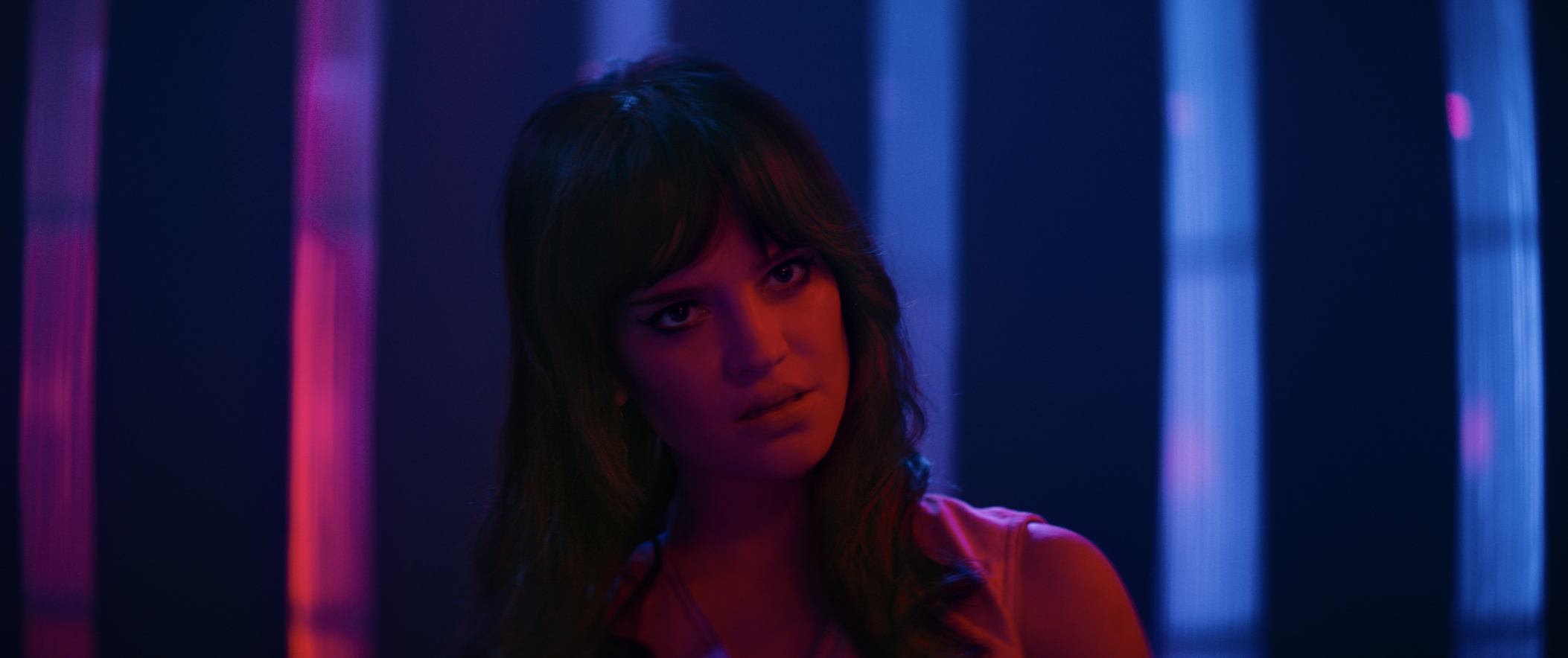
Nicholas Winding Refn’s career, much like his films, can in short, be described as singular. Refn, or often referred to by his initials, NWR, carved a name for himself with his highly stylized crime movies (ie; the Pusher trilogy), before venturing into North American work with more Hollywood talent, then delivering some of his most renowned work (Drive, The Neon Demon) After spending a decade making television and being briefly sidelined by a major health crisis, Refn returns to the world of feature films with Her Private Hell, which follows star actress Elle (Sophie Thatcher) as she navigates her identity, weird psychosexual relationships, shooting a science fiction film, and seeing visions of an American military officer seeking revenge his murdered daughter, all while contending with a masked killer on the loose in the futuristic city that plays host to.
If this brief yet loaded logline wasn’t enough of an indication, Her Private Hell tackles a hell (pun intended) of a lot for one film. The result is an alluring neon smorgasbord that presents a metric tonne of interesting ideas and concepts, with varying degrees of success in their respective exploration. From the get go, the film puts us on the back foot, with its intentionally stunted dialogue, often delivered with much stacatto, oscillating between deadpan or exaggerated readings. Though none of this should be alienating to longtime Refn enjoyers, their specific inclusion in Her Private Hell has an extra layer of isolation from our reality, with the permeating mystery of the unnamed futurist city that can best be described as a mixture of EDM music video aesthetics, contemporary luxury spaces, and the aura of a giallo film, so much so with the latter that this review could have disingenuously been called ‘Refn goes giallo’ or something along those lines, but to do so would be to completely ignore Refn’s many idiosyncrasies. Plaguing the city is a literal and prophesied mist, analogous of uncertainty and change at face value, and narratively ‘enables’ the logic of surrealism and hallucination that the film spends much time with, but can also be read in another major and meta-textual way that will be touched upon later.
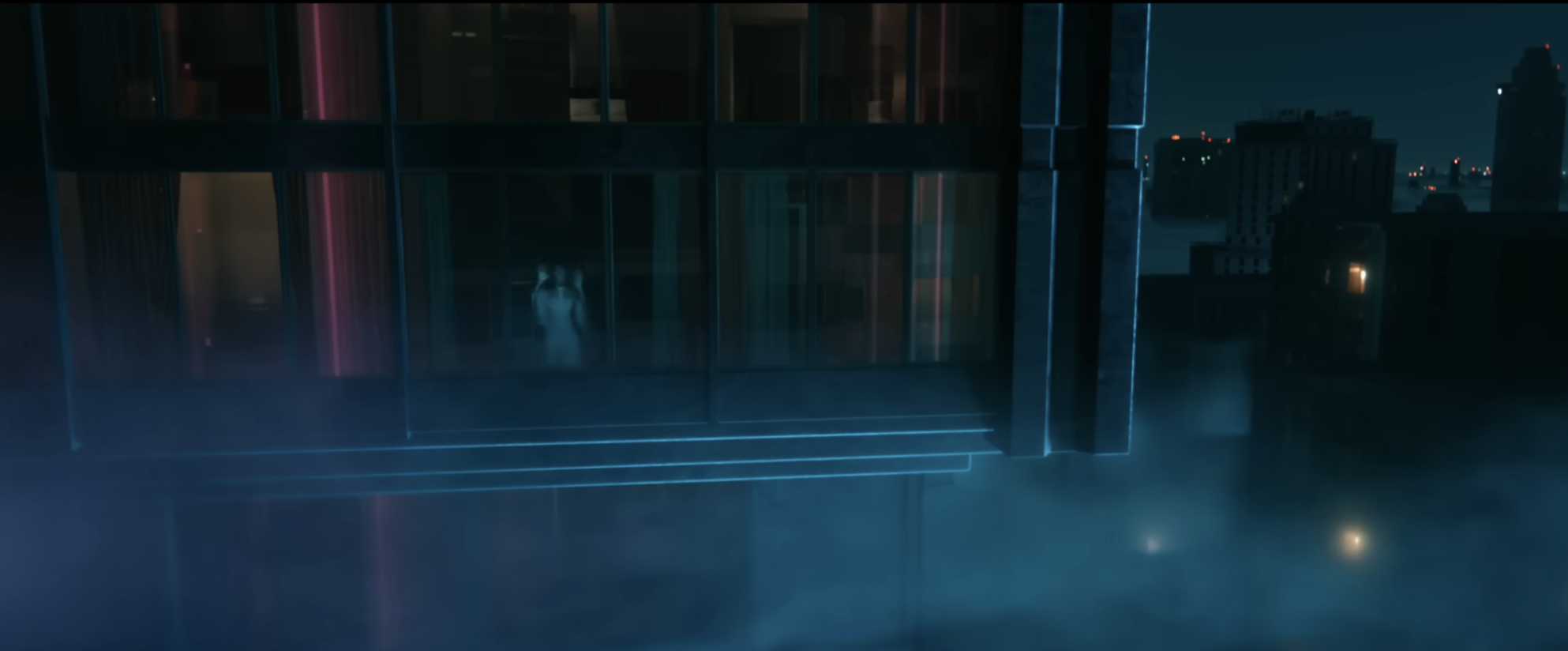
Much like this mist, the journey of our protagonist, Elle, is absolutely more spiritual than narrative. Elle arrives in the central city to shoot a science fiction film, steeped in a heightened look reminiscent of classic Star Trek pastiche, with her co-stars, influencer Hunter (Kristine Froseth) and stepmother/ex-flame (yes, you read that right) Dominique (Havana Rose Liu). The three have been encouraged to do so on behalf of Elle’s action star father Johnny Thunders (Dougray Scott), claiming that working on the film can be something of a healing experience for Elle and Dominique’s complicated relationship. With the aforementioned decade-long gap between Refn working on feature films, this idea of a film shoot as a healing experience can be understood as a kind of metatextual interplay, made apparent by his recent appearances for Her Private Hell at the Cannes Film Festival. There, Refn discussed his major health struggles, including a near death experience where he suffered a leaking heart. Thus, it’s hard not to see this very busy tonally film where a strange, violent killer literally rips open the chest of unsuspecting victims amidst a literal storm of uncertainty as a 2 hour snapshot of NWR’s brain working through his traumas.
Make no mistake, working through the macabre and uncomfortable parts of modern existence through impressionism has been Refn’s bread and butter, and we still see him explore so many themes from his previous works, with Private Kay (Charles Melton) and his violent, muscular descent to hello echoing Only God Forgives’ quiet yet confounding explorations of masculine violence, and the relationship between Elle and Dominique echoing the same film’s warped psychosexual dynamics pertaining to ineptitude, assumed identity, and parental relationships. While all of these dynamics are very much at play in Her Private Hell, rarely do they coalesce in a manner that feels cohesive tonally, and it makes for a sort of irreconcilable disparity between the two halves of Elle’s life. To play devil’s advocate to this exact point, there is a line early on in the film where the idea of a ‘stardust’ life is discussed in relation to Elle, which seems ironic given her deeply bizarre and tumultuous journey to come, and yet, her hazy, interloping visions of Private Kay’s visceral quest can still be seen as such. Smarter minds than I can make a stronger case for Kay’s search for his daughter running parallel to Elle’s emancipation from her own paternal woes, visualized through the form of her dealing with the torment of the murderous Leatherman, and if nothing else, NWR keeps everything compelling, even when the film is at its weirdest.
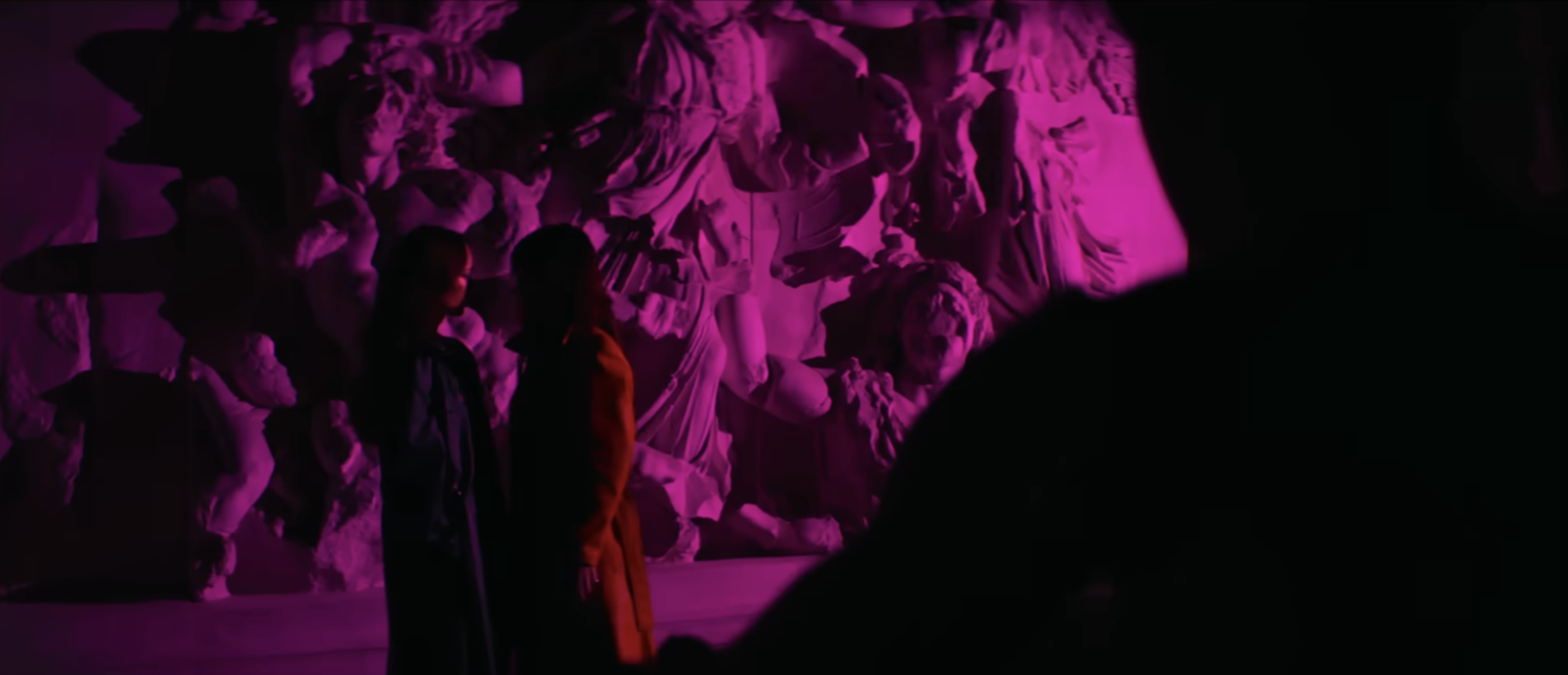
For as much as Her Private Hell densely populates its 109 minute runtime, a sense of absence, both intentional and not, prevailed with my experience of the film. As a visual and sensory experience, this piece absolutely succeeds, yet its glimpses of such compelling thematic exploration ultimately yield diminishing returns as a narrative film. Elle as a character is strangely developed, and you’d be hard pressed to aptly describe her, yet Sophie Thatcher prevails. Thatcher wonderfully embodying Elle’s angst, desire, fury and general sense of unease amidst it all. The film’s most dramatically potent bits come from the scattered yet mostly effective scenes between Thatcher and the ever-wonderful Havana Rose Liu. Rose Liu is very evidently having a great time revelling in Dominique’s ‘femme fatale’ tendencies, and has a complete grasp on the stylized dialogue, delivering some wonderfully pulpy line reads. While compelling, the relationship between Elle and Dominique is ostensibly the film’s most warped, and here emerges another strange disparity with the film, and one that doesn’t necessarily feel like it meets a satisfying conclusion on an emotional nor narrative level.
In any case, this review’s great many critiques should not be seen as an indictment of the film as some kind of wholly nonsensical mess. Many days removed from my viewing of the film, this writer’s thoughts return to the film, both in a sense of mild confusion and enduringly strange admiration. Though its eccentricities outweigh any sense of traditional clarity, the film’s undeniable style, high hit rate with dark comedy, and devoted performances make it tough not to want a more clear way of dialing into the film’s proverbial frequency. Yet, there is undeniable value in this film as a representation of its director’s experiences, influences and obsessions rolled into this very impressionistic gumbo. Perhaps the best advisory that can be given is that the more you can surrender yourself to the film, the more rewarding the experience is likely to be. Refn himself has sadly admitted that he has a shortened lifespan, and that he “is going to make damn use of that to live life to the fullest,” and if nothing else, Her Private Hell certainly lives up to this, in ways both exciting and confounding.