‘Teenage Sex and Death at Camp Miasma’ Review: Schoenbrun Deconstructs Slasher Cinema In This Brilliantly Subversive Satire [Fantasia 2026]
Jane Schoenbrun tackles a lot in ‘Teenage Sex and Death at Camp Miasma’ that it almost feels like it’s going to collapse in on itself, until it doesn’t and opens up in ways you never expected from the outset.
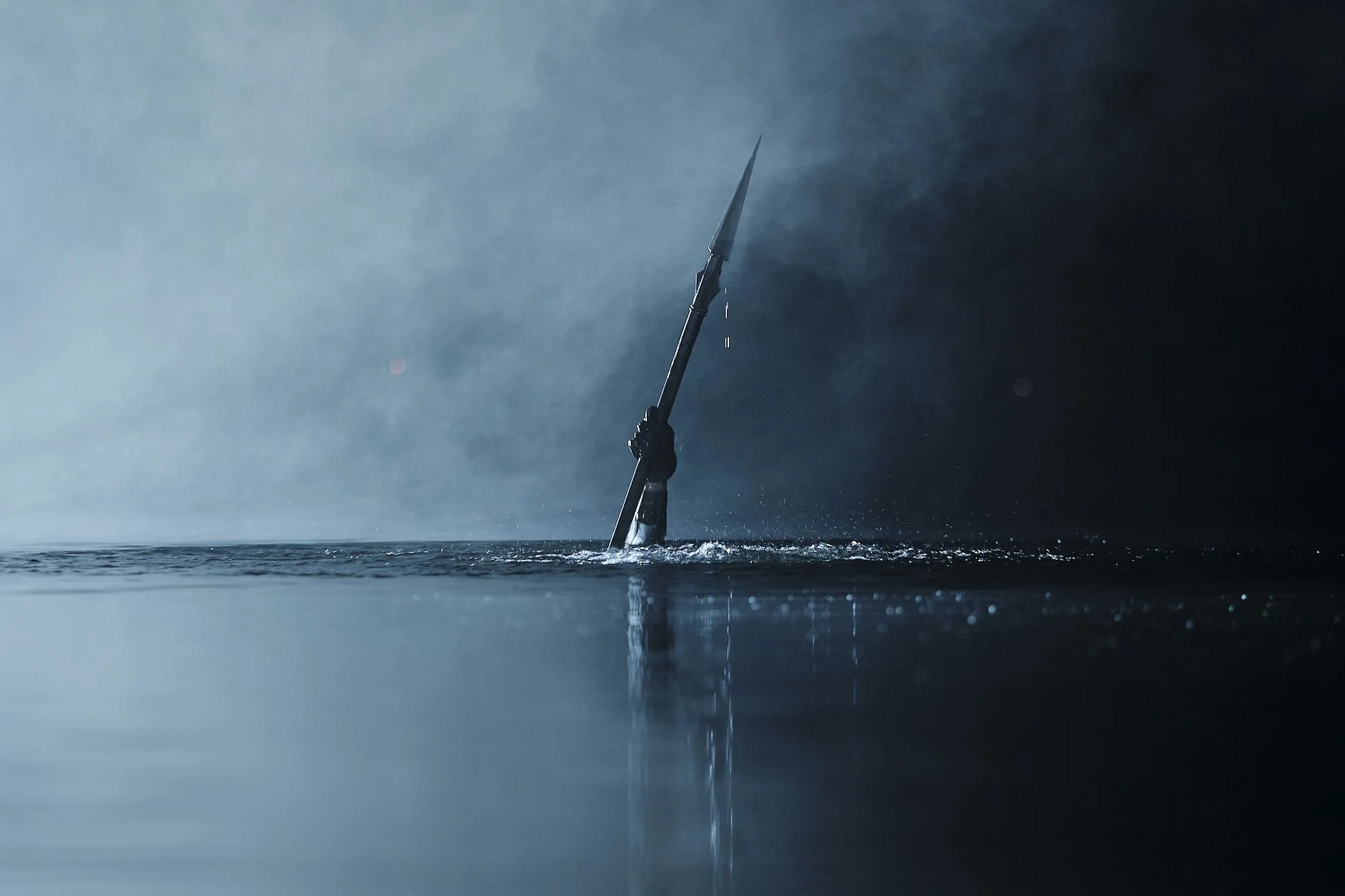
‘Teenage Sex and Death at Camp Miasma’ opens with the year's most soul-shocking scene, which may not seem significant at first but unlocks the entire picture. The Jane Schoenbrun-directed slasher, which had its Canadian premiere at the Fantasia International Film Festival alongside the director and star Hannah Einbinder in attendance, begins with a first-person view of a movie set as a camera is being set up. As soon as “action!” hits, a scene of extreme, almost expressive, gore is laid bare, giving us our first taste of what the fictitious Camp Miasma slasher series was all about, specifically how its killer, Little Death (Jack Haven), operates.
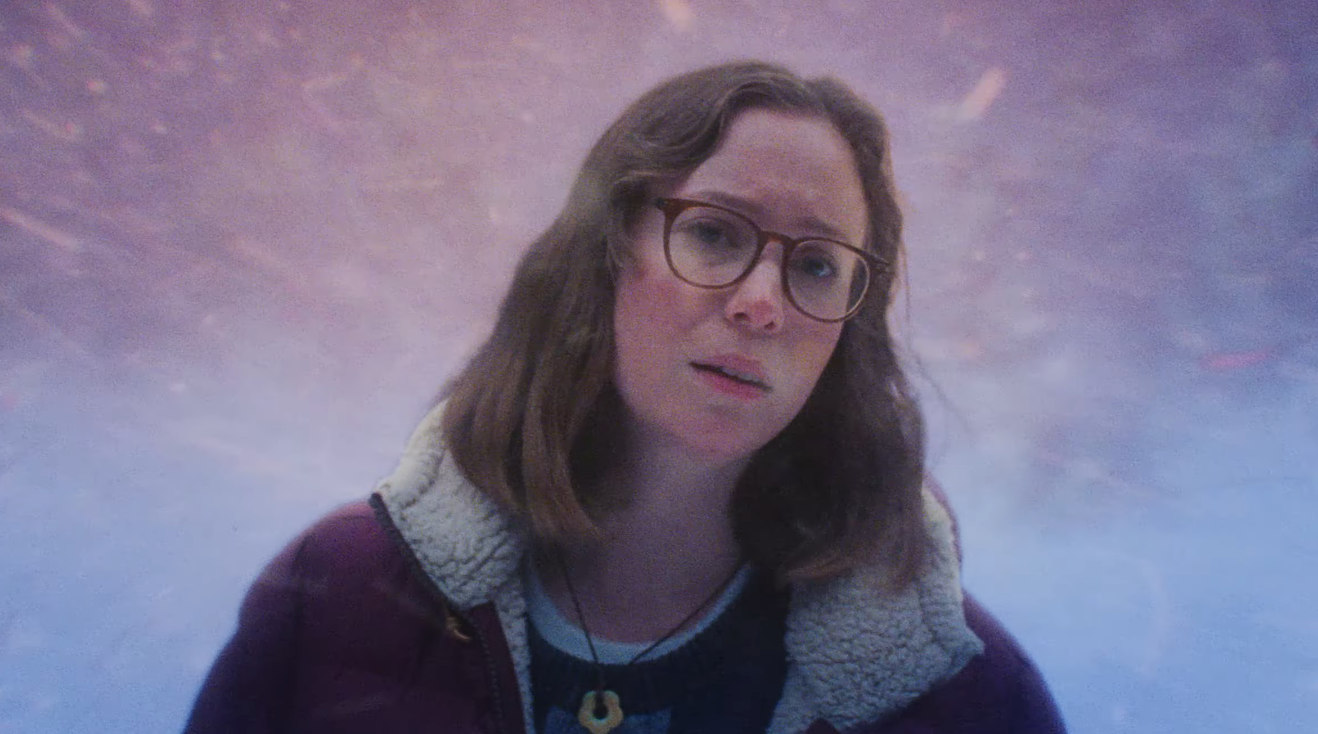
Schoenbrun’s third movie, following the successes of We’re All Going to the World’s Fair and I Saw the TV Glow, is incredibly specific in its research on slasher cinema and the state of moviegoing as a whole. An opening credits sequence gives us an idea of the inspirations the filmmaker is looking at, from Friday the 13th to a broader popular culture, which puts us inside the headspace of ‘Sundance Wunderkind’ Kris (Hannah Einbinder), a burgeoning director in the hopes of reviving the eternal Camp Miasma franchise for a contemporary audience. The studio that will finance the film wants the project to be “elevated” (“because of woke,” as Kris put it), but the director’s vision is much more personal.
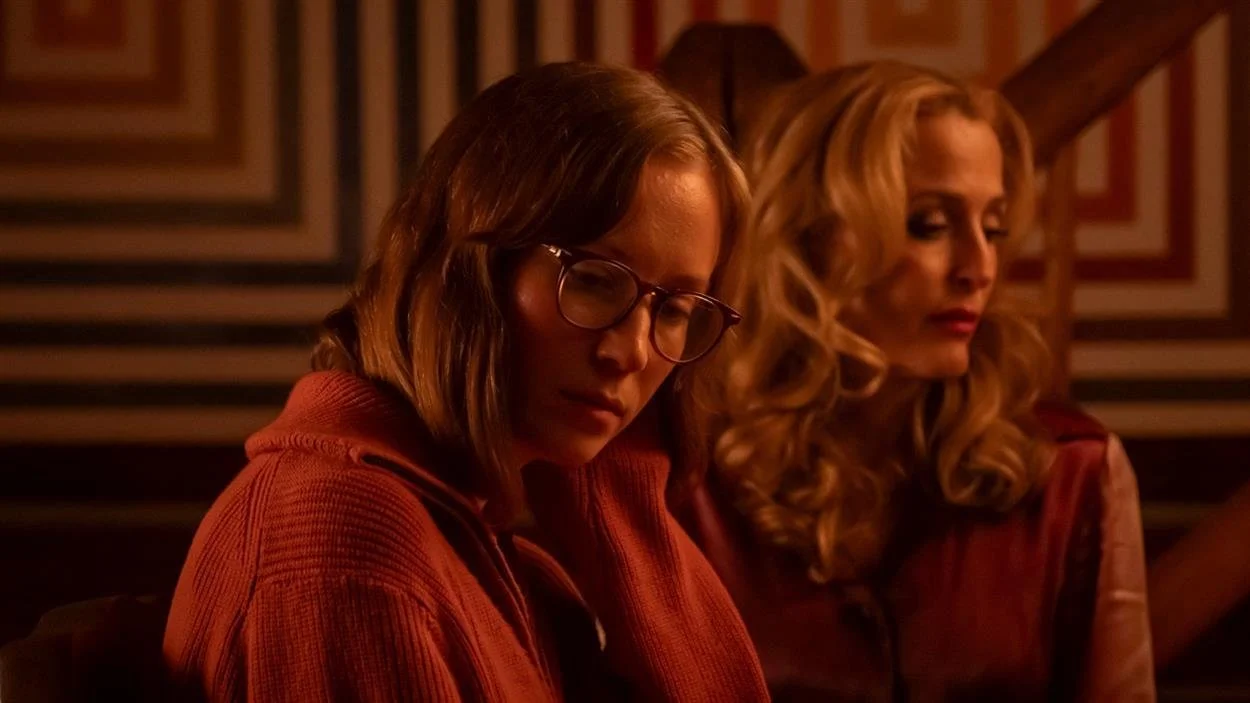
So personal that she travels all the way to the original location of Camp Miasma to track down the first film’s star, Billy Presley (Gillian Anderson), a Norma Desmond-esque recluse who didn’t act in another entry of the franchise after being the original final girl. Everyone has forgotten about her, but not Kris, who knows that Billy is the key to the movie she wants to make. From there, everything starts to blur. Teenage Sex and Death at Camp Miasma is not only a razor-sharp satire of corporate Hollywood executives who have no idea what goes on inside the mind of an artist if it doesn’t mean “money,” but a deeply personal portrait of our obsessions with cinema and the personal connections we make as the movies that leave a lasting impact on us permanently alter our psyche.
Dissecting such an object is difficult, and it will instill an array of subjective perspectives that will undoubtedly arrive once the film reaches a broad audience. Some writers will focus solely on how Schoenbrun incorporates the “meta” element of the story into their picture, while others will discuss the trans and queer allegory at the heart of the movie. Genre cinema, as Kris’ queer awakening, is an essential moment for understanding the protagonist’s perspective, especially her relationship with Billy. However, Teenage Sex and Death at Camp Miasma throws so much at the audience that assimilating it firsthand and parsing through all its ideas seems like a daunting task. This review will focus solely on my experience, and one can’t pretend to be objective about a movie that has so much to say about so many things, but I can give a few words that best describe my experience watching this masterful genre gem.
Teenage Sex and Death at Camp Miasma marks a major departure from Schoenbrun’s quasi-metaphorical storytelling that has defined their first two movies. It is far more playful in its aesthetics than the gloomy tales of both World’s Fair and TV Glow. From its candy-colored painted backdrops that put Kris in a dreamlike world between fiction and reality to its structure that floats between various tonalities, it always makes us aware of the artifice of cinema at every turn, whether by showing what brought the Camp Miasma films to life or the movie we’re watching. It’s also funny as hell – like really funny. That’s what caught me off guard the most, because Schoenbrun had sort of established patterns within their last two movies.
These patterns are still present, especially when depicting the story of Little Death and specifically focusing on that character, but are much less predominant. Instead, Schoenburn offers a pertinent satire of the current trajectory of modern Hollywood filmmaking, where profit is prioritized over artistry and individual, singular visions. This is illustrated through bit parts: Sarah Sherman as Kris’ agent, who prefers to hang up on the filmmaker’s calls rather than hear her out, and Dylan Baker as a producer with no real understanding of what makes a movie successful beyond the dollar signs attached to the talent. When Kris opens her heart to the team that is making this film possible and lays it all out in front of them, Baker’s initial response is “What the f— was that?”
While funny in isolation, it highlights a core problem plaguing our modern moviegoing landscape: an incessant obsession with weaponized nostalgia and franchises, without understanding the appeal of those franchises through the talent they hire to bring them to life. It’s making IP-driven films for the sake of making IP-driven films. No purpose other than “Don’t ask questions, just consume product and get excited for the next product.” Comedy thus becomes the film’s greatest asset, especially in luring the audience into its ever-changing shot compositions and expressions that draw on our modern sensibilities and place it firmly in the camp of a great 80s midnight movie.
Most importantly, though, Schoenbrun taps into something that few have been able to capture, but they’ve done this three times now, through the internet in We’re All Going to the World’s Fair, television with I Saw the TV Glow, and now with genre cinema. Describing it in words won’t do it justice, because it’s so personal that whoever reads this review might have a completely different viewpoint of what I’m going to lightly touch upon. Through Kris’ gaze, as she watches the Camp Miasma films, Schoenbrun captures a feeling that few have been able to express this vividly on screen, of what it feels like to not only be transported by what you’re looking at, but feel as if the moving images are speaking directly into your soul and awakening something lurking deep within you.
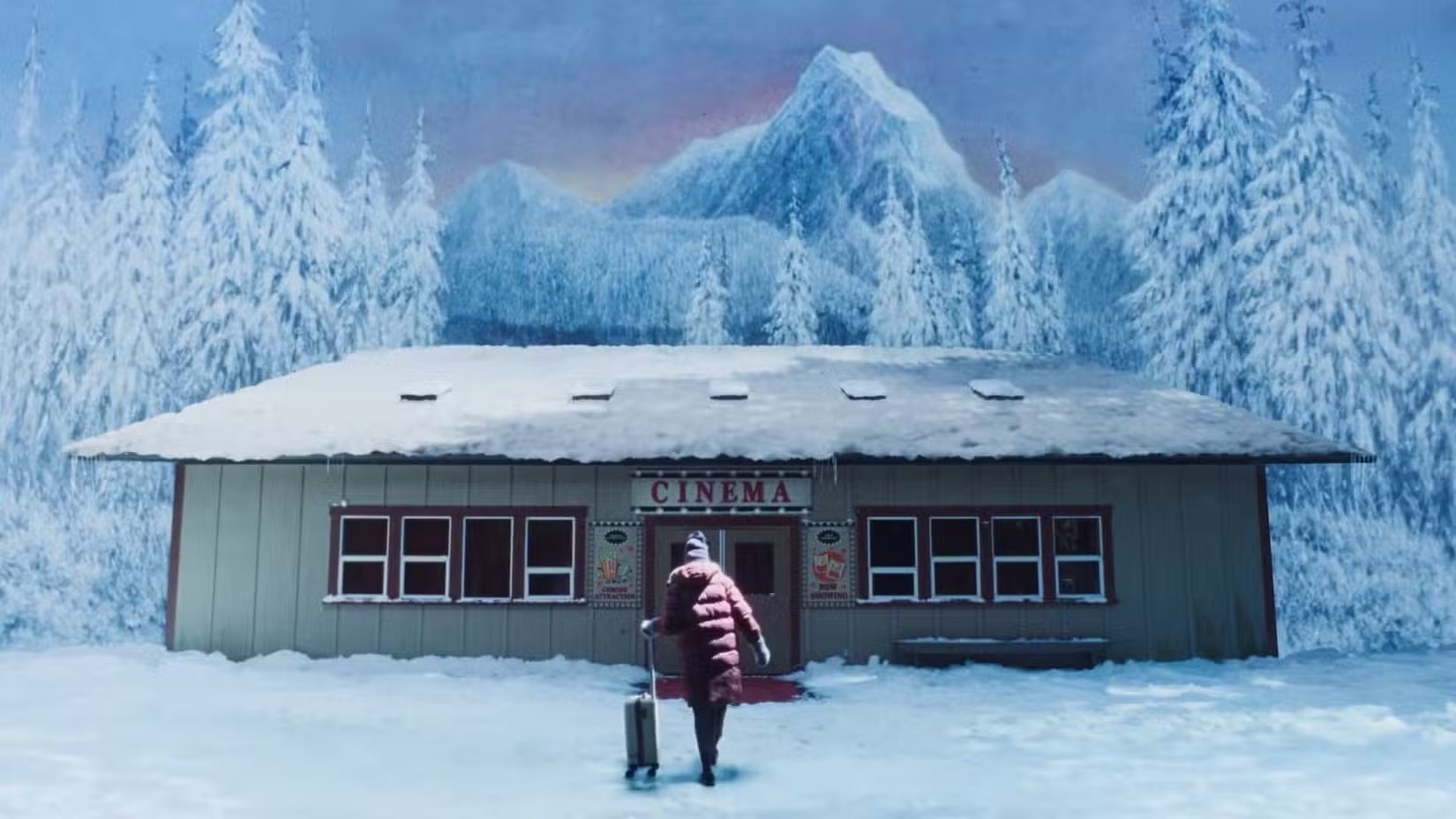
One specific scene illustrates this perfectly, though I’d rather you experience these sickening pleasures on your own, and focus on how the camera lingers on Haven’s boxed-in face as Little Death enacts as he embarks on a killing spree that flips the violence of slasher films to its head. It’s simultaneously a deconstruction of slasher tropes and genre cinema as a whole, and a commentary on the decaying status of Hollywood, as it’s less interested in making movies filled with meaning and in encouraging the audience to think about what they’re seeing. Schoenbrun’s film is filled with meaning, through tableaux of staggering painterly detail, gorgeously lensed and captured on staggering 35mm film.
It’s hard to talk about how great Einbinder and Anderson are in this because it would require discussing specific scenes from the film, which won’t be out for a while. I’ll just say this: Einbinder has finished an Emmy-winning run on Hacks, and the generational stuff she’s been doing on this show barely compares to the revelatory work she does in Schoenbrun’s film. The same can be said for Anderson’s indescribably terrific portrayal of an aging star who has developed an unlikely connection with Kris as they spend more time together, equal parts funny and achingly moving.
The less said about this part, the better, but one thing’s for sure: there simply isn’t anything quite like Teenage Sex and Death at Camp Miasma. Jane Schoenbrun has once again reinvented cinema in their own right with a slasher fever dream that’s sure to be more crowd-pleasing than their last two features, and will hopefully signal even more singular works of art from one of our most thrilling new voices. It was the hottest ticket at this year’s Fantasia – and for a very good reason, too. And if the picture gets too real for you, remember that you can always turn it off…