
‘Being Heumann’ Review: Sian Heder Tackles Watershed Moment in Disability Rights’ History with Mixed Results [TIFF 2026]
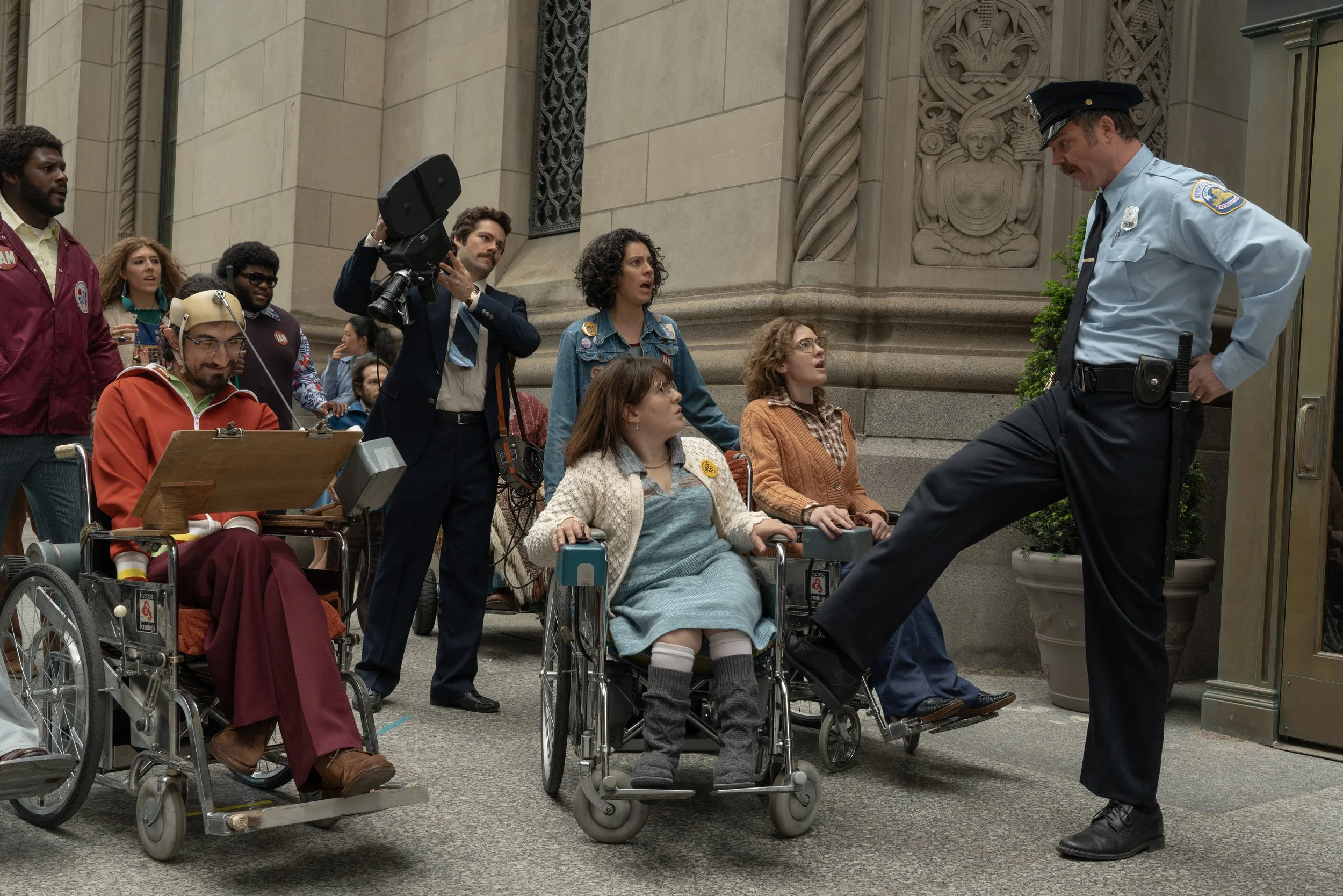
Impassioned performances from Ruth Madeley and Mark Ruffalo save Sian Heder’s Being Heumann from being a misfire, but the film’s flaws stick out like a sore thumb.
You might get a broader treatment of Judy Heumann’s fight for disability rights by watching Nicole Newnham and James Lebrecht’s Crip Camp: A Disability Revolution than in Sian Heder’s Being Heumann, but that should not negate how impactful a biopic on such an important figure will be. For starters, Heder’s follow-up to CODA is marginally better than her 2021 Oscar-winning feature, simply because it adopts a more classical approach in its filmmaking and doesn’t attempt to manipulate, even if one can see slight strings being pulled near the film’s final moments.
That classicism might result in an often formulaic, paint-by-numbers account of Judy Heumann’s (Ruth Madeley) sit-in at regional offices of the United States Department of Health, Education, and Welfare to force Secretary Joseph A. Califano Jr. (Mark Ruffalo) to sign Section 504 of the 1973 Rehabilitation Act. This section guarantees certain rights for people with disabilities and protects them from discrimination in the workforce or in public spaces. Judy’s relentless push to pass the bill might exhaust her team, who have been in these offices for almost a month and need basic care to function.
However, the end result might be worth it if Califano stops talking about the bill's economic impact (his argument for not signing is that it will drain $3 billion from the U.S. economy in 60 days) and hears Judy out for just a second. Of course, he doesn’t want to, but he soon will have to, considering how they will stop at nothing to get the human rights they deserve and hope the country will finally accept them as who they are. I will admit it’s strange to have an American film open the best-known Canadian film festival, but Being Heumann was shot entirely in Ontario, including downtown Toronto and Pickering, so it makes sense why it was chosen as the opener.
Toronto looks more like New York, San Francisco, or Washington than Montreal, but anyone familiar with the city might find that a bit distracting. Still, there’s an undeniable reason why the film played at the 51st edition of the Toronto International Film Festival: it was statistically engineered to be the crowd-pleaser to end all crowd-pleasers. Many critics who attended screenings of the movie at the festival probably used that term, and it will likely stick as more audiences see it. Being Heumann has all the right ingredients of a crowd-pleaser: an easy-to-follow story, minimal aesthetic (and thematic) flourishes, “three acts” (whatever that means), attachable characters, and, of course, the inevitable tear-jerking conclusion.

Some might think Heder’s movies are manipulative, but at least Being Heumann feels more like a pressure cooker than CODA. You feel the urgency as we spend more time with Judy and her group of disabled protestors, even if Heder gives little depth to anyone but the movie’s titular character, while the non-disabled A-listers Ruffalo, Rob Delaney, and Dylan O’Brien have more to do. On-screen representation of disabilities is one thing, but not doing anything with the cast of incredible talent you have at your disposal, minus Madeley, is another.
Some will argue that Madeley’s performance as Heumann is the arguable star of the show, and they wouldn’t be incorrect, but there are times in which I felt like Heder was only staying at the surface of a Wikipedia summary and didn’t give characters outside of Judy the same texture. The movie gives them a montage of various disabled individuals making their case to Califano’s representative and Congressman George Miller (Rob Delaney). One wonders if it was truly necessary to focus on the journalistic coverage of such an event, which sees Dylan O’Brien’s Evan White go from heartless to compassionate. This narrative arc felt painfully telegraphed and dampened the emotional progression by the time we reached the moment we’ve all been waiting for.
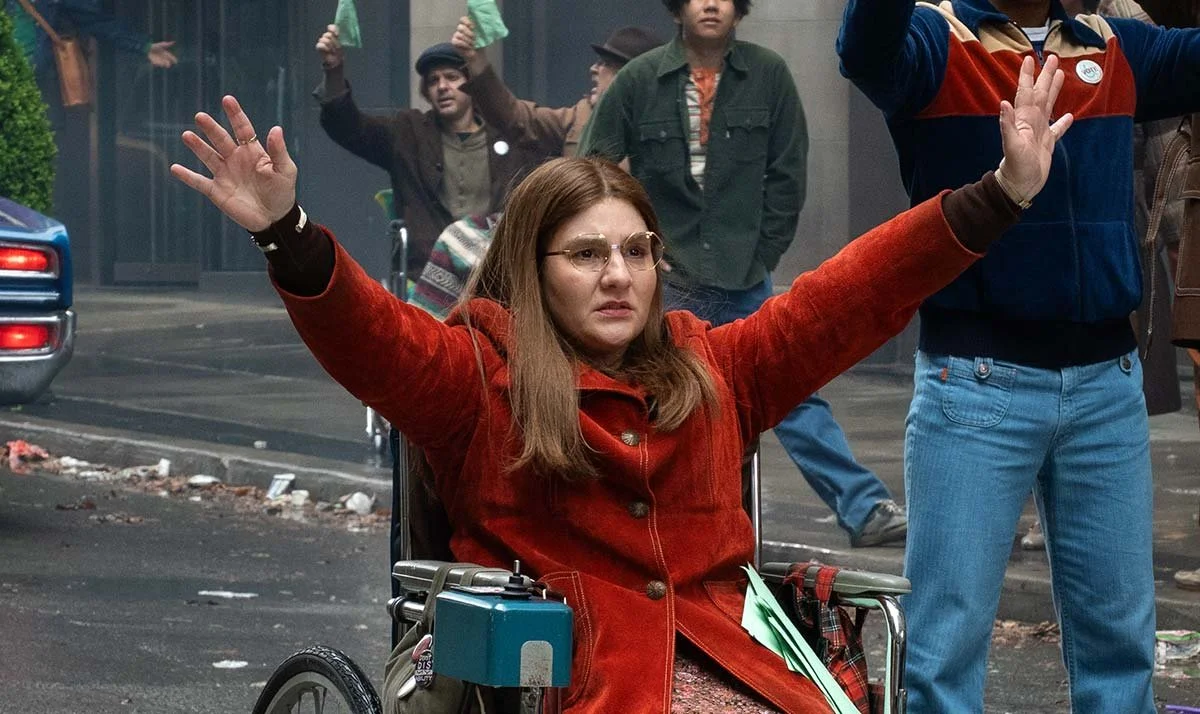
Still, Madeley’s performance makes up for Being Heumann’s shortcomings. She brilliantly captures the ferocity of Judy’s fight for disability rights and her willingness to never give up, even when the political establishment wanted to reject them at every turn. Ruffalo is equally solid, though he can often feel a bit cartoonish in his portrayal of a mustache-twirling antagonist who doesn’t want to recognize Judy’s rights until he becomes disabled after twisting his ankle and realizes that more needs to be done. As Judy said, one’s life can change in an instant, and anyone can join the disabled rank if something tragic happens to them. We should never take our lives for granted and remember that this world only functions if we help each other.
Being Heumann might take its sweet time to get to that core message (we do feel those 24 days stretch out to eternity), but the journey feels worth it by the time Heder completes her film with such a positive, uplifting message. It might not be as “crowd-pleasing” or “emotional” as her last film (which this critic didn’t like), but it will certainly be regarded as a step above it, if Apple were to give it a proper theatrical release…