
'Big Girls Don't Cry' Review: Are You There God? It’s Me, Sid
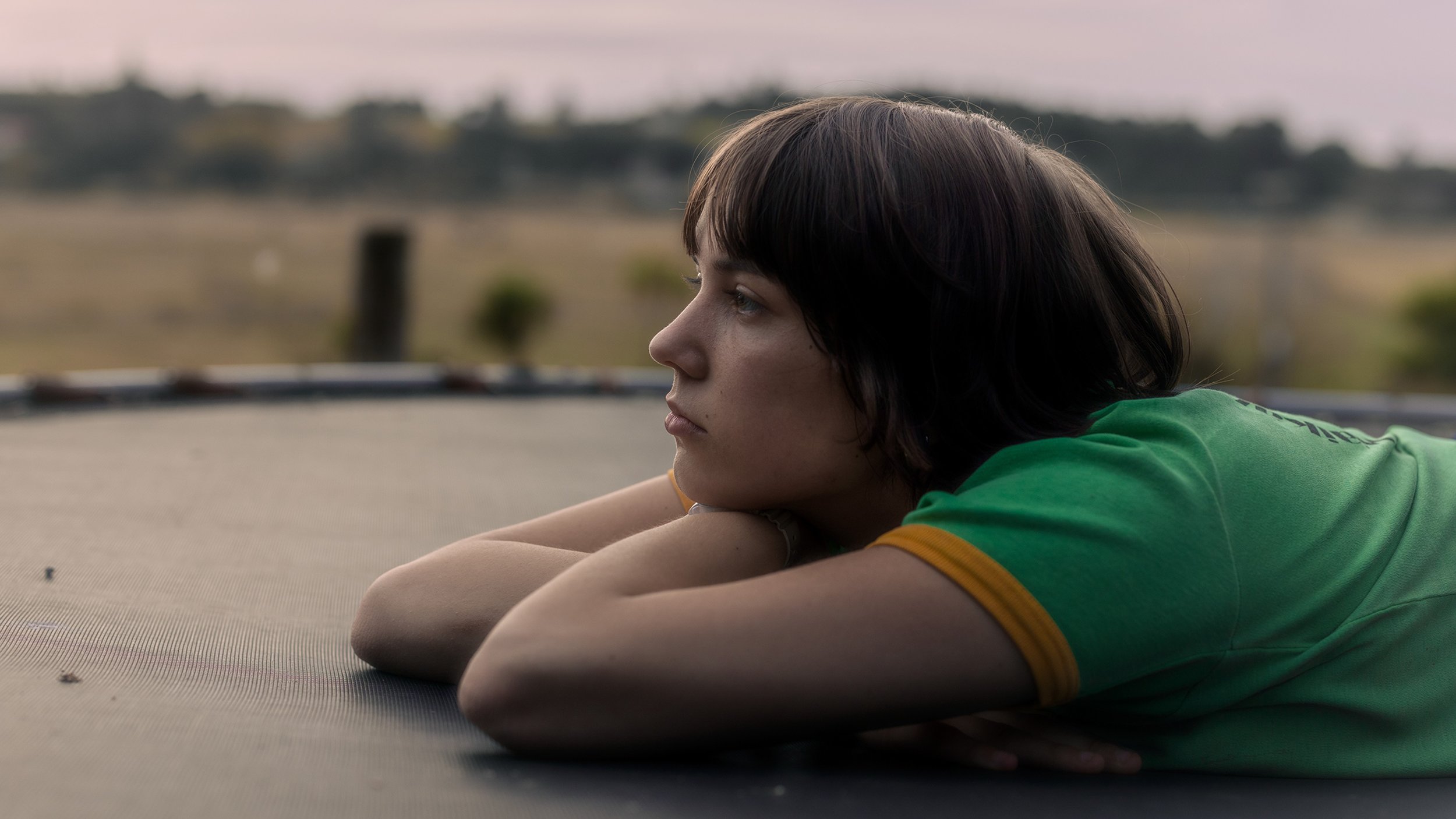
Sid (Ani Palmer) sits in front of a computer next to her friend Tia (Ngataitangirua Hita). They’ve logged in to the MSN account of Tia’s older brother Diggy (Poroaki Merritt-McDonald). Using Diggy’s account, Sid wants to reach out to a pretty girl who takes the same bus as Tia and Sid. Tia asks her why she wants to do that. “Because I can,” Sid replies. It’s a quick and easy answer for a teenage girl to give, almost flippant in its delivery. And like so many teenagers, she is little to know what sort of consequences such a decision will ultimately have.
Big Girls Don’t Cry is a coming-of-age drama from New Zealand. It was written and directed by Paloma Schneideman in her filmmaking debut, with Jane Campion (The Piano, The Power of the Dog) serving as an executive producer. Schneiderman has explained that she made this film for her 14-year-old self, and not only has she drawn from her personal experiences to tell this story, but she also filmed it in the same part of New Zealand where she grew up.
Accordingly, the film takes place in the Auckland Region, during that bygone era of 2006. Given that that was twenty years ago, some modern teenagers might be so bold as to describe Big Girls Don’t Cry as a period piece. Certainly, those teenagers will boggle at the primitive technology on display (and wonder why Tia and Sid need to log off the Internet so that Tia’s mom can make a phone call). They might also boggle at how these Millennial teenagers spend their days. Without smartphones or serious responsibilities, these youths gravitate to hangouts and parties. The young adults look askance at the younger teenagers who lie about their ages and experience, eager to fit in with the older crowd.
Thus we get the film’s protagonist. Sid is a socially awkward girl, struggling to comprehend things about herself while also trying desperately to find her place. The primary focus of her attention is Lana (Beatrix Rain Wolfe), the aforementioned girl whom Sid tries contacting under her friend’s brother’s MSN account. Lana is pretty, cool, confident, and popular. Sid is so eager to get closer to Lana that she’ll readily abandon Tia in the process. Still, her efforts are rewarded when she and Lana come across a group of older boys, and they all proceed to hang out together at the boys’ home. From there, things escalate in ways that Sid is entirely unprepared for, and it will certainly make Millennial audience members squirm in their seats as things unfold.
Many films romanticize or eroticize adolescence, while others try to condemn it. This film does neither; it portrays adolescence as honestly as it can, warts and all. It is positively cringeworthy to watch Sid try so desperately to earn the approval of people who either barely tolerate her presence or who are interested in her for all the wrong reasons. She lies to fit in, she begs other characters not to expose her lies, and then she lets another character lie about having sex with her. And yet, these people are not monsters either; they are people with their own desires and their own insecurities. This film is unflinching in its portrayal of the aimless and awkward desperation which seizes so many teenagers who are utterly lost.
We quickly learn why Sid feels so invisible and overlooked. Her mother left years ago, and when she calls at Christmas to check on her kids, she needs to be reminded to speak English so that Sid can understand her. Sid’s father Leo (Noah Taylor) is a would-be artist working menial jobs to support the family. Between his work, art, and griping about how his life has turned out, Leo seemingly has no time for Sid. This invisibility is reflected in the way she hides behind someone else’s MSN account, or the way she keeps trying to put her report card in her father’s line of sight so that he’ll read it.
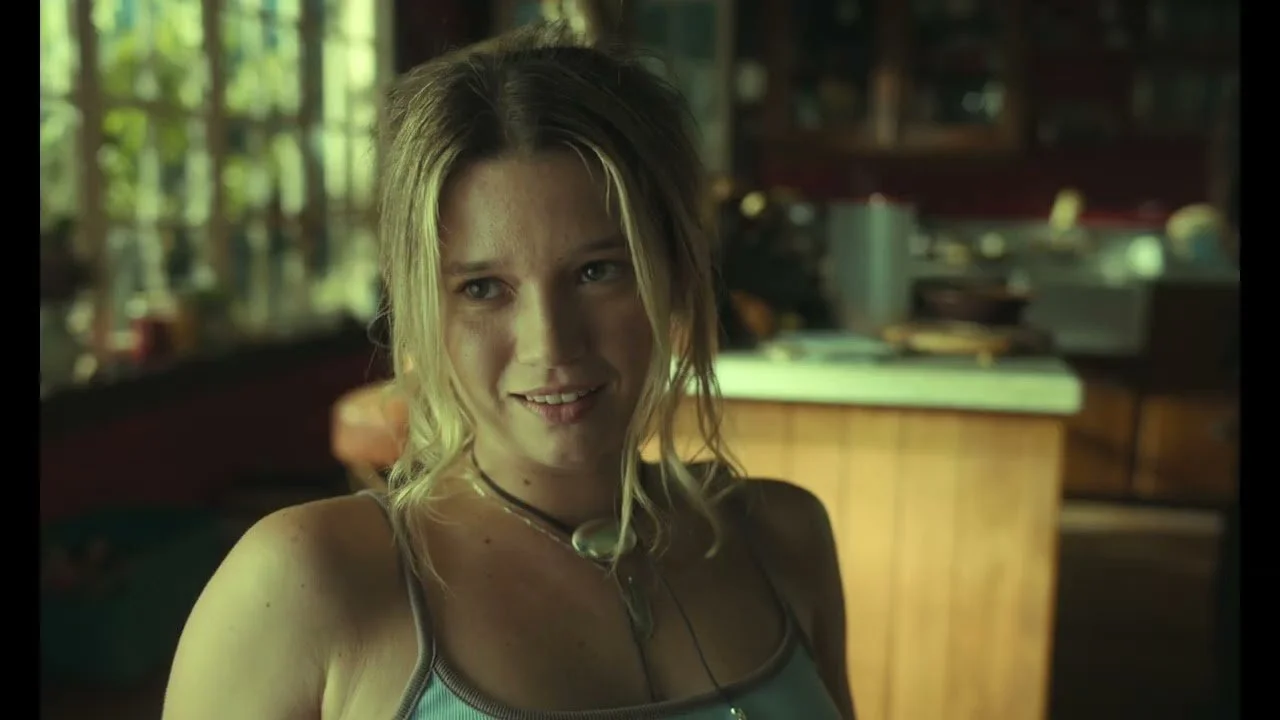
Meanwhile, Sid’s older sister Adele (Tara Canton) brings home a new friend to stay with them for a while. Freya (Rain Spencer) is an American, visiting New Zealand to supposedly escape her own family troubles back home. Sid is initially hostile to Freya’s intrusion, and jealous of the attention that she receives from her own family members. But Freya is a kind and gentle young woman, who treats Sid as an individual. This naturally causes Sid to pursue a close bond with her.
Big Girls Don’t Cry is especially effective at showing Sid’s . At one point, Sid obsessively checks her phone for a text reply from Lana. When she instead receives one from a boy that likes her, she is so frustrated that she throws her phone through her own window. She then stares, utterly flabbergasted at her own outburst, and what it means. Such is her reaction to several other consequences of her actions. The film does not give her some grand moment of realization about herself, or a moment where she dramatically comes out to everyone in her life. Maybe such a moment will happen someday, but if Sid’s life was a book, this film only covers a single chapter of it.