‘Ink’ Review: Danny Boyle’s Disappointing Indictment of Tabloid Journalism Barely Scratches the Surface [TIFF 26]
Beyond the AI slop, Danny Boyle’s Ink does little to interrogate the figures at the heart of his indictment of tabloid journalism.
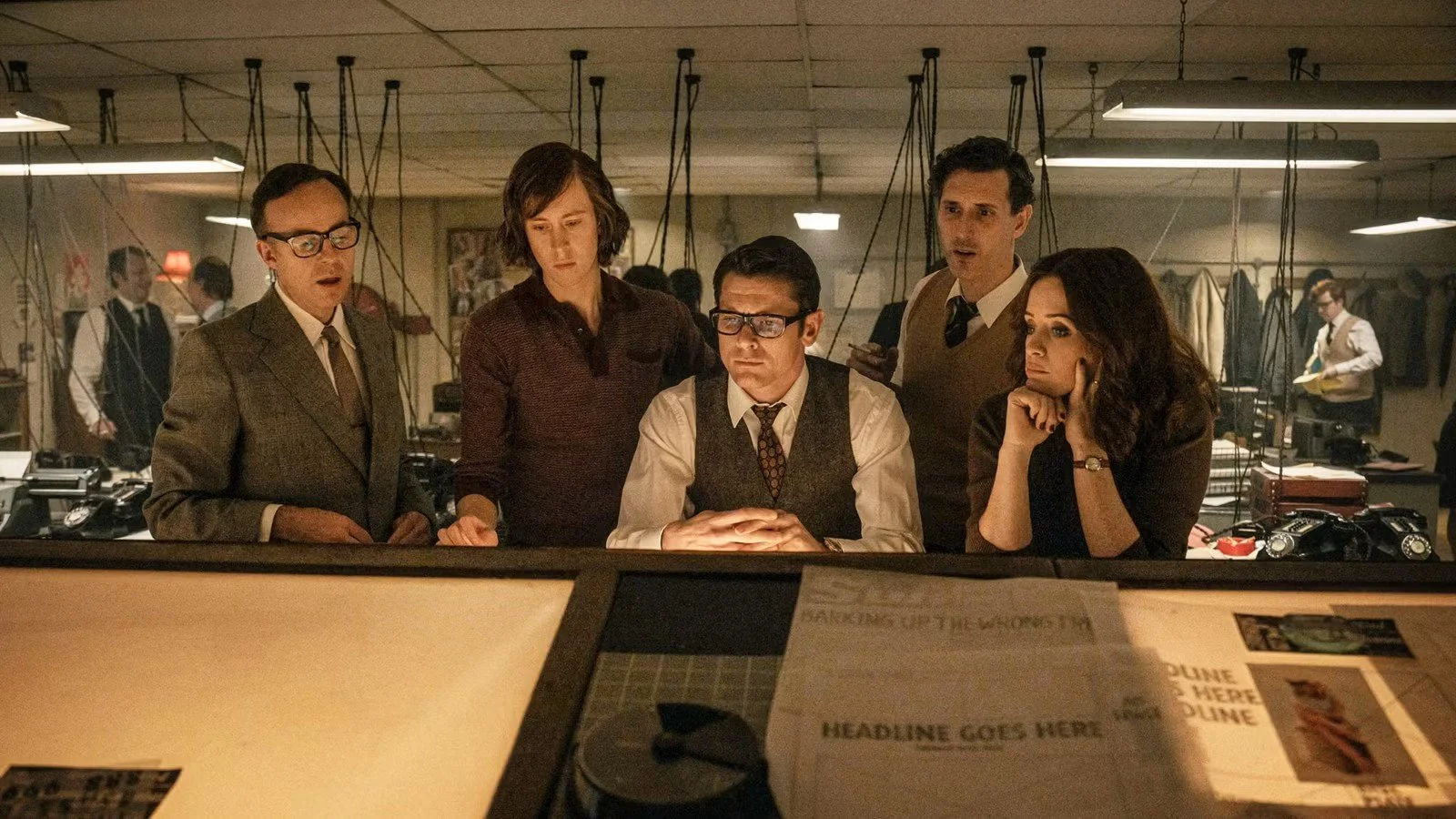
During its premiere at the Toronto International Film Festival, director Danny Boyle was interrogated by an audience member about the use of Artificial Intelligence in his latest drama, Ink, about the rise of the tabloid newspaper The Sun, after Sir Larry Lamb (Jack O’Connell) accepts Rupert Murdoch’s (Guy Pearce) proposition to become the editor of a newspaper that eventually became a massive force for disinformation and sensationalist yellow journalism.
Boyle barely skated an answer before another audience member blurted out, “Never do that shit again,” and the Q&A abruptly ended. For anyone who didn’t know, Boyle’s movie uses AI to generate mice, animate old photographs, and bring Prime Minister Margaret Thatcher back to life. That scene, where “The Iron Lady” tells Lamb to wake up, might contain the most unnecessary (and meaningless) use of a meaningless technology that needs to be shunned from movies forever, unless you’re Radu Jude and are talking about the dangers of AI while using it to show its barbarity. Couldn’t you get an actress? Meryl Streep won an Oscar for that performance. Imagine if she returned for such a brief cameo. That would’ve been a far more effective – and surprising – choice than slop.
Margaret Thatcher is dead. You cannot bring her back to life, “digital necromancy” be damned, even for two seconds. Either hire an actress or cut that scene out entirely. We don’t need “de-aging” or “AI deepfakes” in cinema. Part of the magic of moviemaking is reckoning with our ages and realizing that some actors evolve on screen as they get older. All of this technology to make actors look younger or bring dead public figures back to life removes the magic of movies and creates a lazy generation of filmmakers with nothing remotely interesting or meaningful to say.
But Danny Boyle always had something to say. He has always been at the forefront of the “digital revolution,” collaborating with Dogme 95 cinematographer Anthony Dod Mantle to change our perception of what filmmaking should achieve, as in 28 Days Later. Last year, 28 Years Later pushed the boundaries of digital filmmaking once more, shooting entirely on iPhones and finding new textures to experiment with. Experimentation has always been Boyle’s modus operandi, always finding new angles (and editing techniques) to make his movies feel alive and bursting with eye-popping energy. His “worst” films are the ones that contain very little formal experimentation (hello, Yesterday), but even those ones aren’t boring.
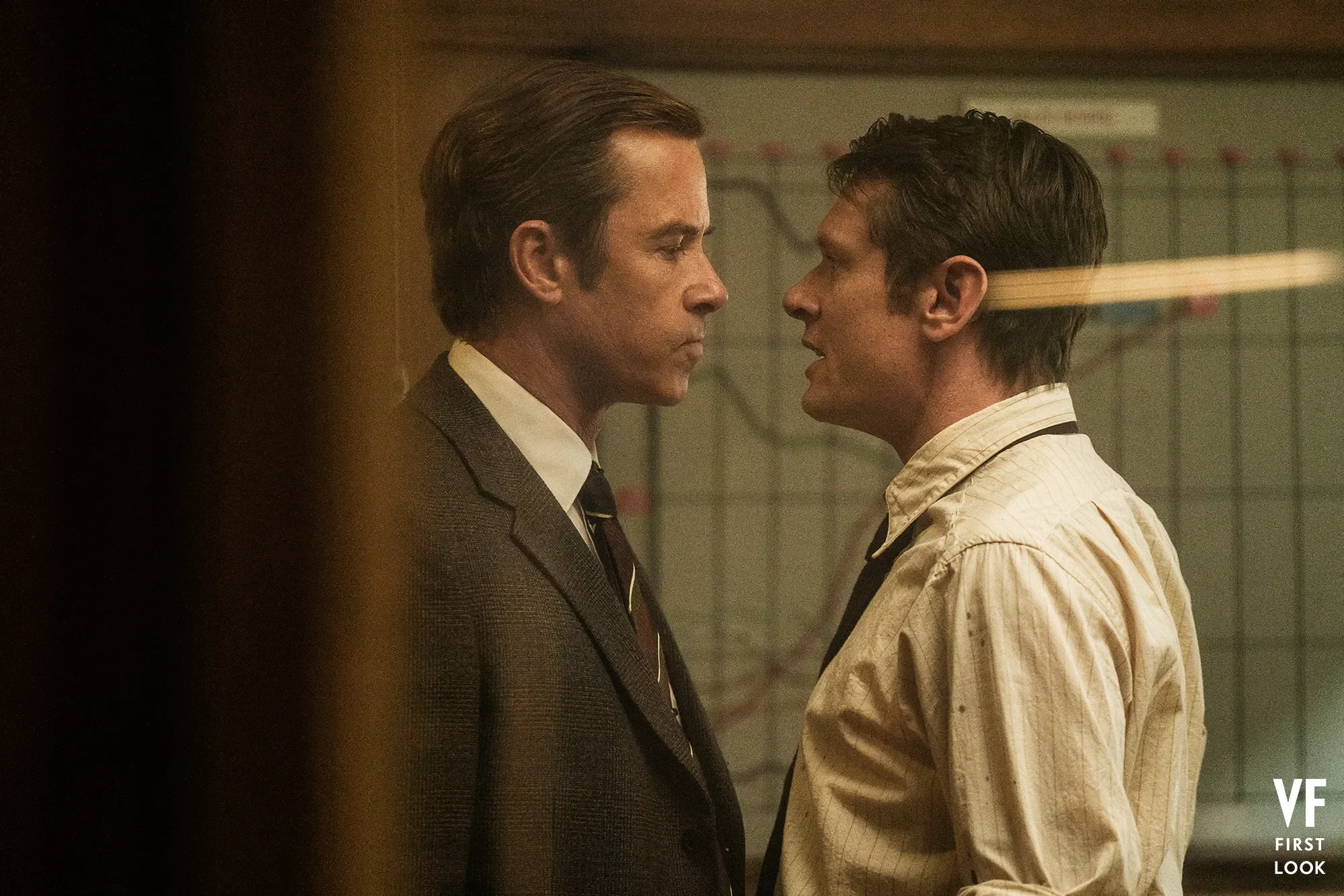
Ink is Boyle’s first boring film. While he certainly dazzles visually, collaborating this time with director of photography Alwin H. Küchler and employing some of the techniques he developed in 28 Years Later, he doesn’t say much about Lamb’s transformation of The Sun into the piece of garbage “journalism” it is now. Murdoch’s presence, an arguably evil character who has made billions off of propagating complete and utter nonsense, is sparse, as the film focuses more on the dissemination of tabloid sensationalism than interrogating the why beyond Lamb’s decision, other than turning a profit off the vulnerable.
The movie begins in media res and doesn’t stop from the moment it starts, which might be a compelling hook to keep us watching, but you’ll soon realize Boyle’s techniques aren’t in service of a thought-provoking story. It’s almost as if he refuses to parse who Lamb and Murdoch are at that point (and who Murdoch eventually becomes), which renders his final montage of censored newspaper covers and oligarchs taking control of the media and political landscape moot. If your film is based on an emotional crescendo leading up to a specific scene, I expect Ink’s dramatic center to build naturally to where we are now.
Sensationalism didn’t suddenly happen. Power-hungry people created it to distort public opinion. Ink barely floats these ideas before giving up its message altogether when the film suddenly becomes a hostage thriller after Sir Alick McKay's wife (Jonathan Hyde) is kidnapped, and The Sun’s writing becomes even more socially unacceptable than it is now. But, again, Boyle refuses to say anything about what’s going on. He presents these events with the energy of someone scrolling through a Wikipedia summary that barely grasps the ideas at play, but never actually understands them. The editing and camerawork are rapid and dynamic, and that’s all fine and good, until we begin to try to understand what the images mean.
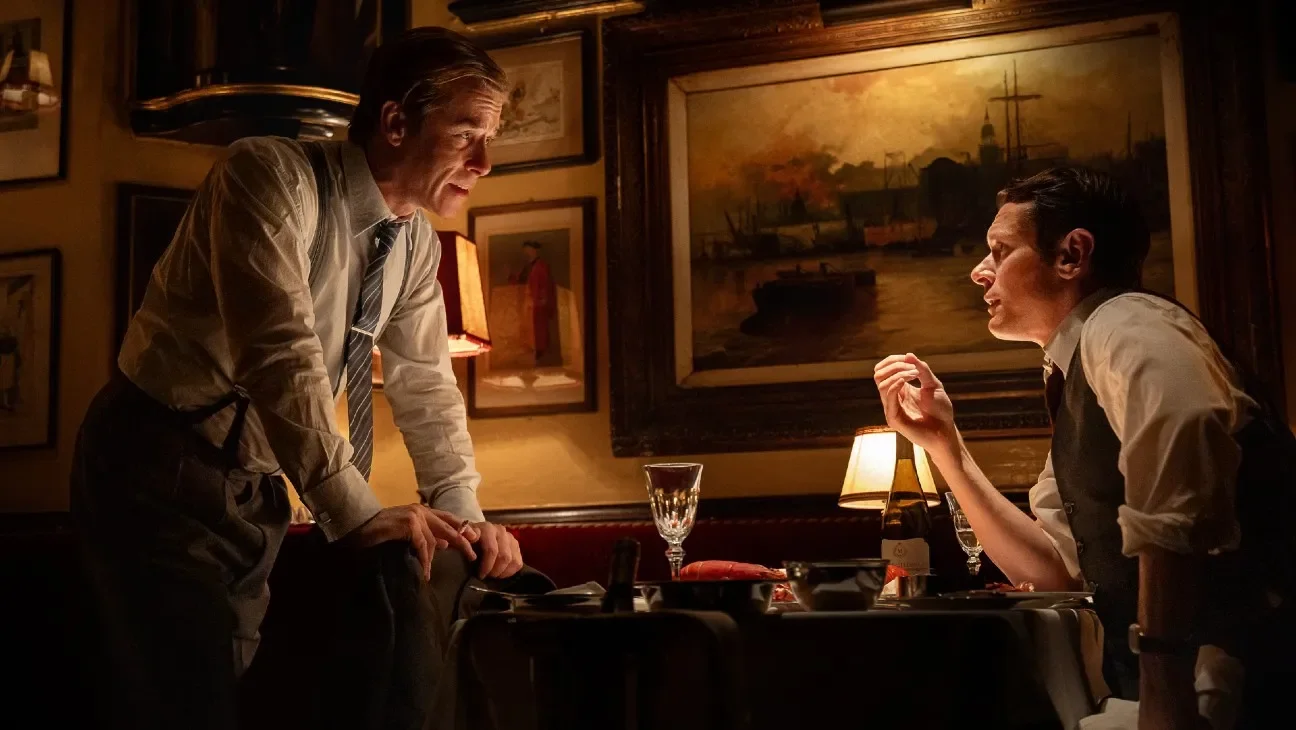
Not much, that’s what I can say, despite some solid work from O’Connell and Pearce. O’Connell has been on an intriguing path since starring in Ryan Coogler’s Sinners, and he collaborates once more with Boyle to give Lamb compelling three-dimensionality, even if James Graham’s script (adapting his 2017 stage play of the same name) doesn’t go deep enough. The film also stars Claire Foy, as Jules Dawes, a fictional character that acts as an amalgamation of various Fleet Street female reporters. To say that she doesn’t have much agency of her own, save for her final moment that acts as the immediate “wake up call” that The Sun is heading in a dark path, would be the understatement of the year.
In fact, the characters that populate Ink’s story don’t have much texture beyond the broad strokes that Boyle presents. It’s a surface-level biopic that wants to say it’s at the forefront of our current journalistic crisis, but doesn’t have the patience to examine why. When the mainstream The Devil Wears Prada 2 has more to say about the current (and past) state of journalism than a movie that attempts to take down the very institutions that have caused society’s enshittification, there’s a massive problem. Add the unnecessary AI slop that reveals Boyle’s total laziness as a filmmaker who seems to have given up tangible experimentation, and there’s no reason for any informed individual to actively seek out Ink when it eventually makes its way to cinemas. The audience member was right: never do that shit again.