
‘Unabomber’ Review: Janus Metz’s Biggest Misfire
After masterfully concluding Disney+’s Andor, Danish filmmaker Janus Metz Pedersen delivers his biggest misfire with the terrible Unabomber, despite a solid cast and production values.
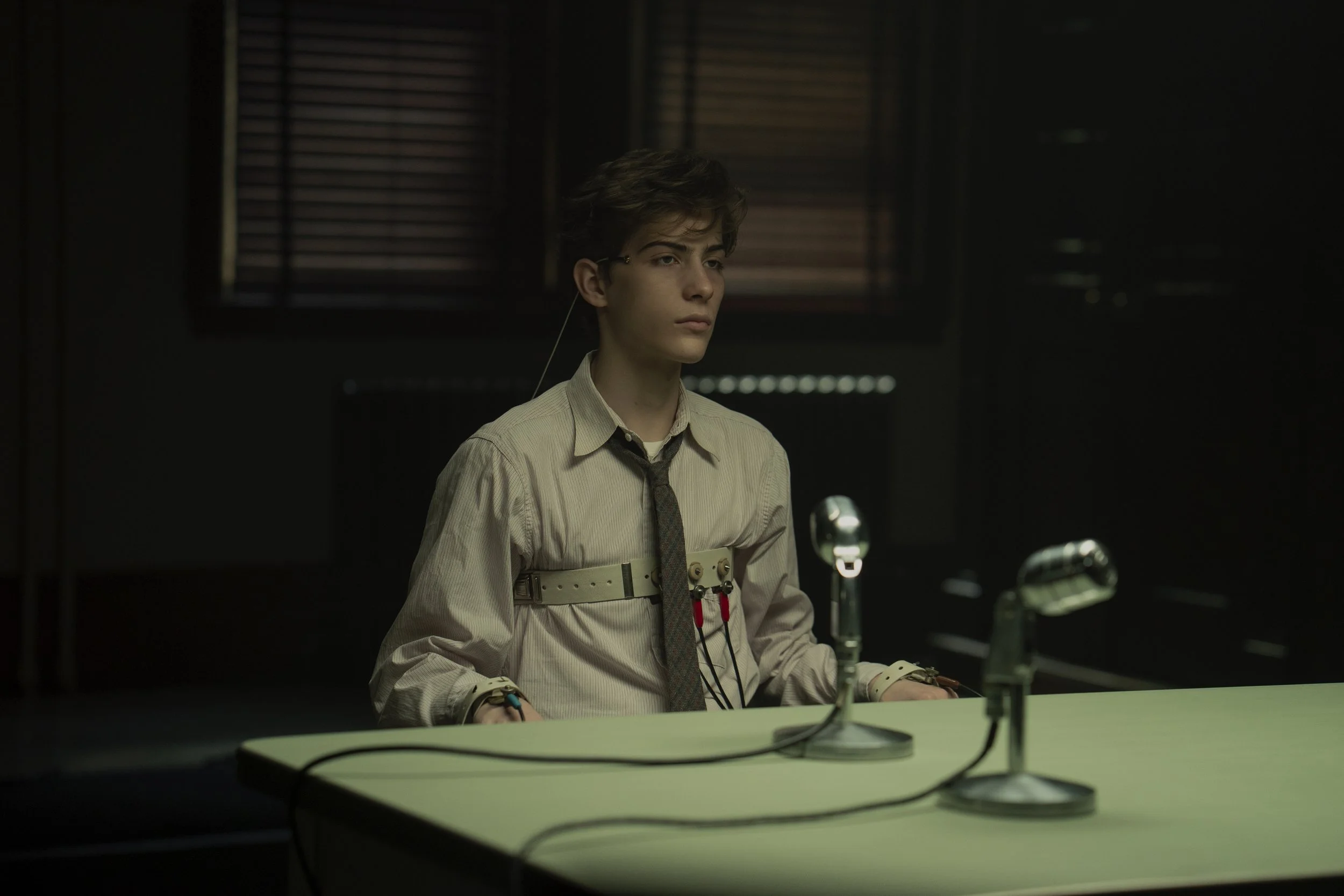
It’s hard for a filmmaker to ask audiences to sympathize (or understand) with Ted Kaczynski, but this is what Janus Metz Pedersen attempts to do with the horrendous Unabomber, the biggest misstep the Danish auteur has sadly taken. It’s even sadder when this acts as his follow-up to the episodes he directed for Disney+’s Andor, likely the most critically lauded of the Emmy-nominated show’s second season. His perceptivity and sense of emotional intimacy is long gone in a movie that exploits the struggles of the titular Unabomber in the same way Ryan Murphy did in his unwatchable Monster franchise.
This terrible movie attempts to oversimplify the radicalization that Kaczynski (played by Jacob Tremblay) went through after participating in a stress-test study that masqueraded as a “debate club” shepherded by Harvard professor Henry Murray (Russell Crowe). That story is paralleled with the ongoing FBI manhunt to find the identity of the Unabomber in 1995, as his attacks intensify and spread terror across the United States. Kaczynski mailed bombs to figures he believed advanced modern technology and allegedly destroyed what he believed were fundamental human freedoms.
In this specific section, we follow FBI Agent Joanne Miller (Shailene Woodley), who is attempting to find Kaczynski’s whereabouts after his brother, David (Matthew Kevin Anderson), denounced him to the federal agency when the writing of the manifesto that was published in the press matched the angry letters he sent to his parents, whom Ted deeply resents. Of course, the higher-ups at the FBI believe more research needs to be done before Kaczynski is their definitive suspect, but Miller takes it upon herself to track where he is, and perhaps learn his modus operandi in the process.
Such a narrative device could absolutely work, but in a television series. In a movie, those parallels feel rushed and underdeveloped, especially the detective procedural, which moves too quickly without clearly explaining what drives Miller to catch him when all the cards are stacked against her. Woodley is fine in the role, and so are Steven Ogg and Alexander Ludwig in supporting turns, but they barely have any material to chew on. The characters are archetypal at best and refuse to excavate who they are beyond the one-note attributes they’re given. They want to catch Kaczynski because he’s terrorizing America, and Miller’s quasi-attachment to the case is only because she wants to be the agent who brought him down. Nothing more, nothing less.
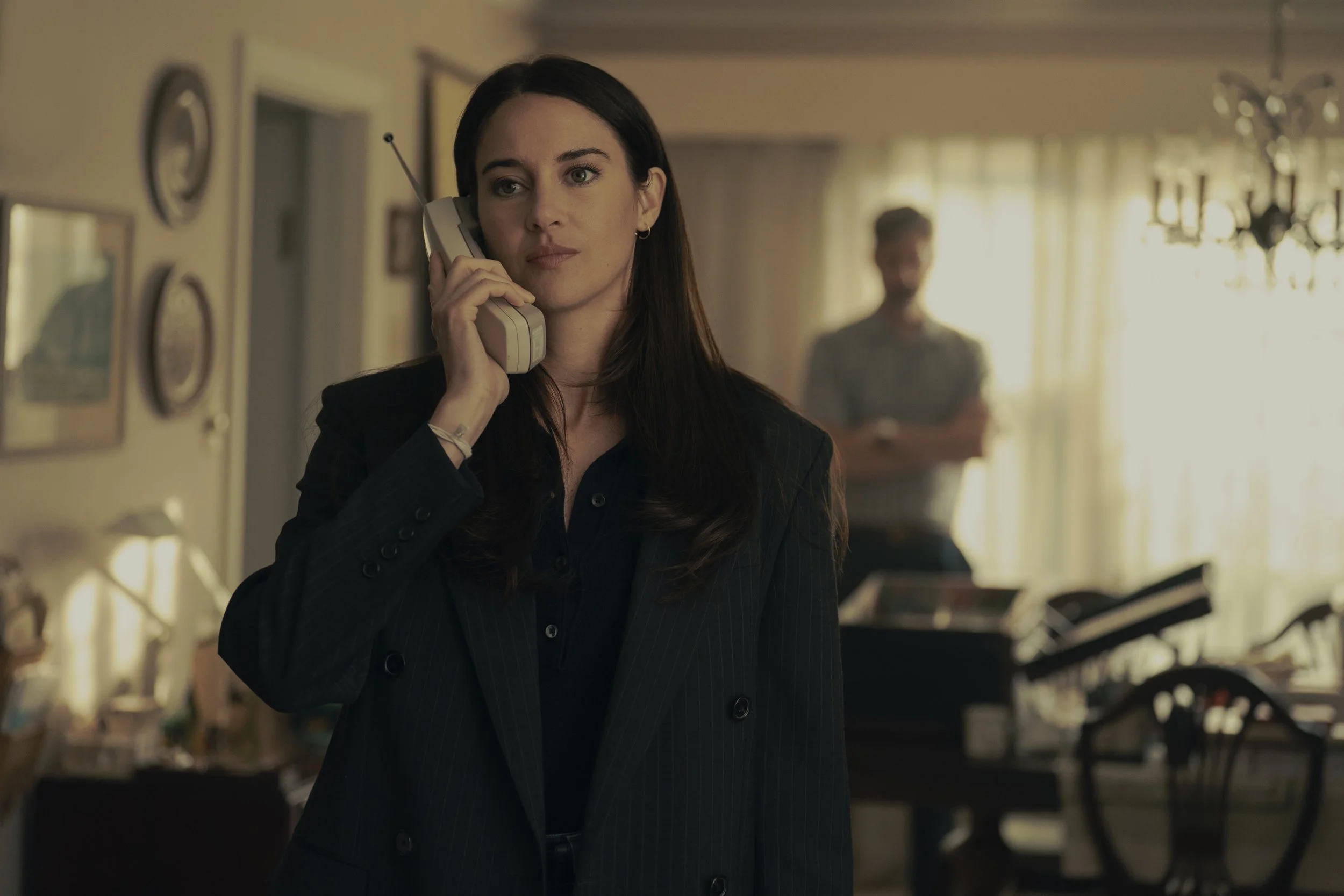
As undercooked as this section is, it’s also Unabomber’s most harmless part. It’s a classic (but clumsily executed) crime thriller. Perhaps it would’ve still been unimpressive, but it likely would have paled in comparison to what Metz has in store for the film’s 1958 sections, where Professor Murray interrogates Kaczynski during his stress-testing sessions. Since the reasoning behind his “debates” is kept secret, this review will not reveal the baffling turn that occurs near the climax, but it’s a ridiculously inert “twist” that turns the real and tangible struggles of Kaczynski into a spectacle of attraction, linking his psychotic behavior to his abusive and controlling father and the stress he underwent at the hands of Murray. It’s, quite frankly, shortsighted and painfully offensive to the victims of the Unabomber, who have rightfully called out the film for fabricating entire stories to make the audience sympathize with the character.
Metz and screenwriters Sam Chalsen and Nelson Greaves depict Kaczynski as a victim, and never as a perpetrator. When the “shift” that prompts him to begin his “experiments” begins, it’s after he was humiliated and victimized by the Harvard staff and used as a pawn for Murray’s tests. That’s willfully disingenuous about what actually happened and the behavior Kaczynski exhibited since he was a child. It simplifies who Kaczynski is in an attempt to “understand” him when there’s nothing to understand: the Unabomber exhibited signs of severe (and untreated) mental illness, and what occurred during the time when he terrified the United States was horrible for the people he targeted and their families. He deserves no sympathy or “understanding.”
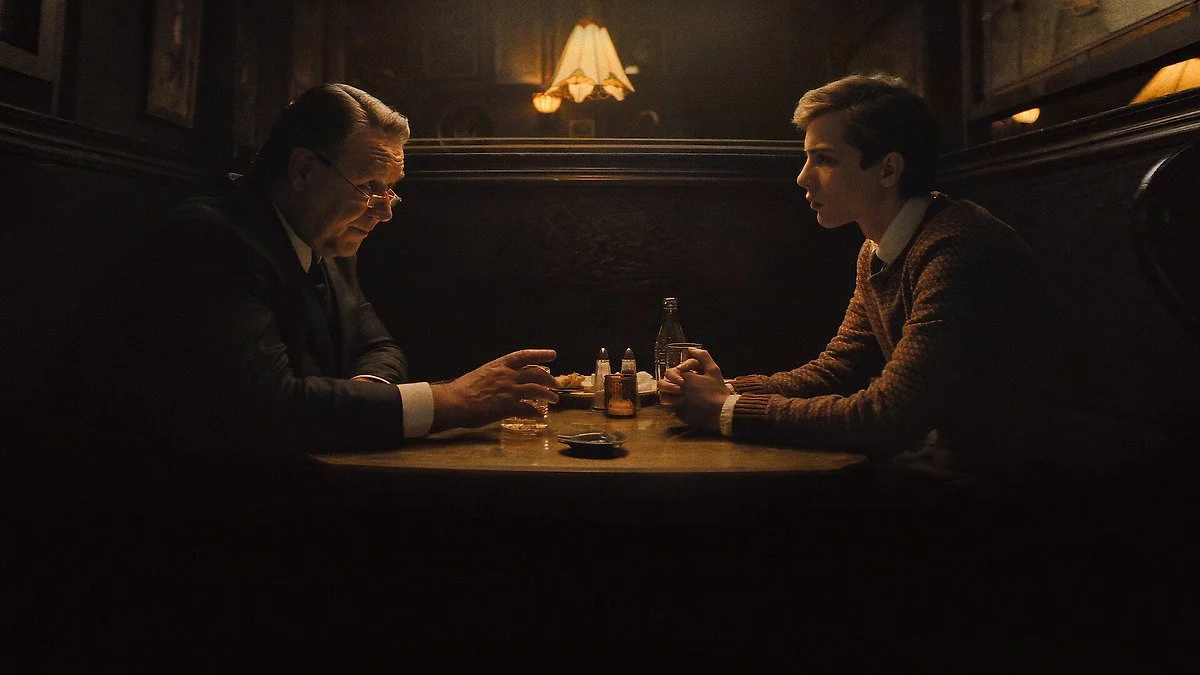
It also doesn’t help that Jacob Tremblay gives the worst, most embarrassing performance of his career as the film’s titular character and fundamentally misunderstands what makes a portrayal like this bone-chilling. He needlessly shouts his lines when he doesn’t need to, and he has zero room to work with in scenes that could theoretically scratch the surface of the character further but refuse to. It’s the type of protagonist Ryan Murphy loves to “write” about, so it baffles the mind as to why he didn’t develop him in a season of his Monster series, which is doing so well among audiences despite the show being one of the very worst things he’s ever done among a plethora of terrible television work.
Only Yves Bélanger’s photography gives Unabomber its sole grace notes, alongside a riveting turn from Crowe that does give Kaczynski a Machiavellian-esque figure to mold onto. If only the movie around Murray were interesting, but since Metz’s sole desire is to turn Ted Kaczynski into a spectacle, the chances of Unabomber being good were slim. Perhaps his next endeavor will be better, because his post-Andor directorial effort might be his worst yet.