
'The Boys' Series Finale Review: A (Loose) Fitting Conclusion
after a season worth of floundering, the ultimate finale delivers a mostly satisfying end to the series.
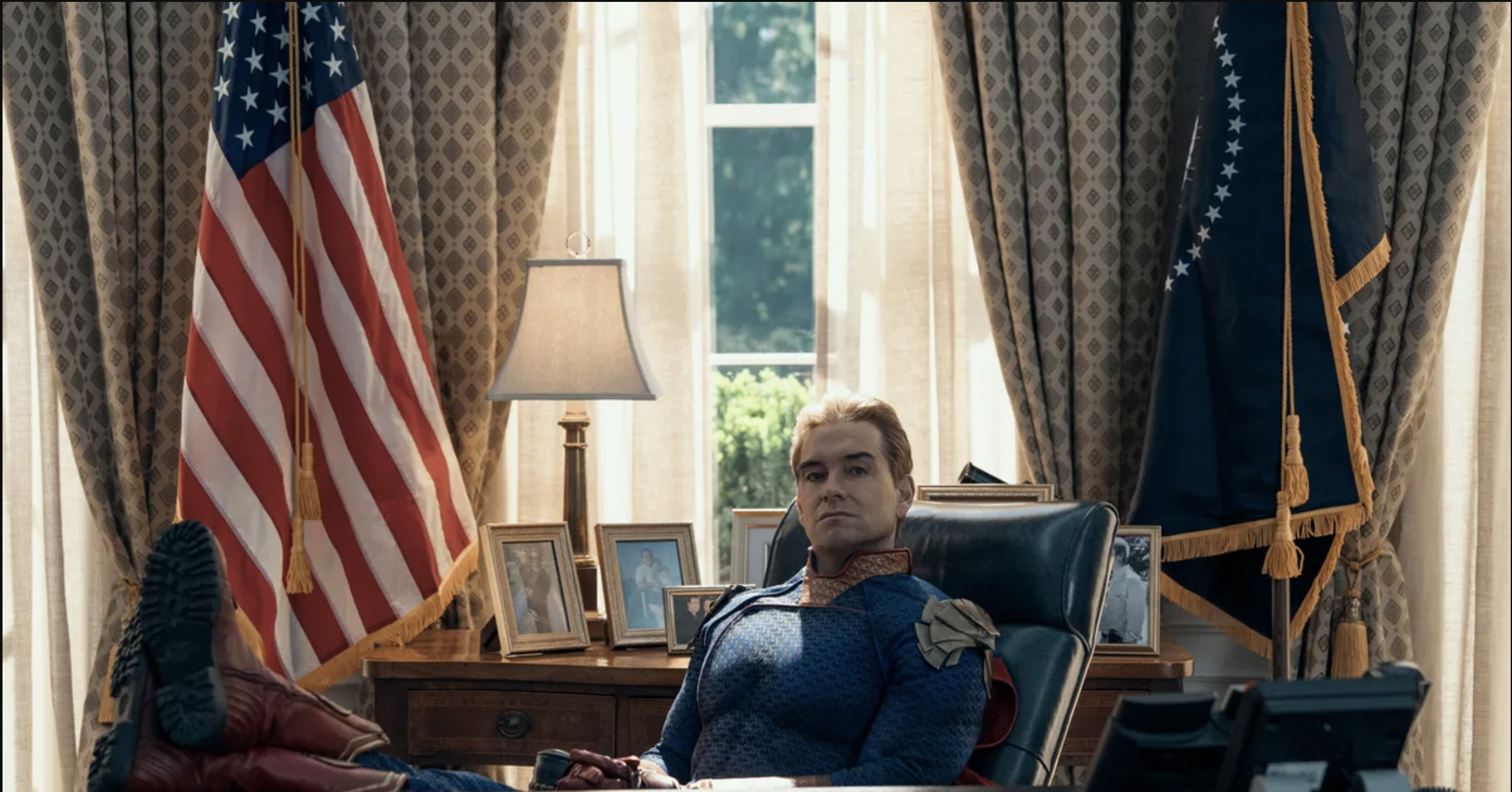
If you’ve followed this website’s coverage of The Boys’ fifth and final season, you’ll know that calling the responses lukewarm would be generous. Yet, after a frustrating season that felt more preoccupied with episodic detours and thinly-veiled backdoor piloting the upcoming Soldier Boy prequel Vought Rising, showrunner Eric Kripke and company were able to ground the series once more and deliver a mostly satisfying conclusion to the 7 year journey of absurdly accurate satire, infinite memes, and gore galore.
Prior to the finale’s release, many questions plagued the show, specifically in regards to how the various plot threads were going to be tied up. The fifth season, and show at large, have built up several big plot threads to be instrumental in the endgame against Antony Starr’s Homelander. His son Ryan (Cameron Crovetti) and his conflicting allegiances, the development of an anti-supe Virus, the enigma that is Soldier Boy (Jensen Ackles), Butcher’s superpowers as an erratic ticking time bomb, the role of his fellow ultra-tier supe Marie Moreau (Jaz Sinclair, whose role in Gen V was extensively posited to be the ‘anti-Homelander’), the allegedly retired Queen Maeve, and many more. Marketing material and previous seasons had teased Homelander finally going ‘scorched earth,’ something that was very much forecast by the ending of 5x6, specifically. With such a large amount of plot threads looming over a comparably small 65 minute runtime, it’s hard to say that the worry was unjustified.
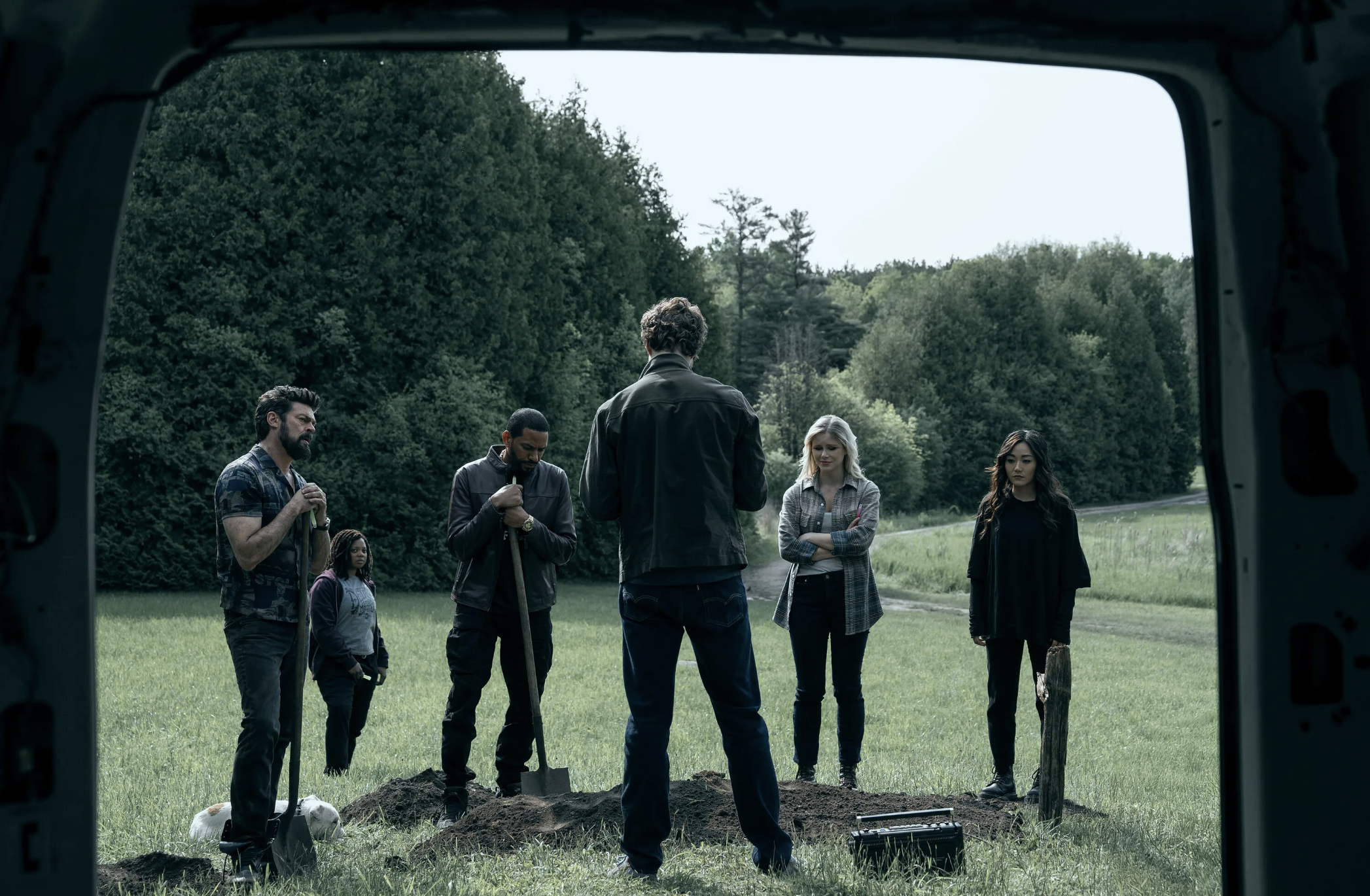
Despite all of this, the finale glides on the somber and grounding note of the penultimate’s end, which saw the death of main character Frenchie, whose loss very much paints the finale with a welcomed shade of dramatic potency. After a funeral sequence, the team ruminates on their final moves. With extensive deliberation and some provoking tactics from Sister Sage (Susan Heyward), Kimiko (Karen Fukuhara) realizes that Frenchie’s death was not fully in vain, and that his experiments to give her Soldier Boy’s depowering chest beam power had worked.
From there, the team makes their last stand, taking the fight to Homelander in the White House. They are able to make their way to Homelander thanks to the last minute save by Ashley (Colby Minifie). The team is forced to divide and take on a few supes at a time. Hughie (Jack Quaid) and MM (Laz Alonso) make quick work of Daveed Diggs’ Oh Father, while Starlight (Erin Moriarty) engages The Deep (Chace Crawford) in a fight that sees them end up on a beach. The gestating conflict between the two characters meeting its end in the finale after The Deep’s sexual harassment toward Annie at the beginning of the show feels like a natural end. Yet, the series opts not to go for its usual hyper-violent revenge beat, not immediately, at least. Annie, stepping back into her role as one of the show’s main moral compasses, extends a sense of pity and compassion to Kevin/Deep, before ultimately realizing he can’t be reasoned with, and blasts him out into the water, where his former fish allies team up to brutally impale him to death.
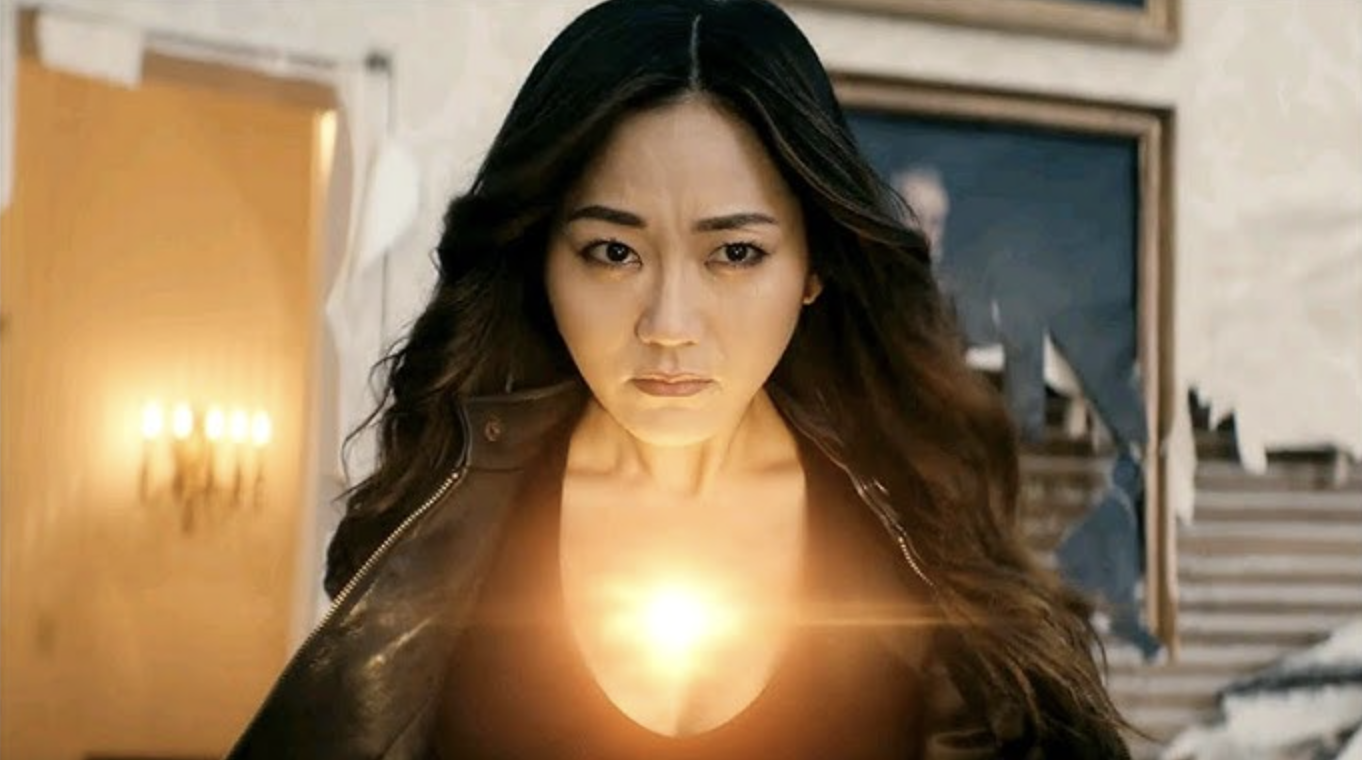
Enter the main showdown. Butcher and Kimiko interrupt Homelander’s broadcast to the world, and an all-out brawl ensues. Laser eyes and tentacles going back in forth in fury, as Kimiko musters the strength to charge her chest blast and end Homelander’s invincibility. She’s unable to, and it seems as if Homelander is about to fly away and escape, before he is stopped by Ryan, flying in with an epic tackle at the exact right moment. Kimiko is finally able to muster the strength and fires the beam, thanks to a vision of Frenchie encouraging her along the way.
After the massive blast, Homelander and Butcher wake up to a ‘stalemate,’ both now powerless, leaving Homelander in a state of utter disarray, reduced back to his stunted child persona. This is it. Butcher has the upper hand for all of the rest of the fight, beating Homelander to a place of desperation where he begs and pleads for his life on his knees, the ‘almighty god’ reduced to a fraudulent beggar, broadcast for the world to see. Butcher grabs his trusty crowbar, and impales Homelander’s skull, killing him for good, dedicating the kill to the memory of his wife Becca, how having finally avenged her.
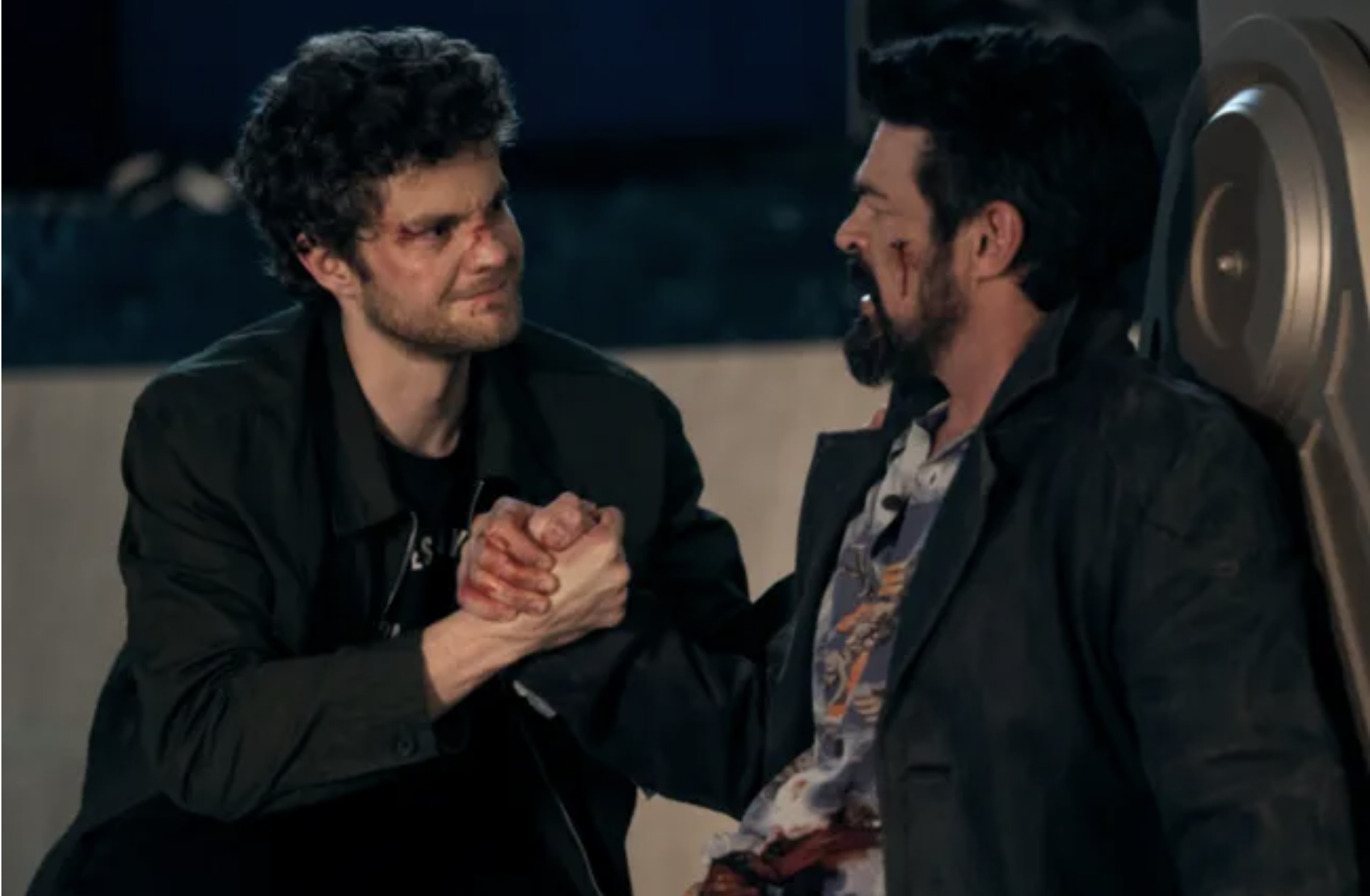
After the major victory, Butcher’s catharsis does not last long. He returns back to base to see his trusty dog Terror lying dead. This leads him to break again, and he heads to Vought Tower with the supe virus, planning to set it wild across the world and effectively kill all superpowered individuals. Before he can do this, Hughie figures out his plan, and confronts him at the tower. After a duel of performers in Quaid and Urban, which so aptly wraps up seasons worth of boiling tension between the two surrounding their differing moralities in the shared fight against Homelander, Hughie is forced to shoot and kill Butcher in order to stop him. What follows is a somber and particularly effective scene, a bittersweet embrace between the two men who have since the beginning, been the show’s moral anchors, as Butcher bleeds out and dies.
Enter the epilogue, which sees our protagonists finally at some degrees of peace. MM reunites with his family and raises Ryan as one of his own. Kimiko is off in Paris, exploring Frenchie’s past life there. Hughie turns down a position at the government’s reinstated supe control program, choosing instead to settle down with Annie, as the two run an electronics store (a callback to Hughie’s initial occupation in the pilot) and prepare for the birth of their expected child.
Some may say this was a convenient ending for the series, with Homelander’s defeat being a relatively ‘small-scale’ fight when compared to fan expectations, and the show’s own teases of Homelander’s ‘god-level’ power upgrades, or that the epilogue’s more saccharine tone fails to reflect the more monotonously gritty and gory aesthetics that the show was built upon. It is also undoubtedly frustrating to see the Gen V characters, Marie especially, be built up for such substantial roles in the endgame against Homelander and Vought, only to be unceremoniously cast aside so early into the finale. It’s hard for any audience member not to feel kind of cheated by investing time and thought into the promises of both shows, with no remotely meaningful pay-off.
These critiques are certainly not without merit and reasonable precedent, and yet, it’s hard for this reviewer to be overly negative about a finale that satisfies the ultimate conflict of the show in a character-driven and generally solid way. Butcher’s ultimate victory against Homelander is succinct, effective, true to the character, and never overly gratuitous (although even I would say some gratuity would have been more than earned), and while telegraphed, still has consequence, with the series also making good on Butcher’s inevitable dark turn and eventual demise. Many will ask, has the series become the thing it was initially parodying? Sure, but it’s not exactly like this finale went all-out on weightless superpowered fight sequences to conclude, righting a big wrong of other parts of the season. The character moments work effectively, and that goes a long way. Most of the notes that the finale needed to hit were hit, and effectively so.
All things considered, the ending avoids the cardinal sin of series finales; leaving a (proverbial) bitter taste in its audience’s mouth. A bad finale can make audiences feel as if they wasted their time and that their investment in the show was for nothing, leading to long-term resentment which shapes revisionist history of the series. The Boys’ conclusion does for the most part, do justice by its long-term central story arc, and ends the show in such a way that it feels like all was mostly accounted for when the credits rolled. The last ride of blood, guts, gore and more wasn’t for nothing, and for that, this reviewer is ultimately thankful. The series has truly been a rollercoaster, with thrilling highs, dramatic lows, projectile vomit, and a painfully slow and dizzying little bit before the ride eventually stops, and one can get off the ride mostly satisfied, with a memorable experience. The finale is an apt encapsulation of that experience. As we’re played off with Billy Joel’s Piano Man, the series’ finale does have this reviewer in particular “feeling alright.”