
'The Boys' Season 5 Premiere Recap and Review: The Last Ride Begins In (Mostly) Usual Fashion
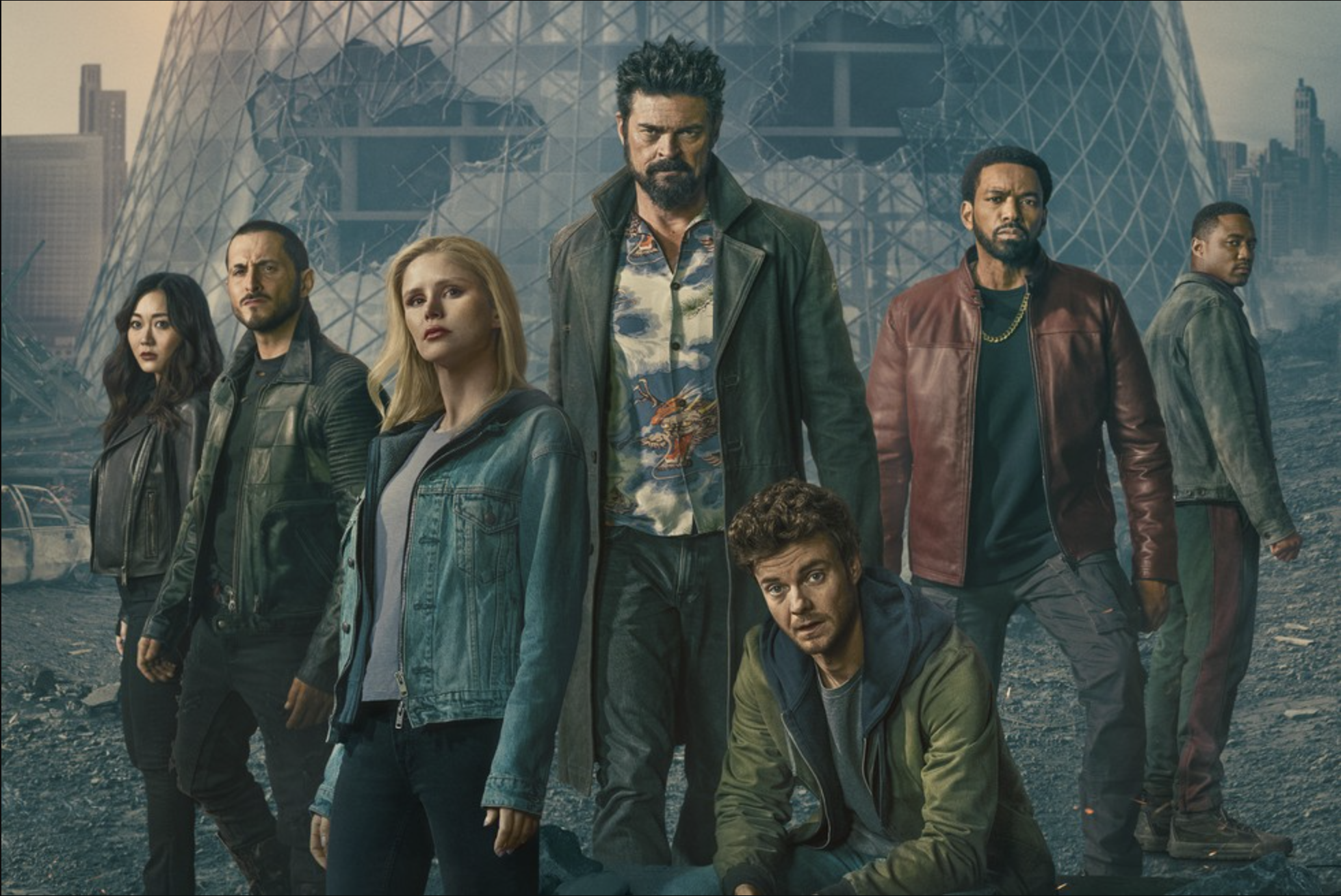
the first two episodes remind us why the series winding down for good has felt long overdue
To put it lightly, The Boys have been through the ringer. The series, which first premiered on Prime Video in summer 2019, has become one of the more fascinating (and longest running) series of the last few years, existing as an exciting genre adaptation, flirting with ‘prestige status’ thanks to a few Emmy nominations, spawning several spin-offs of its own, and ultimately becoming a worldwide hit amongst audiences of all demographics, with incredible viral longevity online. Both the eponymous group of characters and show itself have endured years of absurd changes to our sociopolitical and screen culture landscapes alike, so much so that the series was once hailed as a incisive new take on the superhero genre, and is now often recognized as its own cultural entity that eerily bears more semblance to American political reality than it does to most of its current Marvel or DC counterparts.
Conversely, many have remarked that as the series has gone on, it has become the very thing it once parodied, an overly self-important superhero series with repetitive plot beats, tangential spin-offs, and an excess of ‘shocking’ and gory moments that make each progressing instance feel less important. Simply put, the opening to the series’ fifth and final season does little to dispel these criticisms, and despite a few truly bold moments, make for a redundant re-entry into a world that feels as if it’s been in ‘endgame mode’ for several seasons now, with little to show for it.
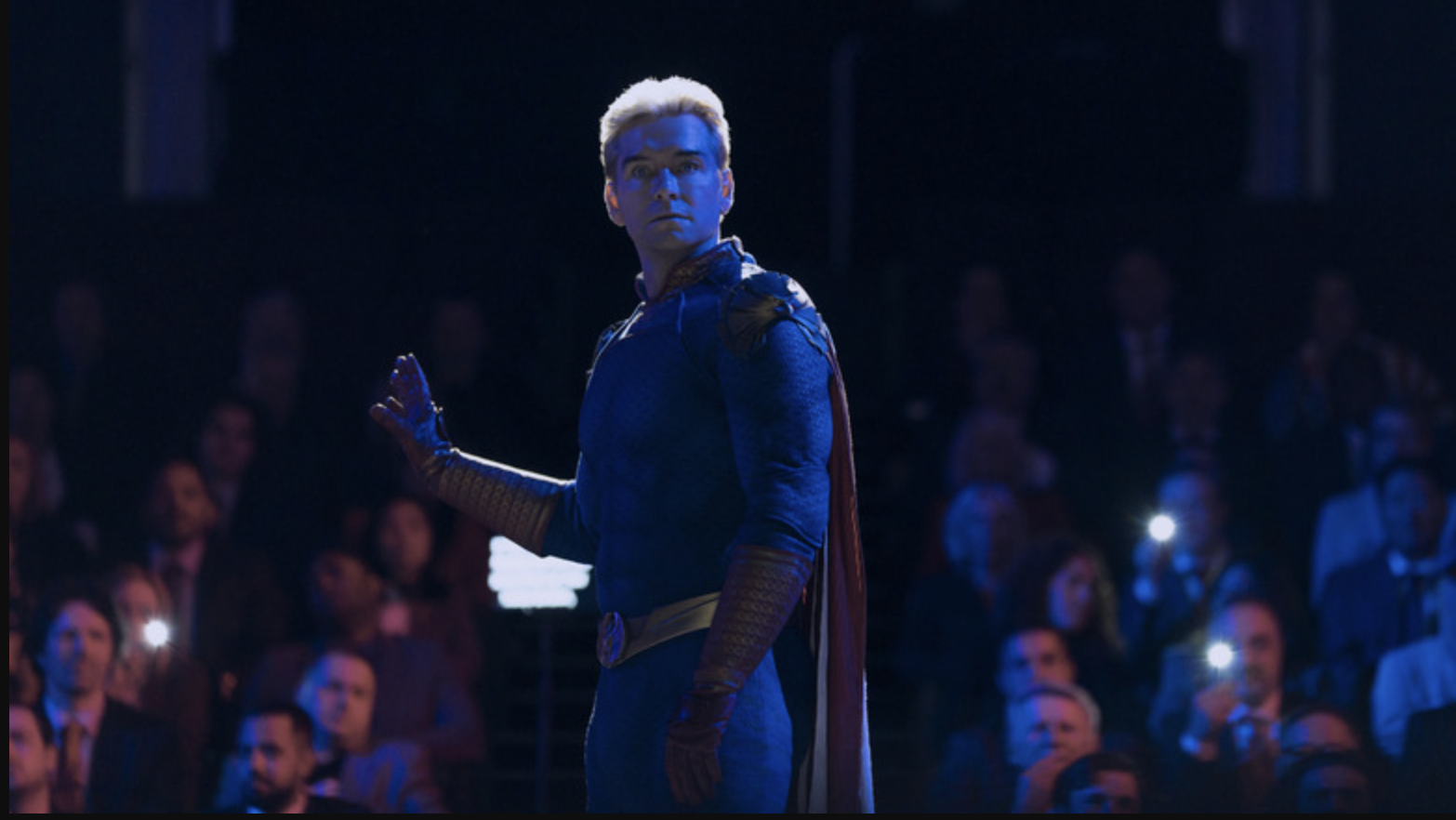
The season opens with Homelander (Antony Starr) and his reign as the de-facto leader of both super-company Vought and the United States alike being stronger than ever. While his popularity and social capital have him on top of the world, he finds himself unsatisfied with the power that he craved so passionately in previous seasons. The state of ‘The Seven,’ the once prestigious and formidable Vought backed supergroup, has become a sad shell of itself, with Homelander continually unhappy with the feeble attempts from his underling supers such as The Deep (Chace Crawford) and the ever enigmatic Black Noir (Nathan Mitchell) to quell the growing ‘Starlighter’ resistance movement against Vought. While Homelander has always been very clearly portrayed as a psychotic and deeply evil character, he’s very much at the end of his rope here, erratic and resorting to his most childlike qualities. Returning to aid him in his reign of testosterone-fueled terror is Sister Sage, (Susan Heyward) the world’s smartest woman who took on the role of Homelander’s chief advisor out of pure boredom last season, and has been involved in many power plays since, even spanning a guest arc on the series’ college-based offshoot, Gen V. The relationship between Sage and Homelander remains intriguing, but still hard to define, especially as Homelander’s stunted adult development and its subsequent mental complexes come full circle, in a variety of ways. Most notably, between hallucinations of his ex-boss/psychosexual maternal figure Madelyn Stillwell (Elisabeth Shue) and the eventual defrosting of his estranged and cryogenically frozen father, Soldier Boy, (Jensen Ackles, as the super-soldier out of time who played a key role in the series’ third season) Homelander’s game feels more desperate than ever, an interesting contrast to his actual power in-universe, a contrast that Starr plays quite well, but this is again, par for the course with this role.
Elsewhere, The Boys themselves are scattered, affected by Homelander’s reign in different ways. Billy Butcher, the foul-mouthed Englishman and ex-CIA agent whose personal war against Homelander for the rape and eventual murder of his wife has anchored much of the series, finds himself globe-trotting, equally desperate to achieve his goal of avenging his wife, and to save his step-son Ryan (Cameron Crovetti) from the influence of his biological father, Homelander. The last season of The Boys saw Butcher’s descent into madness accelerate further, with his own set of hallucinations, a proverbial quilt of distrust being sewn amongst his team, the murder of supe/politician ally Victoria Neumann, and condemning himself to a slow biological death after he gave himself a set of tentacle-based superpowers via a dose of power-inducing drug Compound V.
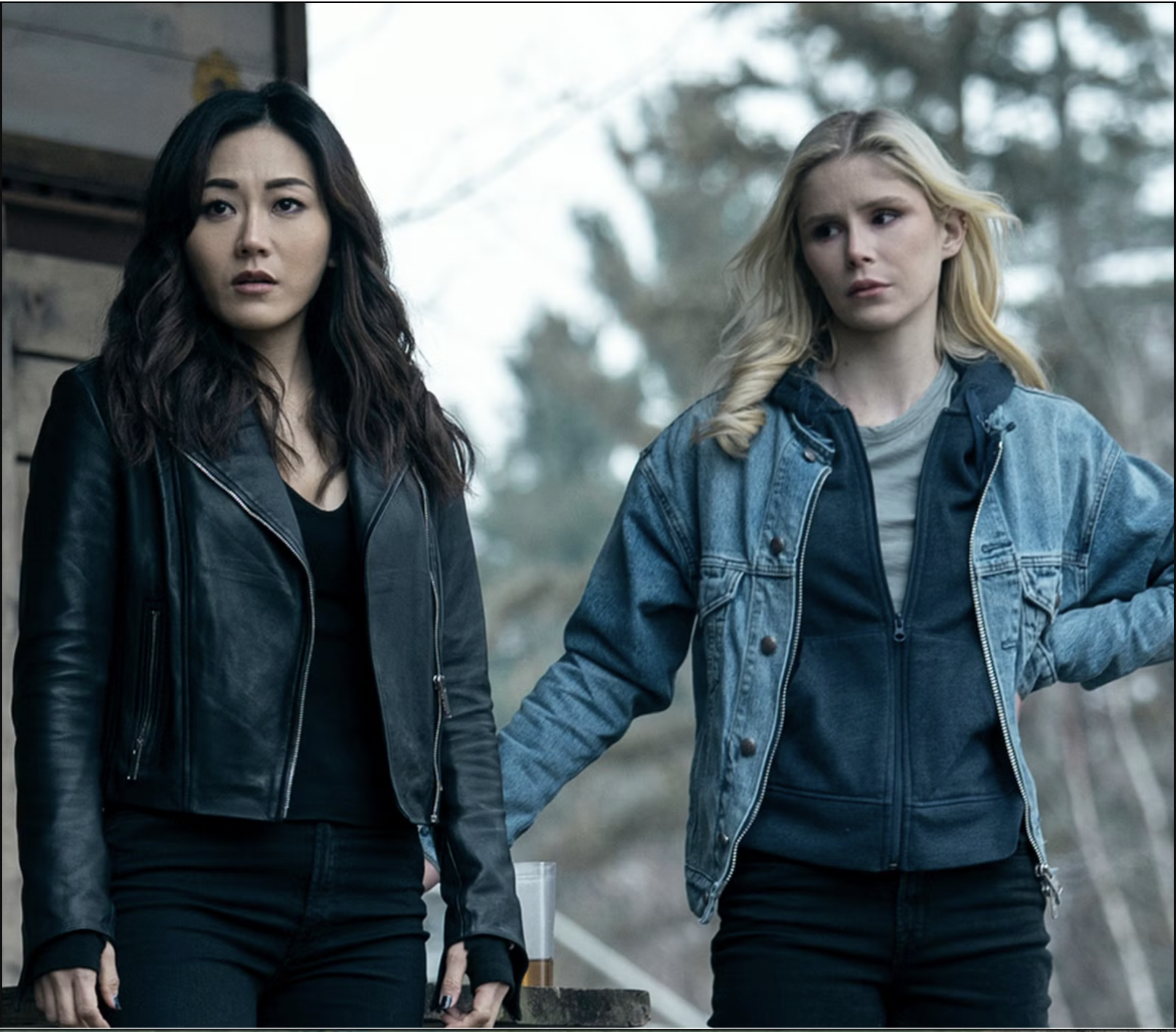
Butcher’s travels see him back home in England, where he has a startling reunion with his father, and eventually to a stop in the Philippines, where he reunites with former ally Kimiko (Karen Fukuhara), the once-silent supe and now longtime ally of Butcher and the gang, whose vocal ability shockingly returned at the end of the series’ fourth season, as she was tragically separated from her on-and-off lover ‘Frenchie’ (Tomer Capone), now imprisoned by Vought alongside MM (Laz Alonso) and Hughie (Jack Quaid).
Fukuhara has long been one of the highlights of the series, and it’s nice to see her have more material to chew on this season, with the character now being able to speak. This reviewer is of two minds when it comes to the exact dialogue she gets, which comes off as kind of parodical dialogue for the show, with every other sentence being some ‘Mad Libs’-esque equation of pop culture reference + sexual act = funny. On one hand, this creative decision can be something of a small referendum on the show’s identity that this dialogue has become learned behaviour for Kimiko, but on the other hand, it kind of loses its lustre as a choice when almost every character on both sides of the fight continues to speak entirely in the grating, formulaic dialogue that feels like its maximum comedic value was reached seasons ago. Nonetheless, it is refreshing to see how show further recognized Karen Fukuhara’s talents before it was too late.
As mentioned, three core cast members; Hughie, MM and Frenchie are being held in Vought’s ‘Freedom Camps,’ cartoonishly capitalist American camps designed to ‘Stockholm syndrome’ the anti-Vought prisoners into Vought’s overall agenda. The three were imprisoned by Vought at the end of Season 4’s cliffhanger ending, presented in a rather dire manner. Any keen viewer could guess that an eventual breakout would happen where the whole set of characters reassemble before an eventual final fight against Homelander, but the season’s first episode does very little with the prison plotline and abandons it quite quickly without much affect on its characters, which kind of makes the last season’s ending feel inconsequential.
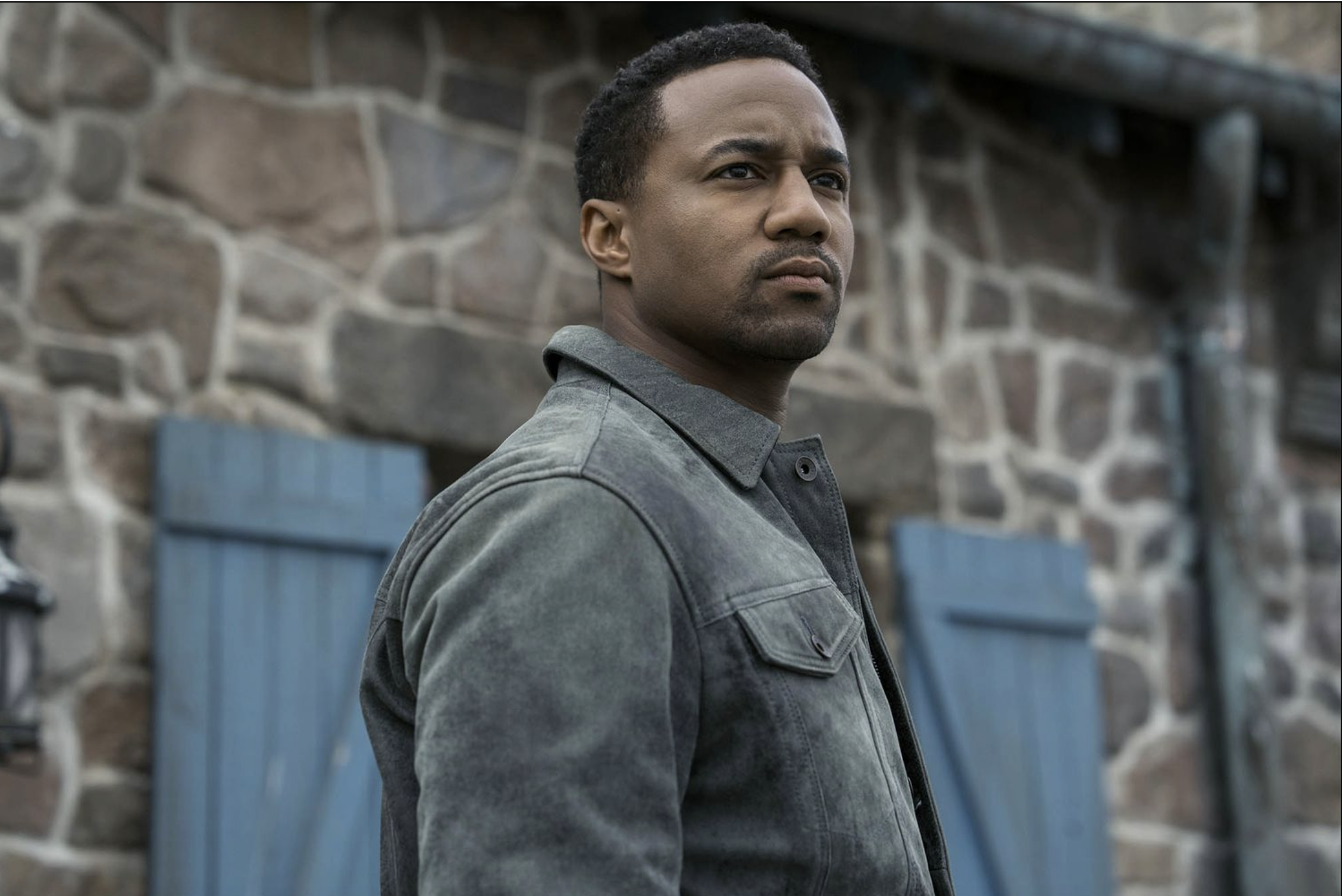
Said prison breakout is organized by Annie January/Starlight (Erin Moriarty) in reluctant conjunction with Butcher, also seeing Kimiko and former Seven speedster turned resistance ally Reggie Franklin/A-Train (Jessie T. Usher), whose arc as an initial antagonist in the series has come pretty close to full circle, and eventually does meet its tragic end following an intense chase sequence where A-Train is chased by Homelander into a forest after saving Hughie from being killed by Homelander, a nice redemption moment that echoes A-Train’s careless murder of Hughie’s girlfriend Robin in the series’ pilot. After said chase scene, Usher revels in his character’s last stand, standing defiantly against Homelander with an affecting final monologue that deftly encapsulates his character growth, before getting his neck violently snapped by Homelander in a fit of rage, which ends the season’s opener.
The second episode opens with a brief Vought-arranged funeral for Homelander to cover up the murder of A-Train with, in which we are introduced to now Vice President Ashley Barrett’s (Colby Minfie) new husband, super-powered evangelical preacher ‘Oh-Father’, played by Daveed Diggs. Last season hinted at Ashley giving herself superpowers via Compound V, in hopes of protecting herself from her ever-erratic boss Homelander, and this season’s first two episodes build to a reveal that her superpower is a very comedic one, at first presented as an internal monologue that is later revealed to be a second face on the back of Barrett’s balding head, covered up by a wig.
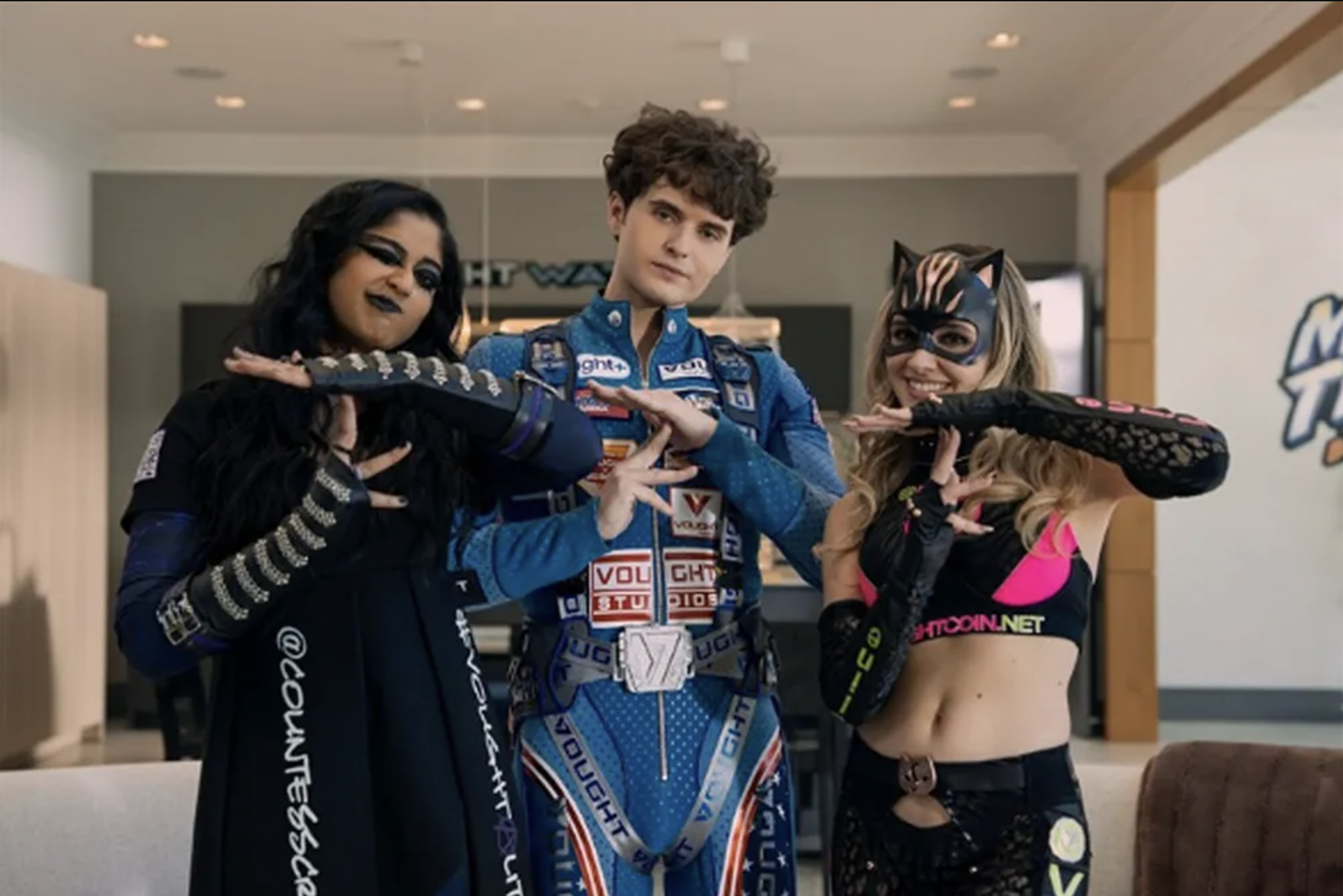
The season’s second episode plays out in much more traditional fashion for the show. The core team is on the run, and hunts down a new supe/set of supers in order to gain some kind of information or tangible ammunition in the ever-complicated fight against Homelander. We’ve seen this kind of plot before, but that isn’t to say the formula hasn’t been effective. This time, they aim to test an anti-super virus that has the potential to eliminate all superpowered individuals, engineered by Dr. Sameer Shah (Omid Abtahi), an ex-Vought scientist with direct connections to Stan Edgar (Giancarlo Esposito) and the Neumann family, now reluctantly working with Butcher and the crew. The crew finds their target in a young supergroup called the Teenage Kix, Vought-backed influencers living in a parody of a content creator ‘hype house’. Their primary target is Rock-Hard, a sentient rock-like superhero who has been domesticated due to his large mass, and the team aims to use him as the test subject for their anti-supe Virus. While in this situation, the emotional beats come from Laz Alonso, one of the show’s most reliable performers, who persuades Vought influencer Countess Crow (guest star Maitreyi Ramakrishnan) to choose an alternative path, looking to get into heart-to-heart stuff in which he recalls his own experiences as a father to a teenage daughter that he can no longer have contact with.
Elsewhere, Homelander defrosts Soldier Boy from his cryochamber and talks him into tracking down The Boys, with both plots ultimately coalescing in Soldier Boy confronting Butcher, Hughie and the other Boys, in an action packed suburban battle that sees Teenage Kix and Soldier Boy alike seemingly meet their demise due to the Boys finally testing their anti-supe Virus, in a dramatic turn that seems to spell the end for Jensen Ackles’ Soldier Boy, representing the Boys’ first victory against Homelander and his ego this season. A few quiet beats are given to the main couples of the heroes, Annie and Hughie, and Frenchie and Kimiko, as they weigh the ramifications of further deploying the super-virus, and how it could take out both Annie and Kimiko as collateral. The second episode’s final scene sees Homelander dramatically reacting to Soldier Boy’s death, before he slowly gets up off the stretcher as Homelander walks out of frame, revealing he survived the virus attack.
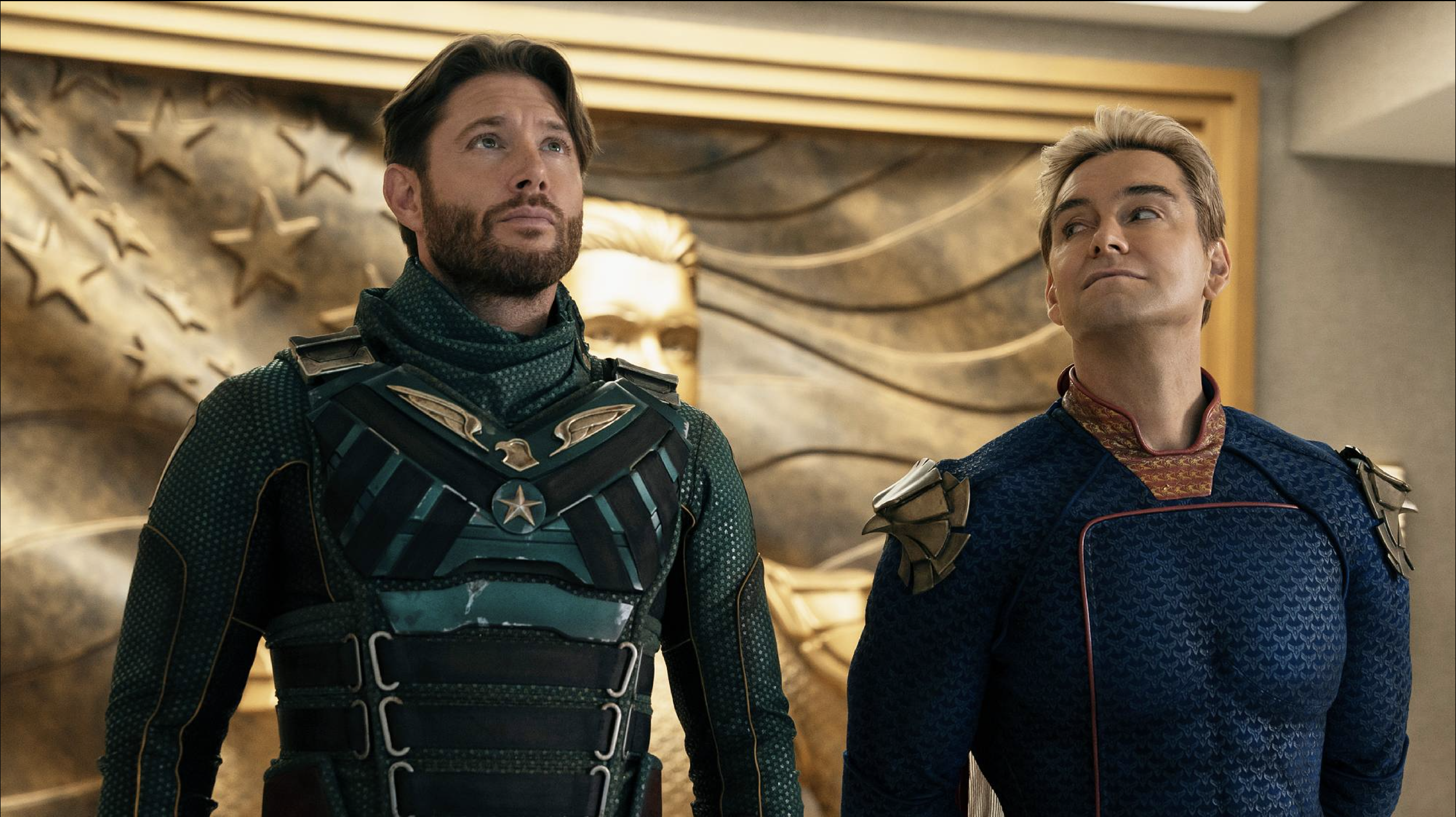
While not without their share of bold swings, these two episodes mostly feel as if the series has entered its ‘endgame mode’ for what feels like the umpteenth time. The core mission of every season is finding a way to take down Homelander, with other superpowered adversaries and government plots getting in our protagonists’ way, and while there is more of a sense of finality in the air, Season 5’s premiere does not do much to deviate from this, sans the loss of A-Train. Nonetheless, the series committing so heavily to its own stakes can be commended, and even amidst the seeming onslaught of formulaic dialogue and character interactions, the show always has its fair share of moments in which both dramatic and comedic gold are still able to be found. There is a reveal early on, in which Starlight and company leak the video footage from Season One of Homelander letting an entire civilian flight die, only for this massive in-universe reveal to be nothing but a mere scratch to Homelander’s proverbial armour, with parodical conservative media coverage denouncing the real footage as AI and doctored. An instance like this makes for great synthesis of the real-world parody the show thrives on, and accentuates the stakes of the final season a fair bit, with some of the protagonists’ biggest ammunition from a public opinion standpoint being squandered. Much can be made of the key rivalry between Butcher and Homelander lasting so long that Homelander more or less admits to enjoying Butcher’s presence as his foil, in real Batman-Joker fashion. In any case, the premiere episodes of The Boys’ fifth season will be sure to give fans a lot to chew on as the final season begins, with lots more chaos set up to unfold in signature fashion.