
'The Bear' Season 5 Review: A Savoury Farewell
after 5 seasons of careful marination, the series serves up a savoury, sentimental and immensely rewarding last course

The Bear can be described as a great many things, but above all else, it can be truly be called singular, and for a great many reasons. Beyond the show’s stylistic singularities, it emerges as an incredibly interesting intersection of a great many themes, both narrative and extraneous. Its 5 season run is nothing to take lightly, especially in an era in which ‘prestige’ television seldom releases on a yearly basis, let alone at such a consistent rate of quality, while also narratively and stylistically reinventing itself, even into its condensed, yet supremely effective final season. This idea of reinvention has always been relevant with the character arc of the show’s protagonist, Carmen (Jeremy Allen White), and part of the series’ enduring success comes from its ambition to keep reinventing itself in tandem. Though, such a statement is likely to prove unpopular amongst certain portions of the audience.
Through the releases of the series’ third and fourth seasons, there was much online sentiment demeaning the more abstract creative choices, such as a more impressionistic, non-linear episode set to Nine Inch Nails’ ‘Together,’ or more standalone episodes featuring comparatively relaxed and non-linear subplots with extended members of the ensemble, (ie; the surprise prequel episode ‘Gary,’) on top of extensive conversation as to whether or not the show still classified as a comedy in awards races. As mentioned, the condensed final season (comprised of 8 episodes instead of the usual 10) represents another singular change for the show, mostly folding out in real time over the course of the eponymous restaurant’s last day of service, bringing a renewed sense of urgency, tension, and environmental circumstance to the show after two seasons that felt more interested in slice of life beats, and yet, this change never feels like pandering to criticisms nor a ‘course correction,’ but rather, the embodiment of the phrase ‘locked in,’ feeling incredibly meticulous in its final act, while never losing the show’s now signature charm and spirit.
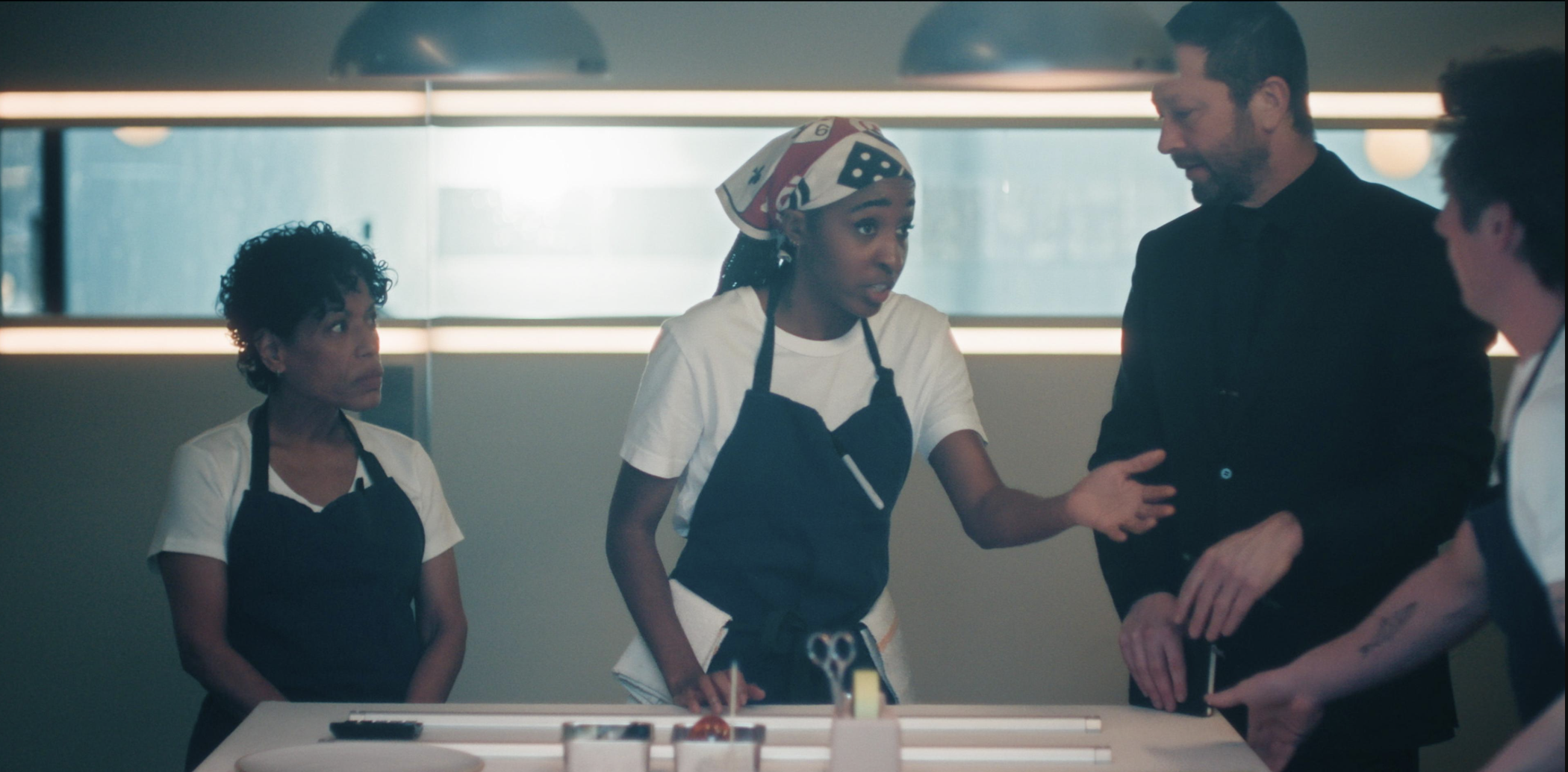
The decision to shoot season five with anamorphic lenses is a great example of this. A big reason why The Bear rose to fame was because of its frenetic pacing and gritty camera work and visual identity, with lots of close angles and such. The much crisper, wider imagery provided by the season’s new visual identity gives the show a sleek new polish that represents another example of the show’s symbiotic evolution, while still using this new look to evoke tension through the signaturely meticulous editing and sound design.
From the start of the season onward, it’s made clear that this is an all-or-nothing play for our beloved chefs, with many clouds, both literal and metaphorical. In classic Bear fashion, everything that can go wrong, does, as emotional tensions, financial troubles, and culinary miracles oscillate in a truly singular way. Yet, this final season never feels trite in its familiar goals and tribulations, thanks to some truly incredible payoff of seasons worth of marinating character arcs. A key arc of Season Four featured the parallel journeys of Carmen and Sydney (Ayo Edebiri), with Sydney’s growing doubt and resentment about her role at The Bear leading her to explore other culinary opportunities, before ultimately realizing that she’s right where she’s meant to be, all while Carmen realizes the opposite, and that the only way to save himself from his perpetually deteriorating mental health is to leave his time at The Bear and the culinary world at large behind. Enter Season Five, where Carmy is taking a bit of a backseat, both in terms of the workload, and narrative limelight. No disrespect is meant to Jeremy Allen White with this statement, but over the show’s run, both fans like myself and detractors alike have pointed out that the show is often at its weakest when it’s entirely focusing on Carmen’s turmoils. This seems blasphemous to say, as yes, the protagonist’s arc should always be prioritized, and it absolutely is in Season Five, just in a way that feels less navel gaze-y and focused, apropos to the continually diminishing returns of focusing on his romantic life. By featuring Carmen in a more accentuative capacity to both the kitchen and season arc (sans the finale), the aformentioned ‘lock in’ is able to fire on all cylinders more smoothly, and in tandem, let us see Allen White play the character in a new light, with more relaxed emotions and a healthier outlook, and way more smiles, the latter of which really do feel substantial, and cathartic in their own right.
Conversely, as the show has evolved, Sydney and Richie (Ebon Moss-Bachrach) have become leads in their own right, something this season absolutely recognizes and does not falter with them. Edebiri in particular has always brought an incredible energy to the series, and to see her inhabit a more assured Sydney as she takes on the head chef reigns is a real treat, and is given a great amount of focus.
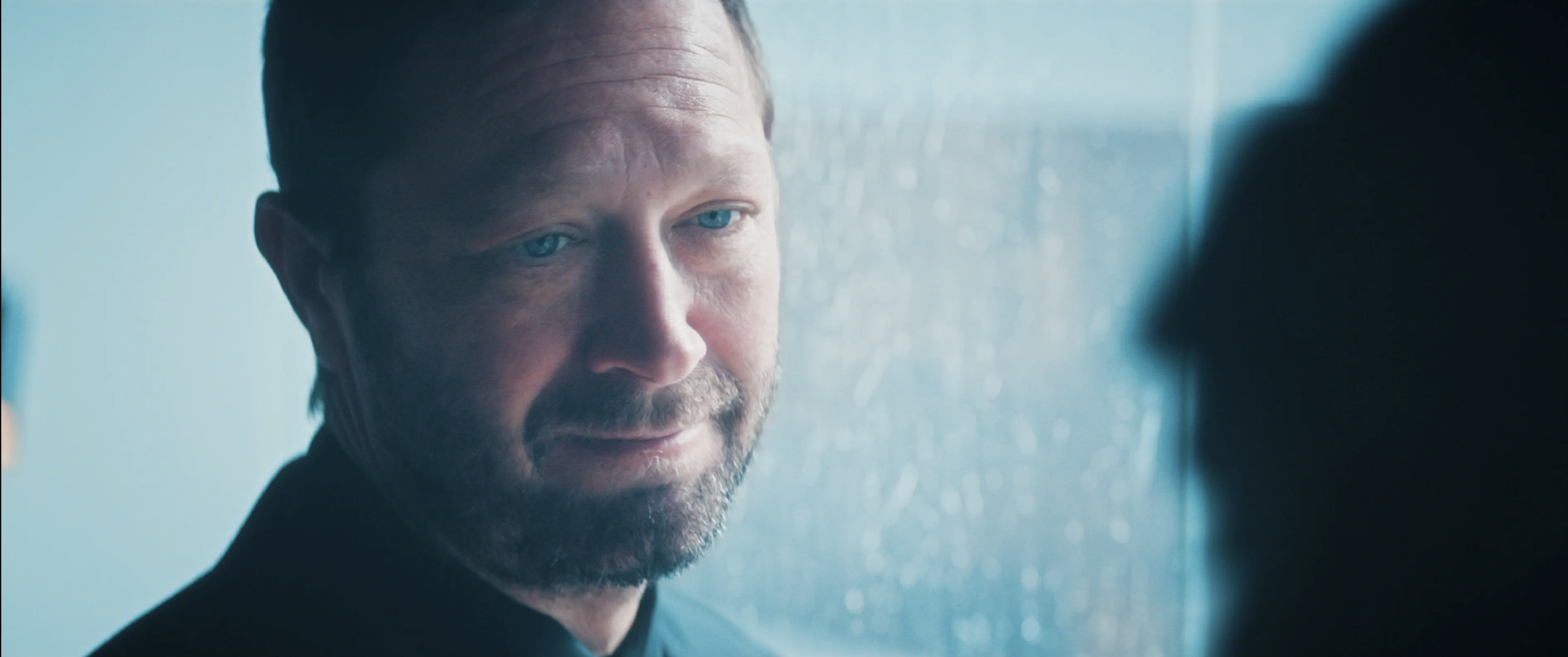
After Season Five, it is beyond safe to call Moss-Bachrach’s Richie Jeremovich one of the 2020’s defining television characters. The once-gruff and grizzled man who was stuck in his own ways to a fault has beautifully evolved in front of our eyes. In a lesser show, Season Two’s tremendous standalone episode ‘Forks’ would have marked the end of Richie’s growth and development as a character. It would have been easy to ‘flanderize’ Richie into this suit-wearing, meticulous intellectual with a heart of gold, but the show has never made him feel static, and Season Five continues to show us the deeply human side of Richie, someone who despite the odds, wills the impossible to happen on account of not being able to turn away patrons amidst a serious logistical crisis, and is it ever satisfying.
This review is already lengthy, but I could write so much more on the series’ penultimate episode, ‘Caramel,’ alone. To merely call the episode exhilarating would be doing it a disservice. Though it is the series’ penultimate episode, tensions are running so high, and creative juices are oozing at such a level with such genuinely satisfying payoff that it could very well be the series finale and still leave many satisfied. Caramel represents the ultimate culmination of the show in a great many ways, relishing in seeing our chefs what they do best, and letting them shine as the most soulful, evolved versions of themselves so much to a point where even a grand setback is able to become a moment of incredible catharsis, a testament to how delicately this show has approached its character work. All of showrunner and director Christopher Storer’s capabilities are put on display and turned up to ten. The evident influences of early Michael Mann films, (especially in terms of score) the razor-sharp oscillation between culinary greatness, superb editing, stakes, character, and the channeling of an inexplicable energy that I can only hyperbolically categorize as ‘destiny’ all coalesce so masterfully into a finale that yields the sweeping results of a Pixar climax, as referenced by the episode itself.
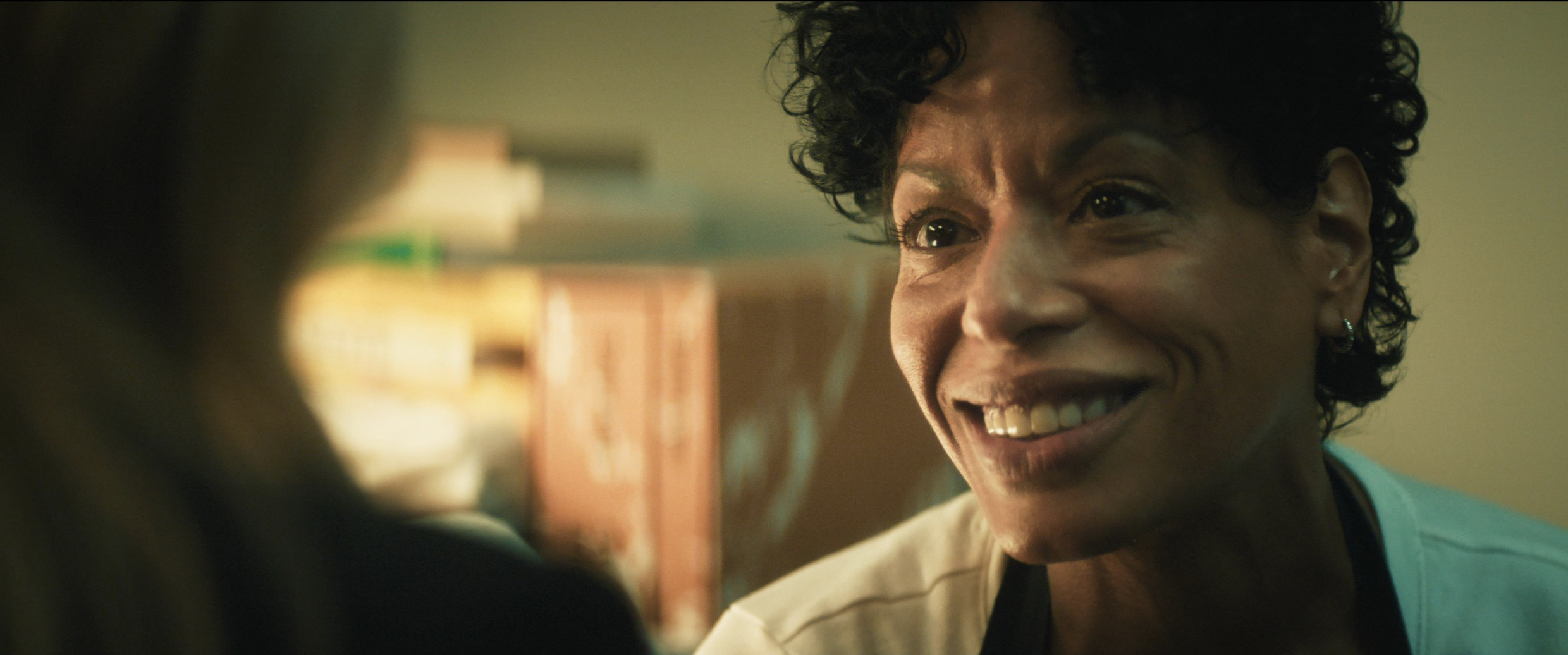
After all that praise for the exciting penultimate, the actual series finale serving as a more relaxed epilogue is a decision that will also yield much earned praise. Like all great finales, ‘The Original Beef of Chicagoland’ is equal parts sentimental and progressive, with an emphasis on the latter. This review has continually mentioned the series’ overall theme of reinvention, something that it preaches until its very last moments, in ways that feel truly impactful. The finale gives its much needed final wins to the ensemble. It was impossible for this reviewer in particular not to be completely moved seeing veteran chefs Tina (Liza Colón-Zayas) and Ebraheim (Edwin Lee Gibson) embracing their hard-earned new roles that they built up the confidence to see themselves in over the series’ run, and the same can be said for Lionel Boyce’s Marcus as he uses his culinary passion as a means of emotional expression and as an olive branch to his estranged father.
This review has also extensively mentioned the theme of catharsis, something that feels inherent when talking about a grand finale. As so many have pointed out, the sheer magnitude of how well Season One’s cathartic ending worked leaves a high bar for the rest of the show to clear, and yet, the series refused to be defined by just that, and continued to provide multiple forms of catharsis for several different characters across its run. As much as the show became known as a stressful experience due to its often frantic nature, it’s important not to lose sight of how much of the show is dedicated to healing, reinvention and self-realization, and this final season is a wonderful final reminder of that, and does a whole lot of right by its characters and overall intentions. Hard to call The Bear’s fifth and final season anything but a fantastic and savoury farewell.