‘Kick On’ - Australia’s Nick Kozakis On His Influences, Filmmaking Process, And The Teamwork That Goes Into Brutality
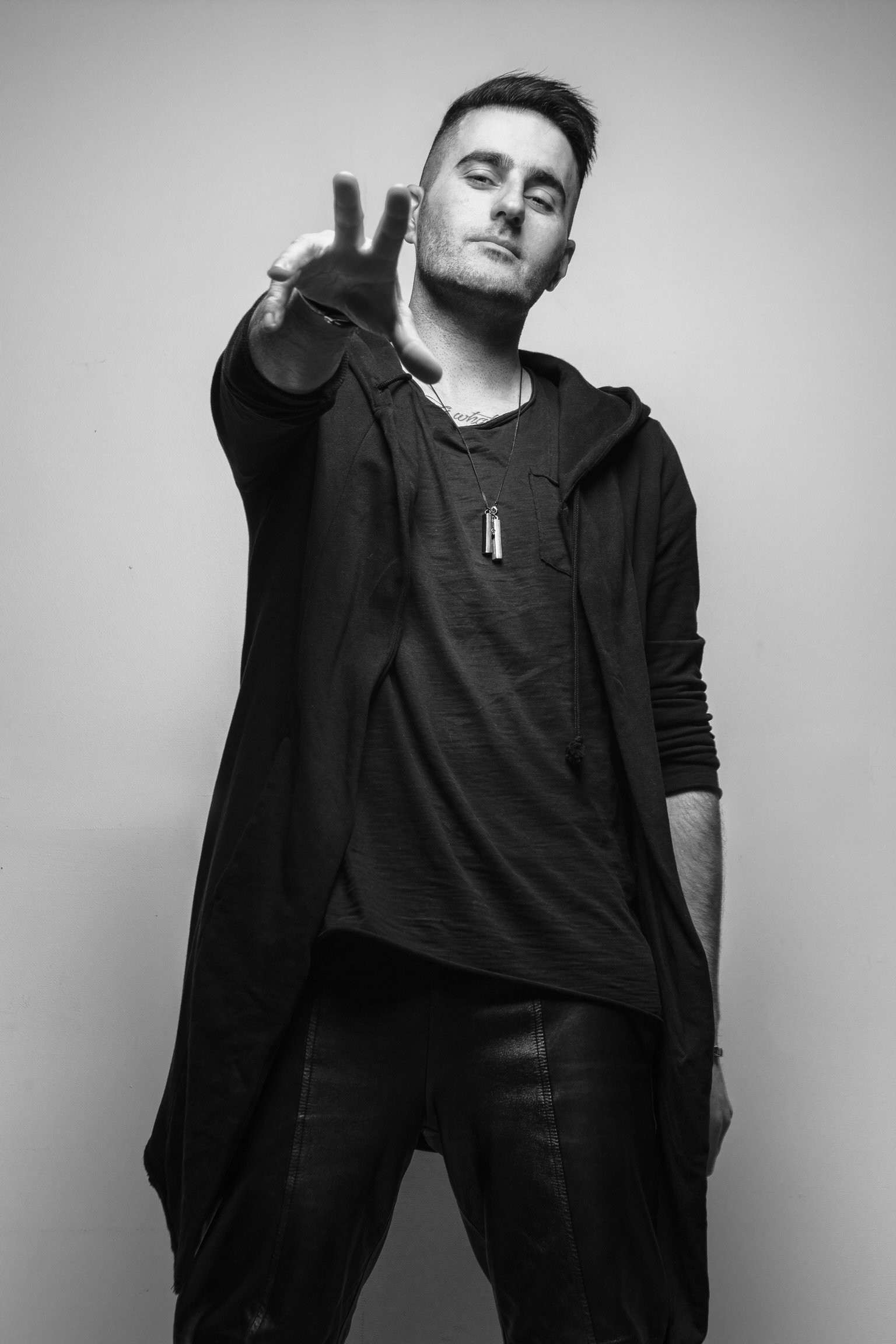
With the world premiere of Nick Kozakis’ hyper violent epic ‘Kick On’ during TIFF’s recent Midnight Madness slate, FilmSpeak got a chance to sit down with kozakis and discuss the work that went into making such a hard-hitting film.
FilmSpeak: The common consensus is that you blew the roof off the place. And at least now that I kind of know you, it's another case of the nicest people making the meanest art.
Nick Kozakis: I think it's just because I'm so traumatized and afraid of everything . So I just gotta, I now have to infect the world with that and just be like, hey, this is what I'm scared of. And when you show it to people and they're scared of it, it normalizes it. And it's like, okay, it's okay to be afraid.
FS: Is that where the film came from?
NK: Yeah, yeah, yeah. It's kind of like a little bit of everything. It’s a love letter to so many horrors. I think the best way to describe me is that I'm a film lover, cinephile, horror fan first, and action fan first, and then I'm a filmmaker. So like, this is a tribute to all the things that I love and also am afraid of. And then also like a little bit of a true story. You know, you can't put it legally at the front of the film, but it's like going to a party where someone pulled out a rifle, not violently, but just brought it out. And like, we didn't know if it was a prop. We didn't know what it was, but like all the air in the room just went out, you know, and then it was just like, it just sort of came and went. From there, Phil Klimek, the writer, decided, you know, what if that gun went off, you know? And what would that person do next, you know? And that's where the whole story was born.
FS: Were you involved in a lot of the writing process with Phil early on?
NK: Yeah. He kind of pumped out a draft and, you know, it was really awesome. Then we just kind of levelled up on ideas. Like, you know, he would come up with a death scene and then, you know, not to give any spoilers away, I'm like, hey, how can we make that worse? So then we just layer it up, and it was a very collaborative effort. But like, the genius and the writing goes to him.
FS: You mentioned at the Q and A last night that layering also has to do with your special effects supervisor.
NK: Larry Van Duynhoven, yeah! Larry’s a genius. He did Mortal Kombat, he did Bring Her Back, he did Furiosa, and many more. He's a freak. Working with him, he sees things through a different lens as well. So, I'll come up with something and he's like, “yeah, yeah, but what if we use this type of weapon?” And I'm just like, whoa, I didn't even know that that was a thing that existed! Like getting the audience to kind of ask that question, which, you know, again, in the spoiler territory, we won't go too far, but it's like, wow, it worked. But Larry's a genius. I remember there was one effect and he's like, “was that too much?” and I'm like, no, man, more is more! He worked on Mortal Kombat, so let’s bring that energy to this.
FS: That kind of Mortal Kombat maximalist energy is felt from the beginning. Was that something you always wanted to do, where the gore and violence are both completely over-the-top?
NK: Yeah, you know, one of my favorite action movies is The Raid.
FS: Midnight Madness alum!
NK: Midnight Madness! Yes, yeah! The alumni! I just love that so much that I was inspired by that sort of stuff. You know, the difference is that our characters aren't martial artists, but I wanted the fighting to feel real. I wanted it to kind of have that stylized movement. So Team Yaz, Warwick Sadler, Yasushi [Asaya], Dave [Chea], they were all part of this genius team that were able to choreograph such beautiful art. On the violent side of things, if you bring a shotgun to a fight, there's gonna be some nasty brutality there. We leaned into that violence. Having watched so many horror films, like, especially the Sam Raimi stuff, and even the later Evil Deads, it's like, if that's a standard, let's go for the standard, you know?
FS: In a similar spirit to that, could you give me some of the more obscure picks that helped inspire the visual direction for Kick On?
NK: The comparable titles are Don’t Breathe and Green Room. They were huge references. But violence wise, I love films like Frontiers, which is the French extremist stuff. Like any French extremist kind of violence, even Inside, like just watching the way that they treat violence and it feels so hyper real. Even Martyrs. There's that scene, I don't know if you've seen Martyrs, but there's a shotgun blast that just comes out of nowhere, and we kind of mirrored that a little bit in this. So, like, I think that there's a lot of those that we've pulled from.
FS: Speaking of other media, you have a background in music videos. What tricks from your music video career made this process easier?
NK: You know, the biggest thing that we took away from being a music video director is speed. Like, sometimes we've had to deliver a video in 48 hours or 24 hours, even. Liam Kelly, who's our editor, I've co-directed a bunch of stuff with him, of course. So it's us using every trick in the book to just shoot and go, go, go, and spray that joint with coverage. I think that was so hopeful, but also, the frenetic energy on set helped us get what we needed. You can also sort of feel that in the film, like the final product, you're just always like, oh, wow, this just keeps moving! That's how we were on set.
FS: And that also extends to the music, with a lot of these upbeat, high-RPM tracks. What kind of bands and artists were instrumental to the feel of this film? I know we have similar music tastes.
NK: Yeah! Like, I love post-hardcore and metalcore music. But this kind of went into a territory where it's like, I wanted to infuse a little bit of hip hop and electro as well. The metal scene now, which I think is very similar to the horror scene, we’re kind of like the misfits. It’s really cool to be that way. I feel like metal has evolved where it uses electro stuff, and it uses hip hop. Bands like Memphis May Fire, one of my favorite bands, uses that high pace kind of thing and those digital glitches. You know, I mean, even Ronnie Radke with Falling In Reverse, you know, he's like across so many different genres, you know?
So I think that's what we wanted to bring into this film where it's like, bring a bunch of genres in. We've got the electro side and the nightclub, and, you know, having Gabe Mounsey and Johnny Klimek come in and bring in their electro kind of Prodigy-esque type stuff. I think The Prodigy does that really well too. We really wanted to kind of have like a hybrid of all the genres kind of coming in and hopefully have that connective tissue run through it.
FS: That hybrid versatility is also felt in the production design. What were some of the discussions around that?
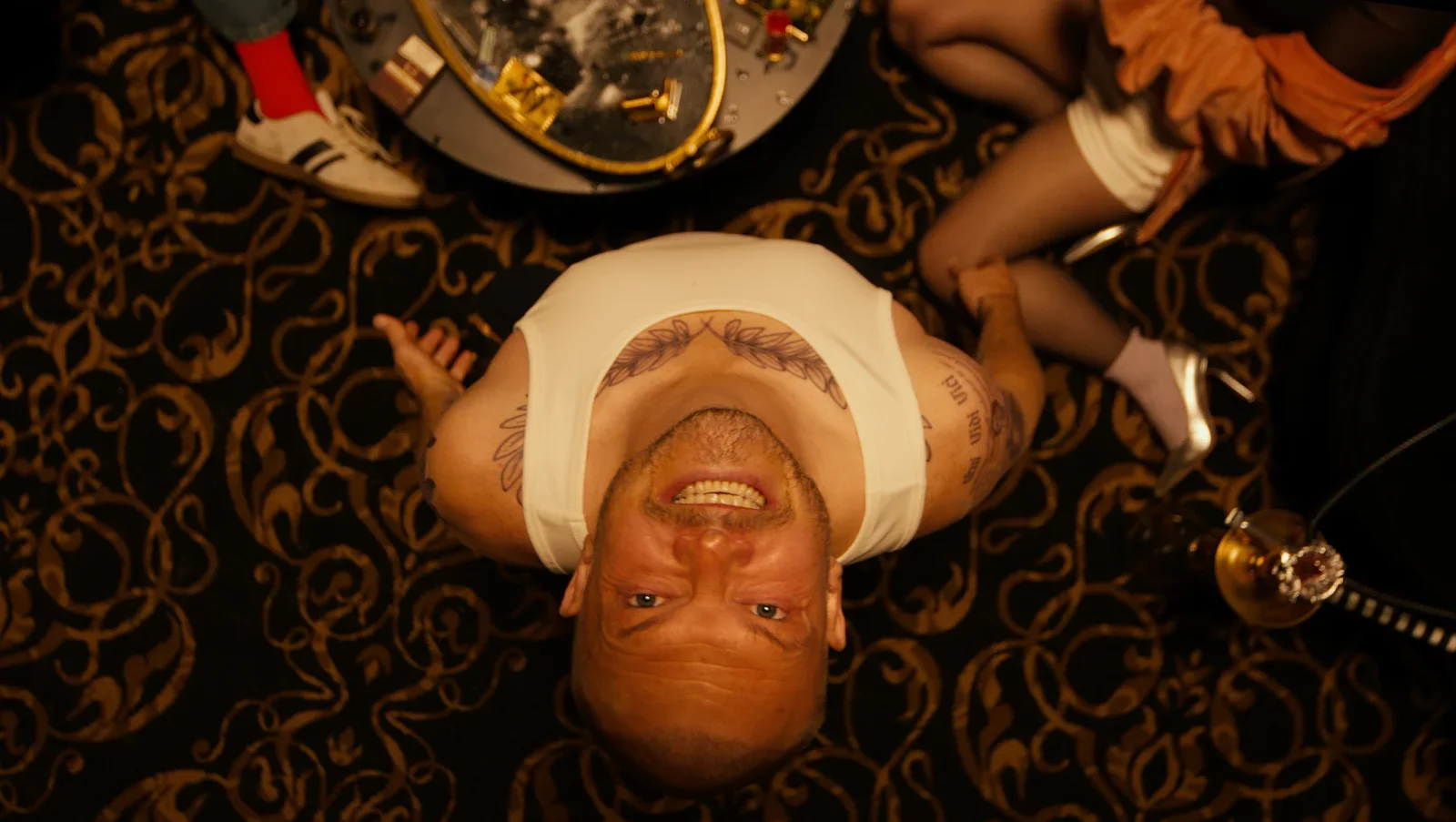
NK: I feel like there's like a holy trinity on set, right? There's a tripod, let’s call it. It’s the director, the cinematographer, and the production designer, and you all have to get on the same page. This came early for us. Bianca Milani, she's amazing. She's our production designer. And Shyam Ediriweera, who's our cinematographer. We all synced up to be like, okay, we are mainly dealing with one location, right? So, how do we stylize this so that it doesn't feel boring to watch every frame look the same? She set dressed things to be quite different, he lit things to be quite different, and they collaborated in that creative deck early on.
That's why whenever the film evolves, it kind of changes palates, but we still need to have the connectivity creatively. It can't just be like a totally different world, you know? We loved leaning into the Roman-esque kind of feel that Ray loves and we just really kind of push that aesthetic whilst always keeping it quite gritty. The whole film is generally quite gritty except for the hospital, which is always a safe space, but everything else felt like it was just like, if you touch it, you can get infected.
FS: And that extends to the cinematography as well, where I found that a lot of the more anxious scenes were shot with very shallow focus. Was that a really important tool for you to convey anxiety in the film?
NK: Yeah, there was a very early conversation with Shyam where I wanted everything to be quite locked off when we’re setting up the worlds. If you notice when they enter the apartment, there’s steady cam movement and tripods. But once the gun comes out, then it becomes loose and shallow. You’re really tight in there, and the suffocation just keeps getting worse and worse.
FS: How long did you have those sets for?
NK: It was a very tight schedule because where we shot it, it was the first time a film has ever been shot there. It's usually a storage facility for productions, and we were the guinea pigs. We did it and it worked out so well that they've turned it into a sound stage. We only had a limited time to do it because it was booked out on either end. We had about 20-ish days of principal photography to actually get it done, and just had to punch and push through it. It was tight, you know? It was very tight. In those days, we did 1536 setups.I think an average production might go from 20 to 40, not to guesstimate for how other people shoot. But yeah, like, that's a lot. One day we did 113.
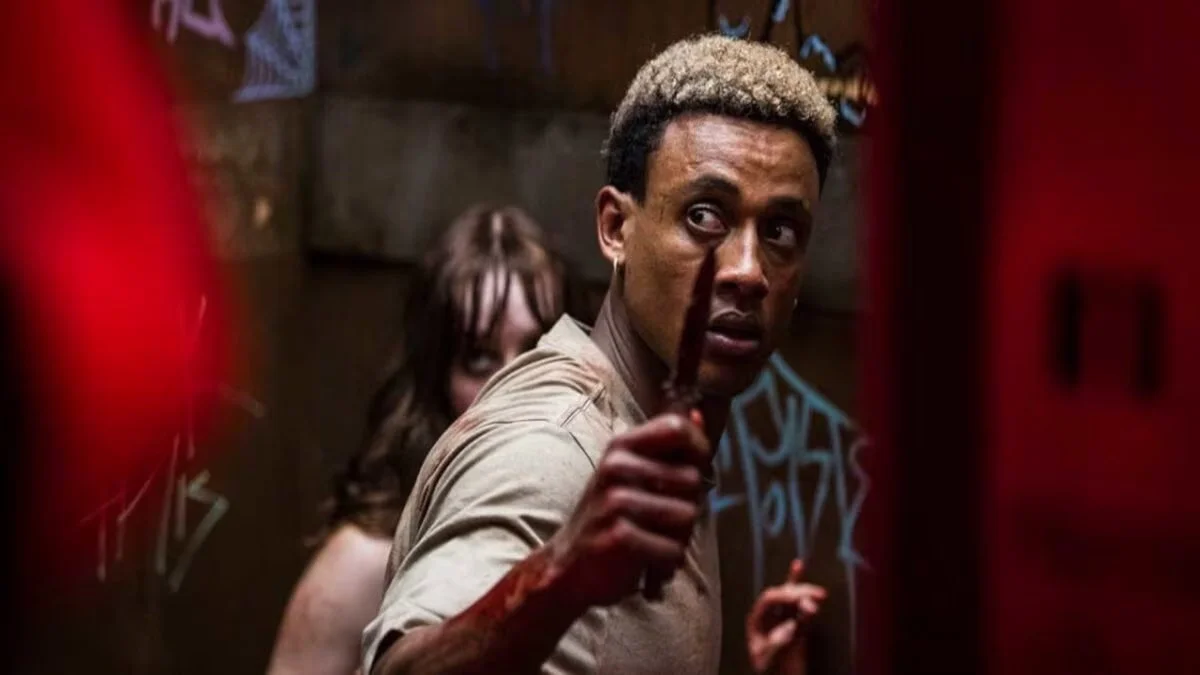
FS: I wanted to ask about that day specifically because you mentioned it last night and I could not believe what I was hearing. How was that possible?
NK: So, the easy part was, it was the first day. It was the montage. So, we just had the camera on the steady cam and then also we just kind of had locked off shots. So we had two cameras going and we did all the music video-ey kind of montage-y stuff, and that was the first two-thirds of the day. And then the last third of the day was the sequence with the heroin girls, where we have a fight sequence there, and that was just so well thought out. We pre-vised the whole shoot. As in we pre-vised all the action side of things. So when we got in, we shot it sequentially. So we knew we were shooting the edit. It was tight, and then we always had 2 cameras going at the same time. Whilst one was picking up the hero shot, we had a bonus shot to the side. So, sometimes it becomes a little BTS looking, but most of the time it actually looks really good.
FS: I have one more question for you. The prevailing visual theme in the film is that anxious feeling, which can apply to the characters as well as the creatives involved. What role do you think anxiety plays in your creative output? There seems to be a common sentiment that if you’re not anxious towards your art, maybe you don’t care enough.
NK: For me, there's always that little imposter syndrome that kind of gets into the back of your head and I don't know, I feel like it makes you a little bit more of a perfectionist. You'll kind of care a little more. That can also swing me the other way, like maybe you might overthink things too much and not do them. I like getting out of my comfort zone. I like experimenting. I think it helps me grow as a filmmaker and, you know, this film is proof in the pudding. I’ve done stunt work before, and I've done some action sequences, but I've never done it to connect it with narrative. It was always just to look cool, and that's been for music videos. But in this instance, you've got to bring the character into this as well. We would always do the action sequences and then do a character pass.
So, I don't know, I think it's kind of good to go in a bit nervous, to have a bit of the jitters, but also having a crew that knows what they're doing and a cast that knows what they're doing, and they've got their confidence in their thing, we’re all in the same boat. Wherever it might dip, someone will pick it up. It's like any sporting team, right? I can only reference Aussie rules football, which means nothing [to North America]. If it's not working, change the magnets, change the positions to kind of help what needs to be done. And ultimately, when you're in the deep end, you just gotta keep shooting. Just keep shooting. It doesn’t matter. I'm a firm believer of get coverage, keep going. Keep trying to push through it. If something doesn't go your way, figure out a quick solution to kind of make it, get close to that, and then let go of what the original idea was, because no one's gonna remember that. They'll think that this was the intention of what you were going for.