
‘Nuremberg’ Review: James Vanderbilt's Bizarre World War II Drama
While ‘Nuremberg’ boasts a strong cast and admirable intentions, the bizarre choices it makes along the way turn what could’ve been a thought-provoking drama into a hollow and trite object.
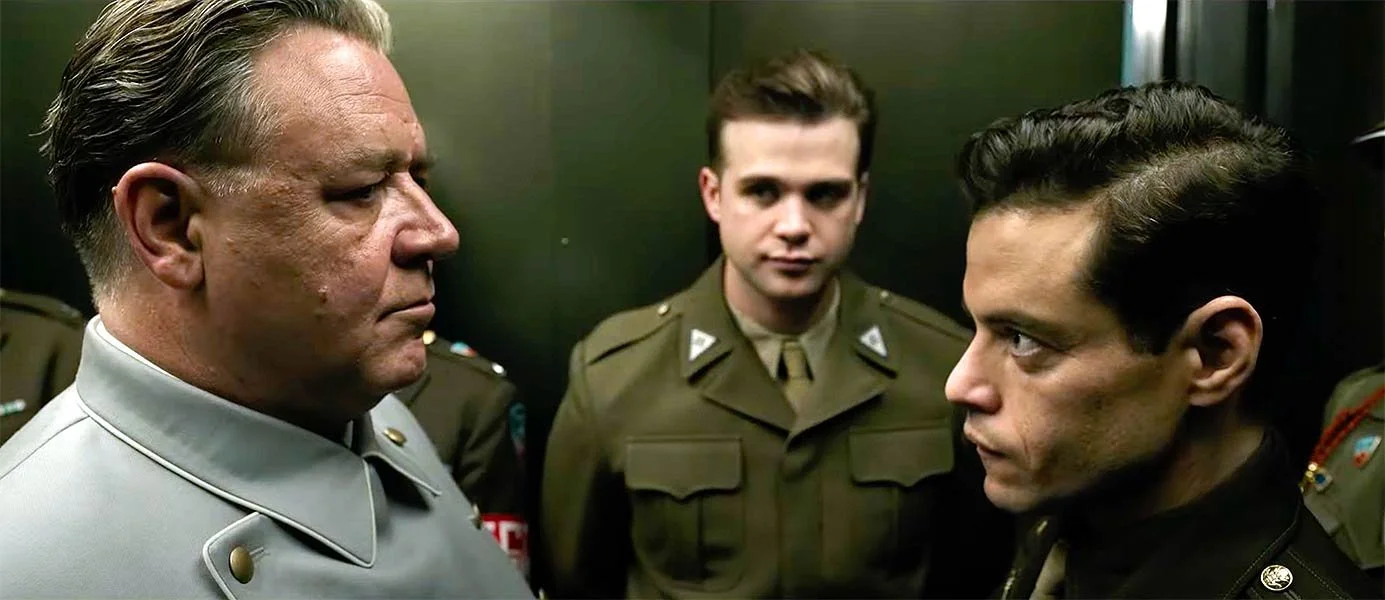
James Vanderbilt’s Nuremberg, adapted from Jack El-Hai’s The Nazi and the Psychiatrist, is a bizarre object. On the one hand, it contains some genuinely great sequences that not only reenact the historical Nuremberg trial but also ask the audience to reckon with the ideals of fascism in ways that aren’t obvious at face value but become clear through the American filmmaker’s frequent juxtapositions. On the other hand, it has no idea who (or what) it wants to focus on and has difficulty distinguishing the notions of “sympathy” or “examination.”
The movie is primarily told through the perspective of Dr. Douglas Kelley (Rami Malek), a psychiatrist who has been tasked by the United States Army to clinically evaluate the Nazi prisoners who have surrendered and are likely going to stand trial at Nuremberg. Among those is Reichsmarschall Herman Göring (Russell Crowe), Adolf Hitler’s second-in-command, who was designated as the Führer’s successor should anything occur to him. With the trial forthcoming, Kelley now believes it is the perfect opportunity to parse who Göring truly is, beyond his narcissistic personality traits and the façade he puts forward in front of the doctor and his translator, Sergeant Howie Triest (Leo Woodall).
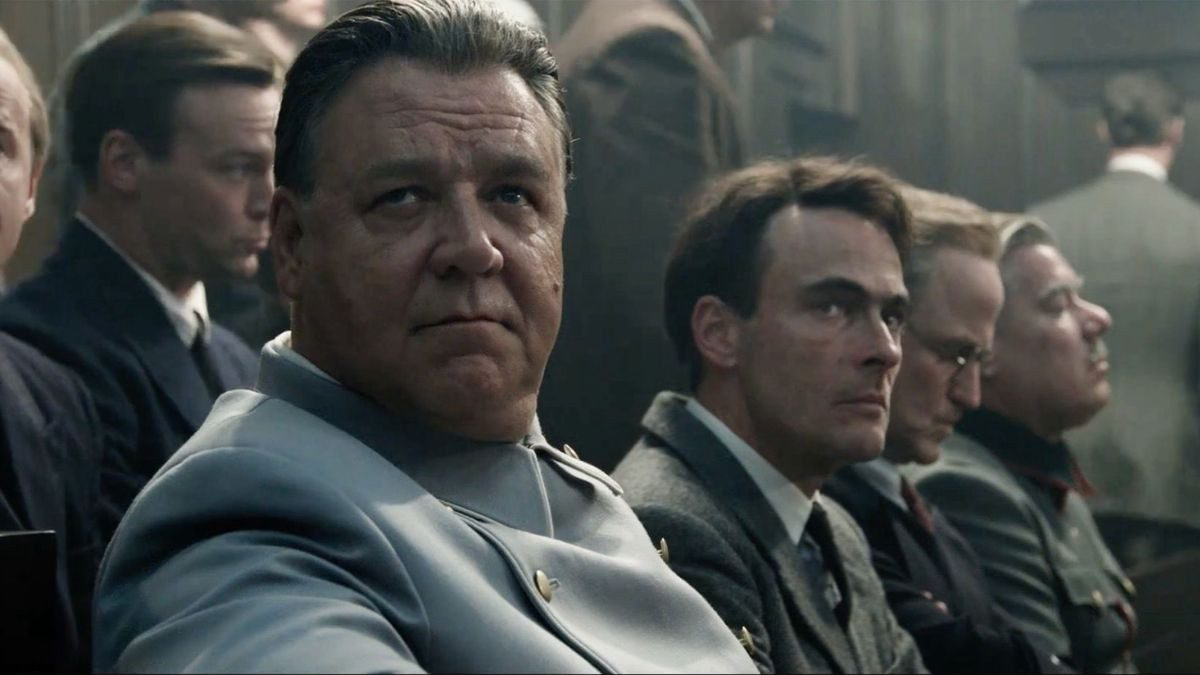
It's at that point that Vanderbilt, who also wrote the screenplay, begins to tread on the fine line between humanizing a monster like Göring and putting us in the shoes of a doctor who is trying to understand him, clinically examining him with the detachment a medical professional should have toward a patient. The thing is, when you have scenes where Kelley shows Göring his most famous magic trick as they debate the significance of the word “abracadabra,” it’s hard to understand exactly what the writer of White House Down, Murder Mystery (and its sequel), and, most recently, Fountain of Youth, wants to illustrate.
Of course, Vanderbilt also wrote David Fincher’s greatest movie, Zodiac, but that seems so long ago compared to all of the other forgettable stuff he wrote in the process. And Nuremberg seems stuck between genuinely impassioned segments, where a clear throughline is heard both within the historical context of World War II and outside of it, and some baffling filmmaking choices that ultimately dilute the emotional impact of the story and its broader significance, where leaders who commit genocide and war crimes, in 2025, are – somehow – evading the International Criminal Court because of Western countries’ blind support towards these leaders.
Instead of presenting the story with a modicum of respect, Vanderbilt infuses the proceedings with poorly timed humor (and visual gags) that feel misaligned with the gravity of the situation, especially after quickly shifting the movie's atmosphere when he recreates the screening of George Stevens’Nazi Concentration Camps. This film was presented at the Nuremberg trial as evidence of what the Nazis did during the Holocaust inside the camps, the extent of which was not truly known until the release of the footage.
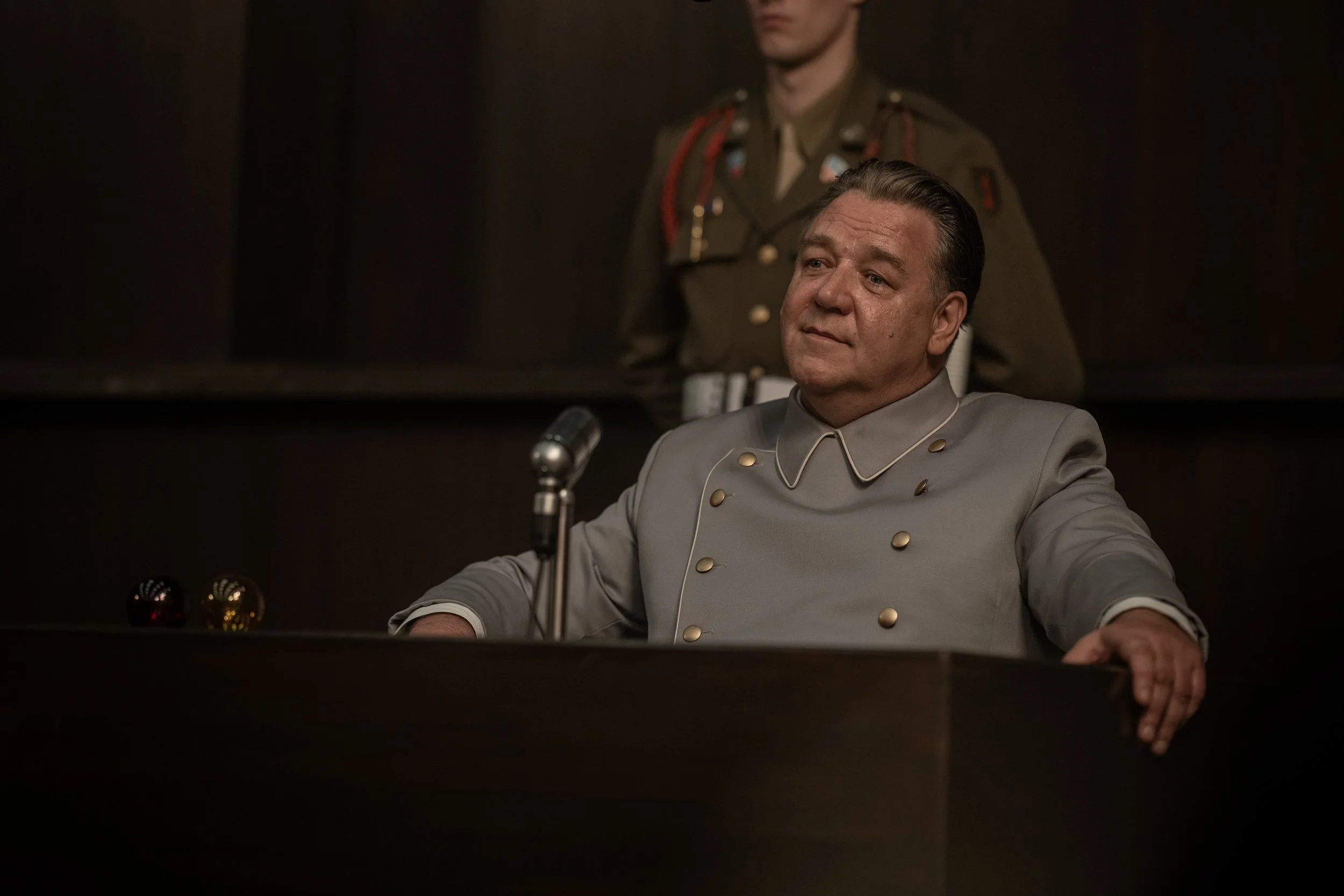
In that scene, the film shows dead bodies being recovered, piled up, and buried en masse. It’s horrifying. And the stunned silence of the crowd, as they reckon with the extent of the crimes committed during the Holocaust, speaks for itself. Kelley, who has been quasi-sympathizing with Göring, going so far as to develop a kinship with his wife, Emmy (Lotte Verbeek), and daughter Edda (Fleur Bremmer), walks out of the room and has a change of heart towards the Reichsmarschall, knowing that he’s been lying to the doctor ever since they met for the first time, and has been manipulating his sympathy.
That’s an interesting throughline, but it’s unfortunately never deepened or made genuinely evident that there’s some form of manipulation going on between Kelley and Göring in earlier scenes, especially when he develops a connection with his wife and daughter. It makes the shift, as powerful as the Nazi Concentration Camps scene is, feel unnatural in the broader context of the movie, especially when it has difficulty honing in on its central subjects, alternating between Kelley’s desire to figure out why Göring is such a monster, and Judge Robert H. Jackson (Michael Shannon) setting up the most crucial trial in world history.
In fact, during table-setting sequences, there’s a scene where Jackson’s assistant asks him, “Who’s more powerful than The President?”, which Vanderbilt then comedically cuts to an establishing shot of The Vatican, as if the Pope were a character who needs to be assembled like he’s part of The Avengers. Small choices like these reduce sequences of high-spirited tension, particularly during its climax, the examination of Göring by Jackson, who attempts to have him admit to the court that he signed a decree authorizing the “Final Solution to the Jewish question.” It’s as if Vanderbilt isn’t meeting the moment with the seriousness it deserves, preferring to add cartoonishly sardonic humor in places where it’s unwelcome, which adds no tangible texture to any of the characters being developed on screen.
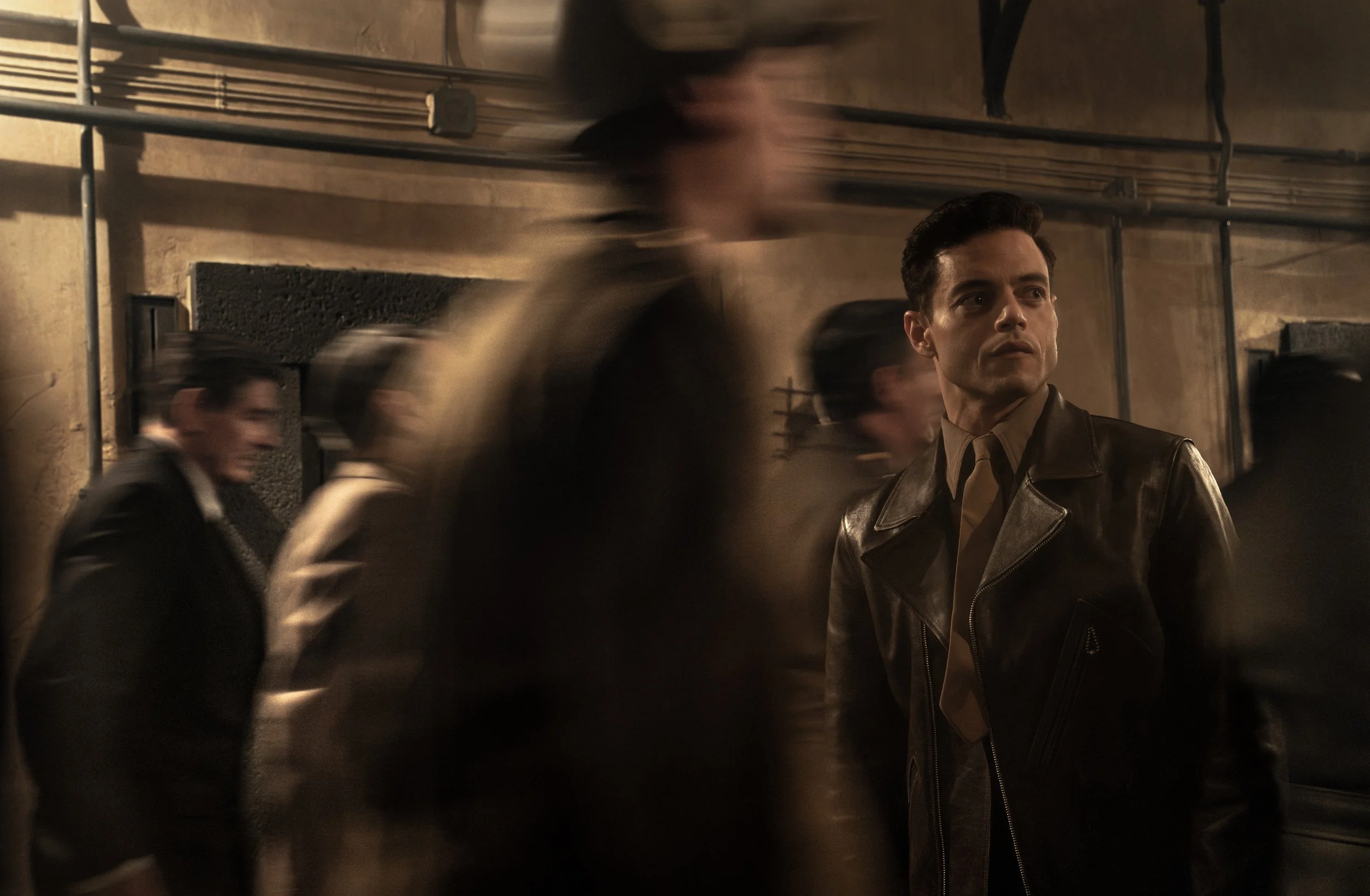
It's also shot – and scored – with the energy of a television film (Vanderbilt may be a fan of Yves Simoneau’s 2000 telefilm Nuremberg, which starred Alec Baldwin as Jackson and Brian Cox as Göring), preferring to create scenes where the characters explain to the audience what the character is doing, while also pointing out prominent figures within the Nuremberg trial – again, as if they were part of a Marvel film – instead of trusting our intelligence for a few seconds and let Dariusz Wolksi’s photography speaks for itself. It then abruptly switches gears through an 11th-hour scene that attempts to link Kelley’s research as a prescient warning that fascism, although defeated in the Nazi party itself, is lurking in the shadows and waiting for the perfect opportunity to rise again, not only in Europe, but in other parts of the world, including America.
This could’ve been what the movie wanted to discuss. By that point, however, it seems to act as a desperate plea to audiences that the story isn’t truly over, rather than the film’s primary focus. Malek and Shannon are both strong, while Crowe continues his work to collect as many European accents as he can, to varying degrees of quality. Yet it’s hard to find anything of note in a movie that doesn’t give us a reason to care about anyone on screen, because it has no idea who (or what) it wants to talk about, and raise awareness. The Nuremberg trial changed the course of history forever, but Vanderbilt shows no desire to extract anything of significance from what it depicts. The end result comes across as hollow and trite, a baffling drama with far too many questionable choices to have any impact on the viewer long after the film has ended. It’s a shame, but I expected nothing less from someone who spent the last eighteen years churning out one forgettable film after another…