
'The Social Reckoning' Review: A Timely And Compelling Follow-Up
Sixteen years after the cultural phenomenon that was ‘The Social Network’, writer/director Aaron Sorkin has returned with a follow-up in ‘The Social Reckoning’, a timely and compelling film that functions more as a companion piece than a sequel.

‘The Social Reckoning’ centers on a young Facebook engineer named Frances Haugen (Mikey Madison) who seeks help from a Wall Street Journal reporter named Jeff Horwitz (Jeremy Allen White) to remove the locks on the company’s most guarded secrets and reveal the skeletons in their closet. Making a follow-up to ‘The Social Network’ would be an unenviable task for any writer, but Aaron Sorkin is able to prove with ease that this is a story worth telling all these years later.
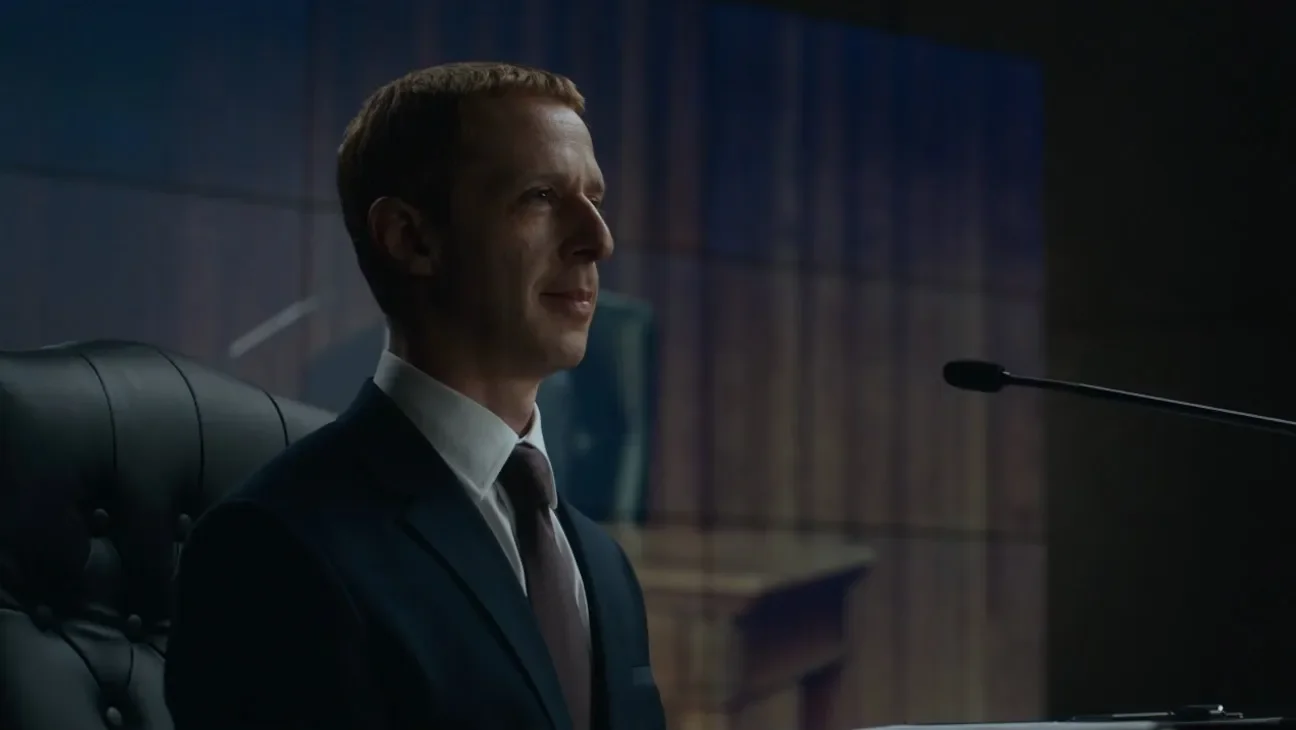
Sorkin has assembled a tremendous cast here and fortunately none of them are remotely wasted or underutilized. The film is largely a two-hander revolving around the core relationship between White and Madison’s respective characters and both of their performances rise to the occasion. Both Madison and White are quietly magnetic, delivering emotionally charged, nuanced performances that sell their relationship exceedingly well, the two sharing a natural chemistry that works in the film’s favor. What starts as a purely secretive and transactional relationship evolves into something far more compelling and the two of them sell that transition deftly as they continue to prove they’re two of the most talented young actors working today.
The supporting cast is terrific as well with plenty of standout performances. Bill Burr and Betty Gilpin seem born and bred to deliver Sorkin dialogue, each of them chewing up and spitting out their juicy material with a fiery pop as they make the most out of their limited screen time as a legal consultant and an employee of the Wall Street Journal respectively. Then there’s Jeremy Strong who portrays Facebook CEO Mark Zuckerberg, following in the footsteps of Jesse Eisenberg’s towering performance that rightfully landed him an Academy Award nomination. Fortunately, Strong is able to make this role his own, not only able to eerily emulate the physicality and mannerisms of the tech giant, but glide past sheer imitation effortlessly. Strong is a ferocious force here as he squares off with a myriad of characters in an attempt to defend his actions and dubious ethics. Though he may not receive as much screen time as audiences might think, he capitalizes on each and every second he’s given to make a lasting impact.

Unsurprisingly, Sorkin’s script is also a notable standout, delivering facts, numbers, names and a litany of other information briskly, but in a highly accessible manner for the audience to properly digest and comprehend. His trademark dialogue is once again on full display, though not as viscerally incisive as his previous work. However, there are plenty of emotionally compelling exchanges and sharp storytelling throughout, especially as the film delves into the murky business practices of Facebook and its proven toxic effect on its users. Those looking for a proper sequel to ‘The Social Network’ should firmly check those expectations at the door because Sorkin makes it clear from the jump that this is an entirely different animal. This is more so an investigative journalism film that shares far more DNA with Sorkin’s ‘The Newsroom’ than it does with its predecessor, a refreshing change of pace that allows the film to function as a companion piece and stand on its own two feet. Once the investigation fully takes shape, Sorkin begins to fire on all cylinders.
Though some can argue the film is a little too late to the game in terms of bringing this information to light, this story with all of its intricate details and discovery still feel as timely and significant as ever. Sorkin does an effective job exploring how the platform has been responsible for radicalization, the spread of misinformation and other ethically rotten practices without ever feeling heavy-handed or preachy. Especially as this investigation coincides with other impactful events over the span of the multiple years it covers, the connections become alarmingly clear and deeply unsettling, the non-linear structure of the film working tremendously well.

However, what this film makes abundantly clear is that while Sorkin continues to be an incredible screenwriter, he lacks any sort of tangible voice behind the camera, an issue that has plagued each film he has directed prior. The visual storytelling here is largely flat and uninspired, lacking any style or flourishes that allow it to stand out. The transition from David Fincher to Sorkin at the helm makes a stark difference and one that is quite underwhelming. Not helping matters is the film’s surprisingly listless pacing that ushers the story along rather glacially. As a result, there is a severe lack of narrative propulsion and momentum, especially as the investigation reaches its climax. These two issues nearly blunt the film’s emotional impact, but thankfully Sorkin is able to land the plane smoothly despite the turbulence.
‘The Social Reckoning’ may not be as entertaining or memorable as its now iconic predecessor, but Sorkin and this incredible cast prove that this is a story worth telling, one likely to spark many lively and passionate conversations long after the credits roll. However, this follow-up needed more oomph, packing an impressive punch that may make audiences’ knees wobble when it should really give them a knockout emotional blow.