‘The Further Mis-Adventures of Cliff Booth’ Review: Tarantino and Fincher Play To All Their Best (And Worst) Qualities
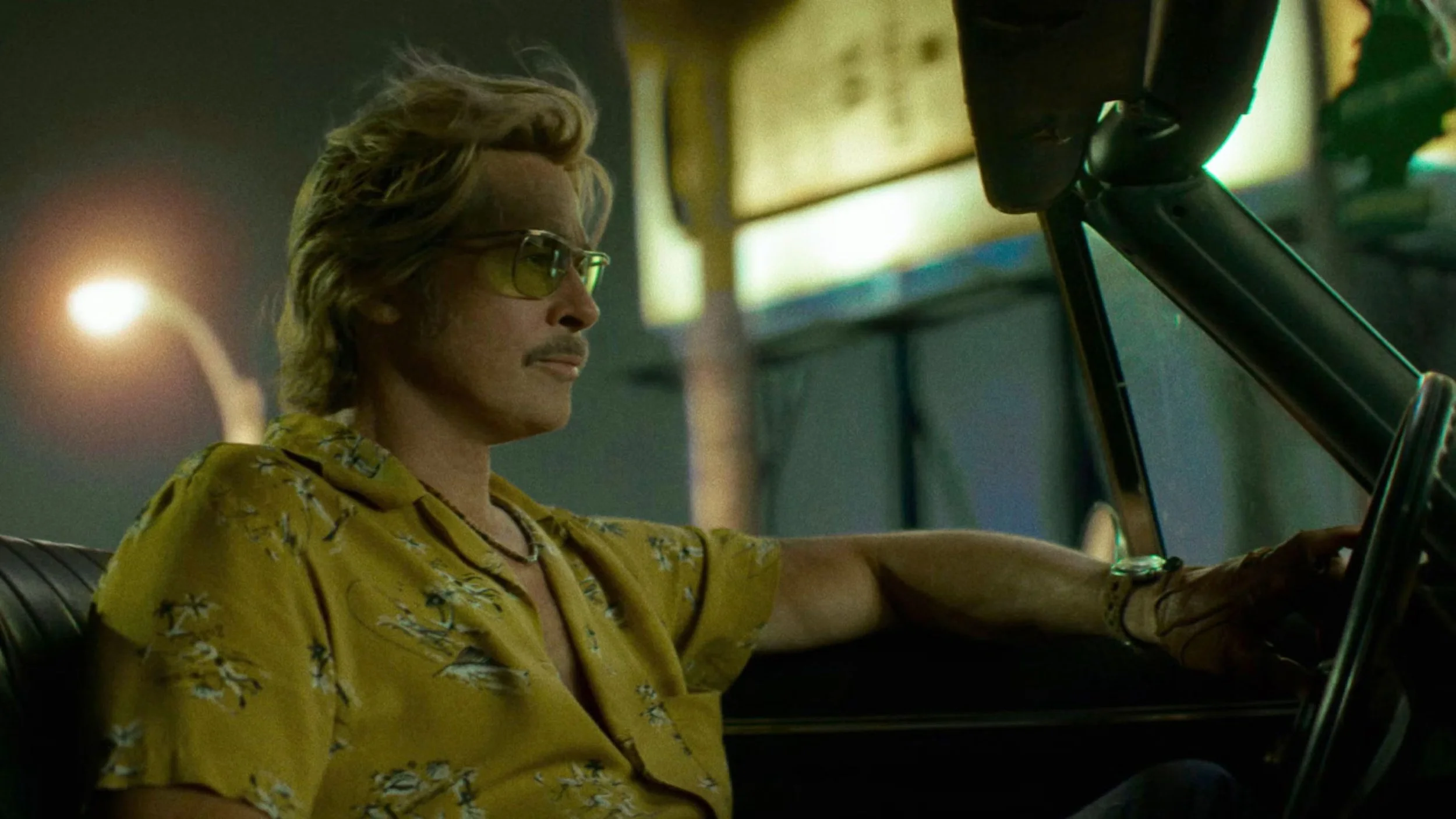
Two Hollywood juggernauts throw everything they have into a sequel to create possibly one of quentin Tarantino’s best.
More than seven years have passed since ‘Once Upon A Time… In Hollywood’, and its long-anticipated sequel is finally here. ‘The Further Mis-Adventures of Cliff Booth’ marks the first collaboration between Quentin Tarantino, who wrote the screenplay, and David Fincher, who directs. Working beside them is Brad Pitt, who returns as the ever-so-charming Cliff Booth. The story follows Booth, who now works as a movie theater projectionist while cleaning up shady business all over Hollywood. After he gets a new job, he has to balance a sleazy boss with a budding romance. Over the past week, the film has been subject to online controversy regarding its use of generative A.I. in many key scenes. Fincher recently confirmed its use for dialogue replacement and lip-sync adjustments, sparking further discussions regarding its morality in Hollywood. Personally, I found myself struggling to separate my views on the ethics of its usage in film from my thoughts on the film. This review will balance out both, and (spoiler alert) will forgo the usual letter grade we use here at FilmSpeak.
Let’s start with the good. I can safely say that The Further Mis-Adventures of Cliff Booth incorporates the best qualities of both David Fincher behind the camera and Quentin Tarantino holding the pen. It’s viciously violent, and shows you from the first act that they are holding back no punches. Fincher is also no stranger to violence in film, and shoots those scenes with a terrifying finesse. Opposite that violence is the same humorous balance we’ve all come to love with Tarantino. When assessing it tonally, it’s exactly what you’d expect from a 70s crime outfit. It's gritty and raw, and uses its surroundings to help suit the story. The film is further driven back to the 70s by a masterful score from Trent Reznor and Atticus Ross, whose period-accurate stylings serve as the film’s defining standout.
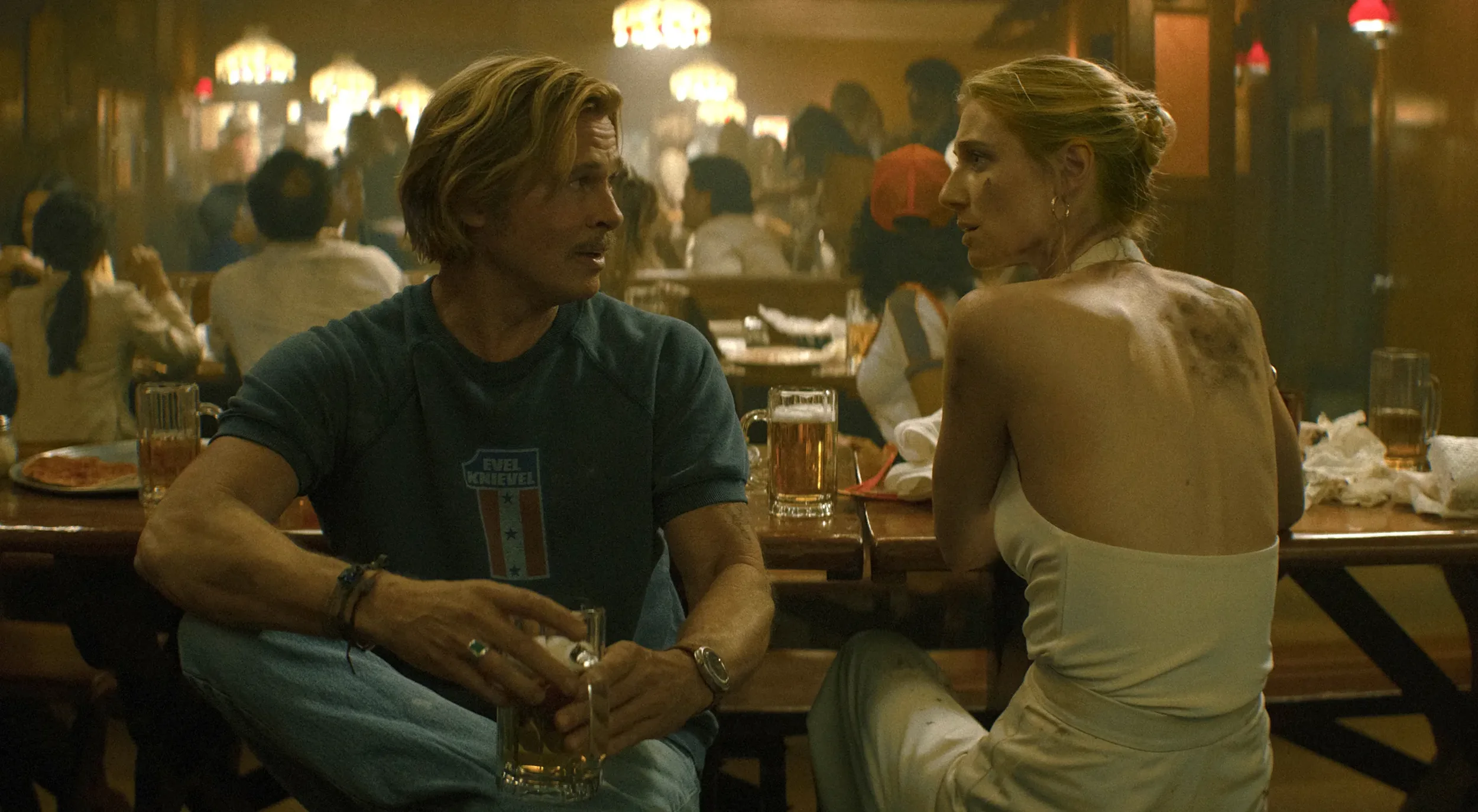
When a new Tarantino film hits multiplexes, I’m mostly excited for one thing: the characters. The Further Mis-Adventures of Cliff Booth delivers on a career-spanning track record of interesting personalities with its eclectic mix of actors. Opposite Brad Pitt, Elizabeth Debicki stars as Karen Crosby, agent to Cliff Booth’s newest shady client. Her character is perhaps the last remnant of Tarantino’s scrapped project The Film Critic, as her background places her as a former writer for a local paper (having some choice words about film criticism as a whole). She plays her role impeccably well, and wastes none of her screen time as the film’s anchor. Scott Caan plays Charlie Peters, her client, with a morally-questionable edge, and is always captivating when in a scene. However, the film’s two surprises came in Matt Groove and JB Tadena, who star as the merciless Verdusco brothers. While both horrifying in their initial appearances, they balance their roles with some of the film’s most apparent humor. I really hope we can see more of them in future projects.
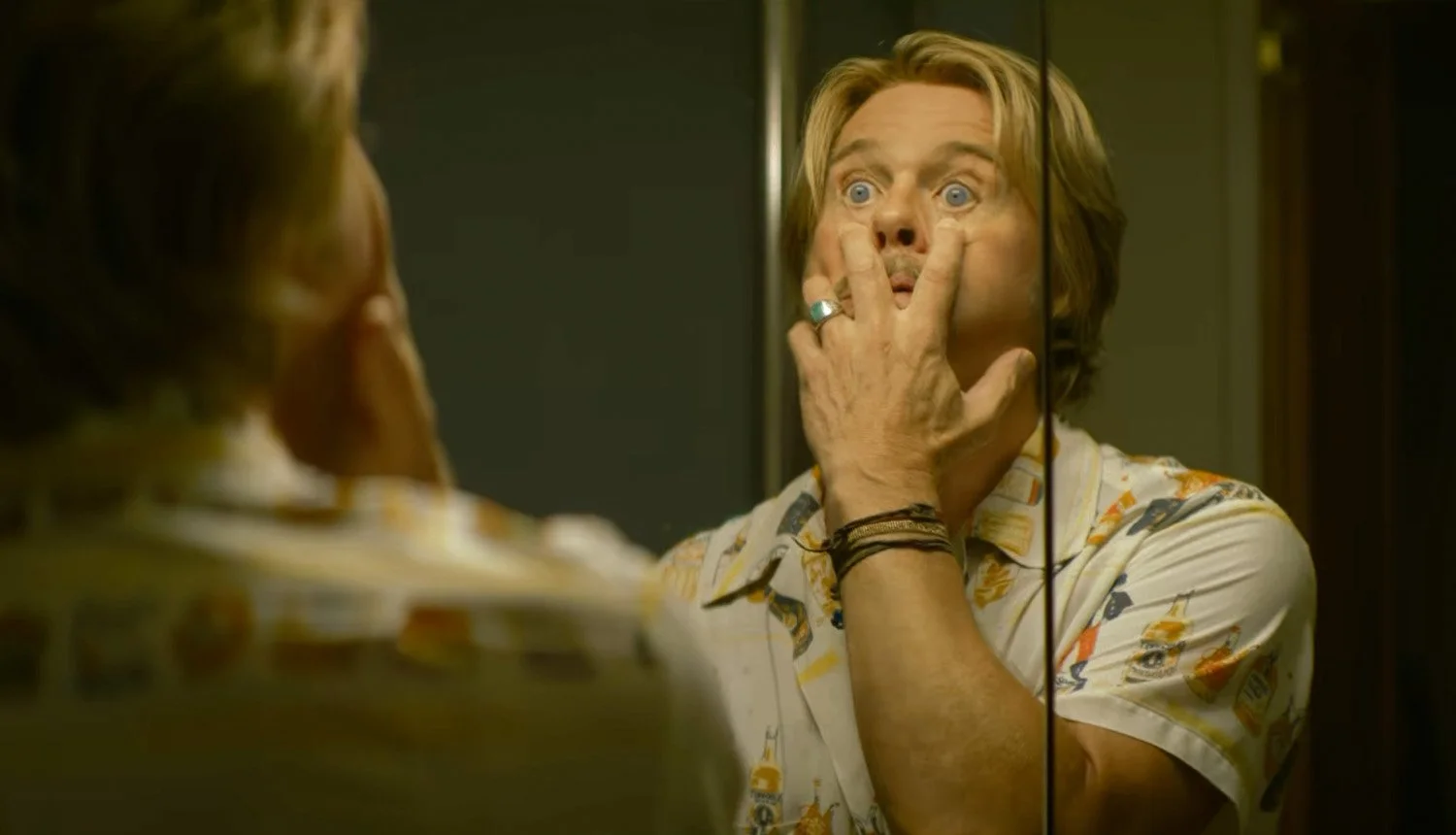
Now, let’s talk about the bad. The Further Mis-Adventures of Cliff Booth has some of the most bizarre pacing in a film this year, ending on a really bizarre and abrupt note after spending a good amount of time barely progressing the story. The film flows similarly to an open-world playthrough of Grand Theft Auto VI, which is fitting given their close proximities in release date. Quentin Tarantino loves to write a “hangout movie”, but if you aren’t going to fully commit to a plotless film, mixing those styles can only lead to inconsistency. The rather unfortunate part about The Further Mis-Adventures of Cliff Booth is that I mostly enjoyed the film, and found myself somewhat satisfied as a fan of its predecessor. However, the large, artificially-generated elephant in the room left me incredibly conflicted on its merits. David Fincher recently commented on his ambitions with A.I. generated imagery in film, and was met with a great amount of pushback. He also confirmed its use on this film, which is something I was able to notice used in copious amounts, whether apparent or not. Fincher also confirmed that the film is still undergoing A.I.-driven touch ups ahead of its streaming release, confirming that the version you would see in IMAX is a different cut. Whether we like it or not, generative A.I. is used all across the creative process in Hollywood, but when it’s so clearly on our screens, it has the power to detract from the finished product.
Although we normally give out letter grades here at FilmSpeak, we are opting out for The Further Mis-Adventures of Cliff Booth. The film was mostly enjoyable, but raises important questions on the ethics of artificial intelligence in Hollywood, and therefor does not necessarily invite the same kind of treatment we would normally give films.