‘Good Luck, Have Fun, Don’t Die’ Review: Gore Verbinski Returns with His Biggest Misfire
Despite a well-mounted cast and a cogent subject matter that should theoretically work in the hands of such an assured genre stylist, Gore Verbinski’s ‘Good Luck, Have Fun, Don’t Die’ is an excruciatingly dull sci-fi comedy with a refusal to say anything meaningful.
As Gore Verbinski’s biggest fan (and staunch defender of films like Pirates of the Caribbean: Dead Men’s Chest and A Cure for Wellness, the latter of which apparently put him in director’s jail for almost a decade), it brings me no joy to say that his latest film, ‘Good Luck, Have Fun, Don’t Die’, is a crushing disappointment, and could even be a more significant misfire than his biggest box-office bomb, 2013’s The Lone Ranger. At least that one had incredible, jaw-dropping action and daring shot compositions we seldom see in blockbusters (let alone movies) nowadays.
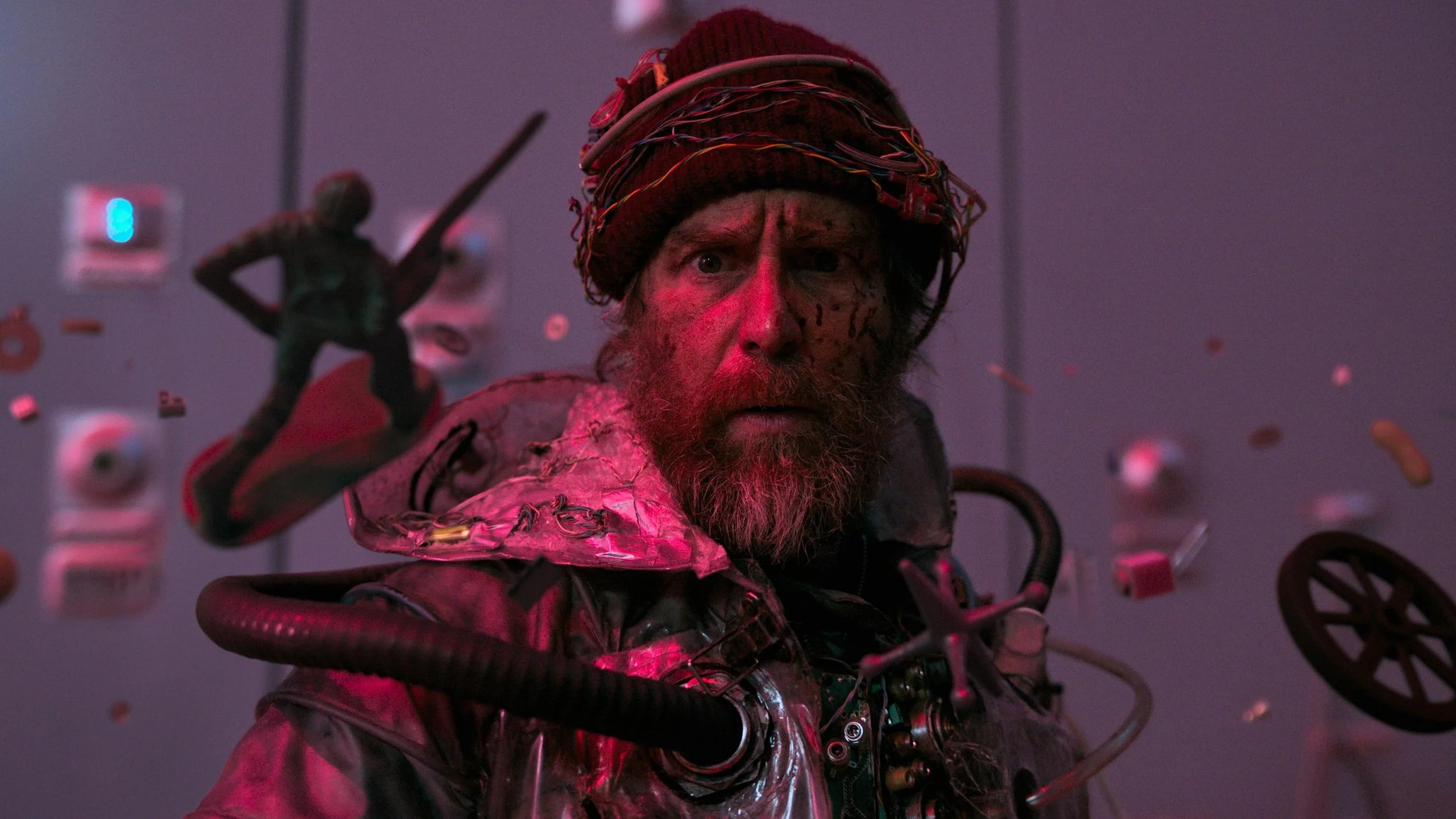
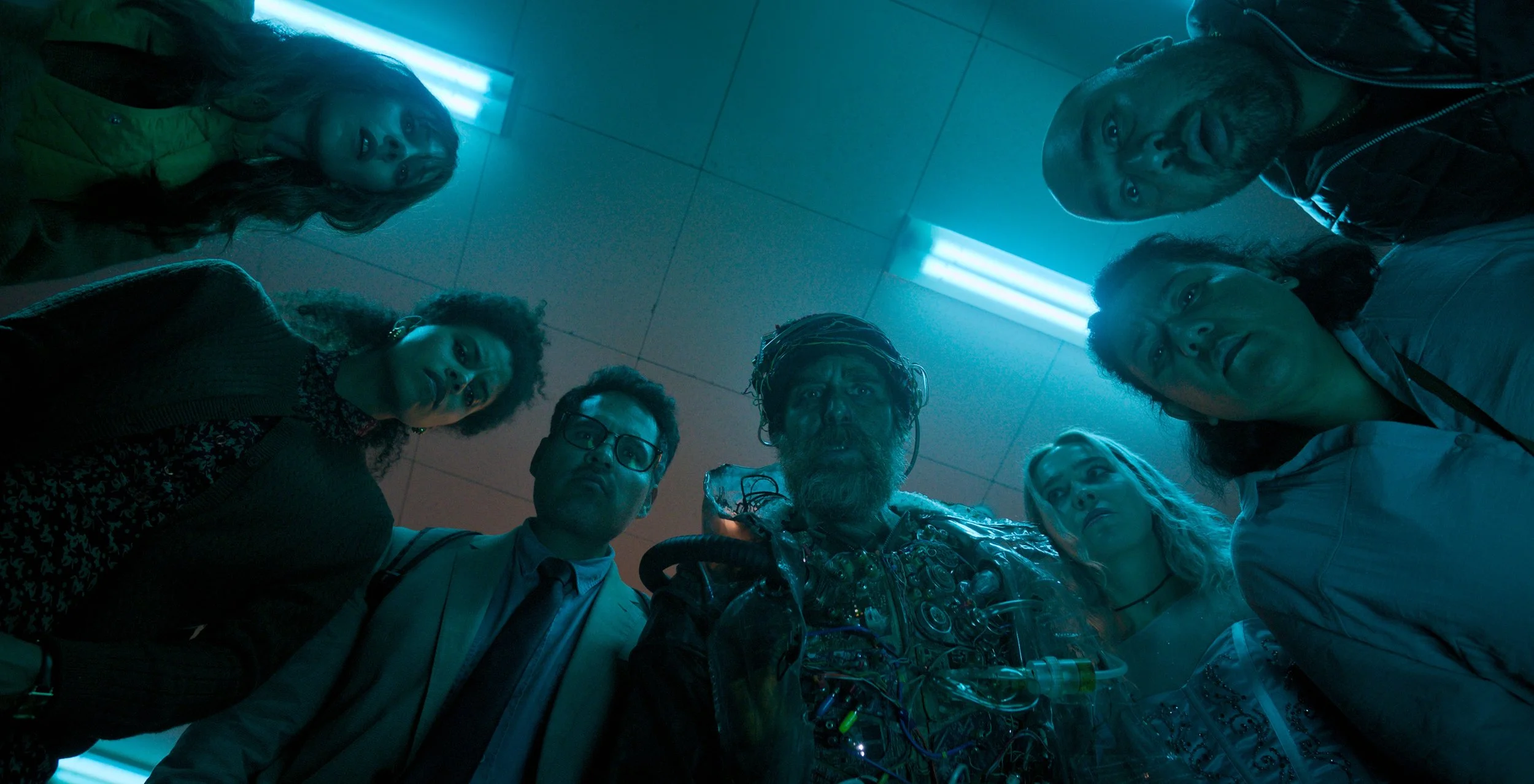
Now bathed in digital textures, the 61-year-old American filmmaker wants to craft a story true to our technology (and Artificial Intelligence)-obsessed times, where phones have turned society into mindless zombies who no longer have time to connect with humans on a profound level and are inadvertently collapsing the world as we know it. However, a man from the future (played by Sam Rockwell) arrives at a diner and believes that a group of benevolent humans, each with a profound impact on the negative effects of technology, can save humanity from the end times it’s likely heading into.
His sales pitch (and attire) doesn’t make him look serious at all, but he forces several people to help him in preventing AI from destroying the world and boxing humans inside fully virtual environments by reaching the house of a nine-year-old child prodigy who will accidentally invent the code that will collapse society and patching his own safety guards inside what “the kid” is creating. Of course, the quest isn’t as simple as one thinks, as the man from the future and the people he’s “recruited” encounter several physical and psychological obstacles that attempt to prevent them from reaching the kid’s house and saving the world.
It’s a simple conceit, with a simple message, handled with zero subtlety or active thought behind the age-old “phone bad” and “AI bad” adage. Coming from Verbinski, I expected far more substance (and style) than what’s ultimately shown in this 134-minute overlong slog, one that attempts to be much smarter than what it actually is and says nothing thoughtful about any of the ideas it haphazardly presents on screen. Verbinski, one of the great stylists of our time – possessing an innate understanding of geography that few modern-day aesthetes have – crafts an artificial-looking nightmare whose sense of scale and scope is eroded by flat, digitized photography.
Some of the more comedic action beats, which should affect the viewer, have minimal impact. Even some of the most esoteric sequences, where the AI attempts to warp the mind of the figures who try to implement the man from the future’s code within the system, don’t have the same verve as the filmmaker always had in his previous works (even in something purely playful like MouseHunt).
It doesn’t help that the film’s god-awful score, a bludgeoning cacophony of loud orchestral beats from Geoff Zanelli, never enhances any of the emotions on screen or accompanies the characters on their personal journeys. It’s always present; it never allows the audience a moment to breathe or grasp the gravity of the situation depicted in the movie. Zanelli consistently dictates the emotions on screen and might betray the solid work that its well-mounted cast might do.
Might, because Verbinski and screenwriter Matthew Robinson don’t develop any of the protagonists past the one-note attributes they’re given. At first, the group the man from the future assembles is quite significant, but it gets reduced by easy casualties. You’d be quick to know which ones will get killed, because they’re the ones played by relatively unknown character actors (compared to Juno Temple, Zazie Beetz, Michael Peña, and Haley Lu Richardson) who Verbinski and Robinson don’t give the benefit of a backstory.
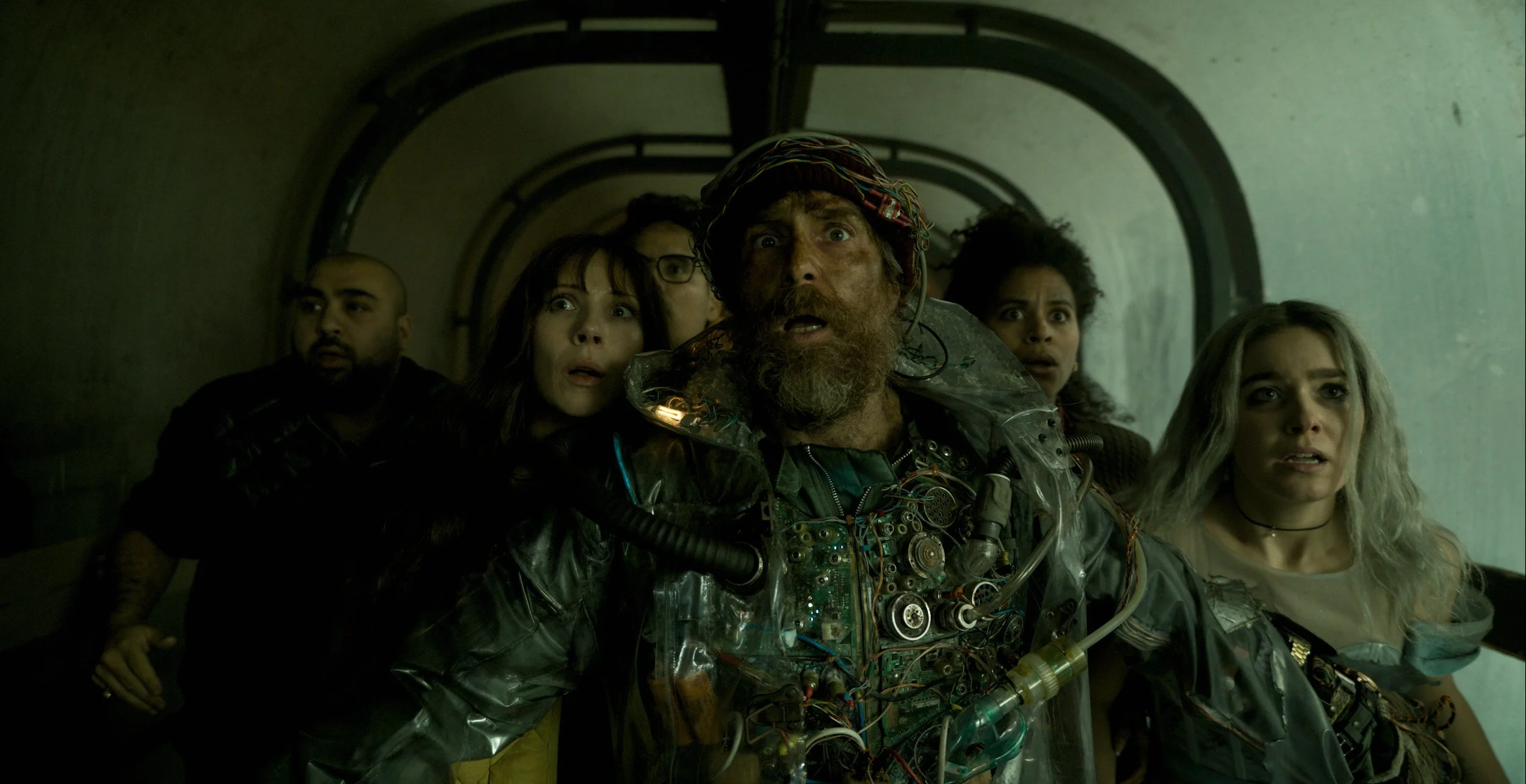
Everyone else, though, gets their time in the spotlight through overlong flashbacks that never fully develop the Soylent Green-esque dystopia the protagonists live in. There are Mark and Janet (Peña & Beetz), teachers who get attacked at their high school by mindless, phone-addicted teenagers (read: Zombies), Susan (Temple), a grief-stricken mother who recently lost her son in a school shooting and brings him back through a government-funded clone, and Ingrid (Richardson), who loses a relationship with the love of her life who chose a purely virtual world instead of a human connection in the confines of reality.
All of these ideas are interestingly introduced, but Verbinski goes nowhere with any of them. Worse yet, he attempts to clumsily link one character with the man from the future, a Tenet-like nameless protagonist whose sense of mystery is far more intriguing than when we get to know (a bit) more about him. Rockwell is especially solid in the opening hour, because the mysterious nature of the character allures us at first, but his performance begins to suffer as Robinson’s screenplay peels back the layers of who he is and crafts a strange emotional conclusion that is truncated by a wobbly, almost cowardly final message.
To be clear, Good Luck, Have Fun, Don’t Die is vehemently anti-AI (perhaps even anti-technology, because it reminds all of us what society used to be like when we talked to one another instead of looking at screens day in and day out). However, instead of giving a predictable yet earned coda to the emotional journeys each essential character undergoes, it throws everything out the window with a ridiculously defeatist stance on the proliferation of technology and artificial intelligence.
Instead of perhaps exposing how this phone-obsessed (now AI has to be factored in everything) culture has created immense brainrot and a lack of real humanity around all of us, Verbinski and Robinson essentially go, “well, if the arrival of AI and the introduction of new technologies in our daily lives is inevitable, is saving the world from the power-hungry CEOs who want to enslave us all to these devices truly worth it?” The answer is obvious (and perhaps is less of a slap in the face than Mercy’s pro-AI, “we all make mistakes” ending), but Verbinski implies that it may not be as clear-cut as you’d think.
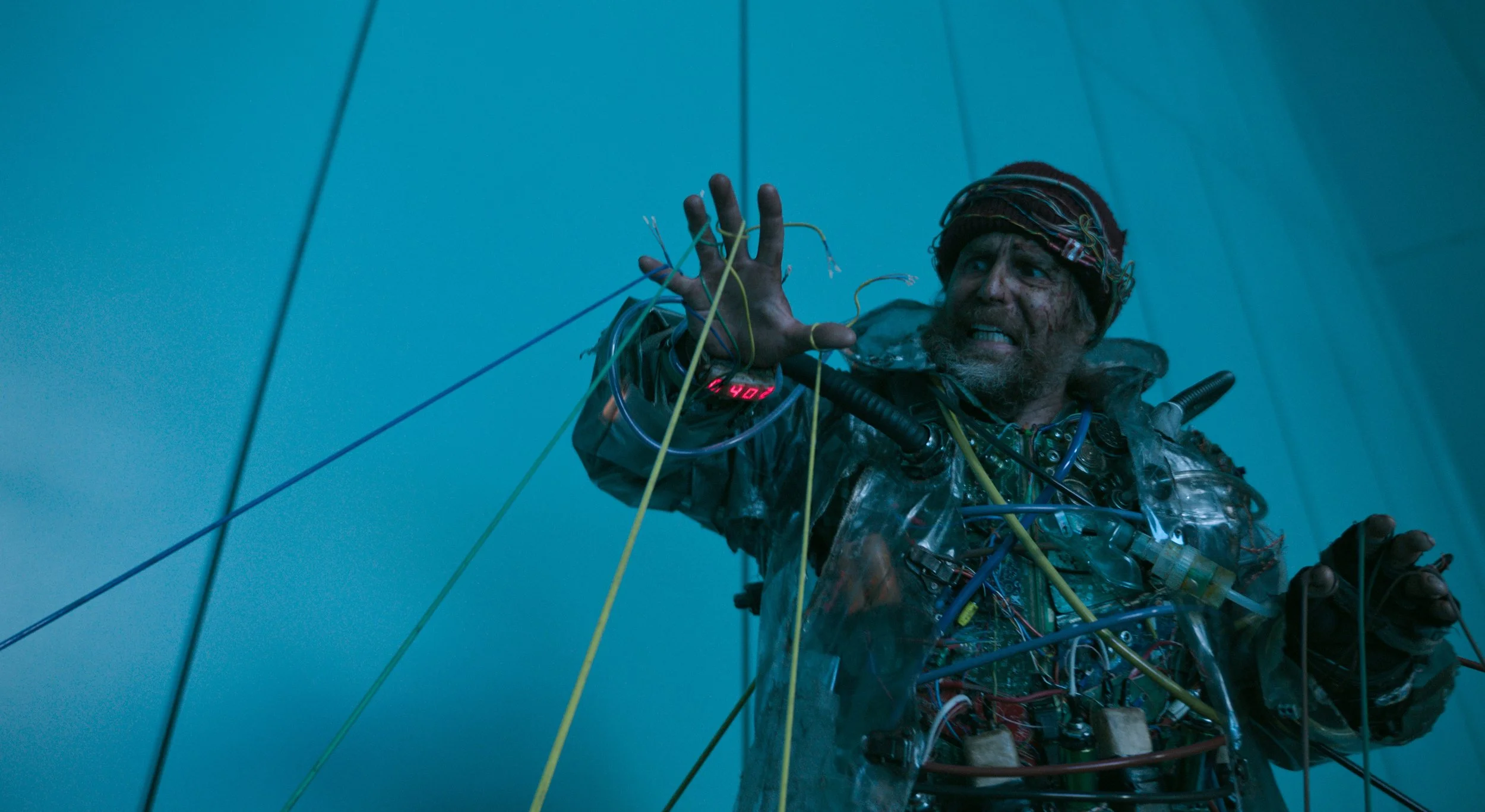
It’s such a baffling way to end a film that seemingly has benevolent intentions, but is stuck inside a story that complexifies itself in unimaginatively boring ways, has one of the worst musical scores of the decade, and arguably the worst images of Verbinski’s career, someone we could always count on when crafting visuals of raw emotional and kinetic power. When the biggest setpiece of Good Luck, Have Fun, Don’t Die arrives on screen, the effect felt is much smaller than what the director probably had in mind.
Some will blame this film's lower budget compared to something like Pirates of the Caribbean, but even with smaller-scale films (MouseHunt, The Mexican, The Weather Man), Verbinski has always impressed. This is the first time I've felt nothing while watching a movie by one of my favorite artists, who should probably keep taking a sabbatical if his grand return to moviemaking is as listless as this…