
‘Pillion’ Review: Finally, A Sexy Film That Doesn’t Hold Back
Thanks to incredible, career-best performances from Alexander Skarsgård and Harry Melling, Harry Lighton’s Pillion overcomes a relatively conventional story with a transgressive approach to sexuality and offers a glimpse of a world audiences rarely see depicted in mainstream cinema.
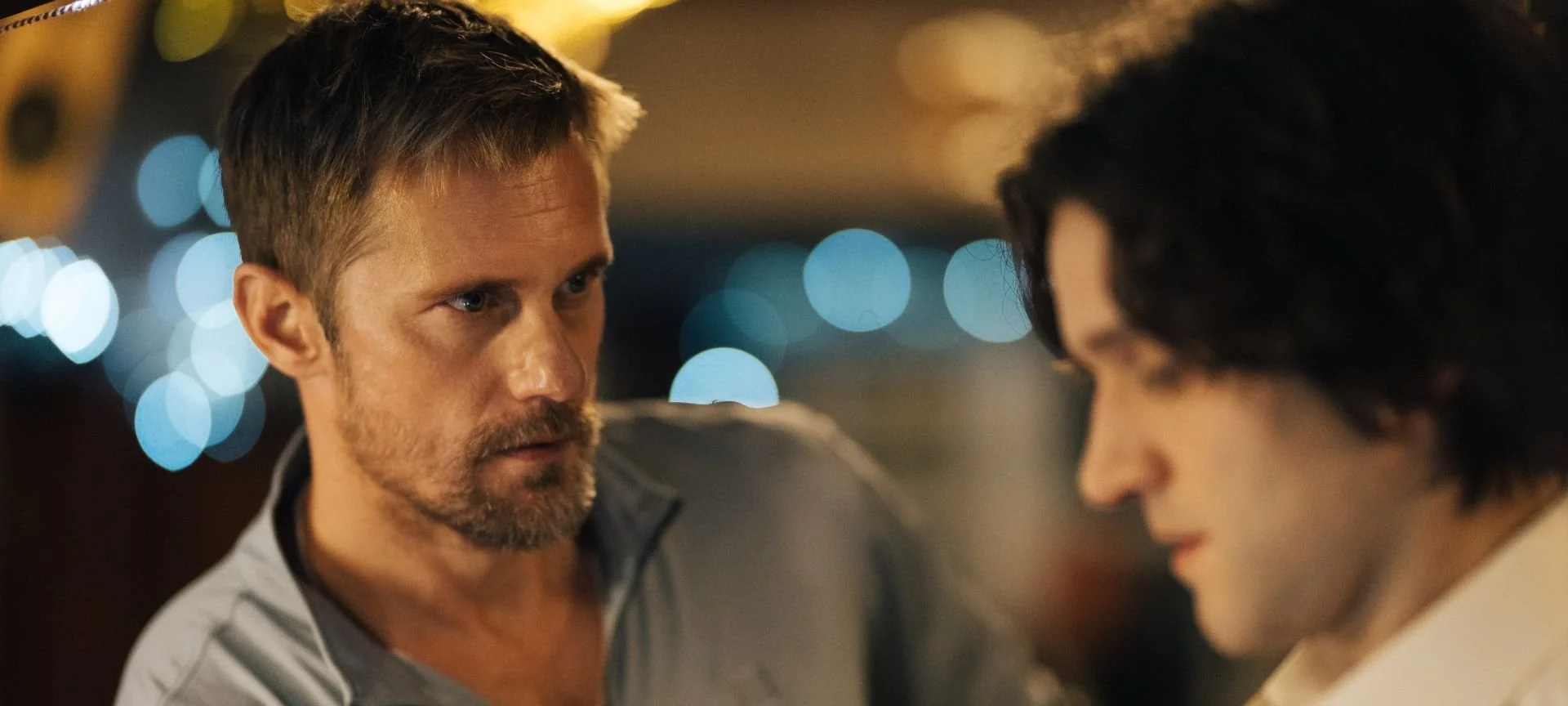
If you were disappointed by an almost-timid approach to sexuality in Emerald Fennell’s Wuthering Heights, despite an opening dissociation that boldly conflated sex with death, look no further than the actual hottest film of the year with Harry Lighton’s Pillion. While it follows a fairly conventional coming-of-age tale, Lighton’s film is quickly elevated by its assured style and career-best turns from its two leads, who have never been better in anything they've done before.
For Harry Melling, this is especially important because the actor has been trying to carve a path beyond his most well-known role in the Harry Potter franchise and showcase a side of himself audiences have yet to see. Unfortunately for him, most of his post-Harry Potter performances were lacking in emotional complexity and impact, but in Pillion, he might just be the best thing about it. Melling portrays Colin, an openly gay but introverted man, who lives a relatively miserable and lonely life, working as a parking officer who is always the object of everyone’s frustrations, despite following orders, and singing in his father’s (Douglas Hodge) barbershop quartet.
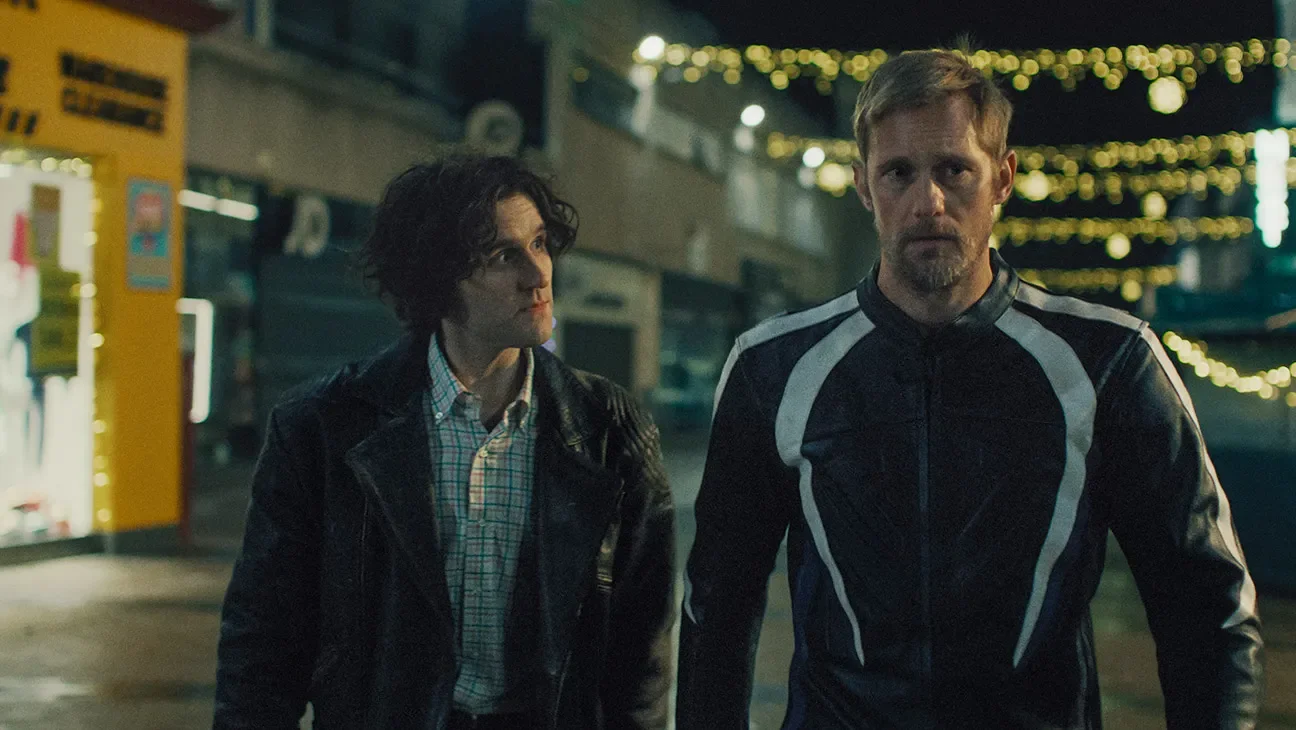
It’s at a bar where he meets Ray (Alexander Skarsgård), an amazingly good-looking biker who slips him a note and invites him for a date. For Colin, this is a personal achievement because he doesn’t have much of a relationship with anyone else but his parents, even though he rarely opens himself up to them, including his terminally ill mother (Lesley Sharp). Colin agrees to meet Ray, but he doesn’t realize until they’re together that the biker isn’t remotely interested in a romantic relationship, but a submissive/dominant one, where the former must obey all of his commands, without anything meaningful in return.
This is where the movie begins to explore the world of BDSM relationships, which has been treated in the mainstream previously in the Fifty Shades of Grey trilogy, but without much nuance. Pillion doesn’t judge its characters, nor does it judge the audience for wanting to embark on this intensely erotic, often emotionally harrowing journey of self-discovery. However, it does so through a surprisingly humanist lens, as Colin begins to realize what’s most important in life through his complex relationship with Ray. Lighton also isn’t afraid to showcase sequences of intense sexual activity, which made a relatively tame audience at a public screening react very loudly when full-frontal male nudity was directly shown for the first time.
Few films in this economy dare to act as a “tonic” to our sexually repressed era, especially at the mainstream level, but Pillion wants the audience to experience what Colin feels head-on, which could prove uncomfortable for some, but is filled with so much hot energy that it won’t be long for you to start peeling through the layers of the protagonist’s relationship with Ray, who may or may not live a double life. What’s most interesting about the movie is how Lighton isn’t afraid to draw characters that aren’t simply one-note attributes, but delve into their complex, layered pasts, which slowly unpeel themselves as we begin to spend more time with both Colin and Ray. Lighton does not give any information outright. He infers on them slightly through subtle shifts in micro-expressions that say more than any line of dialogue and slowly make audiences wonder why Colin even agreed to such a repressive “relationship” in the first place.

If he doesn’t know anything about him, why engage with him at all? Curiosity, perhaps? A way to understand who he is? Wanting to feel something other than loneliness? These are questions Lighton puts forward, but never fully answers outright, as he expects the audience to connect the dots on their own, through amazingly controlled performances from both Melling and Skarsgård, the latter who seems to be following in his father’s footsteps of saying a lot with a few words, but a facial expression that carries immense pain and regret. None is more realized than when Colin kisses Ray for the first time, and conveys something he hasn’t felt in a long time and, most importantly, he didn’t want to feel.
It’s a devastating performance, likely the best he’s ever been. The same can be said for Melling’s Colin, whose innocent face also represents a flurry of emotions he’d like to repress, and he doesn’t want to reveal to Ray. The relationship thus takes a relatively predictable end, but the way in which Lighton opens his film up feels quite unexpected, especially one filled with so many raw (and often kinky) sex scenes. It takes guts to be so open about a world that few even know about, and not be afraid to provoke, but say something meaningful about the dangerous repression of the dom/sub relationship in the process. There isn’t anything empty (or sexless) regarding Pillion’s erotic scenes, because they’re the heart and soul of what first connects Colin and Ray, and the primary explanation as to why this relationship will not last. The relationship isn’t based on feelings. Once they begin to feel something, that’s where their lust for one another takes a telegraphed – but complex – turn.

As a debut feature, Pillion couldn’t have been better. It’s a daring, often confrontational look at the world of BDSM, but it has a surprising emotional heft that you’ll quickly be won over by its sincerity and staggering performances. If anything, you’ll have a strong reaction to it, one way or another. The same can’t be said for Fennell’s dreadfully dull Wuthering Heights, which promised to be transgressive and provocative, but ends up being a complete nothingburger with little to say about anything it presents. Pillion has something to say, while also provoking the hell out of you. That’s cinema, baby.