
‘Two Prosecutors’ Review: Sergei Loznitsa’s Quietly Tense Drama
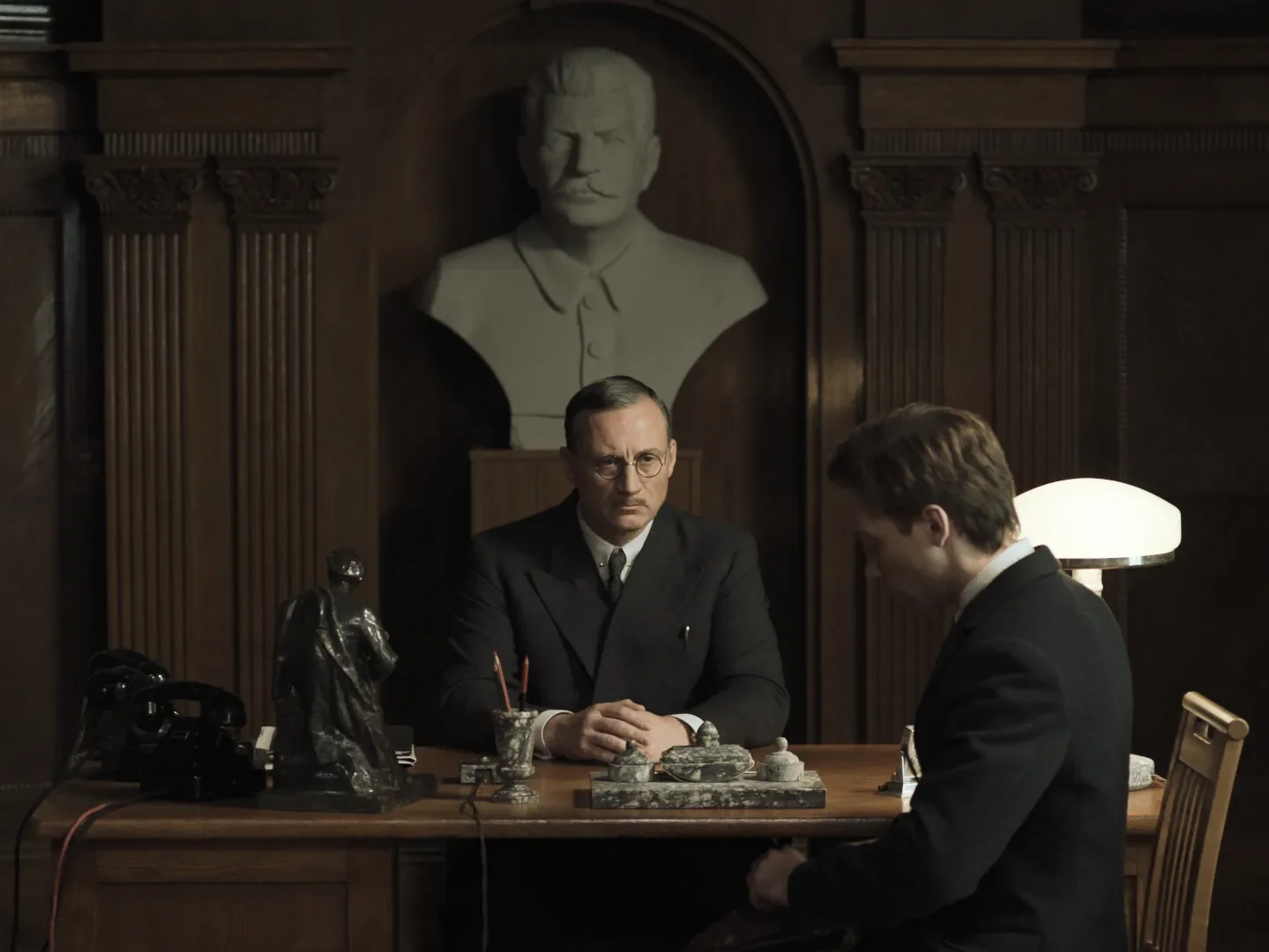
Thanks to its masterful framing and an impeccable lead performance from Aleksandr Kuznetsov, Sergei Loznitsa’s ‘Two Prosecutors’ is a powerful historical drama that asks its audience not to forget.
The opening ten minutes of Two Prosecutors promise a slow and demanding watch. We observe a prisoner opening – and burning – letters sent to prosecutors, reading them one by one, until one catches his attention. It sets the movie's events in motion. Yet, one has to have immense patience to reach the movie’s eventually telegraphed fate, because director Sergei Loznitsa wants the audience to feel every ounce of his protagonist’s painstaking search for truth. In that regard, the Ukrainian filmmaker doesn’t pull any punches in his critique of the Russian government’s past – and continued – actions against its critics and offers a cautionary tale that’s very much in communication with what’s currently unfolding.
The film follows young prosecutor Kornyev (Aleksandr Kuznetsov), who arrives at a prison in Bryansk to speak with Stepnyak (Aleksandr Filippenko), one of the inmates whose letter was not burned, but indeed sent to Kornyev. The frail and visibly ill man tells him, at length, of the torture he has been subject to ever since his arrival in jail, which he received after refusing to falsely confess to crimes he didn’t commit by the NKVD, the Soviet Union’s secret police, which acted with impunity during Joseph Stalin’s Great Purge, where at least 700.000 to 1.2 million executions were committed to remove dissents of the Communist Party. Eventually, the NKVD dissolved following Stalin’s death, but was restructured through the KGB, and its corrupt practices continue.
Kornyev believes Stepnyak’s testimony (and, of course, the physical toll of his torture, which is excruciating to observe in great detail) and travels to Moscow to alert Stalin’s higher-ups. He plans on denouncing the NKVD’s actions to Prosecutor General Andrey Vyshinsky (Anatoliy Beliy), without knowing that he is also in on the State Police’s corruption and one of the key players in orchestrating Stalin’s Great Purge. The movie builds to what you think will inevitably happen to someone like Kornyev, who attempts to play the hero and denounce systemic corruption directly to a corrupt individual who will, of course, ensure he won’t walk out of Moscow a free man.

In that regard, Two Prosecutors might act as a cautionary tale to the oppressive regimes still plaguing the world to this day. However, Loznitsa doesn’t have much to say about the primary subject he presents. Cinematographer Oleg Mutu’s static frames, often employing forced perspective to jaw-dropping effect, sit with the characters much longer than audiences are accustomed to (perhaps even longer than a Lav Diaz film) and let the simmering tension crawl under our shoulders. Yet, the images don’t mean much in the context of Loznitsa’s picture. He seemingly has difficulty imparting a cogent message to the viewer, who understands how horrible Stalin’s regime was (and how Russia has essentially been trading one dictator after another, without interruption), but fails to assess how this specific portrait has any pertinence, considering how it repeats (and, by extension, demonstrates) things we already know.
What Loznitsa does well, however, can’t be overstated. He lets us observe the true cost of political violence and the fear in the eyes of dissidents who have rightly spoken up. He recognizes that their effort is ultimately futile, since they will probably die in prison and any records of their existence will be permanently erased. Mutu’s blocking is also particularly outstanding. There’s a specific scene that initially frames a waiting room as a small, relatively confined space with a few seats, but a cut to the actual look of the space reveals it's much bigger than our eyes anticipated. It yields some morbidly funny visual comedy, but one can’t shake the air of tension Loznitsa fills his movie with, which only grows stronger as one realizes where Two Prosecutors is heading.
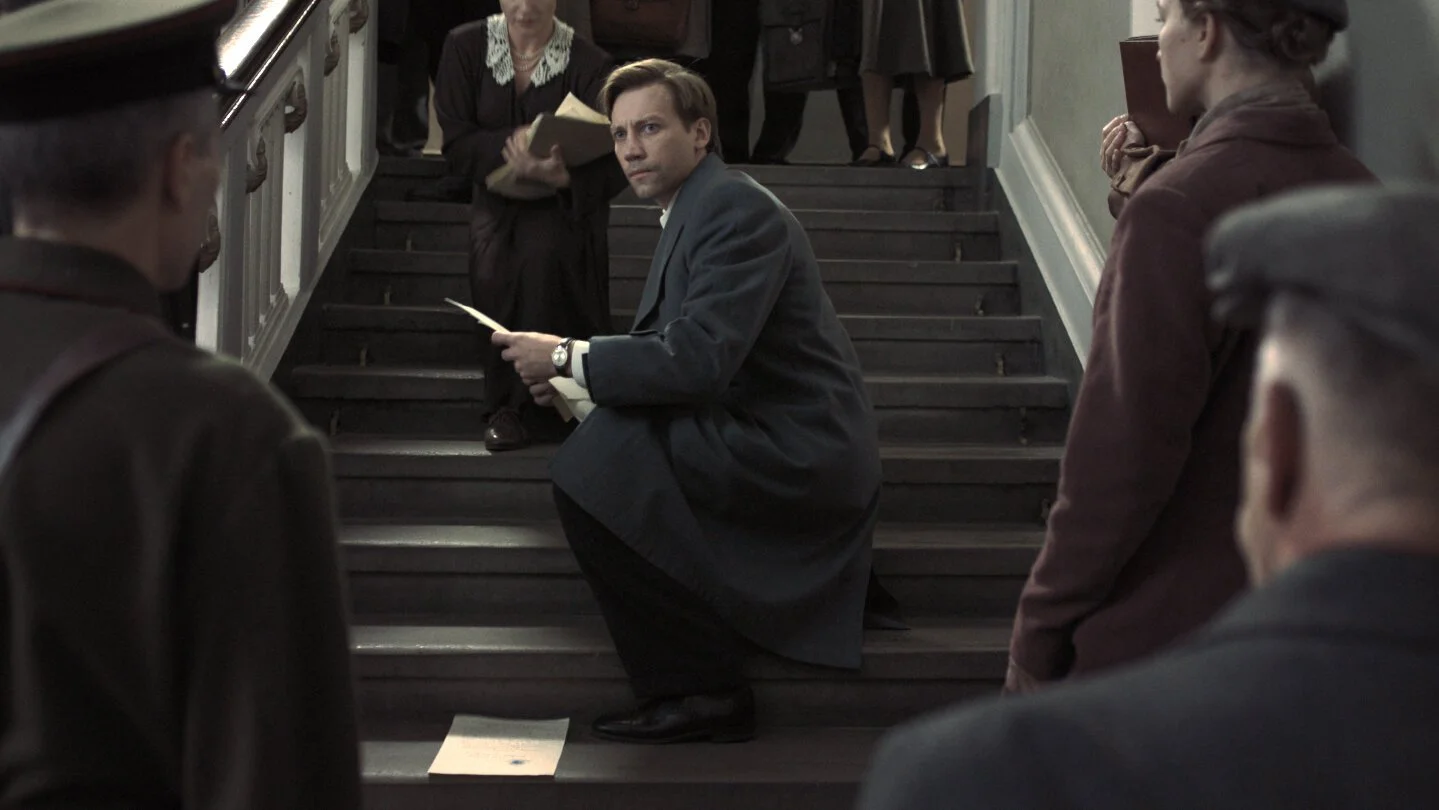
The predictability of Loznitsa’s film might hamper the final moment where Kornyev’s fate is sealed, but it still doesn’t make the movie any less impactful. What’s happened in the past is bound to repeat itself – and is still occurring to this day (which Julia Loktev documents in the upcoming My Undesirable Friends: Part I – Last Air in Moscow). Kuznetsov’s performance as a doe-eyed prosecutor who thinks he is doing a service to the country by exposing the corrupt practices directly to corrupt officials thoughtfully examines Kornyev’s naïveté. It helps us realize that the web runs much larger than the State Police. All of it is linked to one man who has carefully poisoned every aspect of government for his own benefit.
When this happens, it’s hard to topple it, even through people with benevolent intentions. Loznitsa doesn’t even instill hope that it is theoretically possible to weaken fascism’s legs, because when one cuts it off, four more grow in its place. And in the historical context of Two Prosecutors, during the height of Stalinism, this was only the beginning…