
‘Blue Heron’ Review: Sophy Romvari’s Incredible Feature Debut
While the first half of Blue Heron seems conventional, the movie reveals itself as anything but and already positions Sophy Romvari as a major voice to watch within contemporary Canadian cinema.
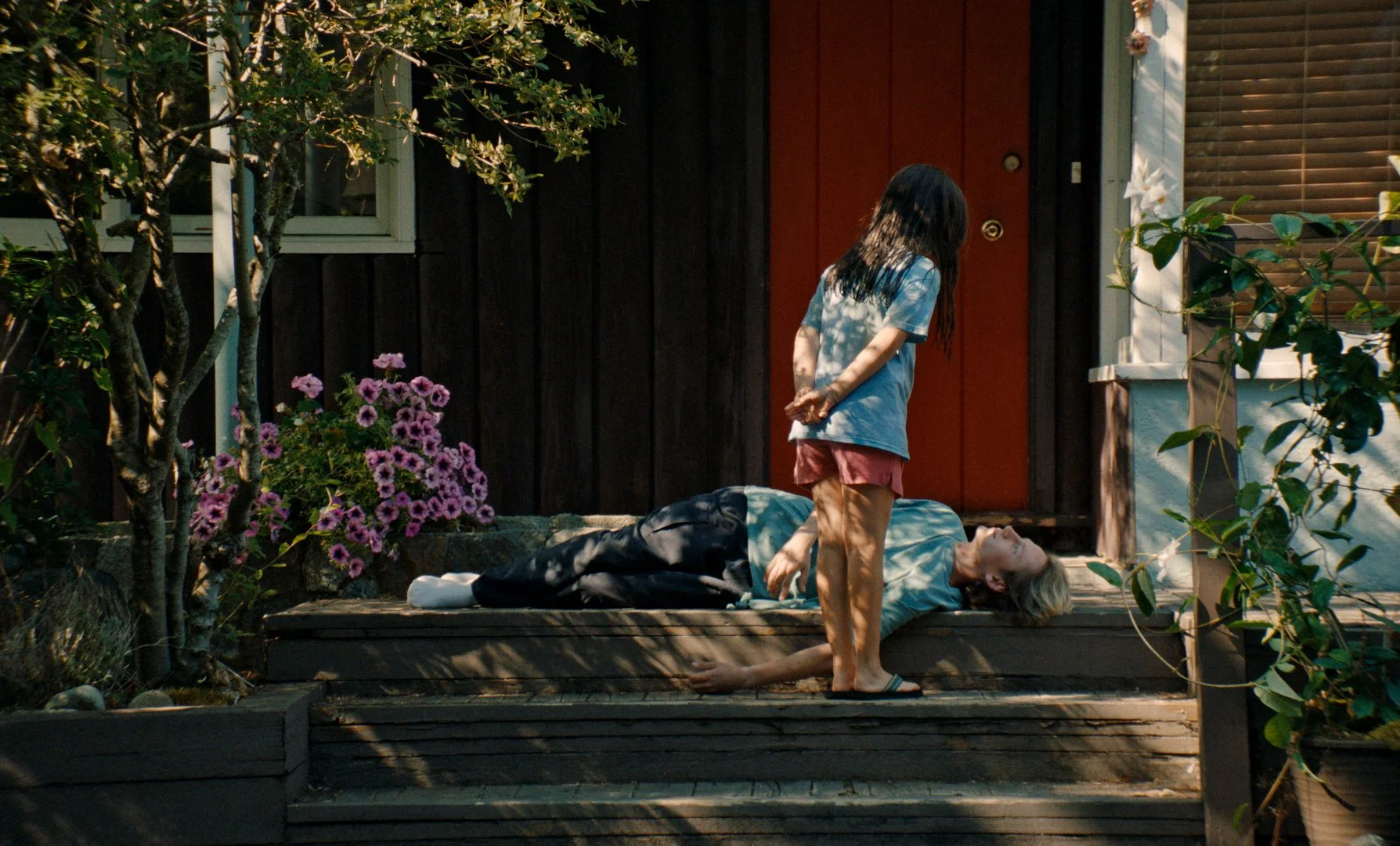
Canadian cinema is having a moment – one that the country hasn’t felt since Denis Villeneuve broke into Hollywood and became a major force of contemporary film history. Films like Matt Johnson’s Nirvanna the Band the Show the Movie and Ian Tuason’s undertone broke out significantly, while Sophy Romvari’s Blue Heron has been showered with praise ever since its world premiere at Locarno, and subsequent showings at the Toronto and New York film festivals last year.
Sometimes, being the last person to see a movie (but having played the long game to attend a Q&A screening with the filmmaker, which was moderated by Canadian legend Matthew Rankin) can often feel like it won’t live up to the months of hype you’ve seen online for it. After seeing the film and hearing Romvari’s illuminating words on how she conceived it, it is clear to me that the Victoria-born director is one to watch and already positions herself as a major voice in the cinema of our country.
Blue Heron is divided into two halves. The first part is set in the 1990s, where a Hungarian-born family that recently immigrated to Vancouver faces challenges after their eldest child, Jeremy (Erik Beddoes), shows signs of disturbing behavior. Told through the flowing perspectives of the family’s unnamed parents (played by Iringó Réti and Ádám Tompa) and, eventually, the youngest daughter, Sasha (Eylul Guven), Romvari’s erratic camera moves between the doe-eyed child realizing that her idealized “bubble” is about to pop, because Jeremy’s behavior grows more and more distressing, and the worried parents trying to figure out exactly what to do with him.
This first part conventionally treats a subject that, while personal to Romvari, feels like we’ve seen so many times before, except for the camera putting us in the shoes of a child trying to parse information their parents are desperately trying to shield them from. Why is Jeremy behaving like this? Why are Sasha’s parents worried about him? What prompts such rebellion and delinquency when he seems to show (he rarely utters a perceptible word) affection for his siblings? Sequences like this strike a deep nerve in the director, whose familial drama is partly based on her own life.
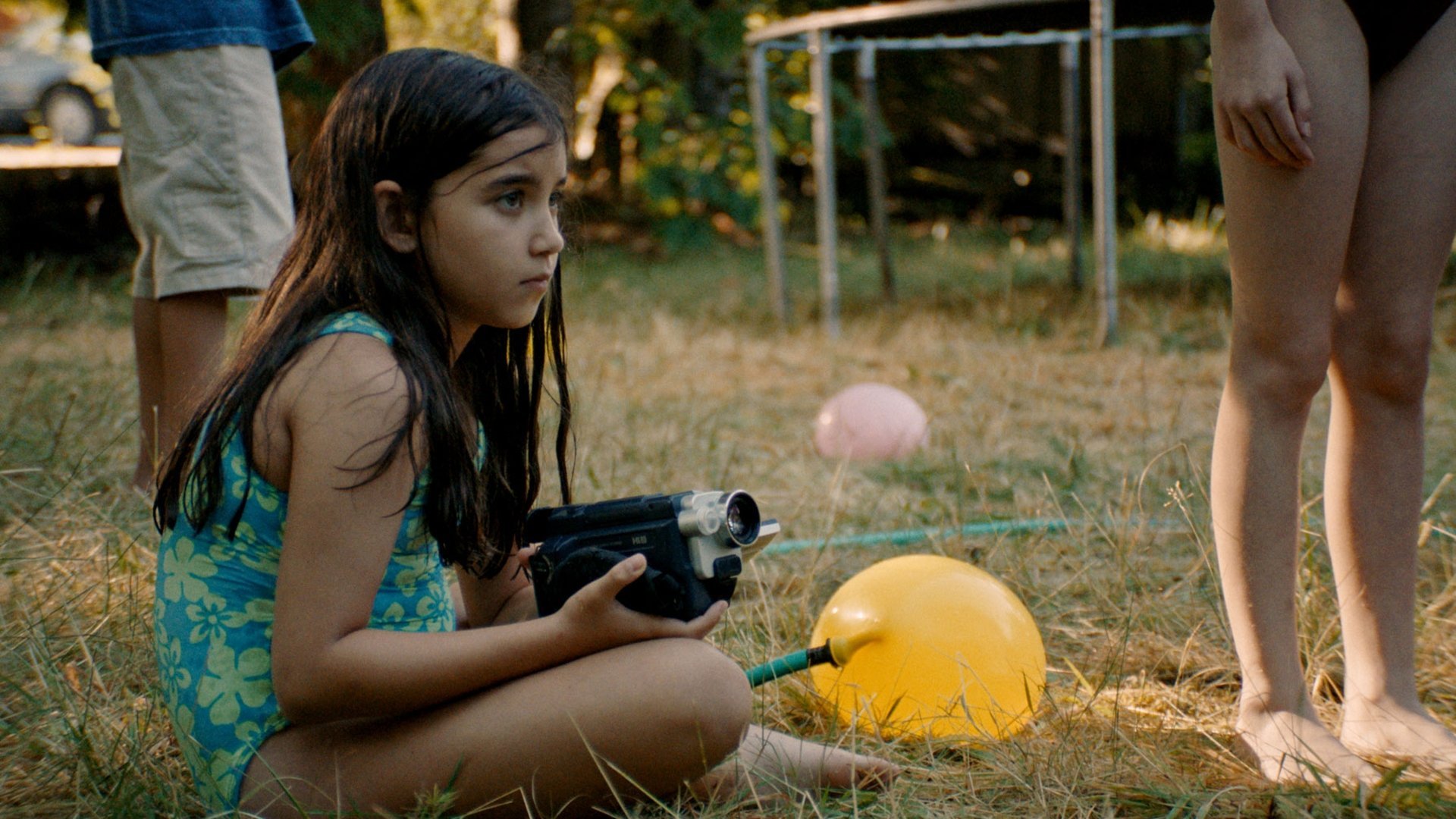
With the aid of cinematographer Maya Bankovic, Romvari creates a singular language that quickly immerses us in the eyes of Sasha, who wants to eavesdrop on her parents’ conversations and understand what’s happening to her brother, but is always shut out and told to go to her room. The atmospheric sounds add so much to our understanding of how a young Sasha perceives the world. Tangible signifiers that associate her time in the 1990s – the television playing the Looney Tunes in the background, or advertisements of House Hippos (a Canadian classic) – immediately bring her back to a time where she was still trying to make sense of things beyond her control, and that she only had a limited understanding of.
The way in which the camera moves feels so heartbreaking before the filmmaker moves on to the second part, where Blue Heron takes on its full meaning. If the first part of her film acclimated us to the seismic changes of everything Sasha has known to be a stable life up until Jeremy’s behavior transforms in ways that their parents don’t understand, the second half of Romvari’s feature debut has a real haunting power that only movies can accomplish at this scale.
Cut to 20 years after Jeremy’s major incident, Sasha (now played by Amy Zimmer) is a documentary filmmaker looking to direct a movie about her childhood, specifically investigating what happened to her eldest brother. In a way, this is Romvari attempting to interrogate her past through the artifice of metafictional cinema, making a movie about someone making a movie about her brother. It’s difficult to reckon with, especially when your subjective memories about your childhood coalesce with your perception of the world today, moving ahead while still stuck in a perpetual void of grief and trauma.
Without giving too much away in how Romvari shapes adult Sasha’s journey to healing, this is where Blue Heron begins to leave an impact. The scene where she returns to her childhood home to investigate the ghosts of her past, still vividly present in her memory, is a strong contender for scene of the year. It’s hard to put the experience of feeling what Romvari visualizes into words, just like it’s not easy to describe how memories suddenly come flashing back before our eyes, especially when dealing with sudden grief. However, if you give someone a camera, a microphone, and access to editing softwares to make them represent what it feels like to move within time as you’re still trying to understand your past, you’ll probably get something as legibly tragic as what is represented in Blue Heron.
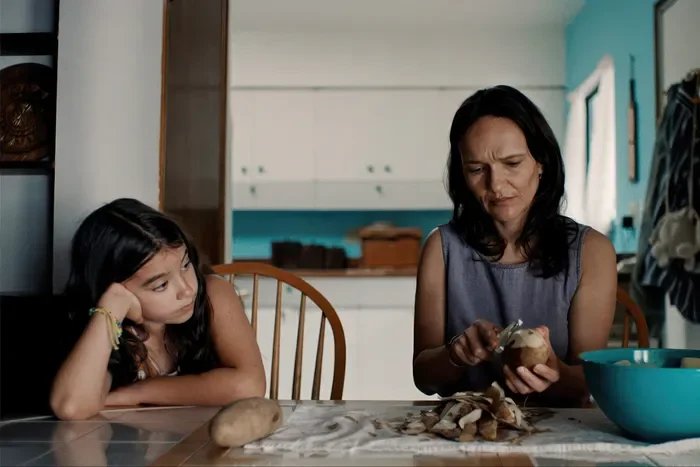
All of us, at some point, have stopped to think about time passing and to reminisce about the best memories of our past, which, in turn, dredges up darker, more disturbing events we likely repressed but didn’t deal with head-on. We try to make sense of things and justify that none of it was our fault, but it doesn’t help us in the short term, and it certainly doesn’t make us understand events that we couldn’t control in the long term. What Romvari accomplishes here is simply incredible, a rarity in making the audience understand the director’s feelings, while reflecting those feelings on subjective experiences that viewers might likely have. She expresses these memories cogently, which progresses into a final scene of genuinely devastating power.
The shadow of Sasha’s brother is still present – and will always be – but she chooses to remember him differently than his darkest moments, if only to see what she’s captured in her eyes at what she believed were his most distinctive and gentle traits. These scenes are what immediately propel Blue Heron as one of the most staggering film debuts of the decade and see Romvari already make a mark within Canadian cinema in ways that artists of the country only dream of. With Ian Tuason, Romvari has flown high among the pantheon of unique Canadian talents whose films not only act as daring aesthetic exercises, but are a pure expression of their individual, subjective selves, which we are slowly regaining – as a cultural sphere – after many years of dormancy.
It’ll be hard for this movie to leave our memory, just as it’s hard to make sense of our memories. Life is, after all, a series of fleeting souvenirs to collect, store deep within us, and learn how to parse them before our time is up and we, like the blue heron, fly high in the sky, slowly to our next plane of existence…