
'The Odyssey' Review: A Sweeping Tale of a Complicated Man
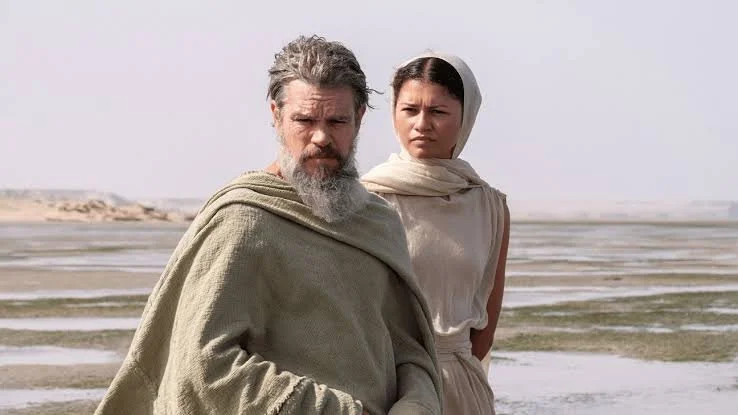
We will never know if the ancient poet Homer truly existed, but regardless, his name ranks as one of the most accomplished storytellers in human history. More than 2,500 years since he supposedly drew breath, audiences around the world are sitting down to see Christopher Nolan’s film The Odyssey, based on Homer’s epic poem of the same name. The film stars Matt Damon as Odysseus, Anne Hathaway as his wife Penelope, Tom Holland as his son Telemachus, and Himesh Patel as his right-hand man Eurylochus.
Despite the film’s title, The Odyssey follows two journeys simultaneously. The first one is that of Telemachus as he watches his home being overrun by suitors (led by Robert Pattinson as Antinous) who are all vying for the hand of Penelope, convinced that Odysseus is dead, and there must be a new king of Ithaca. Both Telemachus and Penelope are still convinced that Odysseus is still alive, but after almost twenty years, it seems less and less likely. The second journey, meanwhile, follows Odysseus himself, living in isolation on a small island with Calypso (Charlize Theron). Through his conversations with her, Odysseus reflects on how he got to her island. Thus we see the final days of the Trojan War, even as Odysseus and his crew parts ways with Agammemnon (Benny Safdie), Menelaus (Jon Bernthal) and his recovered wife Helen (Lupita Nyong’o, who also plays Helen’s twin sister Clytemnestra). From there, the events of the Odyssey unfold, as Odysseus must brave a Cyclops, an army of Laestrygonians, the witch Circe (Samantha Morton), the Sirens, Scylla and Charybdis, and the disfavour of Poseidon himself. All the while, he is occasionally visited by the goddess Athena (Zendaya), thanks in part to a charm which Penelope gifts her husband before he sails off to war.
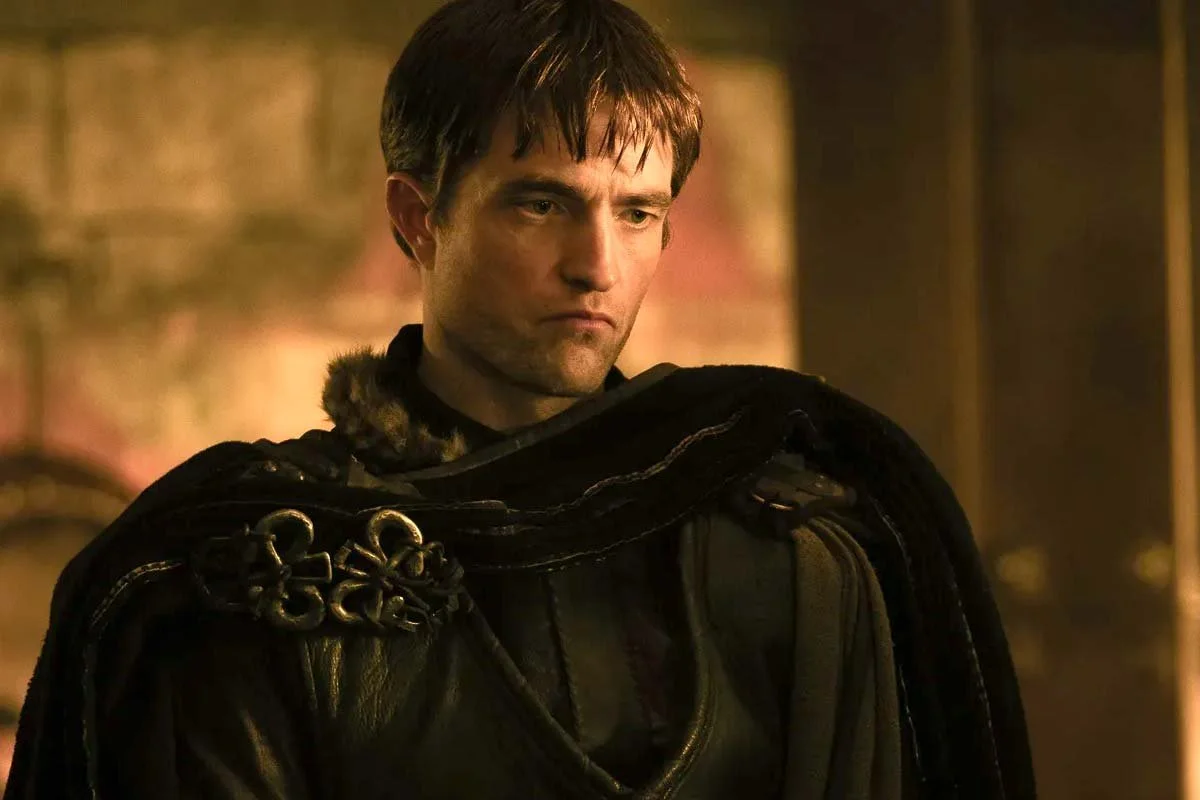
As with all his films, Nolan has assembled a star-studded cast full of highly talented thespians. Damon does a phenomenal job as the titular character. While other projects have emphasized Odysseus’ wit and wry humour, Damon’s Odysseus is a world-weary man who is simultaneously desperate to see his family again, and plagued with guilt over the men who die in his service. Meanwhile, just like Damon, Hathaway marks her third collaboration with Nolan. As Penelope, she struggles to keep the suitors at bay while clashing with her son over what’s to be done, and what her true role is in Odysseus’ absence. Holland is the idealistic and headstrong son, living in his father’s shadow as he seeks any word of his whereabouts. Meanwhile, Pattinson gives a standout performance sinking his teeth into a truly villainous role. He can be charming and manipulative, but this masks a deep insecurity and crippling pride. As Circe, Morton steals the show in a scene which is genuinely disturbing to watch, and possibly the most horrific scene of Nolan’s entire filmography thus far. Nyong’o is talented as ever, and does a lot with what little she is given to do in the story. One might assume that she had a bigger role in the film before it was edited down to fit the 3-hour limit place on Nolan by his use of IMAX cameras, but that is only speculation at this point. Meanwhile, Elliot Page makes a memorable appearance as Sinon, a young soldier who is given a crucial task in the trick which Odysseus pulls on the city of Troy. James Remar is unrecognizable as the blind prophet Tiresias, while John Leguizamo does a phenomenal job as the blind swineherd Eumaeus. Elsewhere in smaller roles are accomplished actors Mia Goth, Ryan Hurst, and Logan Marshall-Green.
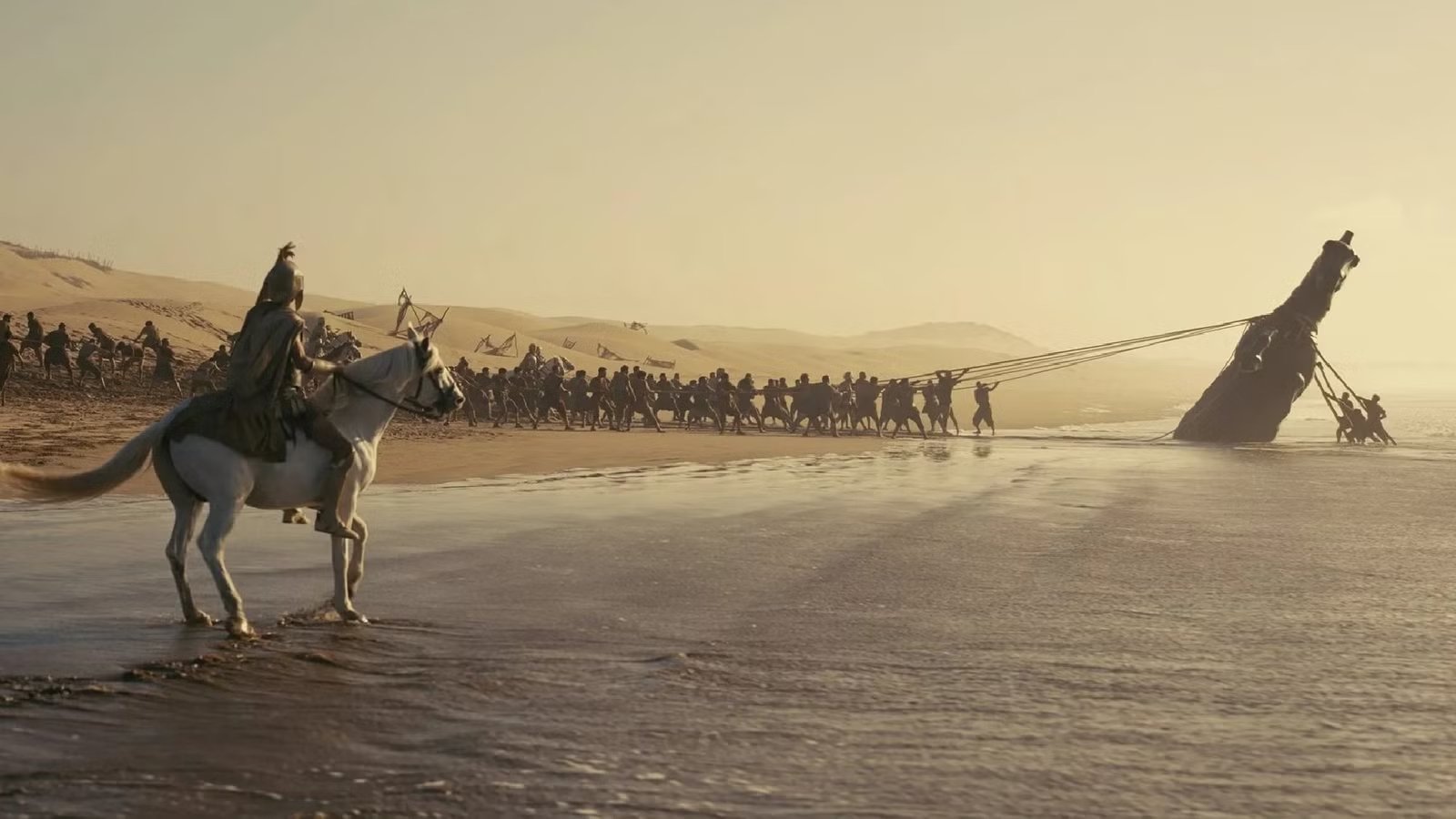
Aside from that, the film’s scope is impossible to doubt. Shot in IMAX, it’s almost redundant to say that The Odyssey looks great on the big screen. Even for Nolan, though, this film is a genuine spectacle, thanks in large part to the work of Dutch cinematographer Hoyte van Hoytema. The designs of the monsters are a bit mixed; while the Cyclops Polyphemus is done brilliantly, the monster Scylla leaves a bit to be desired. On another note, some audience members will doubtless take issue with the fact that the Greeks’ armour is not accurate to the Late Bronze Age, but most will overlook such details and be swept up in the story itself. Moreover, film composer Ludwig Goransson triumphs once more with a score that eschews traditional orchestras and focuses on traditional Greek instruments, which required recreating instruments which no longer exist.
One interesting addition Nolan makes to the myth is the insertion of tangible history. Not long after the supposed siege of Troy, the Late Bronze Age gave way to a collapse of multiple civilizations across the Mediterranean, including Mycenaean Greece. This collapse was hastened by the arrival of a mysterious force known only as the Sea Peoples. Who they were and whence they came have been lost to history, and the film doesn’t try to answer those questions. Their presence, along with whisperings of a coming doom, adds a whole new layer to the story, which ties in with Odysseus’ journey to reach his home once again. Indeed, Nolan’s screenplay also seeks to peel back the layers of myth and capture the human beings at the core of the story. Odysseus is not simply an adventuring hero, nor is Penelope the careworn wife patiently awaiting his return. Antinous is not just an arrogant usurper, but someone who is riddled with shame over a past incident that he denies even to himself. The Trojan War’s emotional scars are brought to the forefront, in a way which the Ancient Greeks could only allude to with metaphor, such as the divine madness of Ajax. Meanwhile, the film also touches on other aspects of the Trojan War and its aftermath, such as the long journey of Menelaus to his own home, and the cursed but arguably deserved fate of Agammemnon.
Truth be told, there has always been something about the tales of Greek mythology which has seemed inherently unfilmable. How does one properly portray these gods who play with mortal men’s lives, or those fantastical heroes who achieve superhuman feats? How can a film do a straight retelling of the myths while still capturing the awe which said myths inspired over countless generations? Such an effort competes with every individual’s imagination, and it requires a person of incredible vision and ambition to even attempt. To paraphrase another film, Nolan is the filmmaker that Homer’s epic tale deserves, and the filmmaker that it needed for such a Herculean task. As a longtime enthusiast of Greek mythology who has had to deal with many disappointing film adaptations, I say that The Odyssey does justice to Homer’s incredible tale (even if three hours isn’t enough to tell the entirety of it) even as it delves into the implications of sacrifice, Ancient Greek ethics, defiance of the gods’ will, and the price of living through an incredible story.