
‘Rose of Nevada’ Review: Mark Jenkin Disappoints With Muddled Time Travel Drama
While Mark Jenkin continues his signature visual language and draws career-best performances from Callum Turner and George MacKay, the overall experience of Rose of Nevada confounds more than it illuminates.
Have you ever started a movie with high hopes, only for them to be crushed as the film went along? This was my experience viewing Mark Jenkin’s latest, Rose of Nevada, a time travel drama that continuously floats between the past and present and blurs the line between reality and fiction. Shot on gorgeous 16mm film, without sound, the movie is more or less an experimental essay on how humanity reckons with the ghosts of the past than a straightforward journey through tumultuous times. However, it’s also painfully unfocused and begins to lose our interest as the runtime stretches interminably and doesn’t know where to take its central characters inside its temporalities.
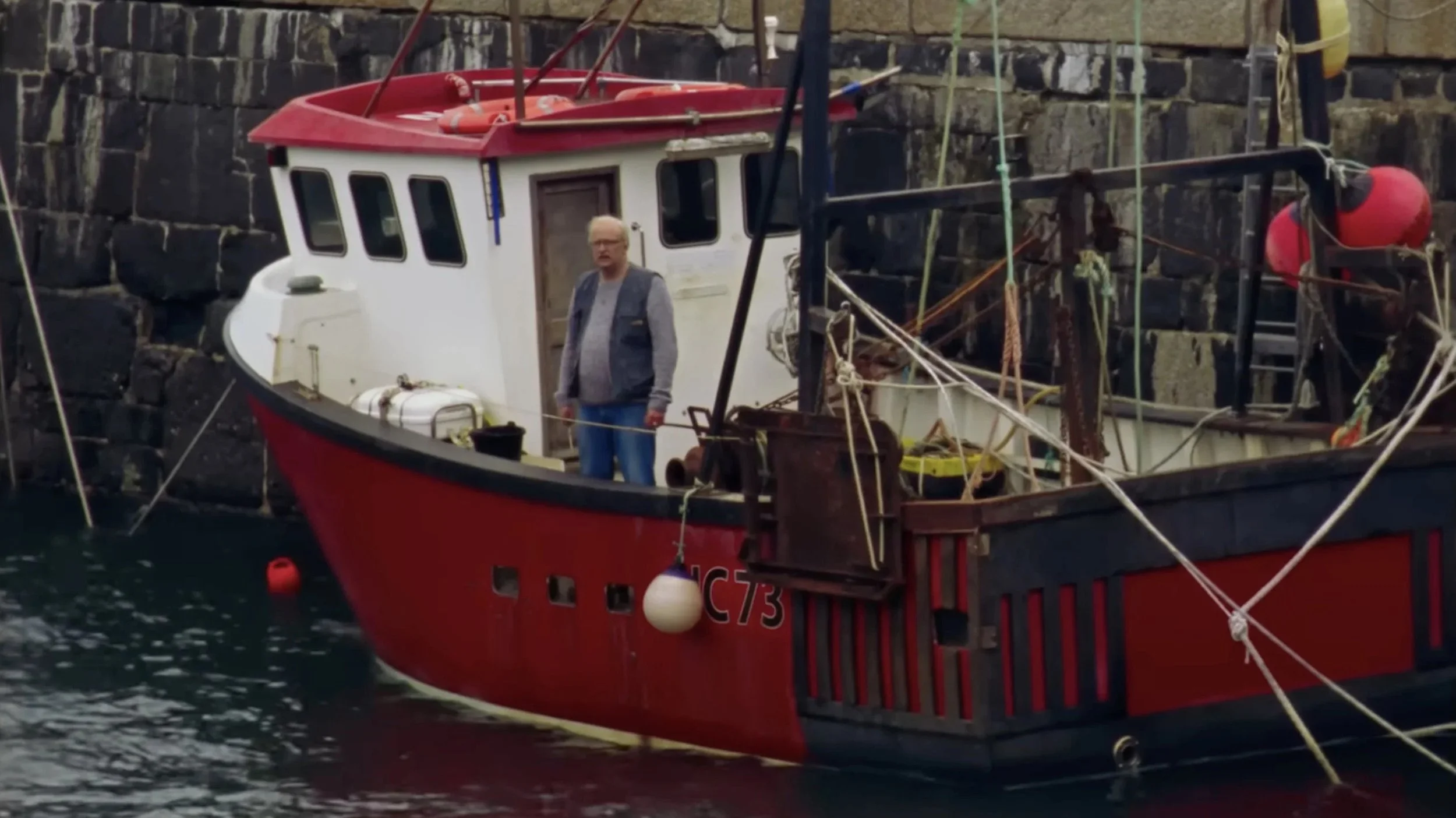
The movie immediately strikes our attention with a dash of magical realism as the titular ship “Rose of Nevada” returns to a fishing village thirty years after an accident that killed everyone on board. The first twenty or so minutes of Jenkin’s latest examines how the incident affected its small population, with family members still reeling from insurmountable loss, and the village itself in total economic decline. The vessel mysteriously reappearing seems strange, but not for Nick (George MacKay), who has been looking for stable employment for a long time but has struggled to make ends meet.
Nick recruits another struggling worker, Liam (Callum Turner), to fish and reinvigorate the town’s stagnant economy and the two begin to travel at sea with skipper Murgey (Francis Magee). The work is long and arduous, but productive, until they return to the town and have been transported back in time, thirty years ago. The two protagonists are mistaken for two people who disappeared wit the Rose of Nevada, Liam for Alan, and Nick for Luke. Nick immediately attempts to find ways to return to his current timeline, while Liam appreciates his new role and believes it just to settle with Alan’s family, wife Tina (Rosalind Eleazar) and Jess (Yana Penrose).
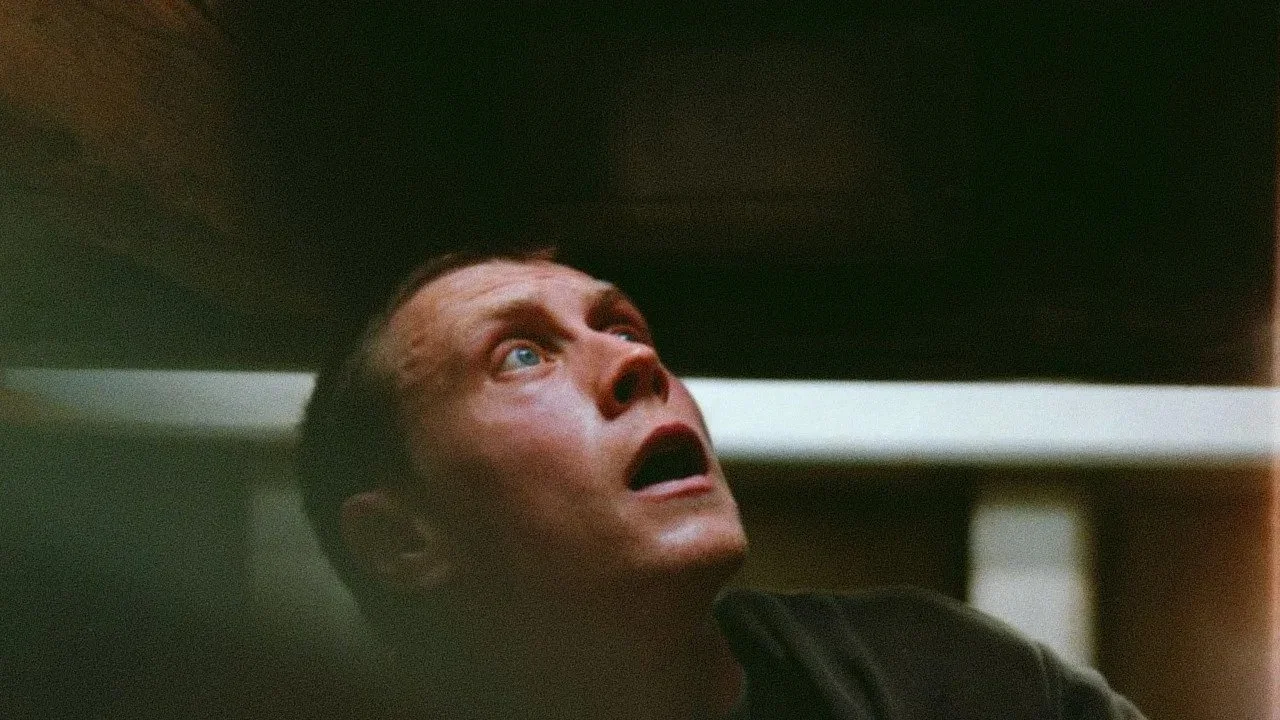
That part is where Jenkin begins to lose his grip on the movie and uninterestingly run around in circles, even if the visual language he’s developed over the years with films such as Bait and Enys Men, which also explore the Cornish coast, remains intact. Jenkin, who also acts as cinematographer, editor, and composer, seems to have a vision and attempts to showcase all of his unwieldy thoughts inside an ambitiously dense 114-minute drama. However, none of these thoughts coalesce in ways that feel as urgent as his last two go-arounds and frequently hamper the dramatic tension at the heart of the drama, which is does Nick stay or attempt to turn back time? Of course, this seems like an impossible task.
There are occasional moments where Jenkin goes much further than his conventional conceit and begins to play with the notions of space and time as fragmented memories in the same way Alain Resnais did in Je t’aime, je t’aime, which is still the benchmark of time travel movies even to this day. Forget Back to the Future, the way Resnais communicated with the past and present, in rapid, jumbled and non-linear succession has never been matched by any other filmmaker. Jenkin certainly tries, and when he gets experimental by crafting esoteric images with his 16mm camera or flashes of something grander than the small town both Nick and Liam are stuck in, Rose of Nevada becomes a more complex character study. However, he rarely scratches the surface of those images and stays in the most uninteresting platitudes, even if his visual style is enrapturing and the actors are all fantastic.
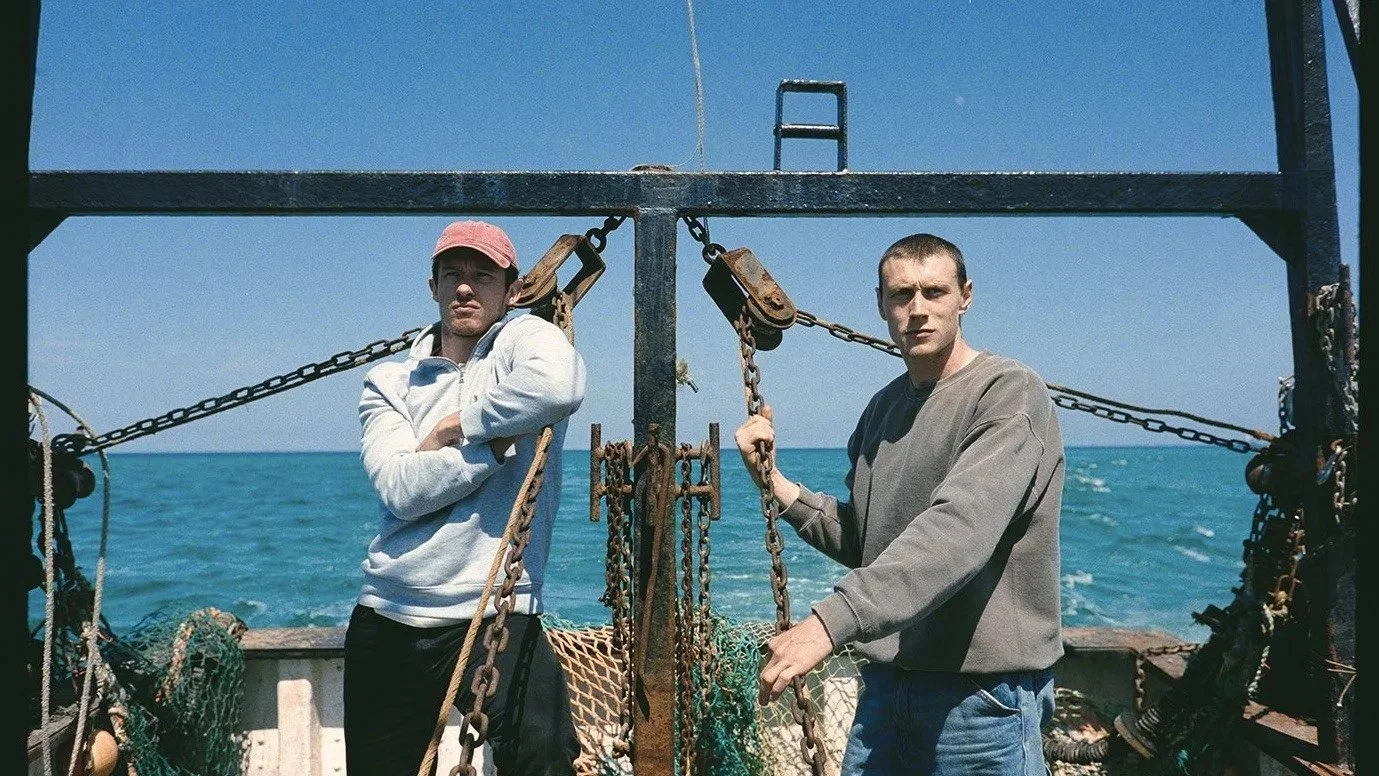
The real reason why anyone should be compelled to view Rose of Nevada is to see Jenkin work with genuine A-listers for the first time. Both Turner and MacKay have been building an impressive resumé in both film and television, and both have incredible faces for the director to play with. MacKay, in particular, was extremely malleable in Bertrand Bonello’s The Beast, and has an even broader range of conflicted facial expressions that are far more devastating to look at than any line of dialogue ever uttered by the actor. Turner, on the other hand, has even less to say, but has so much to convey that we ultimately feel for the protagonists’ respective plight, especially as Liam, who never had a stable home and now has the opportunity to do so, even if he takes the place of someone else.
This results in a devastating final scene (and image) that comes far too little too late in a movie that struggles to find its own identity. The good news is that Jenkin knows how to work with more well-known faces, as he has with lesser-known figures, and treats them on the same pedestal. Turner and MacKay have never been better. The bad news is that they’re stuck in a movie that goes nowhere, which attempts to link too many threads together and tumbles the few interesting thematic sections it barely introduces. If this marks a new stage for Jenkins’s filmmaking prowess, count this writer out.