
‘Tony’ Review: Matt Johnson’s Portrait of a Tormented Figure Is His Best Film
Matt Johnson deconstructs – and complicates – the very nature of biopics by drawing a tragic portrait of Anthony Bourdain’s youth in the masterful Tony.
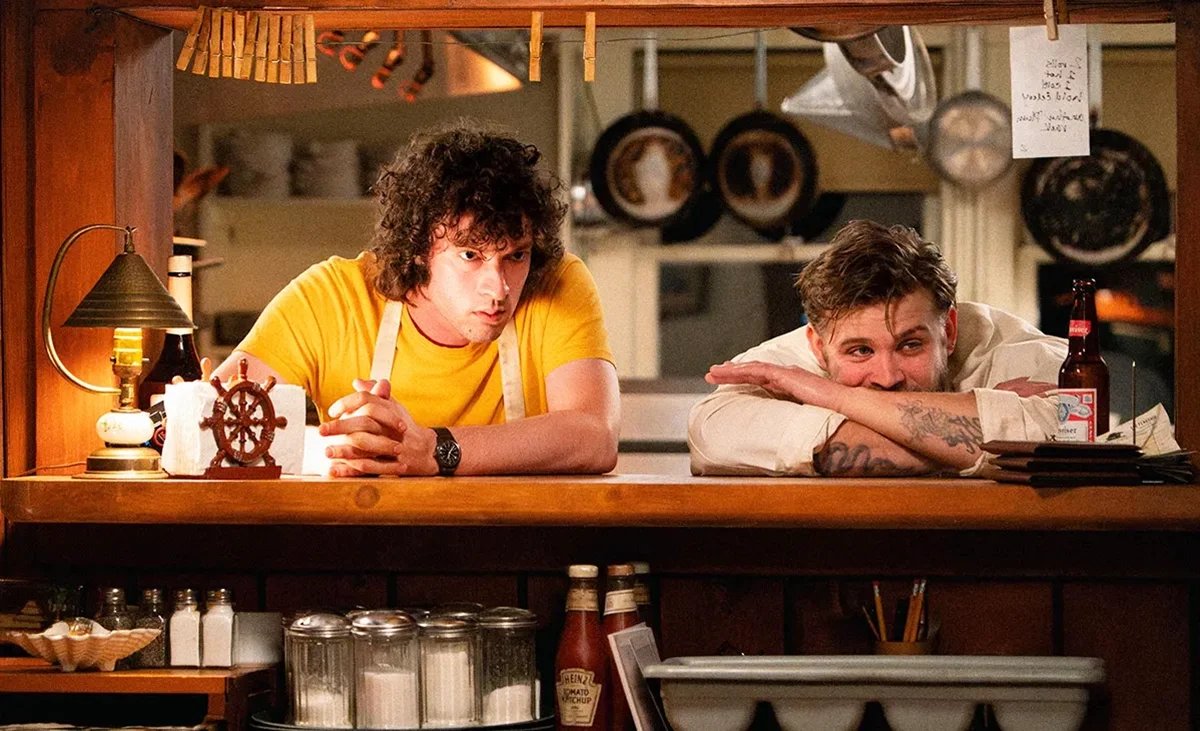
At face-value, Tony is presented as Matt Johnson’s most conventional film. It’s an adaptation of stories from the late Anthony Bourdain’s 2000 memoir Kitchen Confidential, specifically the time he spent as a young delinquent trying to lie his way into a scholarship so he could drop out of college. Bourdain (played by Dominic Sessa) had no tangible plans for his life, calling himself a “writer” with no real path of his own. Johnson doesn’t necessarily follow the “cradle-to-grave” structure as many biopics do, but focuses on a moment of the celebrity chef’s life before he actually became the revered public figure he was before tragically taking his own life in 2018. It seems conventional and rudimentary, but is it really?
The movie contains many of Johnson’s idiosyncrasies he developed with cinematographers Jared Raab and editor Curt Lobb in the form-blurring The Dirties, Operation Avalanche, BlackBerry, and Nirvanna the Band the Show the Movie, but there’s an inherent sadness within Tony that I haven’t seen from the Canadian filmmaker before. At least, not at this scale. Nirvanna the Band the Show (and the movie) certainly has its fair share of dramatic sections, especially as Matt and Jay realize that their quest to play at the Rivoli is leading them nowhere and seems completely futile, but they fully refuse to reckon with that idea, even at the end of the film.
For the first time in his filmmaking career, Johnson works with a different director of photography, eschewing the jittery, almost DIY-esque language that has defined his filmography to date. By collaborating with Michael Bauman, who was recently nominated for an Oscar for his work on Paul Thomas Anderson’s One Battle After Another, Johnson has seemingly evolved (read: matured) as an artist and crafts frames of tangible, almost painterly power. My immediate reaction was total disbelief that it wasn’t shot on film. The grain they achieved with their digital cameras looks as textured and as contrasted as emulsified 35mm. But there’s an aching, deeply human power in the film’s images that unlocks the whole text, and it devastated me in such a way that I still don’t know whether I’ll be able to write this assessment without crying.
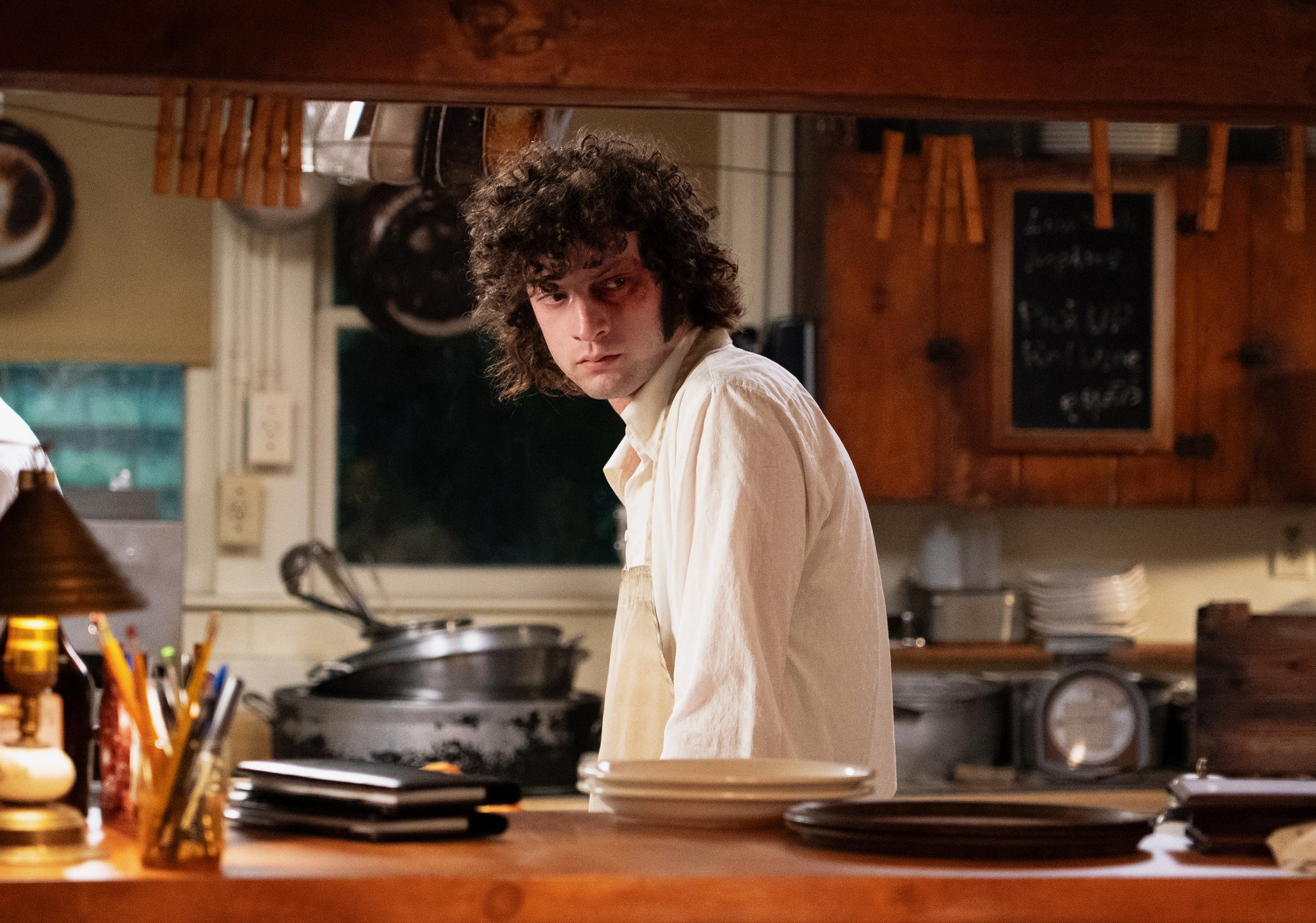
I’ve been trying to reckon with the significance of these images ever since seeing Tony, because the way Johnson frames Bourdain's small, almost childish nature helps us reframe the human behind his mythic stature. Who was he, really? Where did his love of food actually come from? Funnily enough, the film refuses to answer the latter and barely makes cooking the main draw of the movie. In fact, the most cooking you’ll get occurs later in the movie, where the kitchen Tony works at becomes a pressure test for him to impress Nancy (Emilia Jones), a girl he likes.
Yes, this is an important point: Anthony (or as he likes to call himself, “Tony”) moves to Providence in the summer for a girl. His motivations are entirely selfish and hurtful. He’s only bringing himself more pain and misery instead of attempting to make something out of his life. He works at a chef’s (Antonio Banderas) restaurant to sleep in his hammock and collect a bit of money, but doesn’t seem interested in cooking. In fact, the only time he genuinely wants to learn is to craft a dish that will “make you wanna f–ck!” There’s no thought in his brain that isn’t driven by ego. It’s almost as if we’re watching a car crash in slow motion, because we inevitably know where this life ends.
Johnson never judges Bourdain, nor does he have a thought on his suicide. Yet, that event fills almost every single frame of Tony, a movie that’s seemingly filled with hope and joy if you only look at it at face value. Again, it looks conventional, but it never is. Each frame brims with so much sadness, so much tangible anguish, that it almost feels overwhelming by the time it concludes with Bourdain attempting to leave his “rebel” mentality behind to pursue the art of cooking. There’s something Banderas’ unnamed chef unlocks in him, something that will drive the rest of his career, but he has been unable to look at what drives Tony inside, deeper than simply wanting to cook.
Again, the film is barely about cooking. Usually, films about chefs highlight dishes that make your mouth water, stimulate your senses, and perhaps encourage you to eat right after the film ends. It’ll almost feel like a commercial. Johnson rejects this idea. The film isn’t about food, and shouldn’t be. It’s about Anthony. The camera always focuses on him, even if he’s not the main subject of a given scene. Bauman will always frame him in some capacity, or always cut to his reaction. Lobb’s editing is intuitive, because everything he sees communicates to Bourdain, who absorbs the good and the bad of the environment he is now in, without fully realizing if this life is made for him.
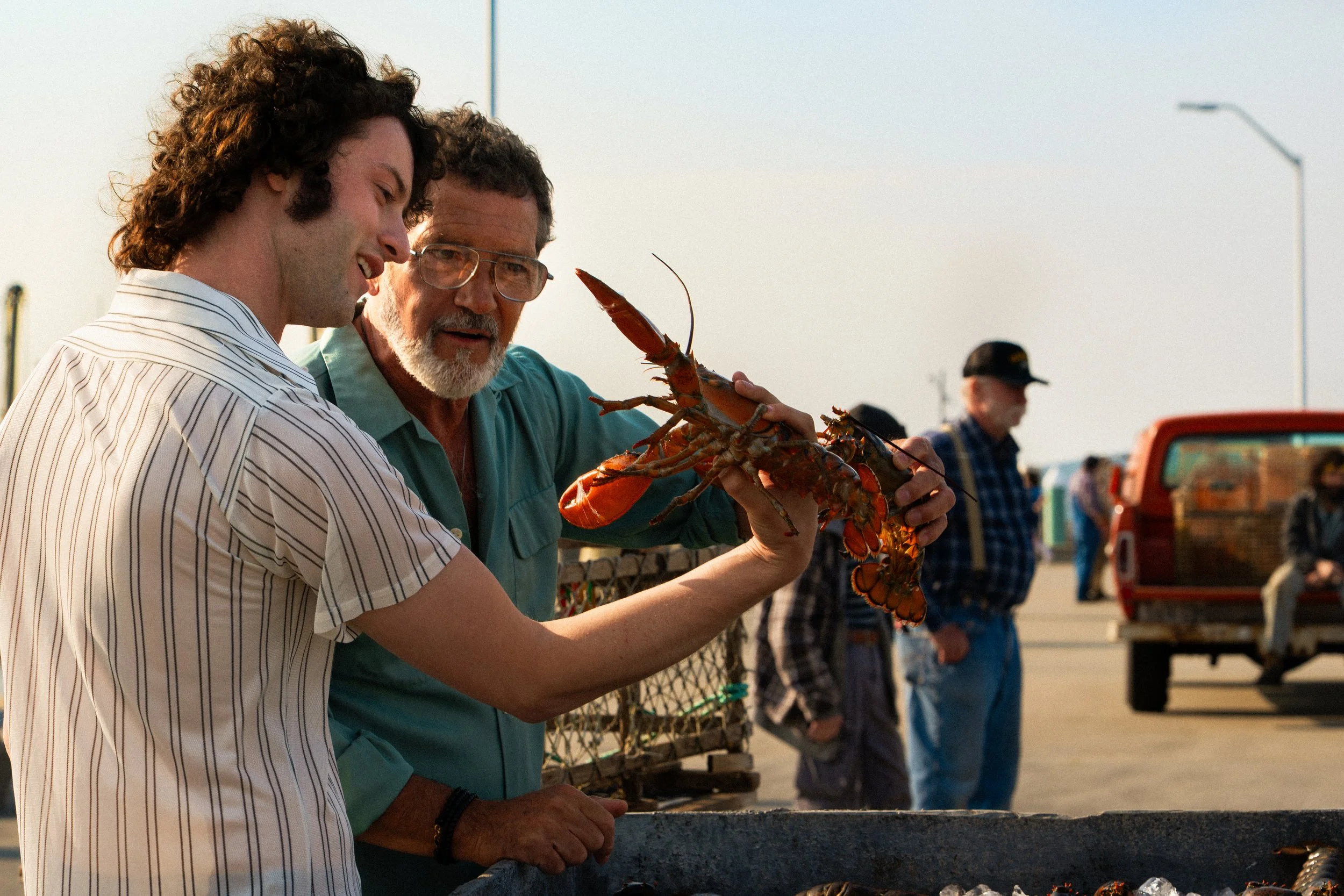
Above all else, though, the movie works because Dominic Sessa’s performance is so believable, so emotive, so full of humanity that we feel for his take on Tony before the film opens up in a magisterial way, almost as if Johnson is sharing a part of himself that we never saw before. Many have discussed that Matt Johnson makes movies about himself (sometimes even starring as himself), but none holds true more than Tony. It’s almost as if he sees a lot of who he was (or is) in a young and rebellious Anthony Bourdain. Perhaps the man himself would’ve hated the film if it came out (certainly, he’d leave a scathing review, at the very least), but it doesn’t pretend to be an “accurate” portrayal of who he was. It’s Tony (Matt’s Version), and the portrait he draws is immensely complex and emotionally overwhelming.
The film brings up the subject of suicide once, but never links it to Bourdain’s death. Instead, it reckons with the story the chef tells Tony, as a catalyst for the uphill battle he will face for the rest of his life. It becomes the most important scene of the movie, and, if you meet it at its term, will result in you watching the back half of this with a puddle of tears in your eyes. It’s such an achingly tragic movie, but its devastation occurs so subtly that you may miss it entirely. On its surface, Tony is a warm-hearted, lovingly constructed (and often comforting) coming-of-age tale. Once you begin to parse its immaculately conceived and raw images, it becomes something else entirely. It might be Matt Johnson’s most “conventional” movie, but it’s definitely his best.