
‘Buddy’ Review: Casper Kelly Conjures Our Childhood Traumas
Casper Kelly reminds us how deeply unsettling ‘90s childhood shows were by simply adding a horror prism to mascot figures in his feature directorial debut, Buddy.
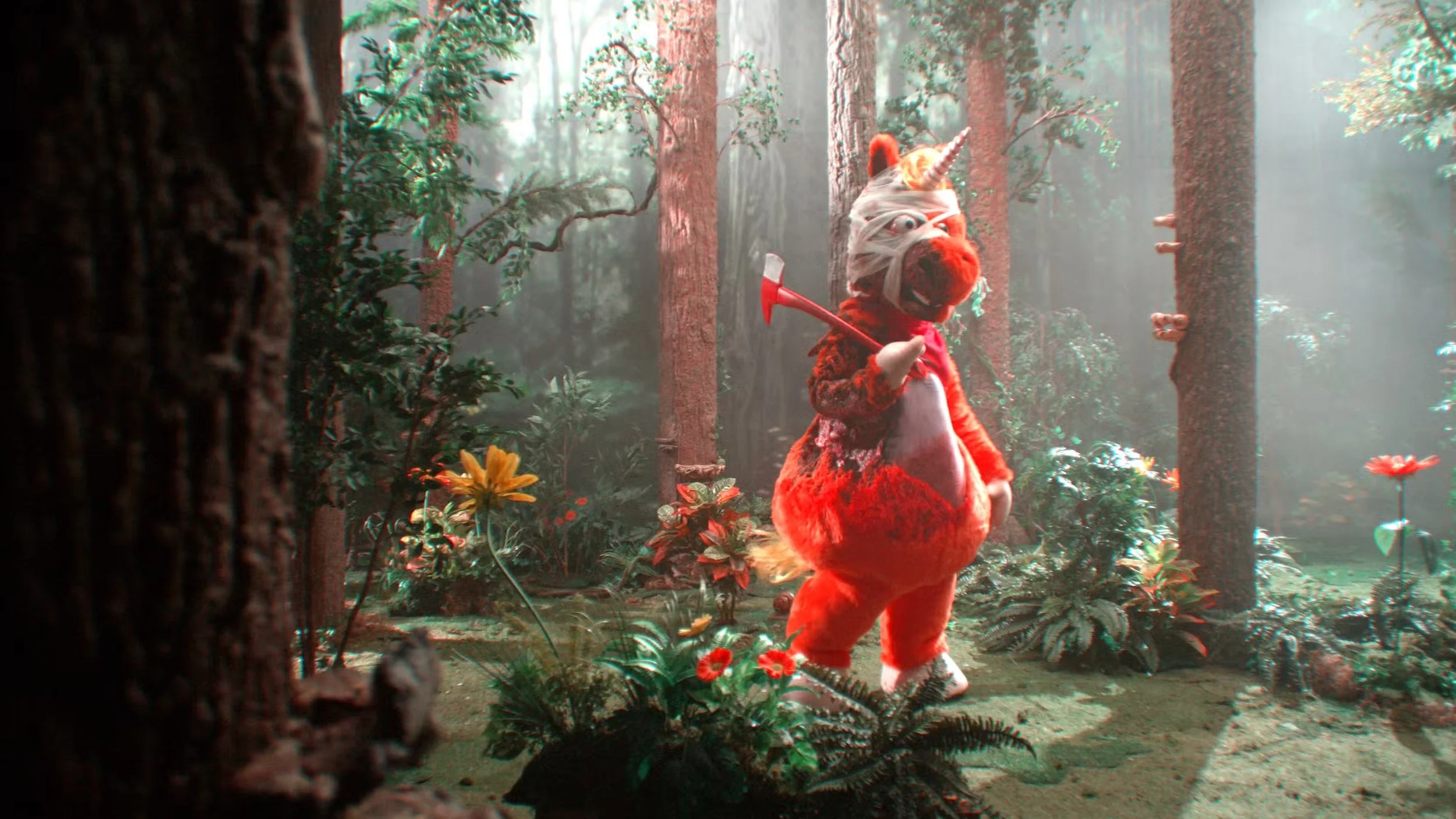
It will be difficult to review Casper Kelly’s Buddy, as its marketing campaign shrouds its plot in secrecy. Ever since a buzzy premiere at Sundance (and its eventual debut at Fantasia early this month), the movie’s premise has intrigued this critic. The creator of Too Many Cooks, one of the most important short films of the past decade, finally makes a movie that addresses a subject that few of us ‘90s kids haven’t fully reckoned with: childhood mascot shows were – and excuse my French – deranged as fuck. Scratch that, “children’s” entertainment made in the 1980s and 1990s is the source of many of our traumas, which we haven’t fully processed, and likely won’t.
The dog dies. An art teacher kidnaps kids and makes them work in a sweatshop. A witch who turns a child into a mouse and shows their “true” self moments later. A sun in the face of a baby who screams in front of the television and comes out at you. A purple dinosaur who mysteriously hangs out with children in a fantastical world to teach them about love and friendship. The last reference serves as the basis for Kelly’s film, where children are the stars of a show dubbed It’s Buddy! In it, its titular character (voiced by Keegan Michael-Key) is “awakened” by any kid who says “Oh, Buddy!”
Buddy, of course, attempts to teach the kids real lessons to make them braver individuals, until one of them refuses to follow his wishes and, well… our worst nightmares come true. There isn’t a single sane person who wasn’t properly traumatized by entertainment they viewed while they were young, and I bet that most of that trauma comes from films and television shows that were primarily destined for “children.” In the 1980s and 1990s, children’s movies weren’t as “focus-grouped” as they are today, and many edgier themes (or images that weren’t necessarily “coddling”) made their way to the screens.
This resulted in a nightmare-fuel generation who, on reddit forums, discussed how specific kids' titles made in the era “either traumatized you or will traumatize you.” Kelly takes the basis of how genuinely unhinged the people in charge of making entertainment for CHILDREN were and inserts our deepest, darkest nightmares inside the figure of a psychotic mascot who, once it begins to snap, goes on a hyperviolent killing spree. Revealing more would spoil key elements that the marketing has smartly wrapped up, including how the characters played by Cristin Milioti and Topher Grace factor into Buddy’s larger plot, but the one thing you need to know is that Kelly holds nothing back in his portrayal of childhood trauma, both directly and indirectly.
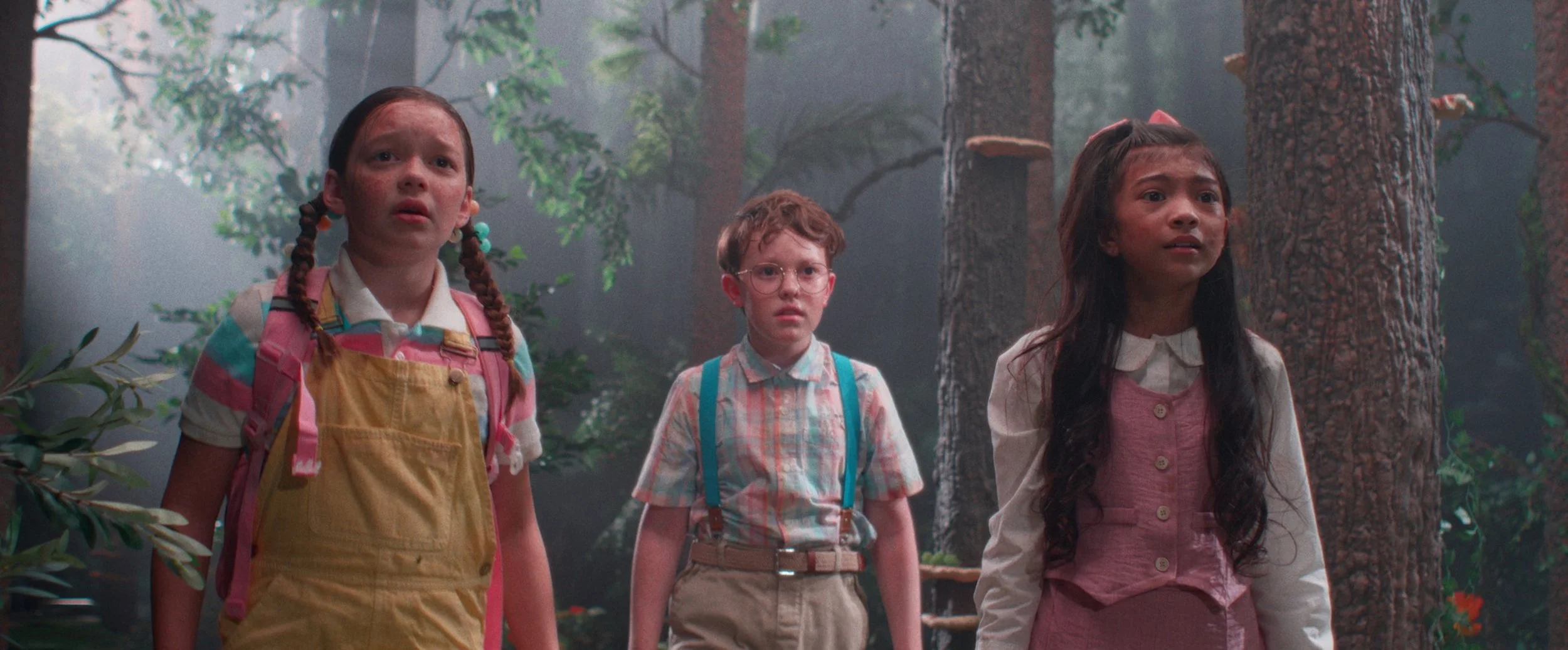
Directly, of course, meaning the various sequences where children get brutally killed by the mascot and attempt to escape Buddy’s imaginative world, and indirectly by way of Milioti’s character, whose repressed traumas begin to crawl back into her mind once she remembers Buddy’s existence. By far, the film’s most frightening scene occurs in a traditional environment, where nothing happens, but our minds play games and make us see images we thought we had repressed to protect ourselves. Milioti’s agonizing scream – and sudden panic attack – says it all. There are people who deserve to get sued for the lasting trauma they’ve caused to children who viewed films or shows that were allegedly destined for them, but their hyperactive minds labeled them a “threat.” The scene represents the cost of scaring us far too early and thinking we will come out of these experiences unscathed.
Kelly will then smartly flip the show's conceit on its head by presenting a series of unwieldy images that harken back to our primary conception of terror and nightmares, before actively revealing Buddy’s true nature. It doesn’t all work. Some of it is painfully off-kilter, including a detour involving Clint Howard and Michael Shannon that unnecessarily extends the runtime more than it meaningfully expands upon capturing a specific period of time where the goal was not to amaze us, but to frighten the Hell out of our innocence and strip it all away. But the nature of the movie is so powerful that it lingers long in our memory, even if some of us were able to overcome as frivolous traumas compared to actual, harrowing events.
The thing is, Kelly understands what makes the aesthetics he riffs on horrifying. This isn’t a simple beat-for-beat recreation of Barney (although he nails everything in that regard, from the note-perfect production design and cinematography to its lifelike mascots), but an unraveling of the true terrors of a show like this one. Why in the hell was this figure deeply unsettling and traumatized a generation of children? After five minutes of watching Buddy, you’ll know why. Kelly is unafraid to tap into our repressed fears and illustrate them head-on, which is exacerbated through what I strongly believe is Keegan Michael-Key’s best-ever performance. The way in which he represents Buddy’s “charms” is actually a mask for a true nature that, once unveiled, results in legitimate catharsis that will enter your mind and never leave it.
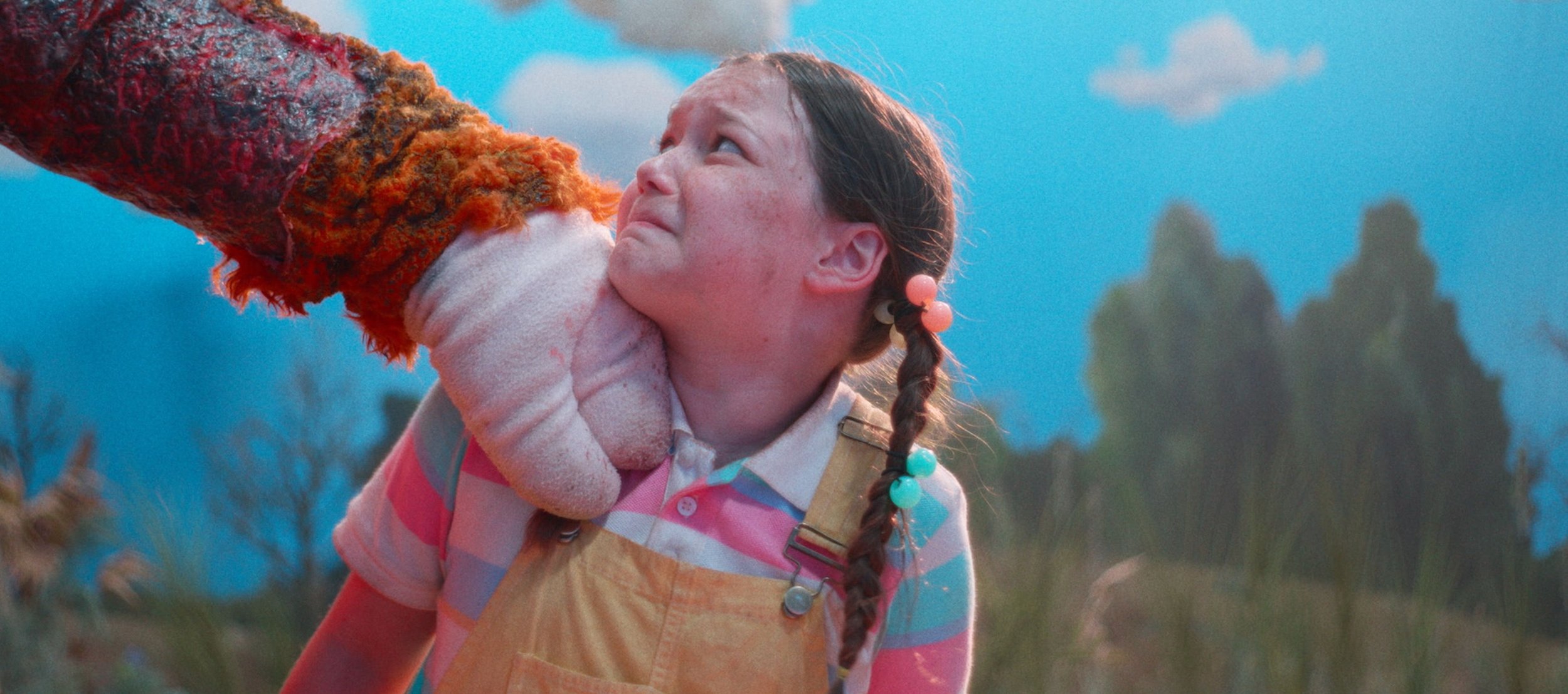
It’s difficult to talk about any other performance, since the marketing hides the entire movie from us. It’s also hard to go deeper into formally asking ourselves what the images mean in this review, to avoid spoilers, but one has to understand that what Kelly is doing is much smarter than mainly making a “lovable” figure of family entertainment “scary.” The Teletubbies have always been scary. Barney has always been scary. The strange motifs and musical patterns of 1990s family entertainment will petrify you. Québec’s Tales for All were the source of many lasting nightmares. There’s a special place in Hell for all of the people who caused a generation of individuals PTSD, all under the guise of “entertainment for kids.”
You can keep telling yourself, “It’s just a movie. It’s not real.” That doesn’t really work when, in a film destined for CHILDREN, at the tender age of eight, while IN SCHOOL, you see an image so disturbing that your mind gets permanently altered and you still have nightmares from it almost thirty years later. Barney (or Buddy) may not be real, but the scars they’ve undoubtedly caused to small children are still present, and most who were exposed to these disturbing shows have chosen to live with their traumas rather than confront them. Buddy confronts them for the first time, and I don’t think audiences are ready for the reckoning they will experience once the credits roll.