
‘Everest: The Other Side’ Review: A Vertigo-Inducing IMAX Experience [TIFF 2026]
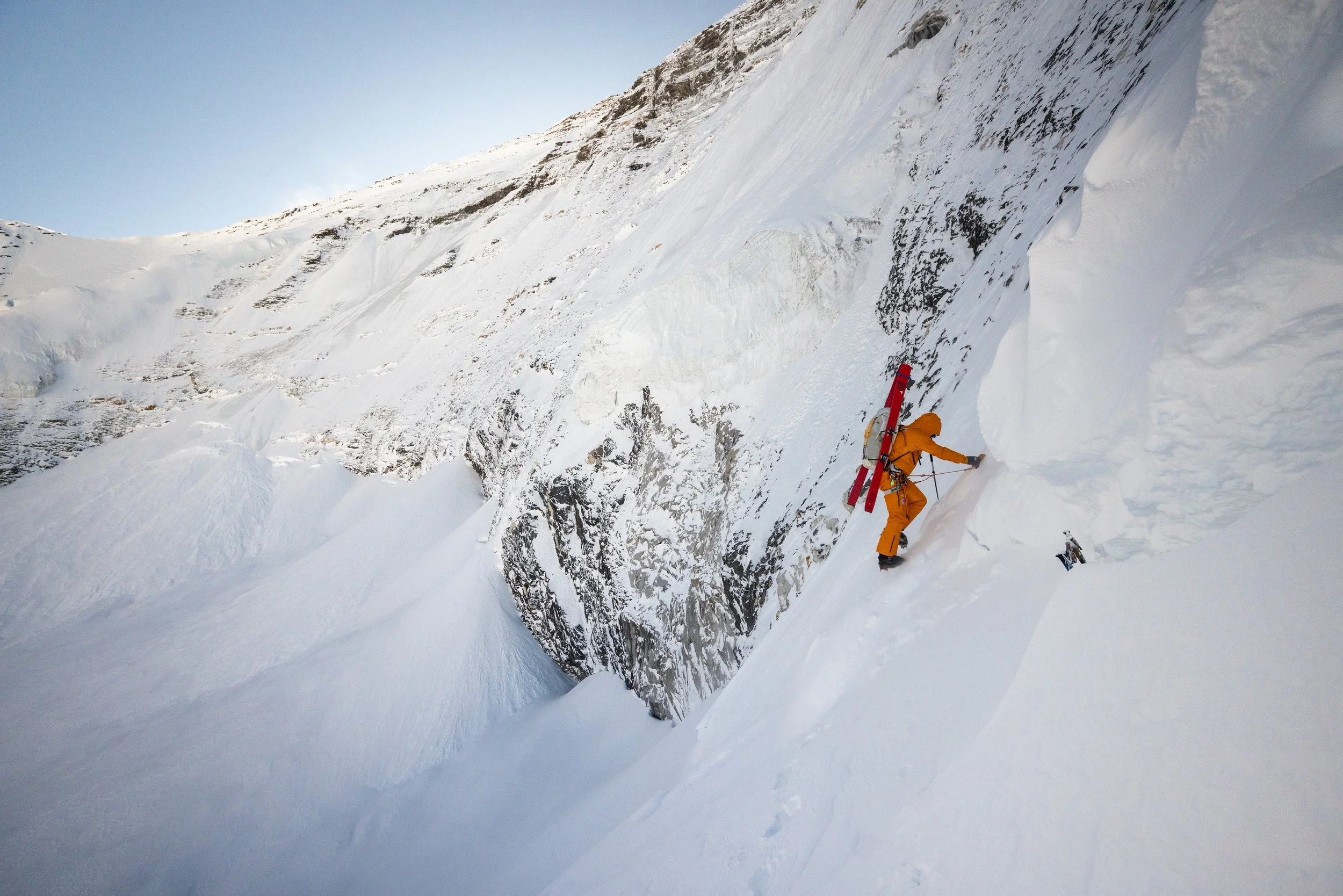
Elizabeth Chai Vasarhelyi and Jimmy Chin’s Everest: The Other Side will make your palms sweat and your heart race by simply showing an extreme sport you’ve likely never seen realized this way.
There may not be a scarier film this year than Elizabeth Chai Vasarhelyi and Jimmy Chin’s Everest: The Other Side. The Academy Award-winning Free Solo husband-and-wife directorial duo are at it again by tackling another extreme sport: ski mountaineering, by way of Jim Morrison and Hilaree Nelson’s lifelong dream of skiing the north side of Mount Everest. The climb is grueling. The downhill slope is far too dangerous. The margin for error is small – and there are too many unknowns that make this challenge practically impossible. Who in their right mind would ever accomplish something like this?
As the saying goes, “The only person who has nothing to fear is one who has nothing to lose.” If you haven’t heard Jim Morrison’s tragic story, this is a man who has lost everything. His first wife and kids perished in a horrifying plane crash. And her second romantic partner, Hilaree, died in an avalanche as they were preparing to ski Mount Everest. Vasarhelyi and Chin have been documenting them since 2019, and were on the grounds of Mount Manaslu when Hilaree began to ski and an avalanche consumed her. Everything is captured, and that precise moment might be the single most shocking thing I’ve seen all year, even as someone who knew she was going to die.
The audible gasps from the audience made that moment feel more real, a jaw-dropping demonstration of the fragility of human existence in ways that any review can’t properly articulate. Seeing it blown up at the Scotiabank Theatre’s IMAX screen was enough to send this critic into a period of breathless shock. I don’t think I’ve ever seen something like this captured in a National Geographic documentary, let alone one for the big screen. Even Cristina Clusiau and Saul Schwartz’s Fly did not show Jimmy Pouchert’s tragic final fall. Only pictures of his last act on Earth were enough to make us feel the gravity of the scene.
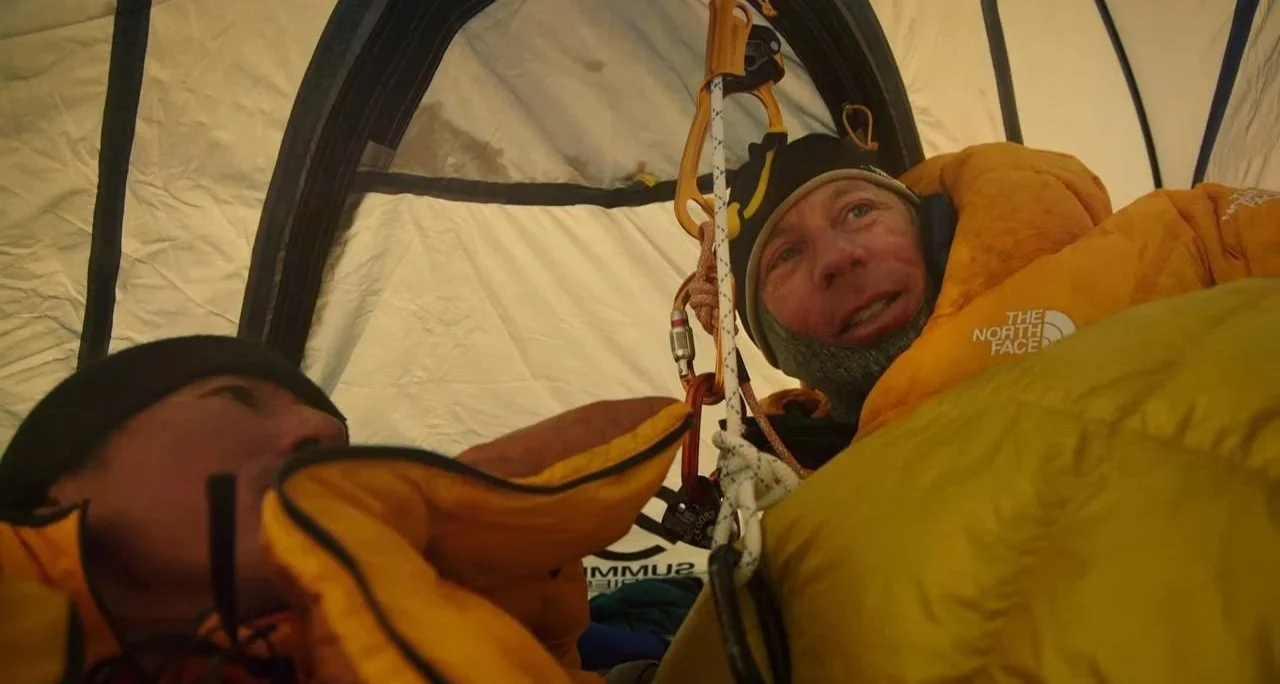
Vasarhelyi and Chin take it a step further, grounding their documentary in a humanity that feels more palpable than Free Solo, where the audience had to sit with a genuinely arrogant climber whose self-centeredness is the least interesting part of the film. Some may believe that Morrison wanting to continue the challenge on Everest: The Other Side is selfish, because Hilaree’s children won’t grow up without a father figure if it goes wrong, but is it truly selfish when you put yourself in the skier’s headspace? There’s a scene that happens late in the movie where Jim actually skis the North Face, after many trials and tribulations. One of them actively incorporates Chin in the project not as a mere filmmaker, but as Jim’s climbing partner.
This breaks the artifice of the documentaries the directing duo have always shaped and makes them part of the picture in ways we haven’t seen from them before. It adds an extra layer of urgency when one of the directors is in mortal danger from Everest’s relentless avalanches and harsher climate conditions, given the reality of where we live now. It makes the eventual ski that happens during its last half-hour even more dangerous, because the conditions they predicted aren’t at all what the terrain actually presents to him. In that sequence, there doesn’t need to be any flashy camerawork or expressive visuals. The act itself of skiing down Mount Everest speaks for itself, and what’s captured has to be the most breathtaking feat of derring-do I’ve seen on an IMAX screen, because it’s real.
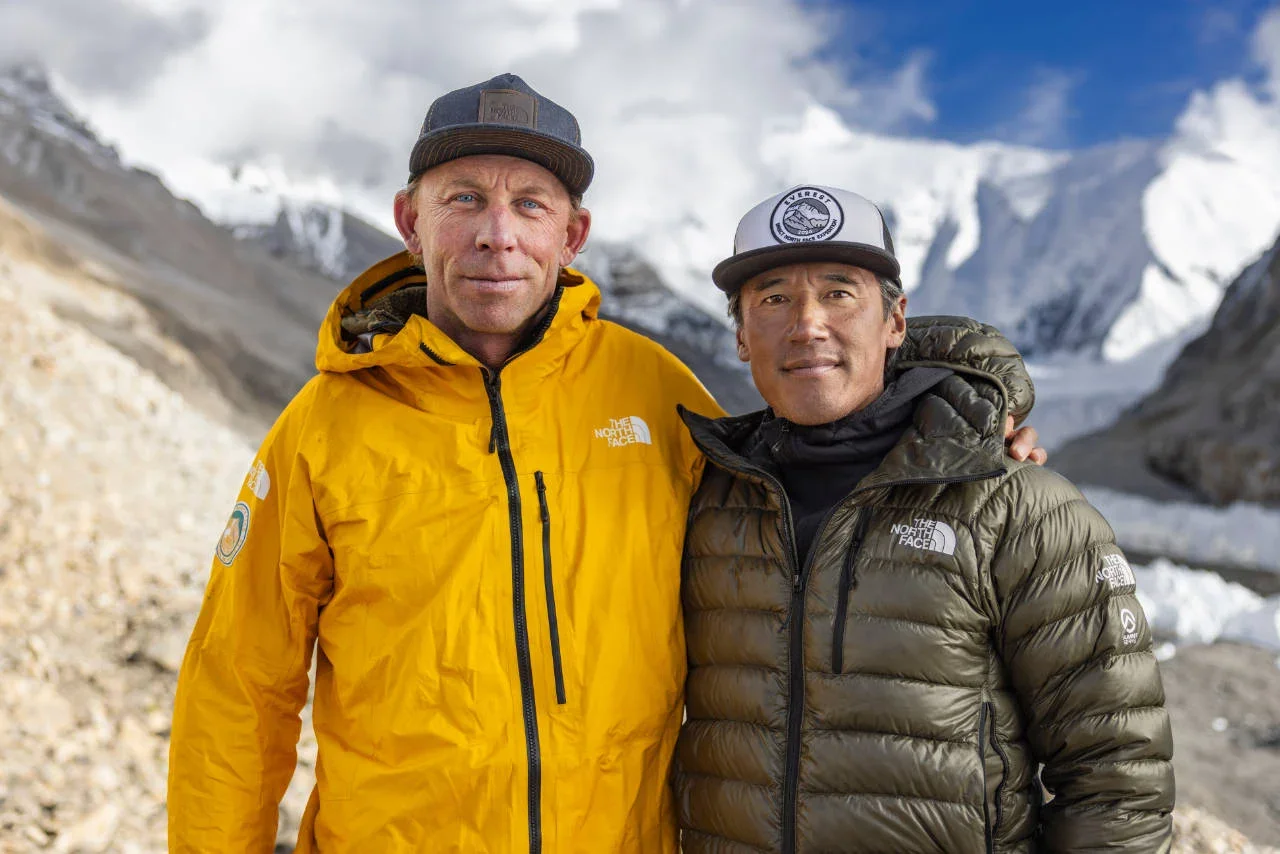
There are many “top IMAX moments” I can think of, because I’ve seen so many films in the format. I’ve never seen what is laid out in front of us on screen in the last half of Everest: The Other Side, and as a skier myself who has done backcountry and several allegedly “extreme” trails (I do not do that anymore; I prefer to live), seeing Morrison take his skis off to rappel down a part of the trail (which doesn’t have snow) seemed all too familiar. Ski boots don’t have any form of grip. One mistake and it’s over. But Jim doesn’t care about this anymore. As he skis down the hill, he eventually says, “If I curve, I won’t try to save myself” (I’m paraphrasing, but it’s something along those lines), because he has nothing to lose anymore.
For some people, this might not be the case. But Jim Morrison is no longer afraid of death. He’s faced it in ways that few of us will actually reckon with. His ultimate victory isn’t selfish at all, but the culmination of a happy moment he’s been chasing since the passing of his family. When he eventually makes it, the catharsis is incredibly overwhelming, and Everest: The Other Side climbs high in the pantheon of both Chin and Vasarhelyi’s oeuvre as one of their most accomplished (and vertiginous) documentaries that’s sure to give people intense goosebumps in a way they’ve never truly felt before.