
'Paradise Lost' Review: Dealing With Loss in the World of A.I. [TIFF 2026]
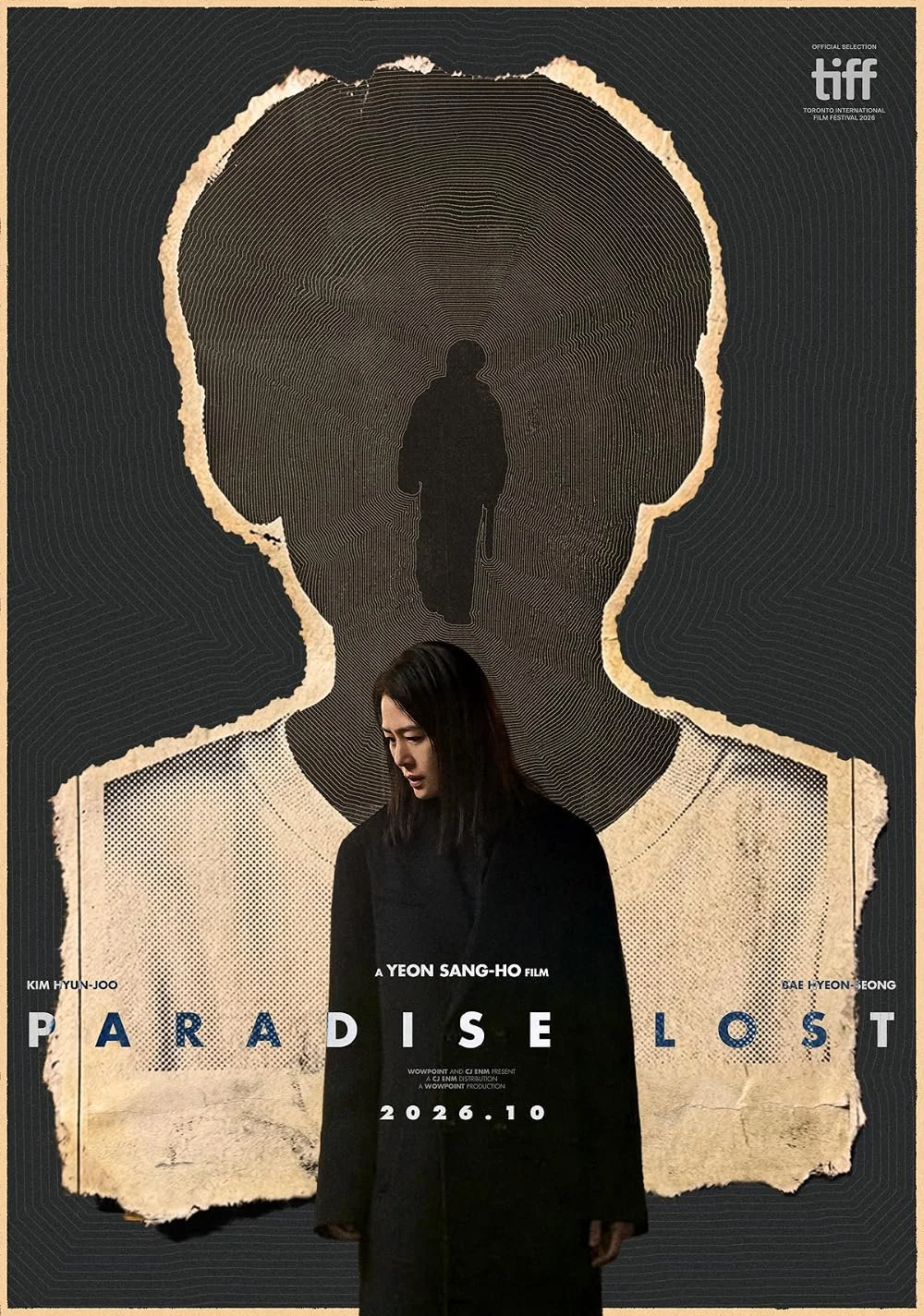
THIS MYSTERIOUS TALE OF GRIEF IS MORE OFTEN THAN NOT A HEAD SCRATCHER.
Grief is an emotion that we often grapple with many times throughout our lives. While the normal way of life is to expect grief to come when those around us age old, there are those tragic times when we are faced with grieving for those who happen to be younger than us, those who have gone far too soon. Paradise Lost explores a rather heartwrenching subject, that being the loss of a child through the lens of our modern way of life, and how we face that in an ever advancing age of technology. Can we go on pretending? Should we?
Director Yeon Sang-ho has been able to find tremendous success over the years. He has slotted himself into being a rather bankable filmmaker in not only Korea but abroad as well. His 2016 hit and now zombie classic Train to Busan was a massive success, and he has since found himself behind the camera of other acclaimed Korean blockbusters such as the Train to Busan spinoff Peninsula, and earlier this year with Colony which currently sits fourth at the South Korean box office this year behind only The King’s Warden (South Korea), The Odyssey, and Spider-Man: Brand New Day. Point being, Yeon Sang-ho is clearly drawn to storytelling in the vein of popular culture, and with Paradise Lost he explores how deeply we have become, and can become attached to artificial intelligence.
The film centres around Ryu (Kim Hyun-joo), who is a mother of a young son who is off on a school trip. The students from the bus mysteriously vanish, and many of the parents, including Ryu, are left with little to no answers. This is devastating for the families, and Ryu, a single mother, sees her life thrown into complete disarray. Several years go by, and we see that Ryu, as many of the other families have also, has turned to a revolutionary artificial intelligence that has developed her son artificially, so that she can interact with him as though he was there before her very eyes, all she has to do is put on the glasses. When she has to go to work, or other things, he runs off into the artificial dreamland and spends his days with the rest of the kids in a sort of paradise. The children in this disappearance all “live” artificially in that world.
From the jump we see that despite many years since the incident, Ryu is still heavily relying on the intelligence. The company has made it so through complex interviews with parents, images, videos, and technological advancements they can develop the child to be as similar as possible to how they were on that dreadful day. These artificial intelligence “children” do not age, they seemingly allow parents to live out the fantasy that they never lost their children. While some parents used it only briefly, which was the initial intent by the company, Ryu cannot separate the artificial intelligence from real life, and it begins to blur for her, getting in the way of her day to day life.
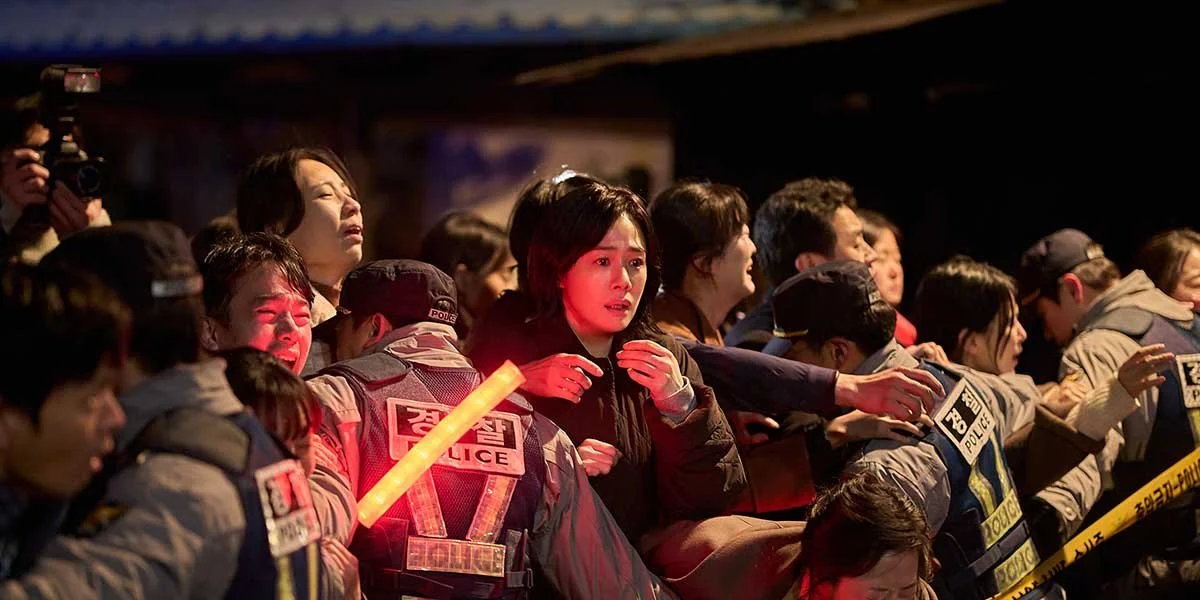
This film provides so much in terms of promise and potential. Someone, someday, and honestly maybe they already have, will tell a good story and execute a good film surrounding this premise. Unfortunately, Paradise Lost is not that film. As we go through this journey of grief with Ryu, she is confronted with some findings that may alter her preconceived notions about the intelligence she so heavily relied on, and this is where the film completely falls apart. Early promise is squandered by characters so poorly written and scenes so unbelievably baffling that the film loses any semblance of genuine cohesiveness. A character that should be compelling, is very misrepresented in Ryu. There seemed to be a loss of confidence in her character as the film went on, and the script does no favours in keeping her true or believable at all.
While a negative review such as this should be a deterrent, it is hard to really pick apart the true negatives without spoiling much of this film's angle as it is based off some serious plot points and story shifts that occur later on. For this reason, it should be encouraged to give Paradise Lost a shot, just to see the head scratching choices it makes down the stretch, and to experience just how frustrating this is to sit down and watch. For that alone, it didn’t stand out as a bore. Paradise Lost does commit to some really fluid pacing that keeps the story moving at a more than digestible pace. It opens strong, it has thrills, and it moves along just fine, but a bad script ruins all of that.
Yeon Sang-ho is often bailed out by a strong lead performance by Kim Hyun-joo in a film that really falls apart like a straw house in a gust of wind. She does her best with what she's given and turns it up to 100 at every turn. Otherwise, Paradise Lost serves as merely a movie to check out on an interesting premise alone. That might be enough for some viewers, but those who commit to the very end will be left frustrated and disappointed.