‘Dust Bunny’ Review: Bryan Fuller’s Uneven Feature Debut
While Bryan Fuller’s ‘Dust Bunny’ bristles with an imaginative visual style and an intriguing world to explore, it’s often bogged down by unimpressive CGI theatrics, despite Mads Mikkelsen and Sophie Sloan attempting to hold the fort.
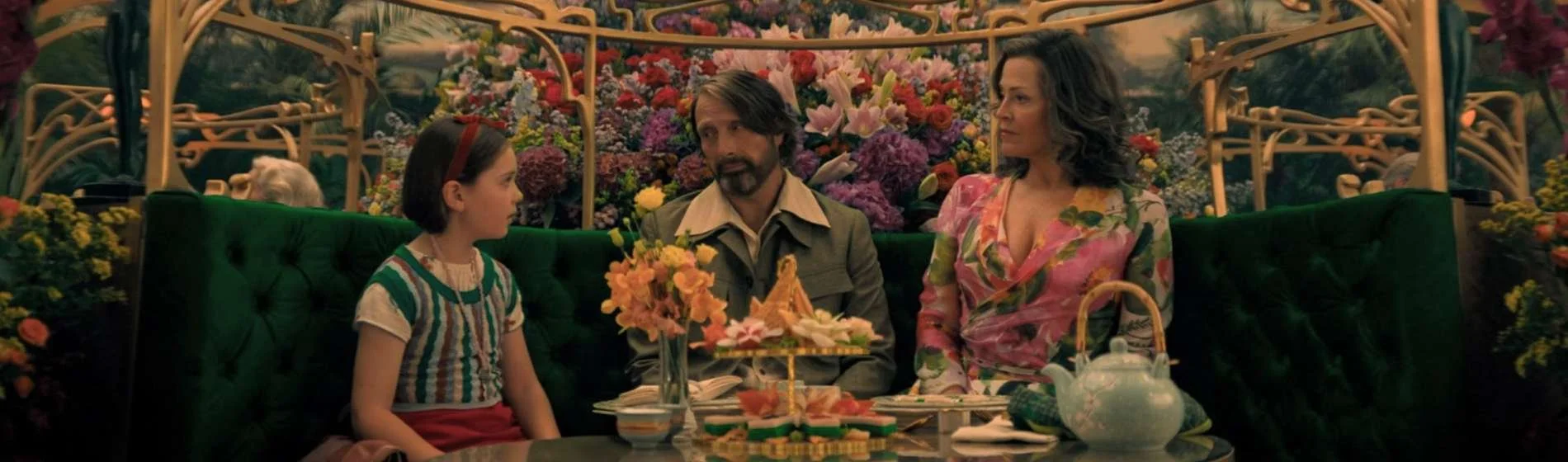
Bryan Fuller’s feature film debut, Dust Bunny, immediately strikes us by visualizing its world in an ultra-wide, 3:1 aspect ratio, a format few (if any) mainstream productions have ever used. Rarely do we see such confidence behind the camera, promising audiences something they’ve never seen before while tipping the hat to modern-day fantasy filmmakers who dared to ask them to dream and open their imaginations a bit. On its surface, Guillermo del Toro and Lucile Hadžihalilović come to mind, especially through its striking use of chiaroscuro lighting, eventually also tapping into Jean-Pierre Jeunet's formal daring as the film begins to visualize genuinely eye-popping imagery. However, the movie eventually recalls the free-flowing amateurism of Robert Rodriguez, whose family pictures, The Adventures of Sharkboy and Lavagirl and Shorts, bristled with as much imaginative power as they could muster and attempted to make us marvel at a world that seemed larger-than-life and beyond our wildest thoughts.
For a while, I meant this as the highest possible compliment. With cinematographer Nicole Hirsch Whitaker, Fuller plays with so many expressions in his 102-minute horror/fantasy actioner, locking audiences in through a mostly silent introductory half, where Aurora (Sophie Sloan) looks for her neighbor (Mads Mikkelsen), asking him, if he can, to kill the monster under her bed. The way in which Fuller builds his highly creative world on the fly, through this almost twenty-five-minute-long silent cold open, lures us into wanting to know more about how monsters exist outside of the imagination of children and what Aurora’s neighbor does for a living. We see him having omnious conversations with a handler of sorts (played by Sigourney Weaver, whom we don’t know her purpose in the story until much later in the movie), who’s part of a much larger organization that looks to be targeting him – and Aurora – down.
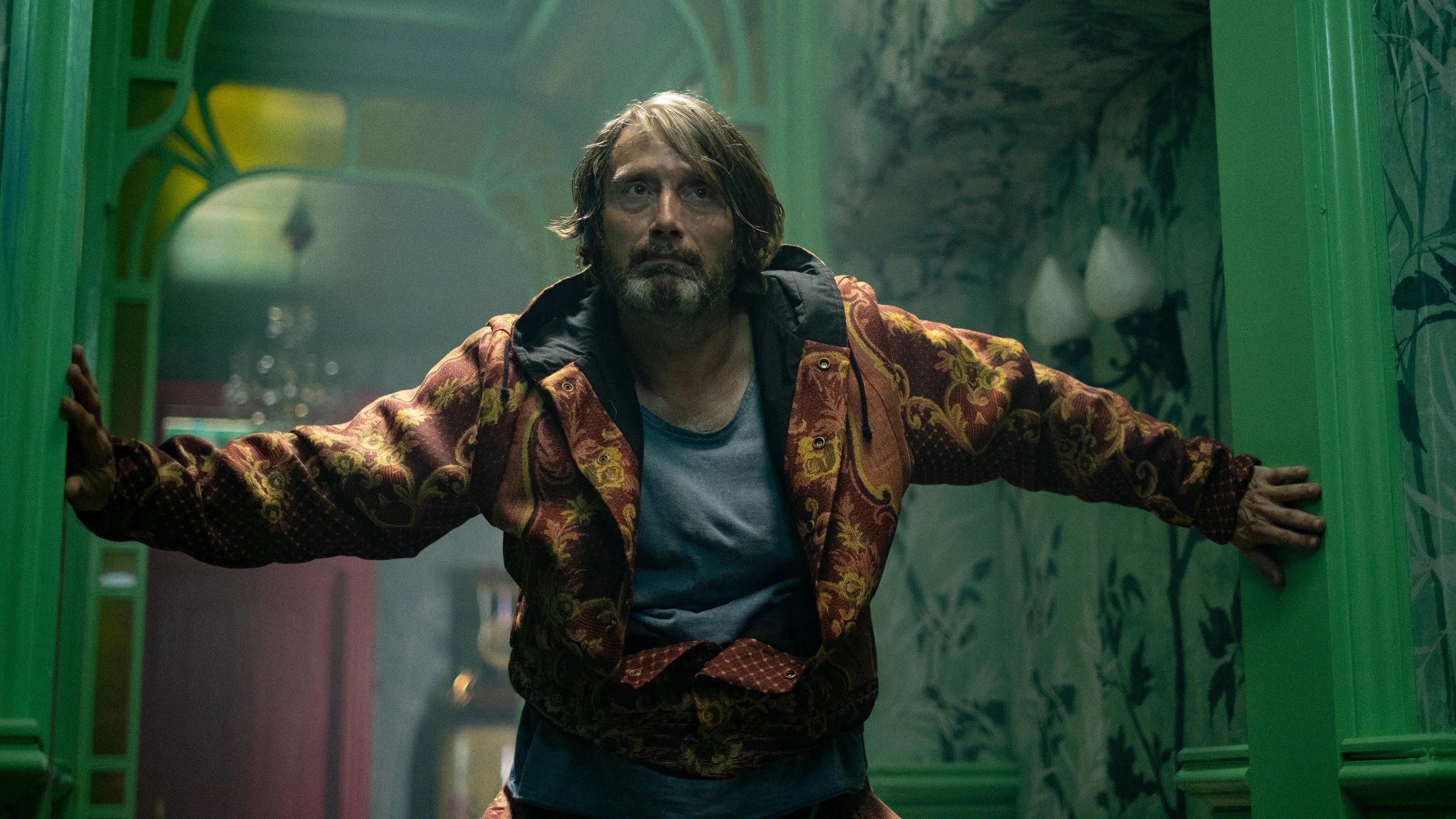
This is also where Dust Bunny begins to falter and doesn’t recover, culminating in a ridiculously inert climax whose earlier Rodriguez-inspired influences start to sour, reminding us why the “One Man Army” hasn’t done anything worthwhile in so long. The earlier world-building, which felt like a genuine breath of fresh air in original studio entertainment, doesn’t make much narrative or cohesive sense as the film evolves, creating strange leaps in logic that even a structure that blurs the line between dreams and reality can’t properly discern or transcend.
There’s enough originality to keep viewers on their toes, particularly during a rather gruesome denouement that immediately makes parents aware this thing isn’t for kids, but the film leaves one with many questions it refuses to answer by the time it reaches its final scene. Fuller hints at something much larger than Aurora and the neighbor were led to believe, but this creates far more contradictions than creating a story that allows audiences to entirely suspend their disbelief and enjoy the permutations the Hannibal creator takes within a world that grows into more unique directions than you initially thought. Worse yet, we never fully know if this is set in reality or just a figment of Aurora's imagination. Fuller isn't interested in blurring any line, which ultimately nixes any emotional (or kinetic) impact a movie like this could have.
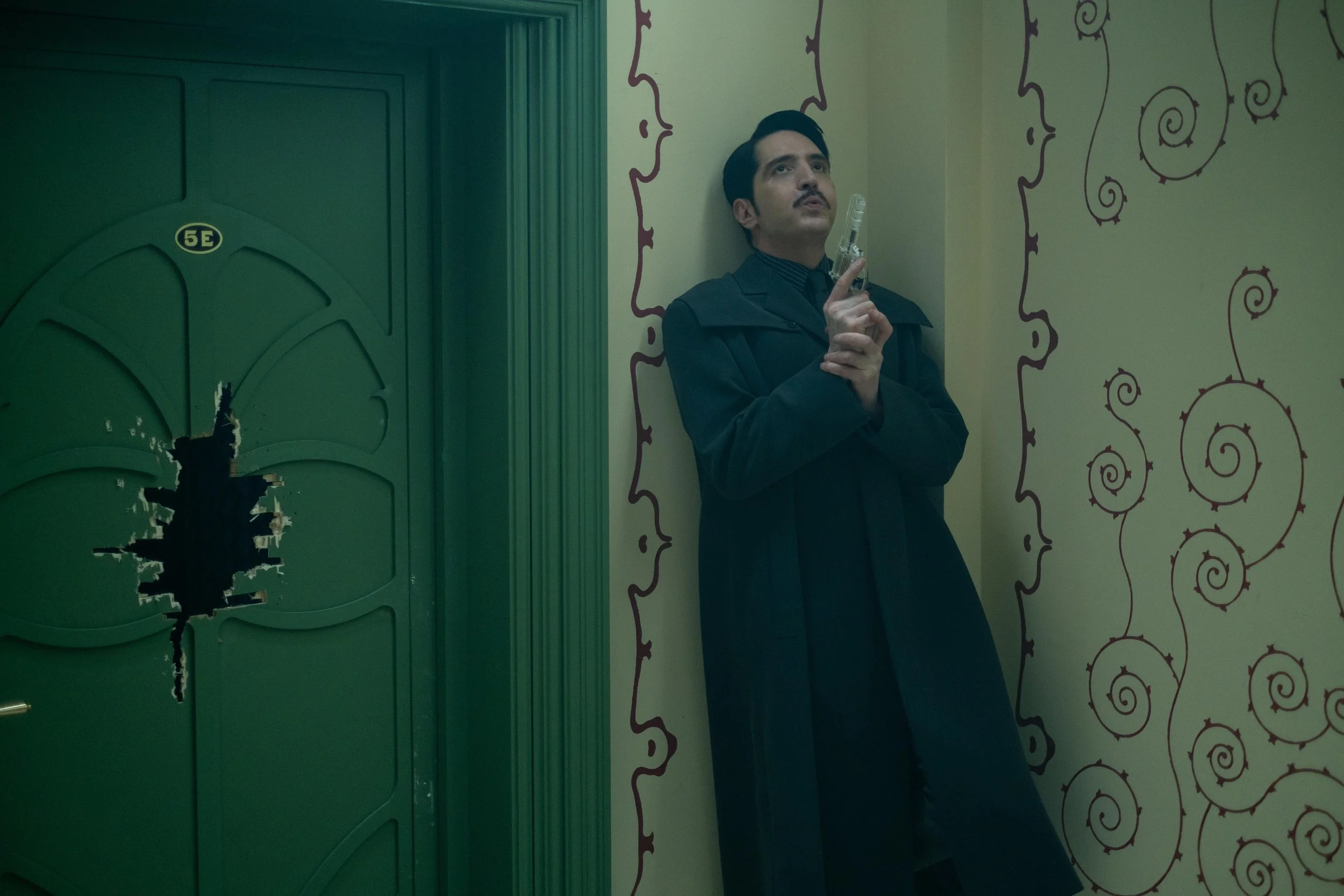
As Dust Bunny adds a bevy of underdeveloped side characters (played by Sheila Atim, David Dastmalchian, and Rebecca Henderson – who are they? Why are they specifically targeting Aurora and her neighbor? Who knows!), the plot gets even more convoluted and needlessly overcomplicates itself when the crux of the story is just about a little girl haunted by the monster under her bed asking her assassin neighbor to kill it. Of course, he doesn’t believe in any of that, but he will be very soon. Had the film stuck to that simple premise, Dust Bunny could’ve been something genuinely special, especially in an era when “family” entertainment has become more facile and safe. In the 1980s and 1990s, children would leave the cinema after seeing an alleged “family film” with PTSD, because filmmakers weren't afraid of killing a dog to make a cogent point, or stage sequences of actual sickening violence in front of kiddie characters to terrify them a bit.
I’m not saying we should bring back traumatic kids' films, but we should have more pictures that target families with a slight edge to enthrall them just a bit, but not give them PTSD. Dust Bunny is rated R, but it’s not as vicious as one would think. Fuller knows when to cut in his action scenes to move away from some gorier depictions of violence, but still retains the cathartic impact of his high-octane setpieces, which are a genuine highlight of a movie in desperate need of an identity to make its multiple tonal (and generic) shifts work. The movie should be simple – and fun – and while it certainly has a few sections of genuine genre pleasures, Fuller’s debut still feels like an incomplete meal, and one isn't left satisfied despite its staggering image-making.
Thankfully, the alchemy between Mikkelsen (who seems to enjoy his continued partnership with Fuller after the two worked together on Hannibal) and Sloan ensures Dust Bunny has something to keep its audience engaged. The latter, in particular, is a total revelation, who knows how to command the screen effectively and hold the audience’s attention, even if she takes a backseat near the film’s climax, asked to tuck under her “special blanket” while the neighbor and an FBI agent (played by Atim – the only side character with a modicum of development) take care of business, so to speak.
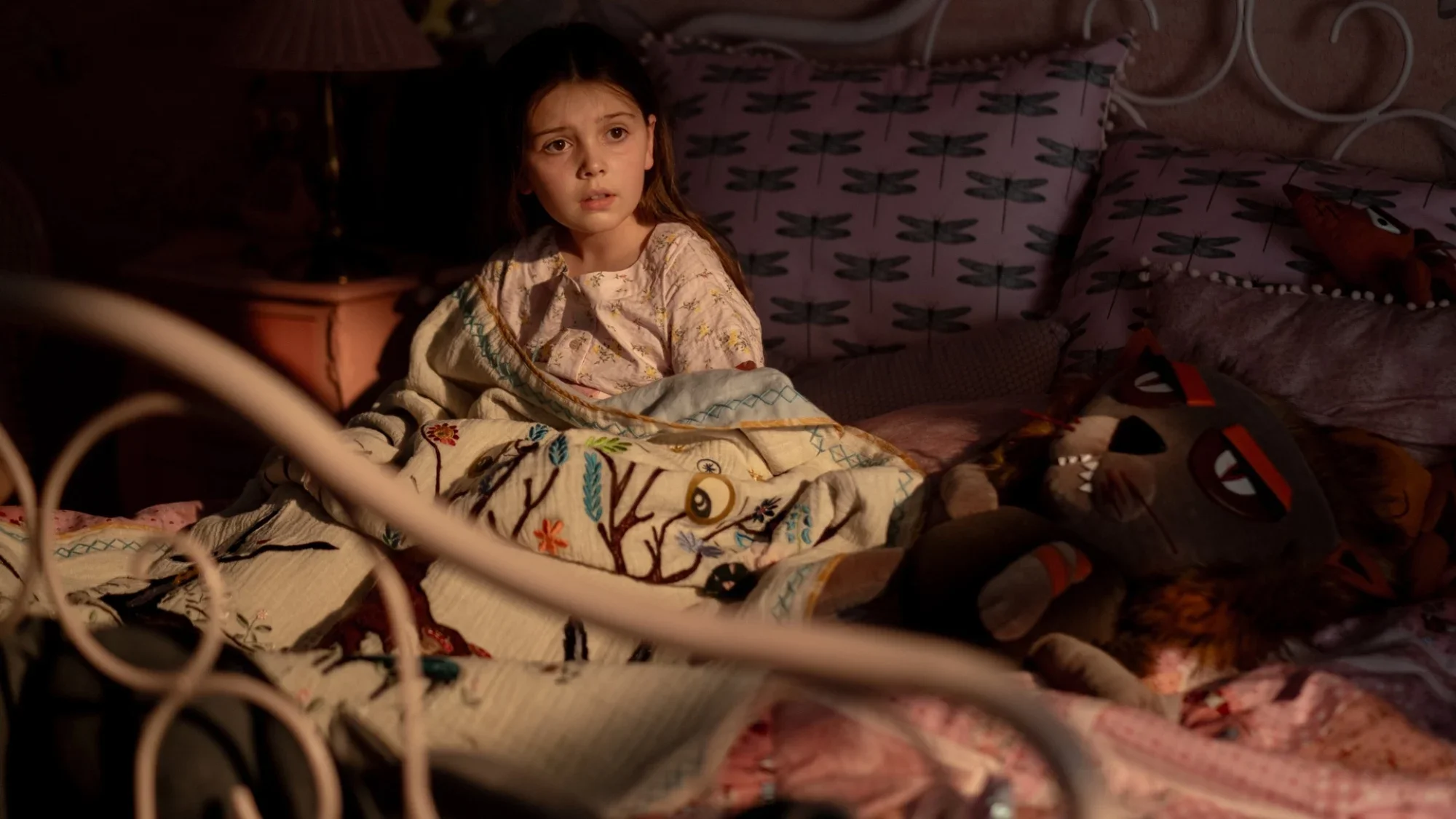
Unfortunately, though, Fuller’s sense of craftsmanship only goes so far when he stages a finale that finally reveals the monster’s design, and it’s one of the ugliest CGI concoctions I’ve seen all year, replete with a bludgeoning score that does nothing to effectively punctuate its most significant emotional – or action – beats. It renders the connection between the audience and the protagonists hollow, leaving me wanting more than what was ultimately given to us in this original, but incomplete, fantasy picture.
The thing is: Dust Bunny could’ve been a thrilling gateway movie for (older) children to seek out more fantasy, or genre-blending efforts, past or present, yet the only thing it’s achieved is remind us how great a band ABBA is during its final scene, with one of the year’s best needle drops. Beyond that, the chances of it lasting in our culture are much lower than those of Fuller’s best-known television project, which audiences are still clamoring for more of after its unfair cancellation.