
'Avatar: Fire and Ash' Review: James Cameron Dares to Make Us Dream

James Cameron offers another lesson in blockbuster filmmaking with the daring Avatar: Fire and Ash, through three hours of dazzling mythopoetic images that stun the soul and remind you what all great pieces of art should strive to achieve.
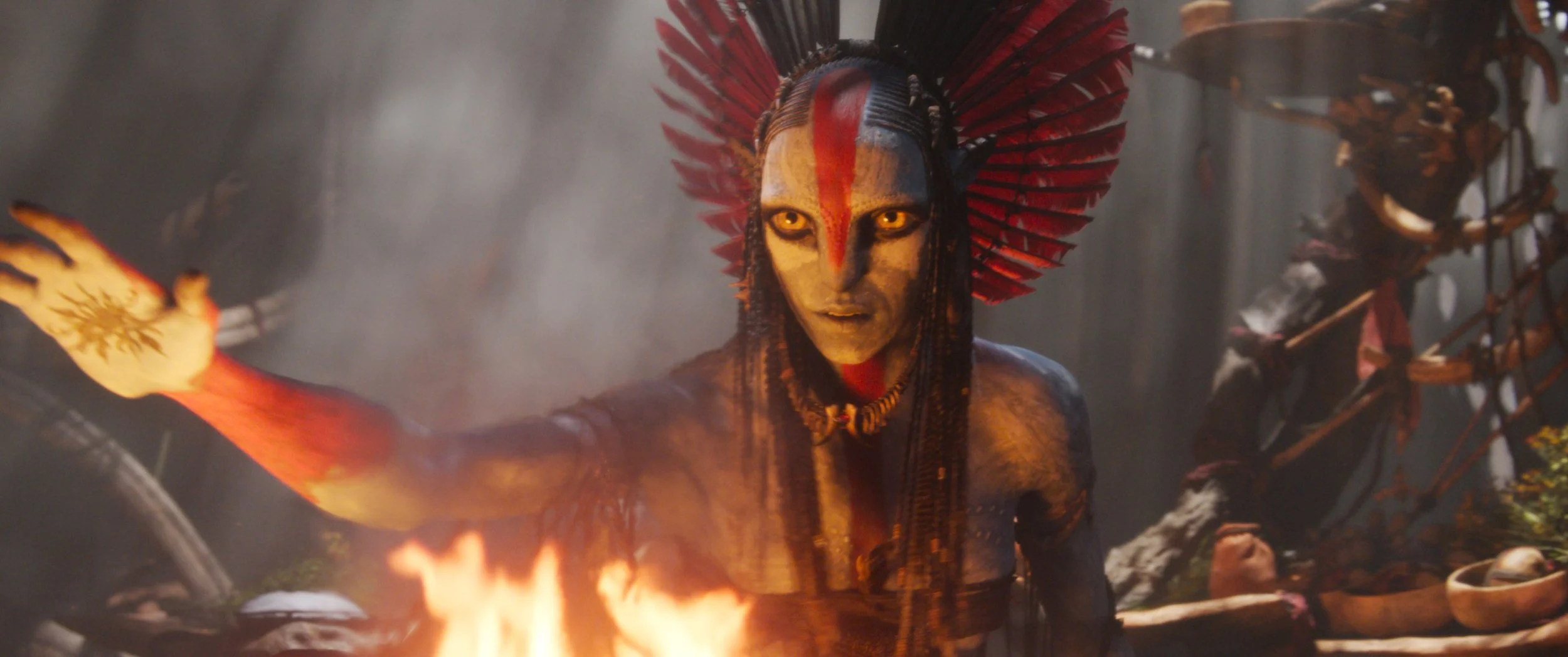
‘Avatar: Fire and Ash’, is a dazzling work of mythopoeia that’s miles ahead of any blockbuster crafted in this economy. The fact that James Cameron built this completely singular universe from the ground up and is expanding it in ways that are genuinely thrilling to watch feels like a miracle. There’s no way a series that initially started with a simple “good vs. evil” premise over a planet’s environment could get this esoteric and spiritually-charged in its third entry. Yet, Cameron continues to take the admittedly simple scenario of the first film into completely unexpected directions by introducing audiences to the fire-dwelling Mangkwan clan, a group of Na’vi who not just wield fire as the destructive force it is, but worship it in a quasi-fetishistic way, eager to see it destroy everything in Pandora’s ecosystem until the territory is nothing but ash.
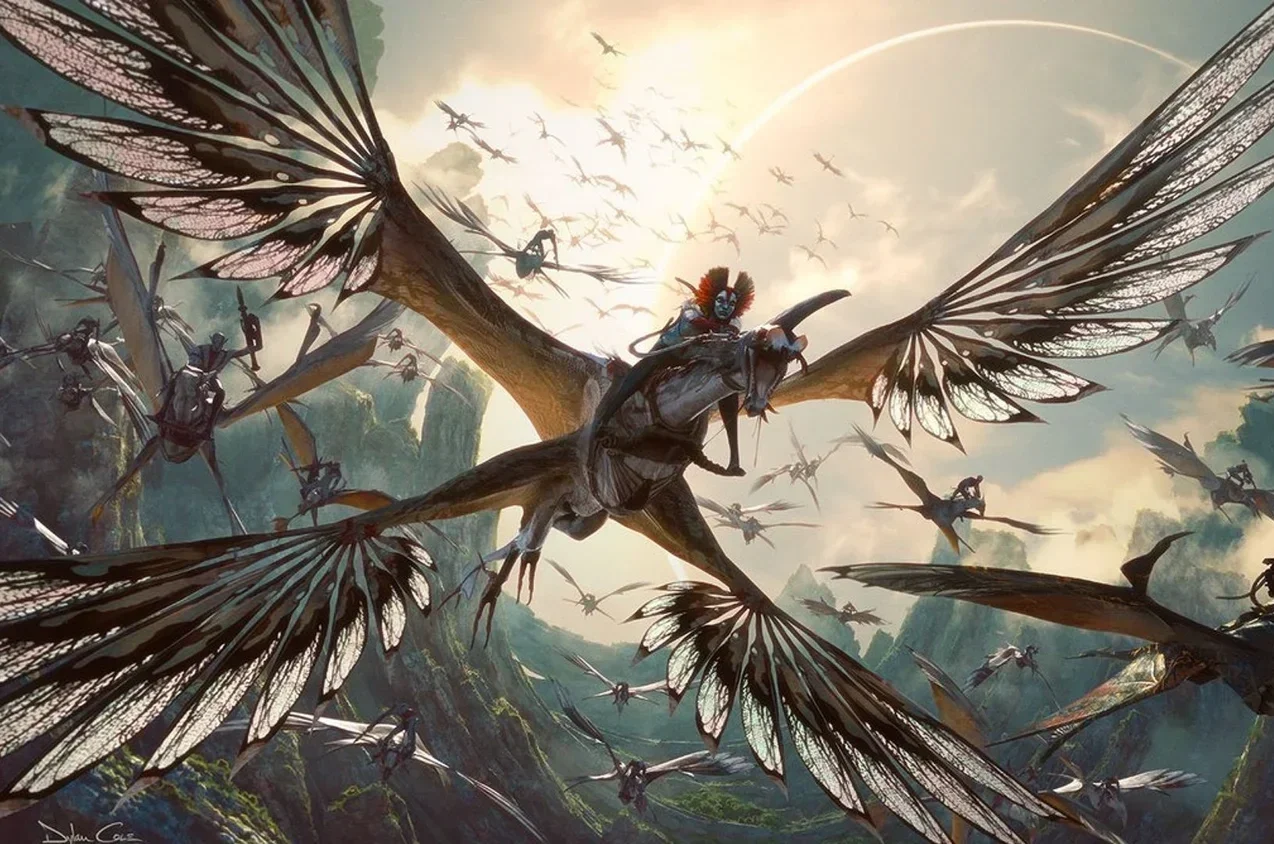
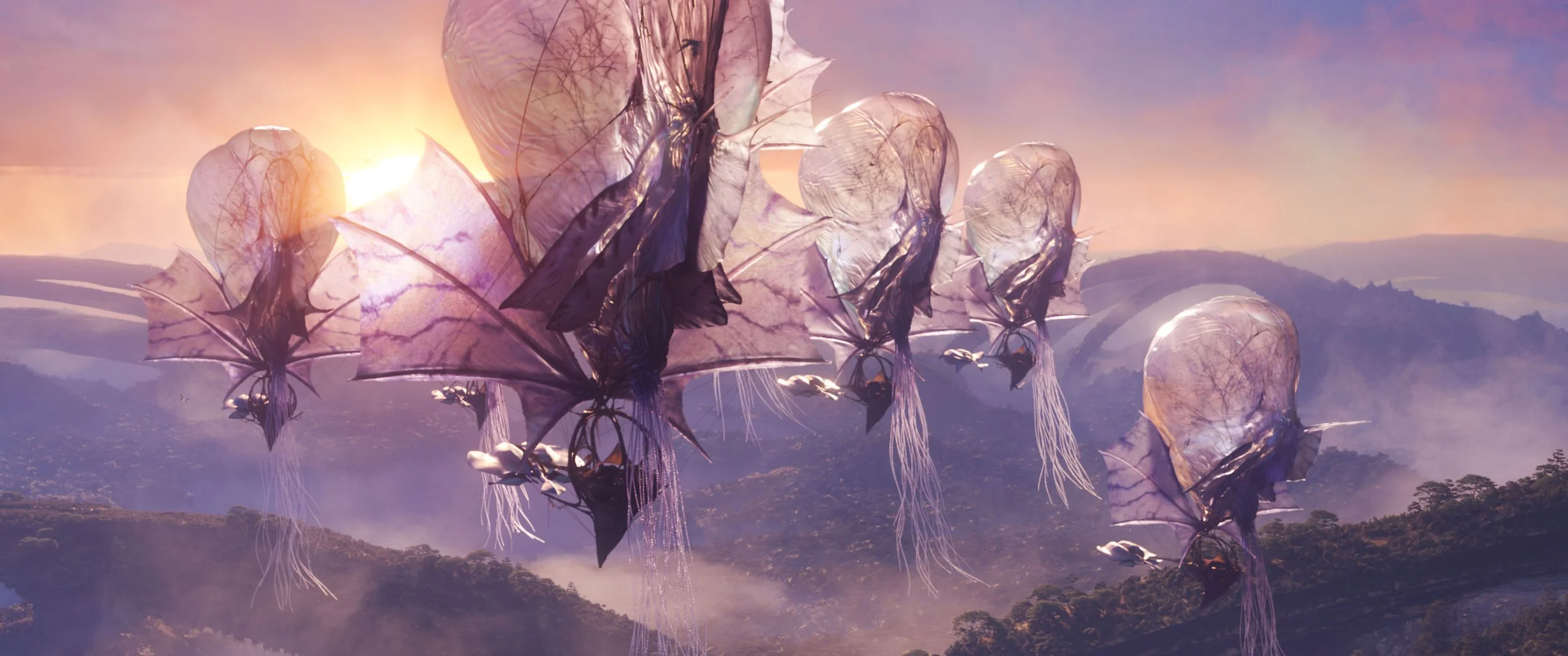
There’s a scene which occurs early on in the picture – the first significant action setpiece – where the Mangkwan appear by attacking Wind Trader’s Peylak’s (David Thewlis) convoy. This grandiose introduction immediately sets them apart from anything we'd seen in the franchise before. Without spoiling anything precise, one of the clan’s members looks at its leader, Varang (Oona Chaplin), yells, “I am the fire!” and does something so unbelievably insane it makes the first two parts of the Avatar franchise look like child’s play. That particular scene tells you everything you need to know about the Ash People, before Cameron expands their relationship with the planet – and fire – as they team up with Colonel Miles Quaritch (Stephen Lang) to chase Jake Sully (Sam Worthington) out of Pandora once and for all.
Of course, Cameron isn’t reinventing the narrative wheel. At its core, Avatar: Fire and Ash still follows the archetypal “good vs. evil” story we’ve come to expect from the franchise. Yet, it won’t matter by the time the Mangkwan attack is visualized, and you consistently have to remind yourself that everything you’re seeing (minus the human characters) is entirely synthetic or motion-captured. There isn’t a single element in Cameron’s world that “exists,” but your eyes are so convinced that it’s real that you immediately forget the “illusion” of moviemaking and become as immersed in Pandora’s ever-expansive world as you were in the first film, and its sequel, The Way of Water, provided you experienced both on IMAX 3D.
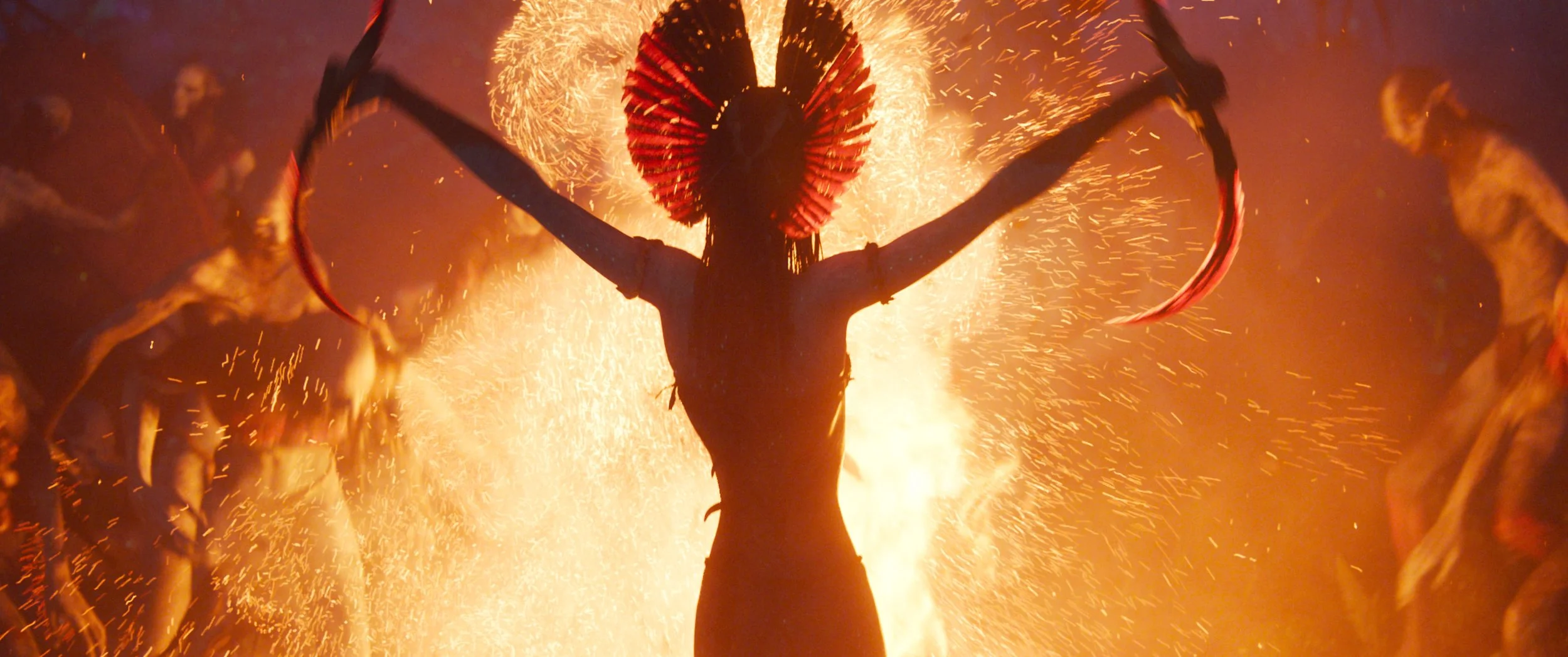
In an era that has mostly forgotten how to shoot anything for blockbuster entertainment anymore, Cameron’s formal daring is the shot in the arm cinema needs in order to move forward, because any movie made after Avatar’s wake – especially a monstrosity like Wicked: For Good – feels like the audience is being cheated out of something genuinely incredible where their senses are activated through its purely immersive filmmaking that still remains unmatched even after three entries under its belt.
There will be many criticisms thrown at Cameron for “repeating” Avatar: The Way of Water’s structure in Fire and Ash (though it becomes less of a problem when you realize that Fire and Ash’s story is immediately set after the 2022 sequel). And yet, it’s the thing that matters the least when, early on in the movie, Big Jim locks in with the year’s most spectacular action scene and immediately says to the audience, “bet you never seen this before, now, have you?”
From there, he takes us into completely uncharted cinematic territories and creates a language that few aesthetes of the post-digital era dared even to attempt (the only ones that come to mind are Joseph Kosinski and S.S. Rajamouli). Avatar was a leap forward, sure, but Cameron pushes his approach much further to see how far the technology can go, now that audiences have been acclimated to unique innovations in digital filmmaking and stereoscopy in the first film, and to newer advancements in visual effects in the second entry.
The third film isn’t too far removed from The Way of Water, so audiences know what they will get in that regard. He can’t blow them away with stuff they already know is amazing. That’s why, instead of purely “repeating” that experience, Cameron plays with form and crafts images of such mythopoetic power that it genuinely seems brand-new for a large-scale blockbuster destined for a broad audience to go in so many abstract directions.
A good chunk of Fire and Ash’s gargantuan 197-minute runtime is spent ruminating on the soul-crushing loss that Jake, Neytiri (Zoë Saldaña), and their children, Lo’ak (Britain Dalton), Tuktirey (Trinity Jo-Li Bliss), Kiri (Sigourney Weaver), and Spider (Jack Champion) experienced in the events of the second film, and it’s genuinely moving. What happens when one can’t make sense of the senseless death and destruction that occurred in The Way of Water and has imbalanced a world that, before the arrival of the RDA and Sully himself, was in perfect harmony with Eywa and had developed its own cultures?
Cameron seeks to explore this issue through a bevy of images of dramatic power and “performance capture” acting that’s far more real than most live-action performances you’ll see all year. Lo’ak’s broken interior, exposed through Pandora’s artificial moonlight, reflected on the water will move you in ways you won’t expect for a digitized blockbuster, but most of Fire and Ash’s power lies in the way each image drawn on the screen always responds – and sits with – the characters that populate this world.
Avatar and The Way of Water were concerned with providing as much exposition as possible to help the audience understand the mechanics of Pandora before letting us immerse ourselves in the world. In contrast, Fire and Ash dismantles almost everything it’s introduced and is instead far more patient in observing the protagonist's attempts to move on in the face of Netayam’s death, when carrying on the same way is impossible. Of course, Cameron will stage numerous conflicts that are to be resolved in future installments. Yet, the immediate moral anguish Lo’ak feels over the death of his brother gives it a surprisingly profound dramatic heft that’s further exacerbated by sequences where we’re forced to see Jake and their own children overcome massive personal and physical trauma to fight back against oppressive forces looking to destroy this entire planet for their own selfish benefit.
Then he cuts to the Mangkwan, who has discovered the power of “creating thunder” through the use of human-made weapons, forever changing their perverse relationship with fire and plunging Pandora into a literal and figurative Hell that will permanently change our protagonists' (and antagonists’) relationship with the planet – and each other – when the film concludes. In that regard, Chaplin is Fire and Ash’s biggest addition, portraying the villainous Varang with enough emotional complexity that she doesn’t “fit” into Cameron’s usually archetypal “good vs. evil” story. That said, the movie is about a group of benevolent heroes uniting against the evil colonizers looking to rip Pandora from the Na’vi’s hands, especially after learning that Spider, a human, can actually breathe on the planet.
Cameron, however, never forgets to add immense texture to Fire and Ash’s antagonistic figures, going so far as to evolve Quaritch from the gun-toting, jingoistic “patriot” who would rather decimate Pandora in its entirety than reflect on the land he lives in to a more three-dimensional antagonist whose morally grey areas begin to emerge when he is forced in a position he doesn’t want to be in.
The inclusion of Varang also complexifies Quaritch’s stature and makes him realize that not all Na’vis in Pandora are the same, or worship Eywa. Chaplin’s facial performance is the best Cameron has ever directed an actor through motion capture, imbuing the character’s relationship with fire in the way she looks at it or marvels at the “thunder” a semi-automatic weapon creates. It’s intrinsically built in her very nature, and her alluring presence towards fire terrifies even Quaritch. Were it not for Joachim Trier wiping the floor with his cast of characters, Chaplin would be at the top of my imaginary “best supporting performance” ballot of the year.
Lang is also terrific, and often funny, as he explores a new side to the character we had yet seen, but still manages to tap into Quaritch’s cruel nature during its show-stopping climax, an extension of The Way of Water’s techniques elevated to the eleventh power. Describing it in words is impossible, but Cameron’s sense of action geography remains unmatched.
Some people know how to craft an efficient action scene, others know that action is emotion and that each significant action beat should enhance the emotion of the characters - and the scene itself. Cameron is an action artist at heart and stages a bevy of jaw-dropping, bracingly exhilarating setpieces that get more refined and intricate as the runtime progresses, leading to a denouement that plays as the “greatest hits” package of the Avatar franchise, not as pure repetition, but in building up everything the franchise has been carefully introducing since its inception.
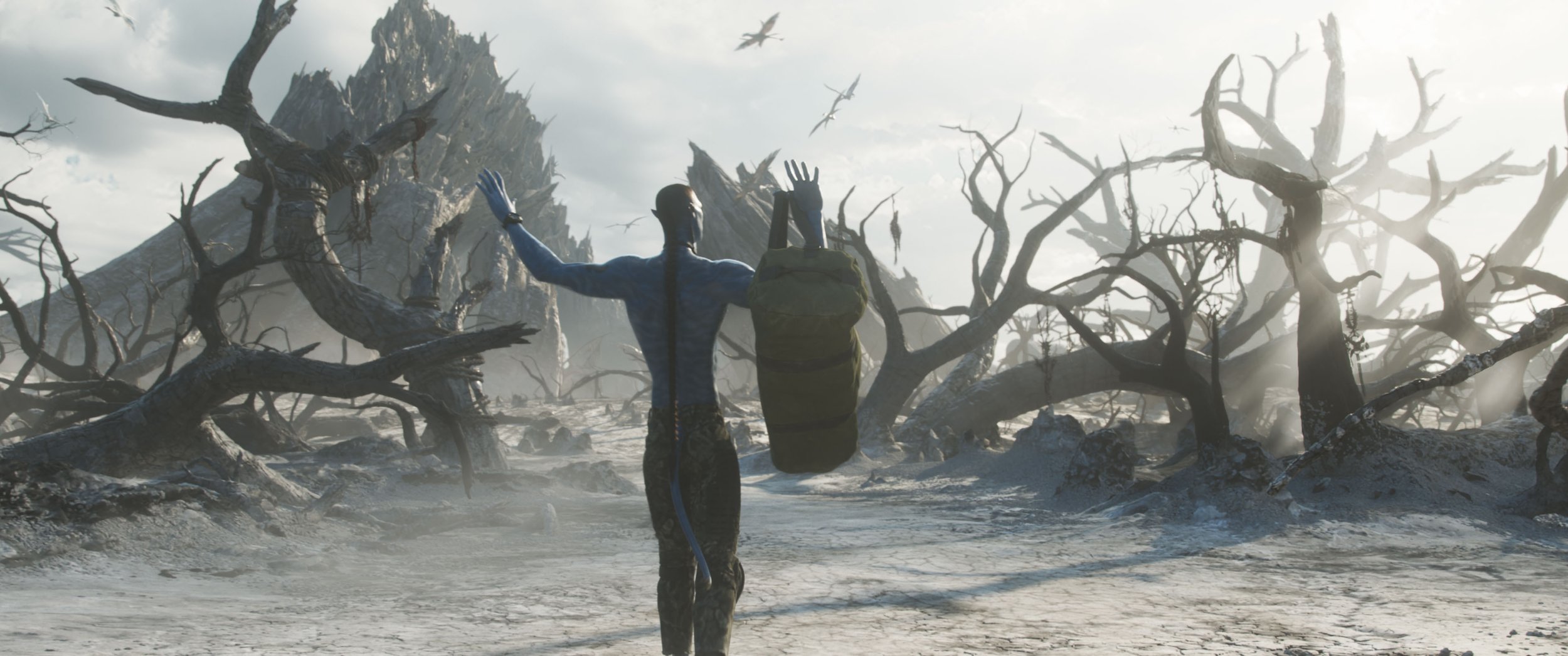
The movie may not win any new fans who weren’t on board with the first two installments. Yet, if you stop for one second and look at the way Cameron moves the camera around, creates tangible amounts of space, and fills our large IMAX 3D glasses with as much painterly detail as possible, where one soaks in the frame by looking around and noticing how more than photorealistic the environments the characters inhabit look, you may be astonished as I was. Dialogues (or “the story”) are trivial in a movie like this, because the poetry Cameron creates through his soul-shocking imagery is enough to transport you to places cinema refuses to explore in an era when technological innovation should be at the forefront.
The potential of cinema has been so wasted in this economy that, when a film like Avatar: Fire and Ash releases, which inserts jaw-dropping, never-before-realized images that are best left undescribed by this review, future filmmakers should be encouraged to walk in Cameron’s footsteps and continuously offer awe-inspiring lessons of pure cinema instead of the gobbledygook we mostly get. When Cameron paints at a level previously unprecedented by anyone else in Hollywood, who continue to offer reheated nachos with limited cinematic – and cultural – power, there’s a reason why the phrase “never doubt King Cameron” exists. Avatar: Fire and Ash, once again, proves that the doubters will always be wrong.