‘Father Mother Sister Brother’ Review: Jim Jarmusch’s Rutted Triptych
Jim Jarmusch crafts his best movie since 2003’s Coffee and Cigarettes with Father Mother Sister Brother, but the end result of his latest anthology effort is still much wobblier than what we used to expect from the American filmmaker.

When Jury President Alexander Payne announced Jim Jarmusch’s Father Mother Sister Brother as the winner of the Golden Lion for Best Film at this year’s edition of the Venice Film Festival, the reception was either muted or met with disdain, as many expected Park Chan-wook or Kaouther Ben Hania to be awarded the top prize with No Other Choice and The Voice of Hind Rajab. Having finally seen the movie during the holidays, as Jarmusch’s latest anthological project received an exclusive limited release at the Cinéma du Parc in Montreal before opening wide on January 9th, I can confirm that, while it is a decent effort, no serious festival jury would give their top prize to a movie that doesn’t bring anything new to the filmmaking form, nor makes its audience think more than a micro-question.
Jarmusch used to be a staunch formalist, as expressed in his masterpiece, Ghost Dog: The Way of the Samurai, but subsequent efforts (Coffee and Cigarettes innocent) have strayed him further from who he once was, churning out one forgettable project after the next. In a way, Father Mother Sister Brother serves to remind us of the filmmaker he used to be, crafting patient stories where the unspoken words cut deeper than any line of dialogue delivered by its star-studded ensemble, but the visual language crafted by cinematographers Frederick Elmes and Yorick Le Saux leaves much to be desired.
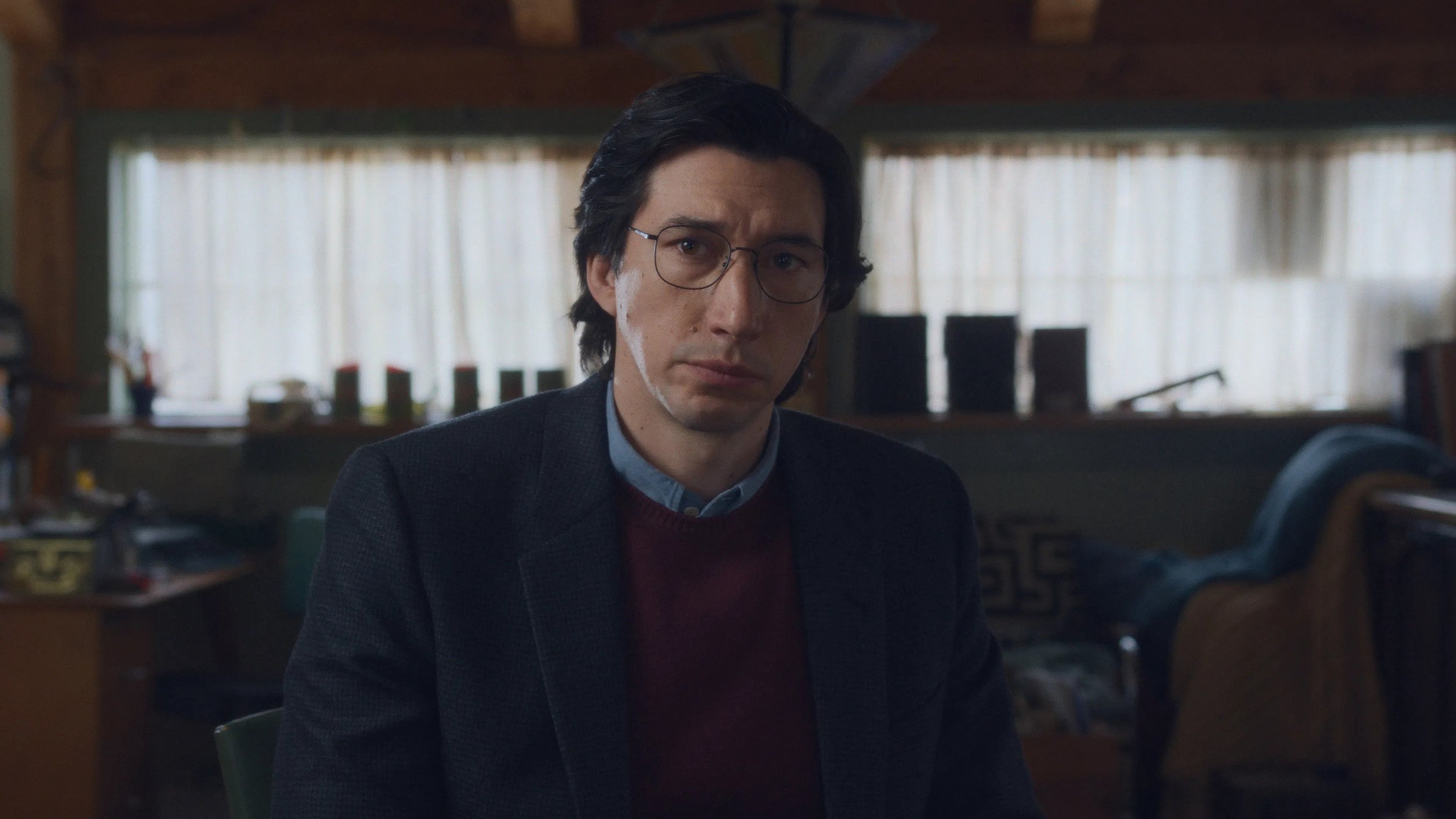
Consider the opening segment, “Father,” specifically the car conversation Jeff (Adam Driver) has with his sister, Emily (Mayim Bialik) before they arrive at their father’s (Tom Waits) secluded home. Everything looks flat and unengaging. It almost feels as if we’re watching a television film, and not a Jim Jarmusch picture. It’s only when he cuts to an exterior shot of the car navigating into a country road, filled with enveloping nature, that we’re reminded of Jarmusch’s attention to the mundane and quotidian elements of life, such as in his 2016 film, Paterson. One such recurring image is one of skateboarders, which he slows down to make the audience aware of their existence. But the use of slow motion cheapens the naturalism of the moment, and makes the entire thing feel artificial.
In fact, the first of three stories, centered on parent/sibling relationships, is probably the weakest. The performances are unimpeachable, but the humdrum dialogue makes the characters seem stilted, even when paying attention to what they don’t say. Some of the interactions between the protagonists are funny, but never in a way that lingers when Jarmusch was at his prime and examined banal routines at their most human. In that regard, Coffee and Cigarettes is probably his most accomplished anthology film, because it makes the humanity of the characters he depicts feel alive as they engage in activities many do in their regular lives.
Father Mother Sister Brother has difficulty finding its footing in the first segment. However, the movie begins to take shape in the second story, “Mother,” where siblings Timothea (Cate Blanchett) and Lilith (Vicky Krieps) have their annual afternoon tea with their mother (Charlotte Rampling). The language gets more refined, and the unspoken conversations have more actual meaning than the dead air Jarmusch sits with in the first short. It’s also more acerbic in its comedy than “Father,” and forces the audience to examine why Tim and Lilith meet with their mother only once a year, despite living close to her home. Within a few minutes, as they sit together at the table drinking their tea and eating pastries, it’s easy to understand why the sisters don’t see each other and don’t want to talk to their mother, even though their friendly exterior partially masks the feelings they have for each other.
It helps that Blanchett, Rampling, and Krieps have more to work with than Driver, Bialik, and Waits, especially in the “silence” department, which makes their performances feel more three-dimensional than those in “Father.” Yet, nothing prepares you for the tonal shift of the third segment, “Sister Brother,” which focuses on two twin siblings, Skye (Indya Moore) and Billy (Luka Sabbat), in Paris, as they clear up their parents’ apartment after the two tragically died in a plane crash.
Many critics have expressed that the third story is possibly the weakest one, but I found it to be emotionally rich and far more complex than the first two, especially when it begins to sit with both protagonists who are still trying to figure out what their lives will look like now that their parents’ apartment have gone to the tenant (played by Françoise Lebrun) and is no longer theirs. Maybe it’s because I’ve experienced the same thing, with the recent passing of a loved one, having to clear their house and sitting, just a few weeks ago, in an entirely empty home that will no longer be ours by the time the sale closes, which it has. A house that was once lived in and is filled with over forty years of memories through one family is no more. It’s a difficult feeling to describe, but it’s an inevitability for all of us. Chapters in our lives end until it’s our time.
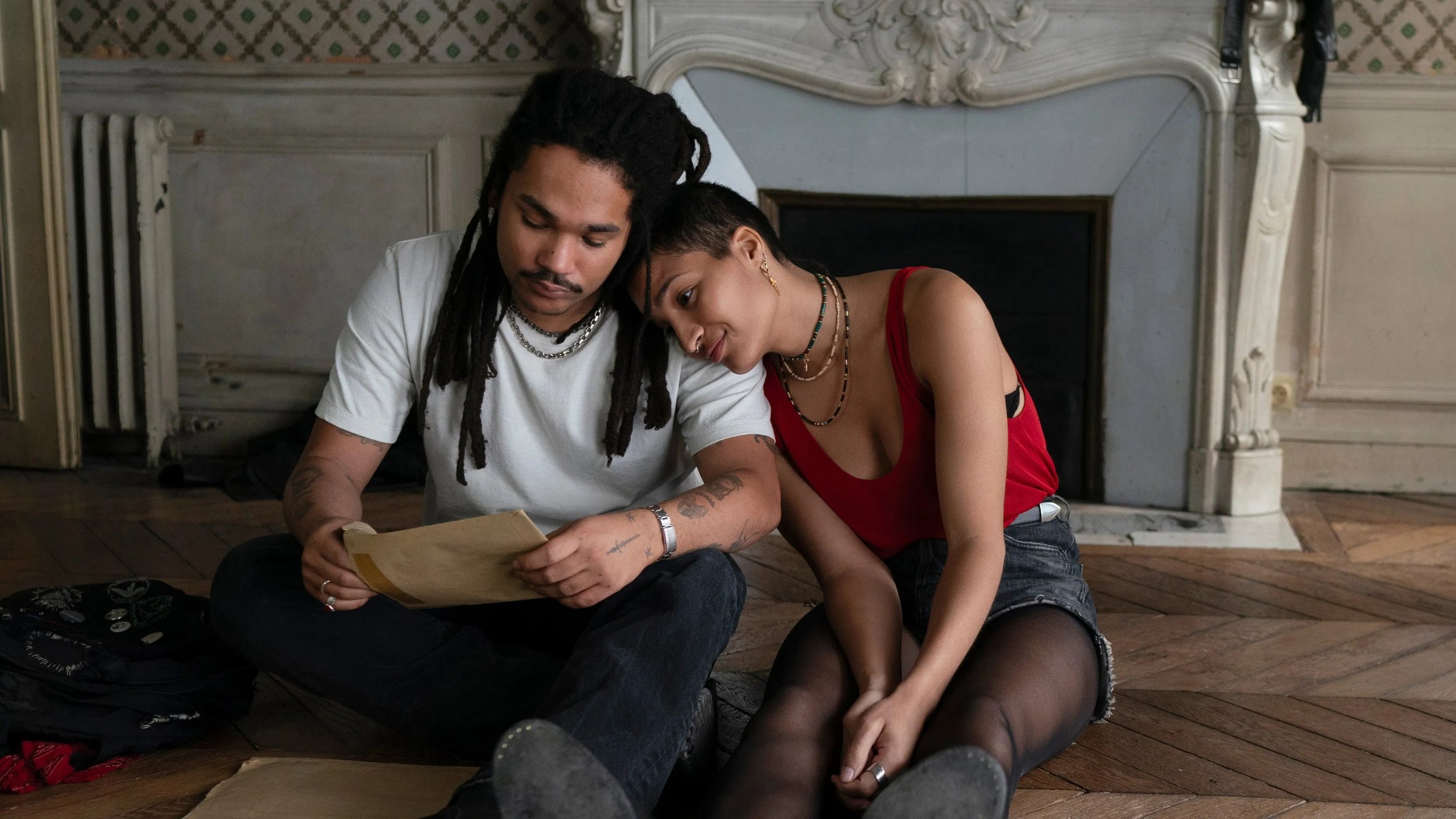
Jarmusch reflects on this inextricable fact through the siblings' latent silences, who literally sit and reminisce about the moments they spent with their parents in this very building. They won’t come back, so it’s best to soak it all in before saying goodbye forever. Even when Billy brings Skye to a storage locker, where most of their parents’ objects are now kept (and will most likely collect dust), the feeling of not touching any of them and of remembering their existence feels too real. Both Moore and Sabat give the movie’s best performances, embodying a stillness in their emotions that no other veteran actor, especially no other frequent Jarmusch collaborator, can convey. The final scene, in particular, is one of Jarmusch’s most emotionally potent, and could perhaps indicate that the American filmmaker is willing to pursue the films that made him such a staunch voice within independent cinema rather than his post-Ghost Dog failures.
Whatever he will do next, however, the film’s lack of artistic merit sticks out like a sore thumb, and, as much as one can enjoy many elements in Jarmusch’s best film in over twenty years, one remains baffled that such a project can win the highest honor at one of the world’s most prestigious film festivals. In any event, it’ll likely be a less polarizing win than Todd Phillips’ Joker, but will it be a film audiences see, let alone remember? In the grand corpus of Jarmusch’s filmography, Father Mother Sister Brother will likely be seen as a minor work, and one quickly to be forgotten by the masses, as more awards-worthy titles stick out further in interest and adulation…