
‘The Choral’ Review: A Contemplative but Uneven World War I Drama
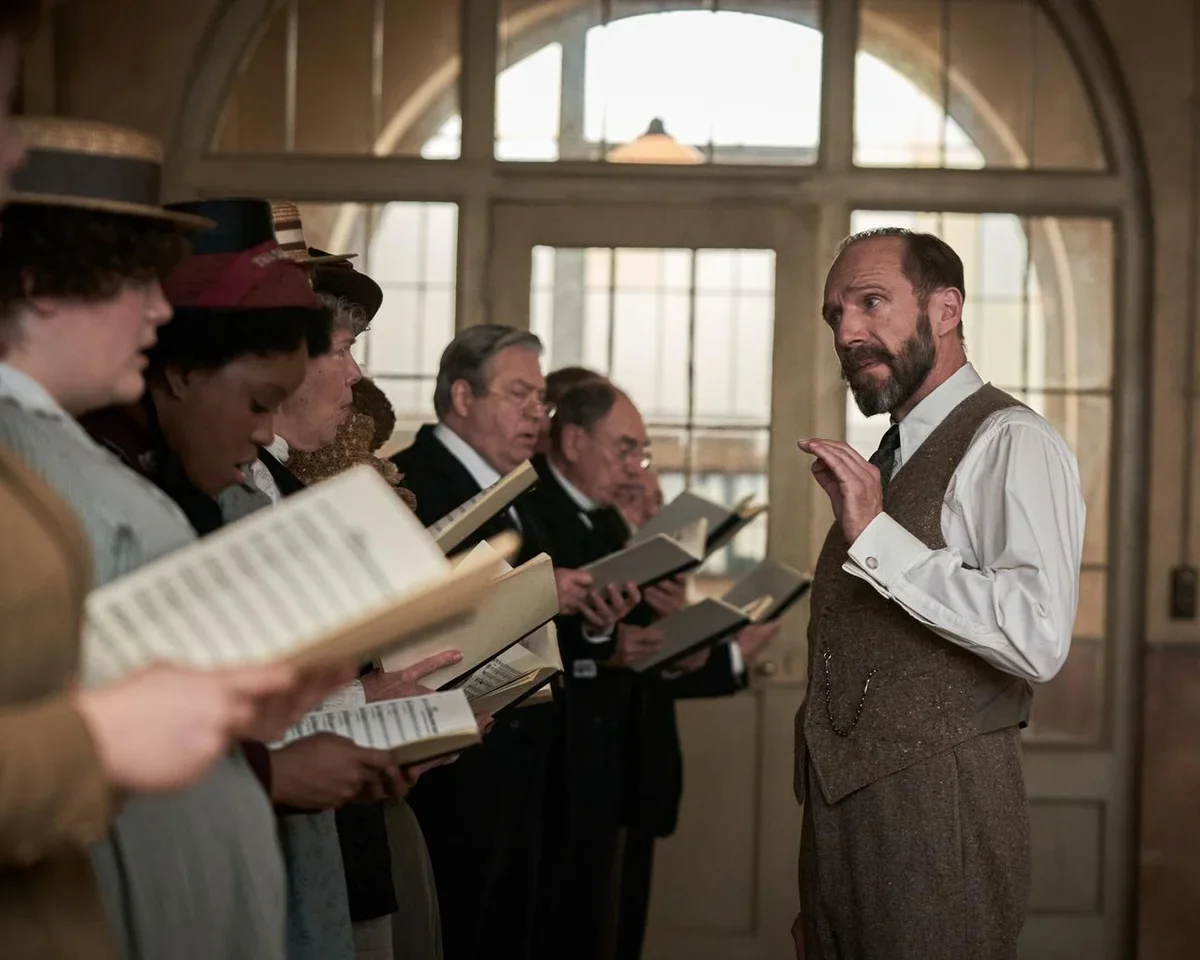
Nicholas Hytner’s The Choral shines when it focuses on its protagonists ruminating on the casualties of war, but not so much when drawing character relationships inside the titular choir.
The Choral is a type of British period piece we’d see released not once a year, but at least ten times in the given twelve-month release calendar. It’s a film catered to a certain moviegoing public, who will see top talent give excellent performances inside a story that offers nothing new to audiences. However, since the movie is usually neatly packaged and performed, it almost doesn’t matter that the film’s plot is this pedestrian or unmemorable. In the case of Nicholas Hytner’s drama focusing on the choir of Dr. Henry Guthrie (Ralph Fiennes) in the middle of World War I, there’s a bit more than audiences can chew on this time around.
When the chorusmaster of a local choral society decides to enlist, Alderman Bernard Duxbury (Roger Allam) asks for Guthrie’s help, despite controversy surrounding his character – specifically his love of German culture and music, and his homosexuality, which was banned at the time in the United Kingdom. While the group was beginning preparations to bring Johann Sebastian Bach’s St. Matthew Passion to life, Guthrie proposes an oratorio from a less polarizing artist, The Dream of Gerontius by Edward Elgar, instead. This, of course, occurs as the war intensifies and tensions mount within the community, with multiple chorus members considering enlistment, unaware of what lies ahead.
One of them does, and that’s Clyde (Jacob Dudman), a soldier who was thought dead, but arrives at his girlfriend Bella’s (Emily Fairn) doorstep, where she passes out in total shock. It’s at that point that Hytner’s film becomes really interesting, as it examines the lingering effects of war through figures who have seen its horrors firsthand and are still grappling with images their minds will never shake. Alan Bennett’s screenplay begins to question the beliefs of British society, which hasn’t been able to see what Clyde did. The veteran knows what fate awaits most people who enlist and think they will do some good by serving their country, when it will only result in more unnecessary bloodshed.
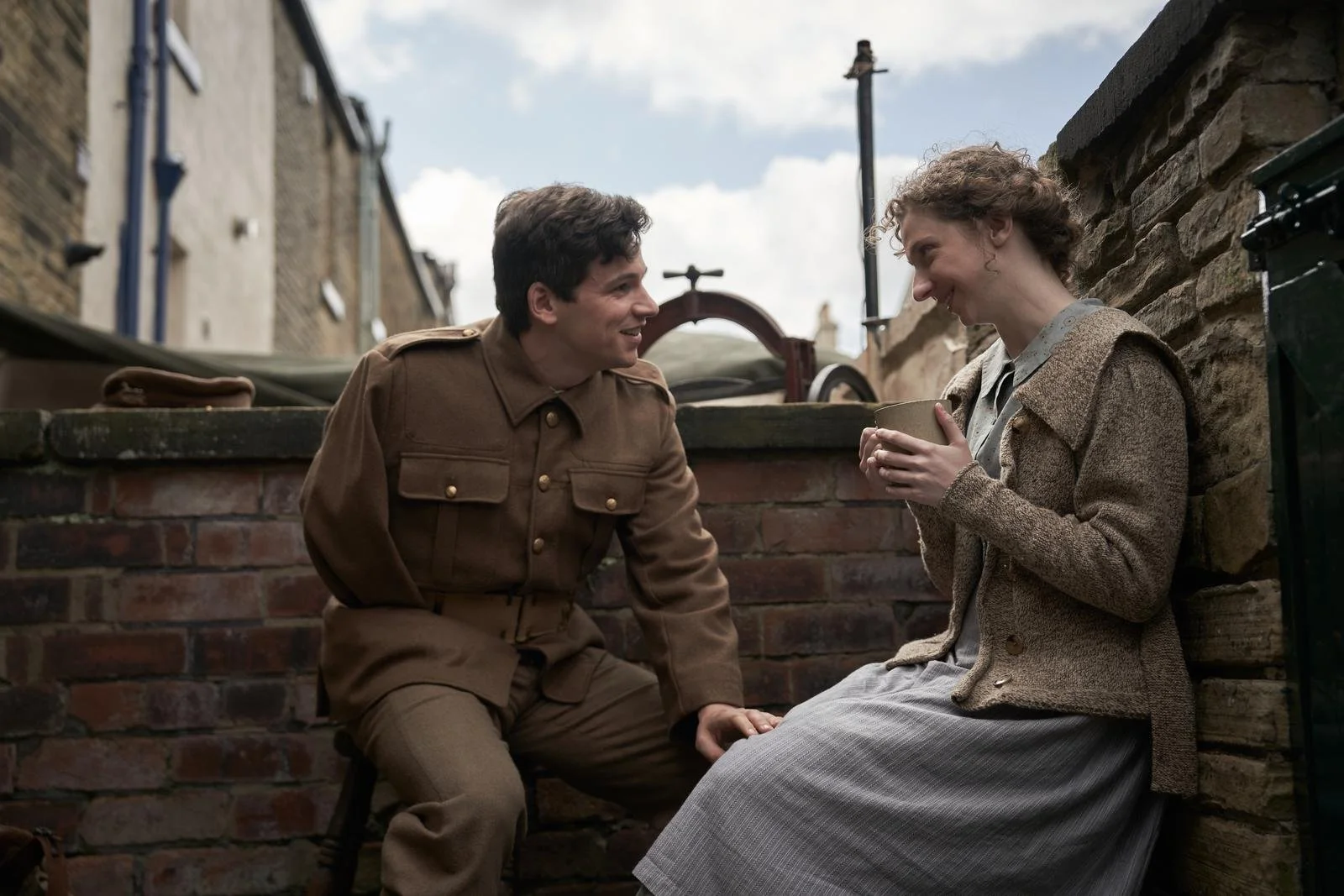
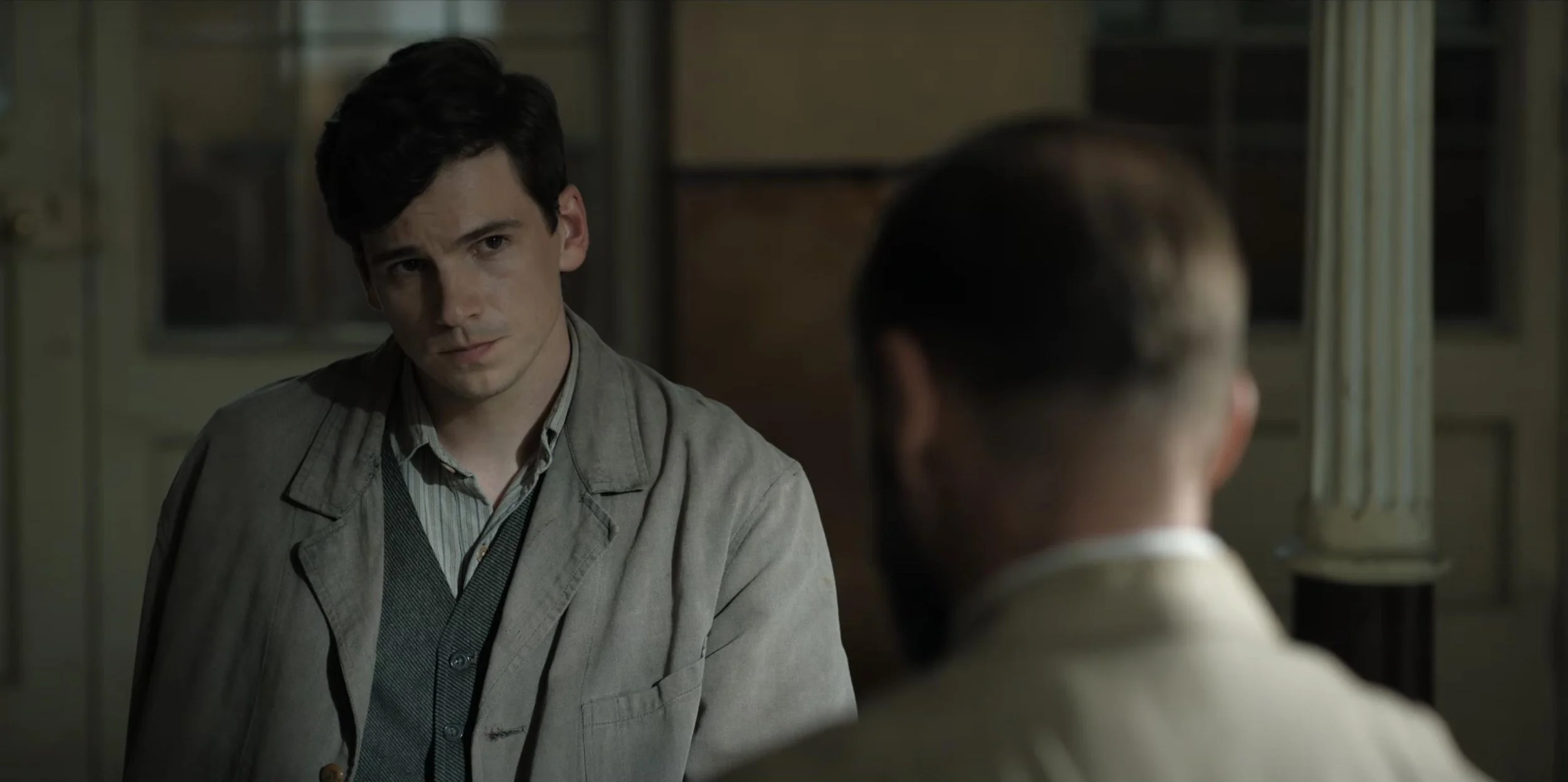
There’s a scene that occurs shortly after Clyde has returned and accepted the role of Gerontius, despite the character being older, that informs audiences of the prevailing thought at the time of the war. It was “necessary” for men to mount up and serve when, in reality, few of them, if any, would come back. Clyde only lost an arm, but he could’ve lost far more if he had kept going. In that scene, the vicar (Alun Armstrong) attempts to convince Guthrie there is no such thing as Purgatory, since the Bible never mentions the fact, until Clyde interrupts him by talking about No Man’s Land.
The sheer terror he feels just uttering the name is enough to send a chill down our spine, and it repurposes the character in later scenes, where he reflects on what his future might be during the war. Moments like these, or when we slightly peer into Guthrie’s psyche, which he doesn’t, in any way, want to reveal, are what make The Choral stand out among the pack of British dramas related to the war, which is far more contemplative in nature than could be imagined.
In contrast, it’s incredible how much this writer didn’t connect with the drama within the choir itself. Guthrie is a strict, but warm-hearted teacher, but the movie never seems interested in delving deep into his passion for music and artistry. It’s almost as if it’s the least essential element of the film, even if Fiennes always gives an impassioned performance, alongside Allam, whose sullen grief is expressed without having to utter a single word. Both are terrific together and lead an incredible ensemble of veteran and burgeoning British talents, who know which emotions to modulate on-screen at any given time so the audience feels them rather than merely watching them unfold.
Then comes the ending, which sadly nixes most of the dramatic forward-momentum of Bennett’s screenplay with an overlong and treacly denouement that has no idea what to grasp as the next cohort of soldiers leave for the trenches. If it weren’t for Fiennes and Allam in the final scene asking themselves, and the audience, if all of this is genuinely worth it, most of The Choral’s conclusion would’ve been thrown in the bin. Still, there’s enough here to warrant a watch at least, because few British dramas of that ilk actively draw such textured characters who ruminate on a war that caused more bloodshed and unnecessary violence than peace and ask audiences if the human cost was truly worth it in the end.