
‘A Private Life’ Review: Rebecca Zlotowski’s Almodóvar-Inspired Murder Mystery
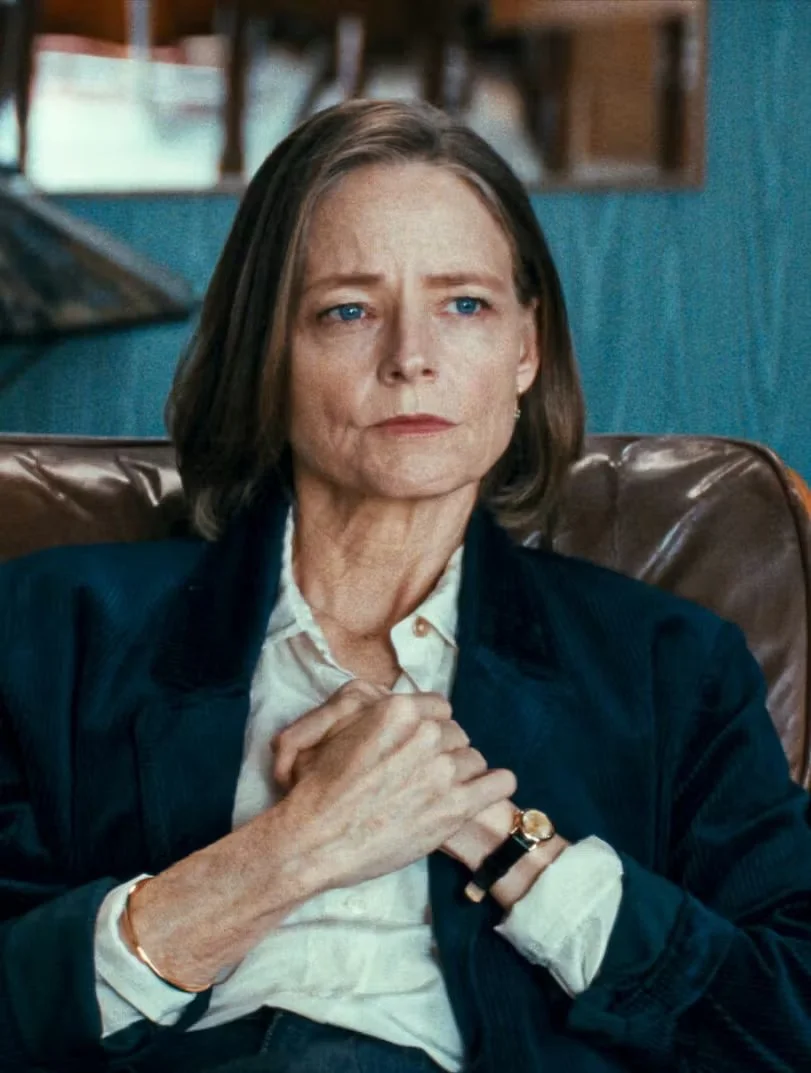
Thanks to a committed (French-speaking) performance from Jodie Foster, Rebecca Zlotowski’s A Private Life is an intriguing mystery
There was no doubt that a film opening with Talking Heads’ “Psycho Killer” would be at the very least moderately entertaining. It’s even better when Rebecca Zlotowski’s A Private Life (Vie privée) is more than simply moderate fun and is actively intriguing to parse as a psychoanalytic thriller instead of a mere murder-mystery. This is what the director of Planetarium and Other People’s Children proposes, offering what looks to be a breezy time at the movies on the surface that unfurls itself in often surprising ways.
It would be foolish to think that all of it works, but there’s enough formal and thematic juice here to warrant a watch, especially considering that this is Jodie Foster’s first entirely French-speaking role as psychotherapist Lilian Steiner, who has recently learned that one of her closest patients, Paula Cohen-Solal (Virginie Efira), has committed suicide. Attending her funeral, Paula’s husband, Simon (Mathieu Amalric), wants Lilian out of the room and away from their life, blaming her work for his wife’s death. However, upon investigation, the suicide doesn’t add up, and Lilian begins investigating Paula’s passing without the involvement of the police, and with the aid of her ex-husband, Gabriel (Daniel Auteuil).
What starts out as a fun – and breezy – caper quickly turns into a psychoanalytic fever dream as the movie questions Lilian’s state of mind and consistently blurs the lines between what’s the fabric of her imagination and reality. In a key sequence, where the protagonist visits a hypnotist (Sophie Guillemin) to stop crying (she has never shed a tear before in her life, we learn), she enters a state of trance, inside an MC Escher-shaped fetus, where doors of repressed memories of her past (or past lives) can be opened, and the relations she currently has with people closest to her life, such as her son, Julien (Vincent Lacoste), may have different significance than her present-day trajectory.
Zlotowski seems to borrow heavily from the work of Pedro Almodóvar, in its questioning of the human condition through psychoanalytical means, specifically examining the protagonists’ identity at the heart of his stories. The colors may not be as heightened as the Spanish filmmaker’s oeuvre, but Georges Lechaptois’ constantly kinetic camera certainly brings to mind the vivid expressions of a Volver or, more recently, Strange Way of Life. The film seems stuck between an Almodovarian fever dream and an episode of Miss Marple, which gives it charm and originality that few murder mysteries of that ilk can replicate. It does lose itself as the plot develops and things seem to contradict one another, but for a while, Zlotowski keeps her hook in front of the audience and grips them so tightly they never let go.
It also helps, for Zlotowski’s sake, that Foster gives the best performance since her Academy Award-winning portrayal of Clarice Starling in Jonathan Demme’s The Silence of the Lambs and imbues so much texture to Lilian’s complex state of mind, as she discovers what may or may not be real regarding Paula’s death. In fact, each line of dialogue spoken in English seems to dilute the emotional impact of her performance, including a revealing conversation she has with her mentor (played by documentary filmmaker Frederick Wiseman, with another Sony Pictures Classics bit part after having a major impact in Laura Piani’s Jane Austen Wrecked My Life), whereas her note-perfect French seems genuinely refreshing to see her play opposite people she’s never been in a film with before.
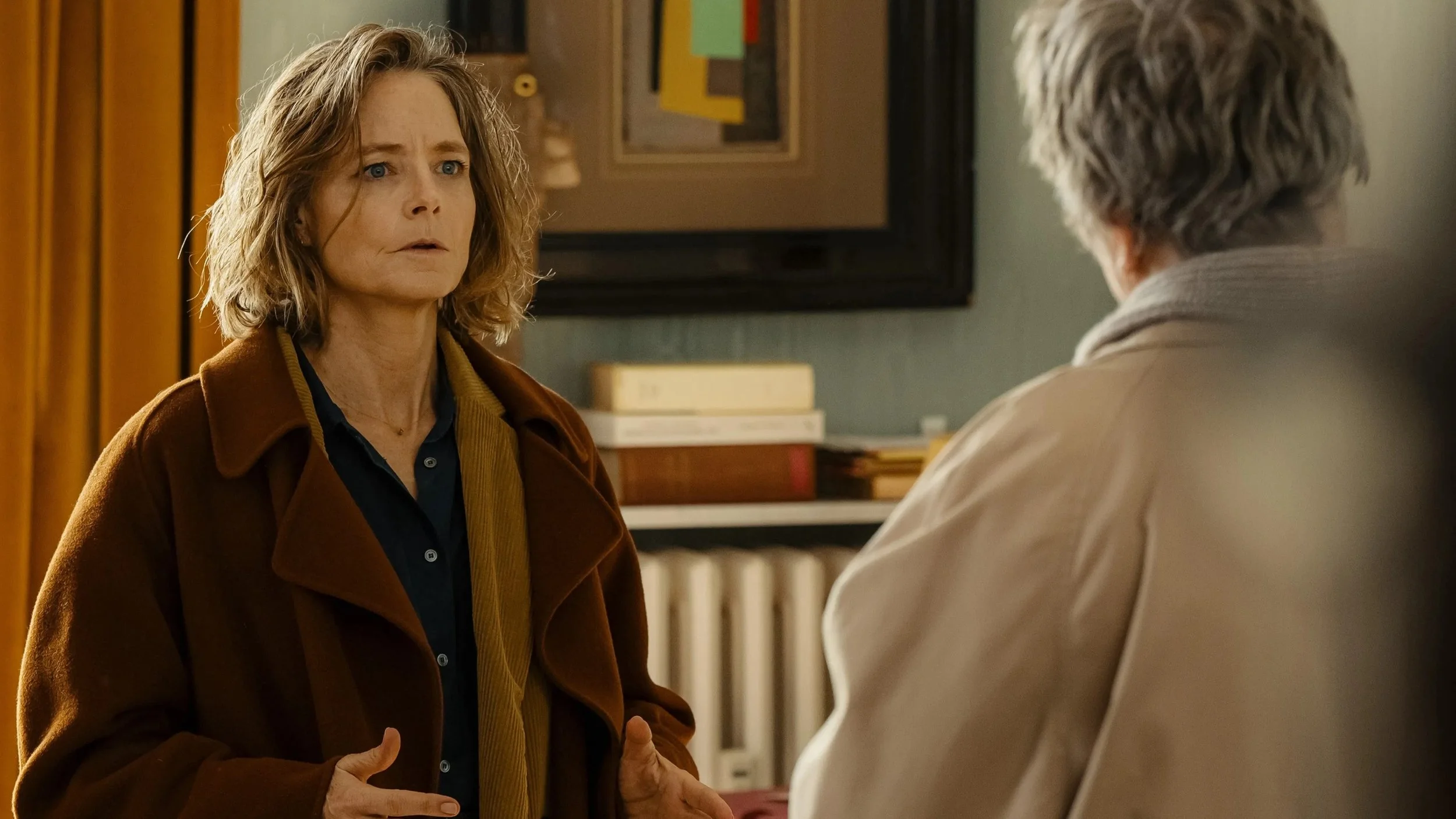
Auteuil, Amalric, and (a sadly underused) Efira are all highly-acclaimed veterans of French cinema, and the former is especially terrific to watch alongside the American actress, who seems to be wanting to carve a different path as she enters the next stage of her on-screen career and be up for roles that will actively challenge her on-screen persona. It’s a refreshing change of pace for Foster, and there’s hope that she will do more roles in a language she is perfectly fluent in, and this critic understands far more than English. When Zlotowski taps deep into Lilian’s psyche, A Private Life’s structure morphs into a thrilling piece of psychoanalysis and forgoes the murder-mystery part entirely. In fact, it’s the least interesting aspect of the movie, because when Foster’s character locks into a state of trance and remembers the lives she wished to have (or had), our understanding of Lilian becomes more active than merely passing.
It’s a shame that Zlotowski loses her grip during the film’s uninteresting climax, where all is revealed in the most matter-of-fact way possible and twists the story in directions it shouldn’t have taken when everything seems obvious from the jump. Still, A Private Life’s daring Freudian dimension gives it tangible emotional heft in a type of film that probably didn’t warrant it, but we’re so glad it did.
Plus de rôles en français pour Jodie, s’il vous plaît!