
‘H Is for Hawk’ Review: Philippa Lowthrope’s Simple but Effective Story of Grief
Thanks to heartfelt performances by Claire Foy and Brendan Gleeson, Philippa Lowthorpe’s adaptation of Helen Macdonald’s ‘H Is for Hawk’ is effective enough to hold our attention, even if the approach taken here feels a bit too pedestrian.
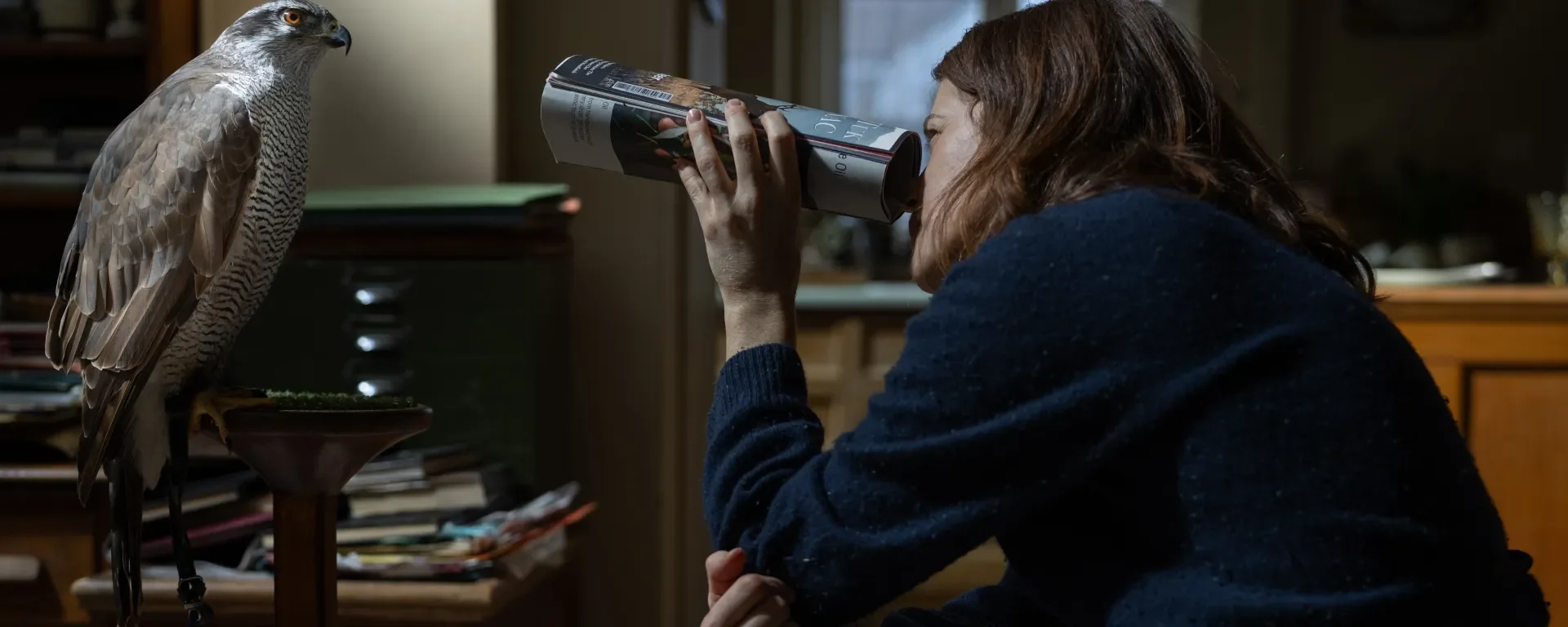
Grief was a recurring theme in the corpus of 2025 films, until it hit this critic hard after the loss of a loved one, even more so following a life-changing viewing of Joachim Trier’s Sentimental Value, a film he holds dear to this day. With the release of Philippa Lowthorpe’s ‘H Is for Hawk’ this weekend, it seems as if grief will be yet another recurring universal point of discussion within world cinema. In this case, Lowthrope adapts Helen Macdonald’s memoir of the same name and explores the unconventional bonds humans can form with animals, especially in the wake of a tragic loss.
Claire Foy portrays Macdonald, an academic fellow who, we learn, has a very close bond with her photograph father, Alistair (Brendan Gleeson). Things, however, quickly take a dark turn as, not even five minutes into the picture, Alistair dies, which profoundly changes Helen’s life for the worse. Finding difficulty carrying on, even if her friend, Christina (Denise Gough), tries to give Helen support, while her family, including her mother (Lindsay Duncan) and brother James (Josh Dylan), are concerned for Helen’s health and well-being. Helen has a deep connection with animals, specifically hawks, which she learned through spending time with Alistair, watching birds in the sky performing acts of raw natural beauty.
That’s why the author and academic decides to connect much more deeply with animals that can’t fully be tamed and adopts a Goshawk named Mabel, with whom she will quickly form a strong bond. The story doesn’t seem conventional, but the way it’s handled is relatively pedestrian. There’s not much reinvention of form – or themes – in Lowthrope’s hands, a director mostly known for her work on television instead of film, which seems obvious considering how many of the dialogue scenes aren’t shot with the cinematic language in mind, and don’t fully tap into Helen’s intimacy in ways that feel suited for the big screen treatment.
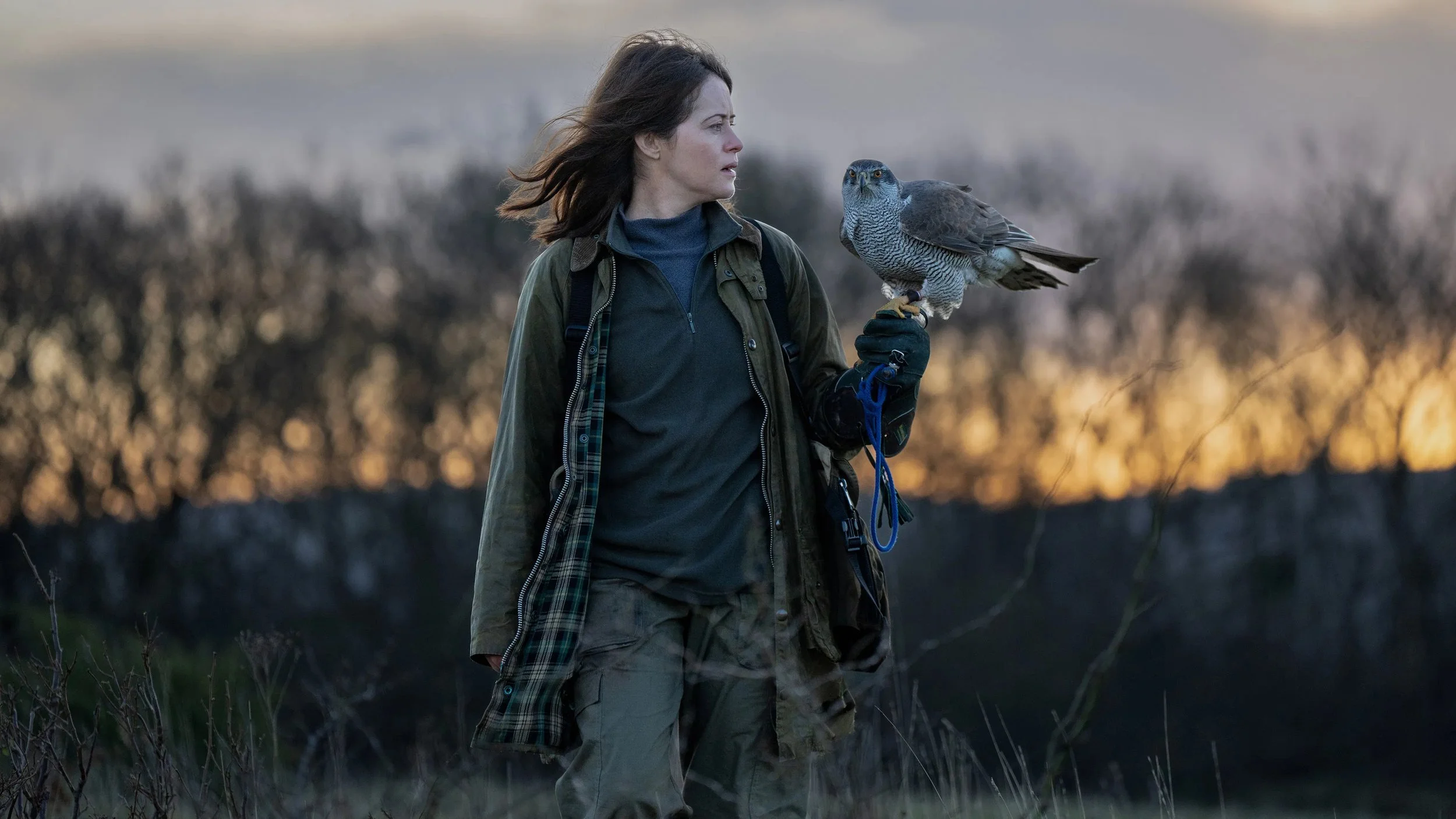
It’s only when Lowthorpe and cinematographer Charlotte Bruus Christiensen go into nature and capture Mabel’s feats of derring-do that the film becomes more cinematic in a way, especially during a bravura sequence where Mabel kills a rabbit in show-stopping fashion. Sure, it feels more in line with what you can see in a National Geographic (or IMAX) nature documentary, but it’s still exhilarating and almost unbelievable to see a Goshawk in action. There’s a line early on in the movie that primes viewers for such a sequence, but we initially pay no mind to it because we think none of us will see the animal perform what he’s been set out to do on this planet.
Yet, when it occurs, we begin to understand why Helen is drawn to such a creature, and why it’s hard for her to let go of the past and carry on with her life despite her father’s passing. Nothing prepares you for grief, and nothing prepares you for the amount of time it will take to recover from a loved one’s passing. The connection she feels with Mabel is the most genuine she’s ever had with anyone since her father. Scenes as she tries to tame the animal are moving and profoundly cathartic, with Foy giving a performance of rare heartfelt beauty as she peers into Helen’s conflicted emotional center.
On a similar note, Alistair’s fleeting memories (wonderfully portrayed by Gleeson) are heart-wrenching on their own. They flash back within Helen’s mind in rapid succession, almost as if she wants to repress them as far as possible, but can’t help thinking of the joyous, often loving, times she had with Dad, when he was alive and gave Helen as much love as he could. Gleeson’s presence is obviously limited, but his impact in the movie is long-lasting. One wishes, however, that Lowthorpe hadn’t taken such a button-pushing approach to this inspirational story, in which Helen finds the strength and purpose to live again and carve a new path in her life through her relationship with Mabel.
It also doesn’t help that the film’s pace is a bit more on the lethargic side, but it doesn’t stop Foy and Gleeson from two genuinely moving turns that make us feel a textured connection with the two that will sadly be kept within Helen’s memories from now on. In that regard, Lowthorpe succeeds. In making her film feel different from the bevy of titles we had last year that were all singular in their respective visions of grief, it might not reinvent the thematic and aesthetic wheel. However, there’s enough there to at least warrant a viewing, provided you’re emotionally prepared enough to deal with the subject matter head-on.