‘Mercy’ Review: The Spirit of Albert Pyun Lives On in This Horrendous Knockoff
Screenlife auteur Timur Bekmambetov attempts feats of ingenious IMAX 3D artistry with Mercy, but the results fall so flat they become unintentionally laughable.
Maybe you’re asking yourself why the late (and great) Albert Pyun’s name is featured in this review of Timur Bekmambetov’s ‘Mercy.’ The answer is simple: the genre auteur’s B-movies always contained unwieldy ideas that seemed far too ambitious for the low-budget constraints he worked with, but the comparison ends there. Pyun’s films, while imperfect, were always sincere and full of unbridled artistry behind the camera. Bekmambetov, who has carved out a massive niche with screenlife entertainment and became a pioneer of the genre, after producing Unfriended, Searching, and, most recently, the laughable adaptation of H.G. Wells’ The War of the Worlds starring Ice Cube, possesses none of the same formal verve as Pyun, but will certainly try to emulate his ambitions in this shot-for-IMAX, post-converted to 3D disaster that almost has to be seen to be believed.
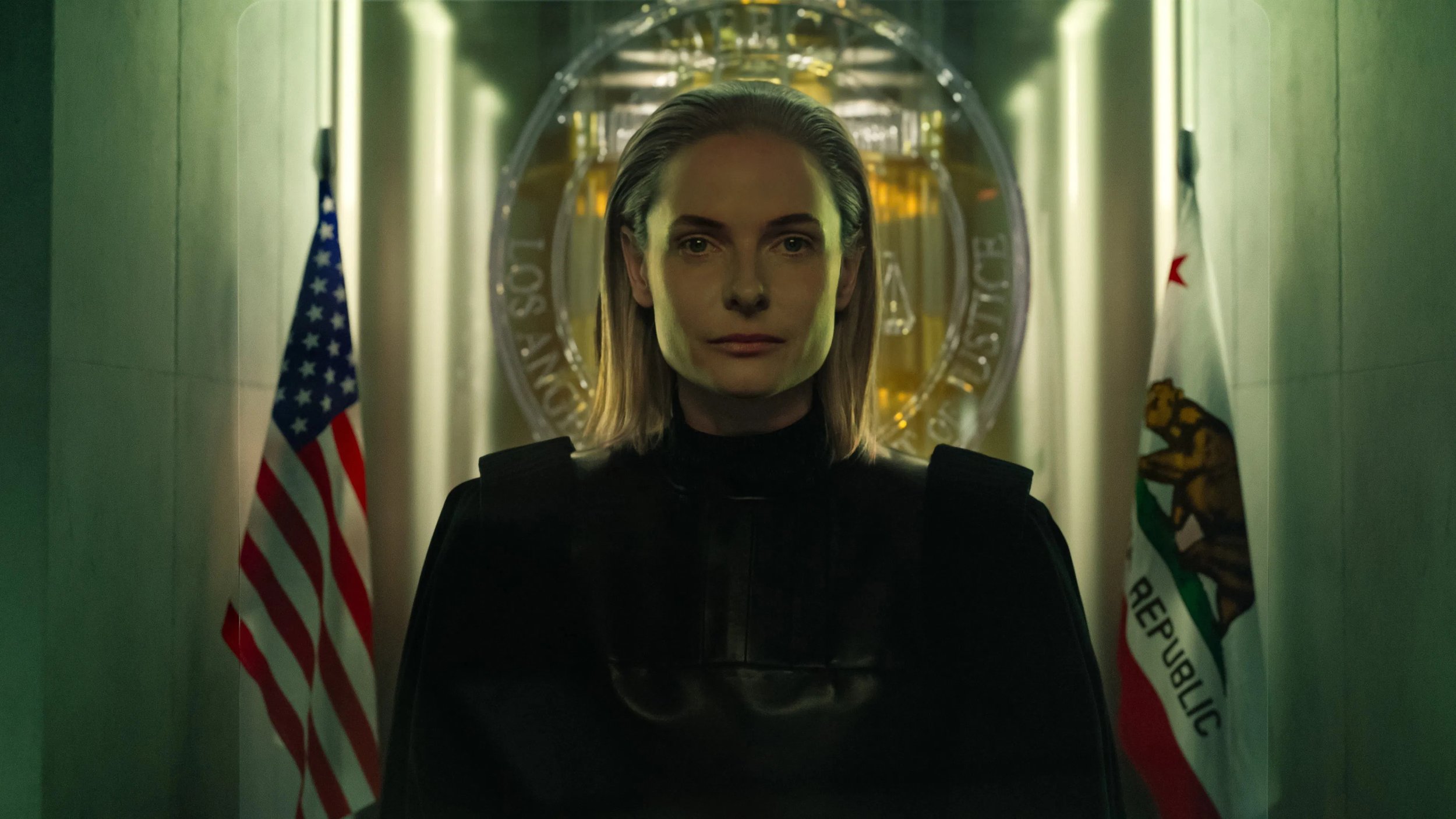
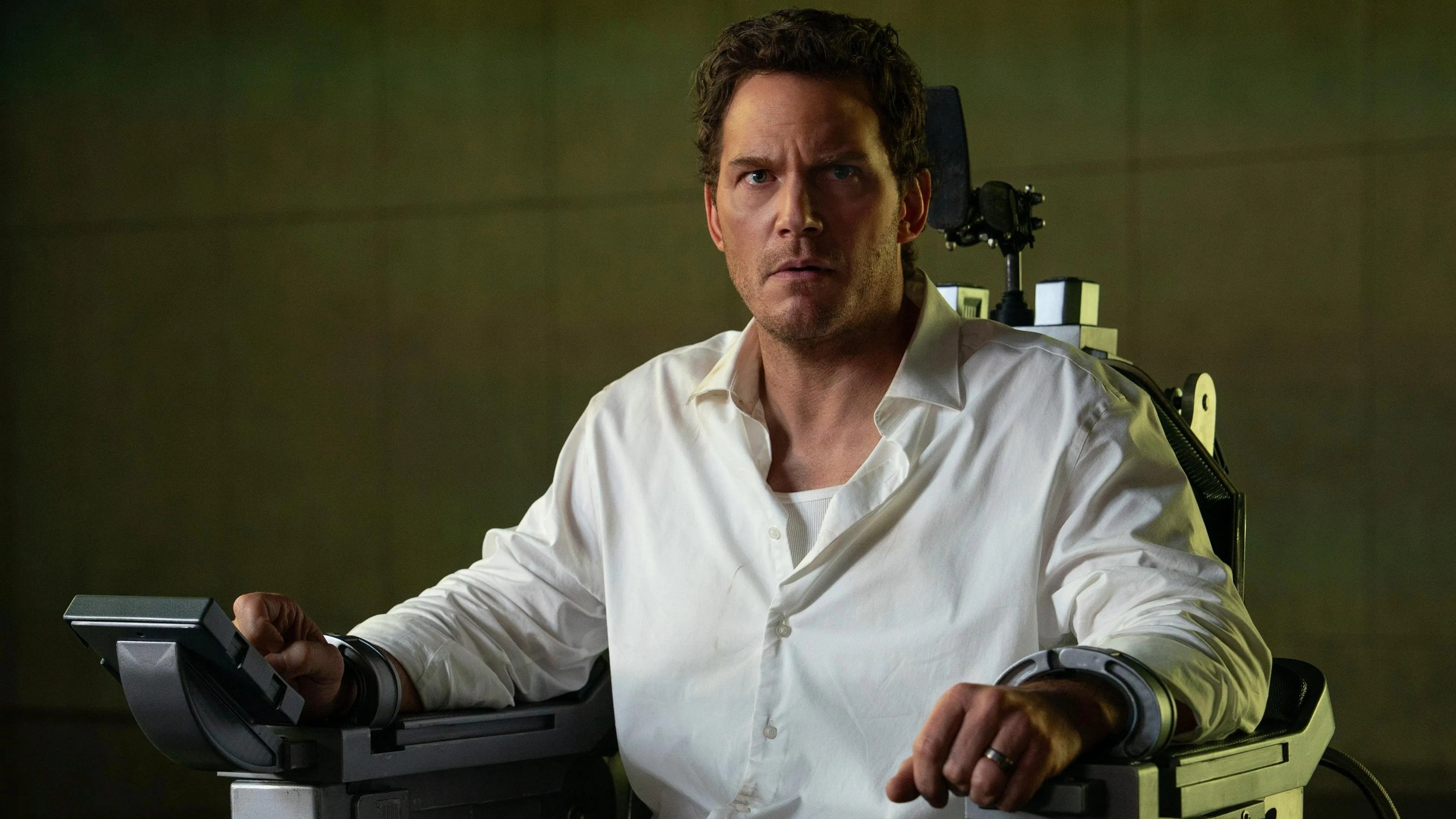
There’s no reason for a film where Chris Pratt sits on a chair for 90 minutes and talks to a volume-composited shot of Rebecca Ferguson to be filmed with IMAX cameras and presented in 3D, especially when the use of both formats adds nothing tangible to the “cinematic experience” of this quasi-screenlife picture and makes many sequences feel dizzyingly imperceptible. Perhaps if the film were thought out with 3D in mind, it could’ve been something genuinely form-blurring, especially in the post-digital era where filmmakers always attempt to create brand-new innovations for the big screen (especially in large-format photography), but the post-conversion is genuinely one of the worst I’ve ever seen, if not the worst IMAX 3D presentation ever conceived for these screens.
This isn’t hyperbole: most of the film is composed of footage shot on phones (FaceTime calls or videos), police bodycams, webcams, or Ring cameras. None of these devices screams 3D, and there’s a minimal sense of immersion when one sees a first-person bodycam chase that frequently jitters in all directions, with a slight stereoscopic effect. Even when the movie begins to break the screenlife artifice during its climax, the three-dimensional presentation adds nothing to the picture and only makes the action feel more imperceptible and nauseating. Try to make out what happens during the movie’s final confrontation – I guarantee you won’t be able to. It’s so incoherently shot and edited that all rules of filmmaking logic (and continuity) seem to be thrown out of the window.
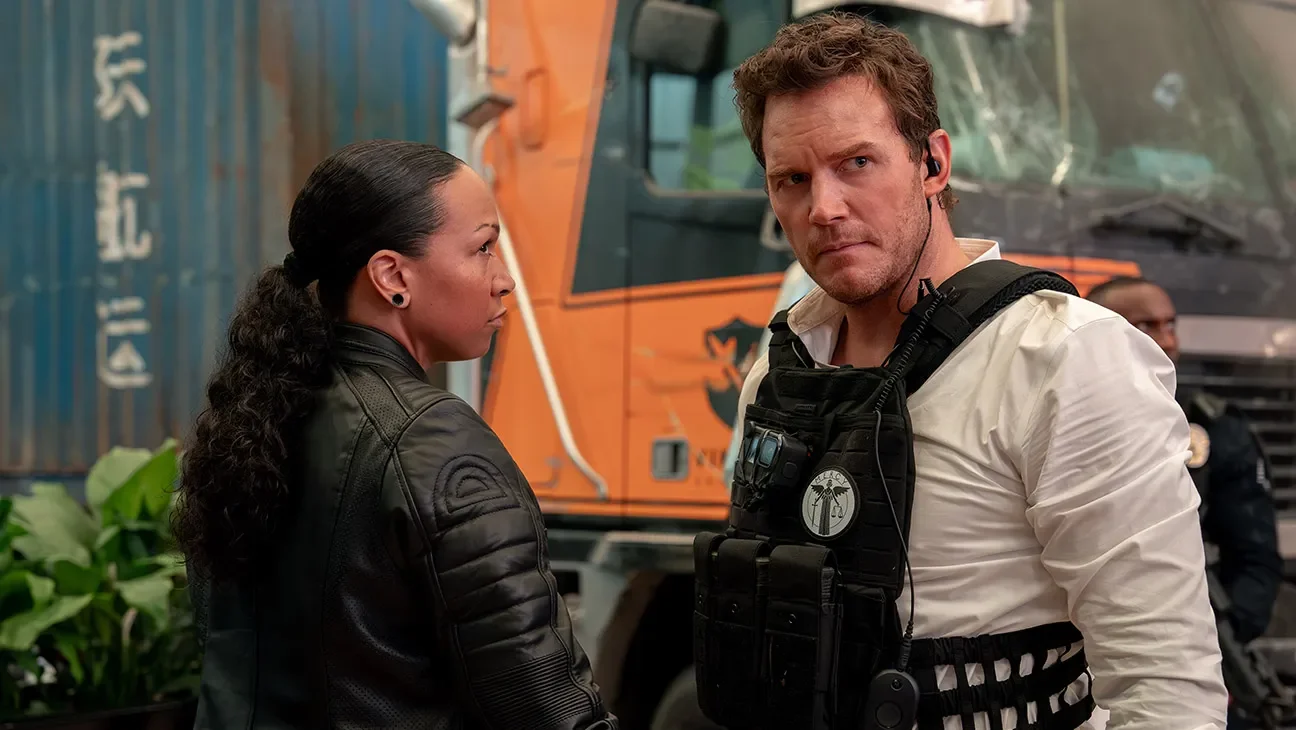
Apart from fleeting “frame-breaks,” where certain elements of the artificial screen of the Mercy Capital Court, led by AI judge Grok – I mean Maddox (Ferguson) – come out directly at us, the 3D is a true afterthought, a cash-grab that no one should be suckered into believing this film was actually conceived for the format in mind. Even the IMAX photography is the most unimpressive it’s been. I mean, it’s Chris Pratt’s Detective Chris Raven sitting in a chair, attempting to prove his innocence for the murder of his wife, Nicole (Annabelle Wallis), as he scrolls on various screens to find evidence.
None of this feels like something you need to see in IMAX, and no set piece offers any justification for the film's presentation in the format. The most baffling formal decision made, which adds no emotional texture or reasoning behind it, is how the aspect ratio will suddenly shift from 1.90:1 to 2.39:1 at the most random occasion, while still retaining the same blocking as its IMAX sequences, almost as if the frame was cut out in post-production and the film was actually shot entirely for large-format screens.
In any event, there’s no formal innovation in a movie that touts itself as a “must-see” in IMAX 3D. Of course, I was curious to see exactly what makes this experience a must in the format when you’re advertising the “Chris Pratt sits in a chair for 90 minutes” film as one you have to see in IMAX 3D (after all, few films actively get advertised this way anymore ever since IMAX moved away from 3D in most cases, unless it was part of the director’s vision), until I realized that this was essentially a marketing tactic to sell a film that has nothing interesting to offer and nothing tangible to say about any of the various subjects it presents, whether be criminal justice or, most importantly, the unfettered dangers of Artificial Intelligence.
In an era where the dumbest people on the planet are attempting to get all of us to adopt AI softwares like Grok, ChatGPT and Copilot, films that discuss the potential risks that such a technology could have are welcomed, even if they may repeat the same message ad infinitum (though it is important to hammer home that AI is slop and will kill the intrinsic nature of humanity as we know it). For a while, Bekmambetov seems to support the idea that AI systems won’t make this world a better place. Judge Maddox frequently glitches and often expresses biases in front of Raven, which could make the software feel emotive when it shouldn’t express a modicum of human emotion, hinting that the AI could be sentient and actively be a danger to humanity, and, in this case, neutral justice that bases its decisions on the evidence presented in front of it.
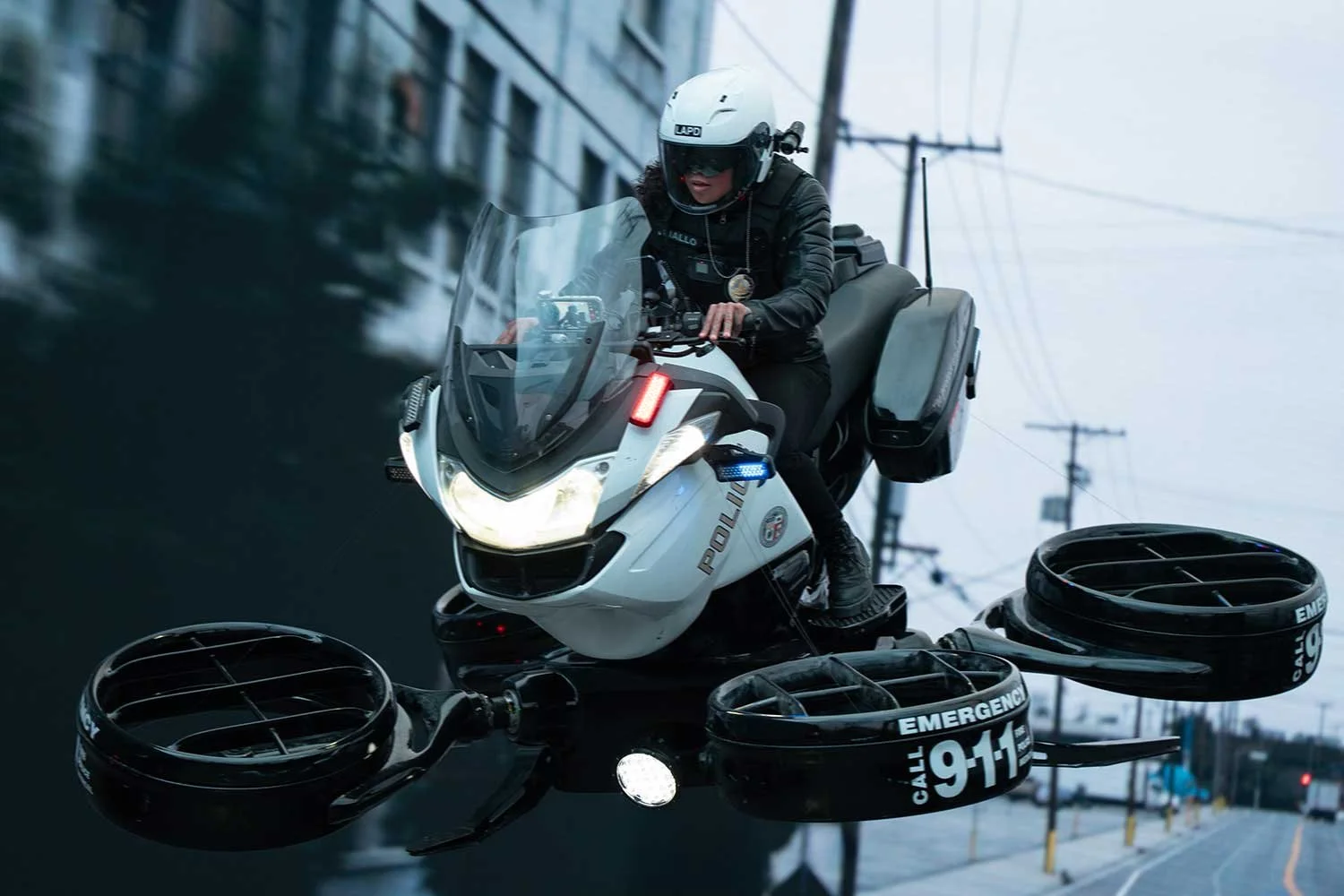
That’s about as far as Bekmambetov and screenwriter Marco van Belle will go in talking about AI and justice, because the film ends with the stupidest line I’ve heard in a major motion picture in so long I couldn’t believe such a cowardly move could actually be made to backtrack any good intentions this thriller might have had beforehand. I’d be a fool to spoil this line to you, but let’s just say it’ll send you in a state of pure disbelief you may actively think the film is evil pro-AI propaganda designed to make you accept softwares that drain creativity and human feeling as the “norm” instead of pushing back on this grim future so our collective imagination can maintain what makes this world worth living (as expressed in Radu Jude’s Dracula, which showed, with great ingenuity, the slopmines of AI).
The rest of the movie is a profound waste of talent and time, A-list actors deliver career-worst performances (Chris Sullivan, in particular, is especially bad here), and none of the plot theads amount to anything tangible by the time Mercy abruptly cuts to credits, but there is one silver lining: everything is so terrible that you may end up having the time of your life watching this piece of screenlife entertainment that feels very much in line with Rich Lee’s War of the Worlds, but with a higher budget. In any event, recalling Albert Pyun's body of work was enough for me to appreciate its bargain-bin nature, even if I will never watch this movie again and cannot recommend it on good conscience. Instead of wasting your money on what will be 90 miserable minutes in front of an IMAX screen, why not check out Pyun’s Nemesis instead? You’ll thank me later.