
'The Hunger Games: Sunrise On The Reaping' Review: A Fiery, Riveting New Chapter
The Hunger Games franchise returns yet again with The ‘Hunger Games: Sunrise On The Reaping’, a fiery, riveting prequel that colors in the past while shading in the future.

‘The Hunger Games: Sunrise On The Reaping’ takes place twenty four years before the events of the original film and centers on Haymitch Abernathy (Joseph Zada) as he is chosen from his district and must compete in the 50th Hunger Games where he must fight for his life in order to survive. However, with the help of some of his fellow competitors, he begins to spark a revolution against the games altogether in order to put an end to them once and for all.
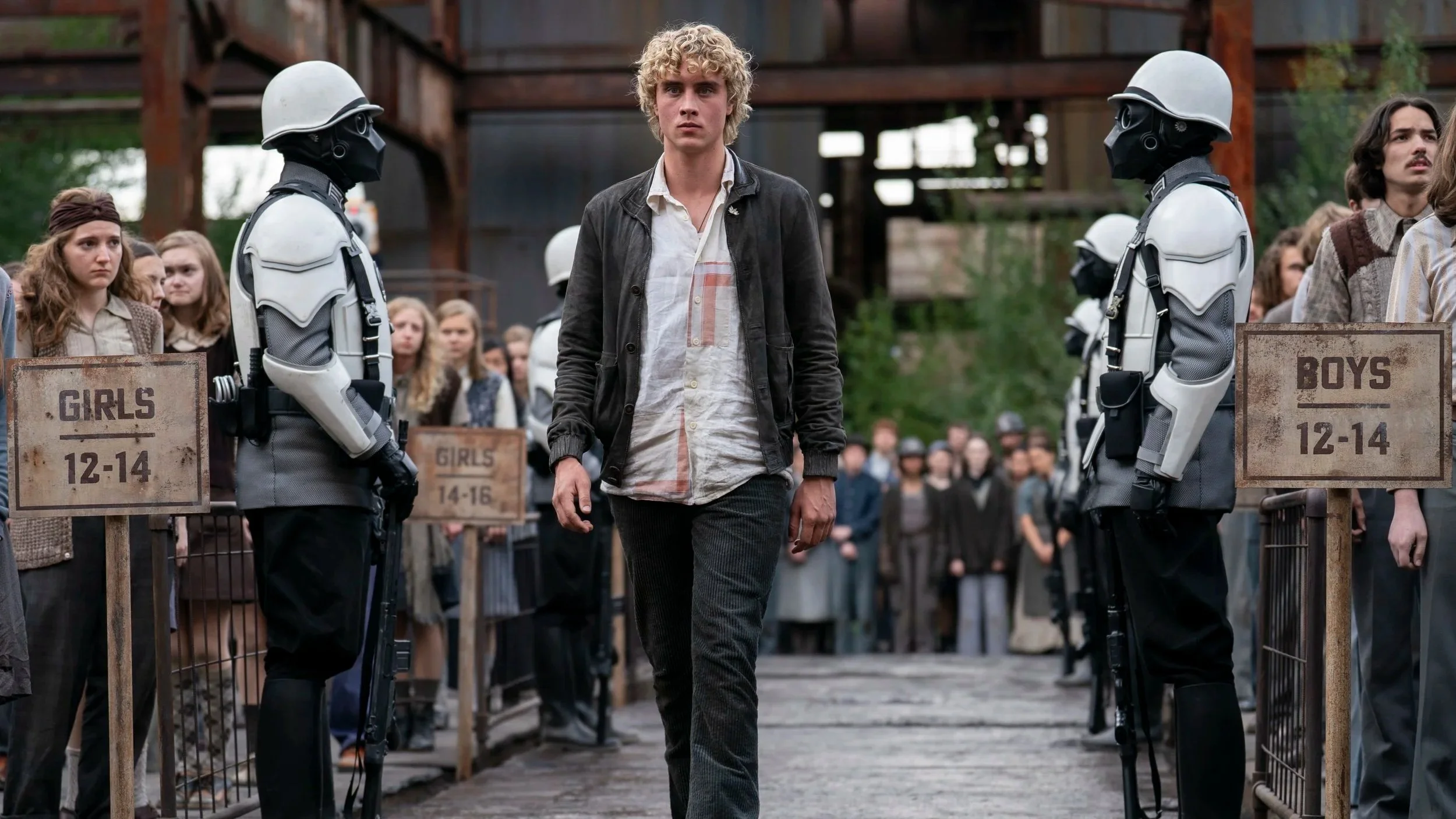
More so than any ‘Hunger Games’ film that has preceded it, this new installment in the series boasts possibly its most impressive cast to date. Fortunately, everyone in this ludicrously stacked cast is superb and gets their moments to shine bright. Zada, simply put, is a superstar, not only capturing the spirit of the character first established by Woody Harrelson in the original series, but able to make the character wholly his own. Zada has to carry this prequel on his shoulders, an unenviable task for any young actor, but he does so effortlessly as he navigates Haymitch’s arduous and emotionally complicated journey as he bears witness to just how ugly and cruel the Capitol can be. He’s able to balance the charm, swagger and pathos of the character while bringing an ample amount of gravitas, showcasing an actor whose future has boundless potential.
The supporting cast is truly outstanding here as well. McKenna Grace delivers strong work as Maysilee Donner, one of Haymitch’s fellow competitors and tributes from his district. Grace brings a prickly magnetism to the character as she slowly begins to lay down her walls and connect with those from her district. Zada and Grace have terrific chemistry as well, their dynamic and relationship one of the more compelling elements of the film. Jesse Plemons is also phenomenal as Plutarch Heavensbee, previously portrayed by the late Phillip Seymour Hoffman, delivering quietly compelling work while Glenn Close is a scenery chewing delight as Drusilla Sickle. Compliments can also be paid to Elle Fanning and Kieran Culkin, the former capturing the spirit of Effie Trinket with effortless ease while the latter gives Caesar Flickerman a fiendish charm and palpable edge that gives the character a fresh new spin after being in the hands of Stanley Tucci prior.
However, it’s franchise veteran Francis Lawrence at the helm that allows this prequel to stand out from the other entries in the franchise. Lawrence is certainly no stranger to being in this world, having taken the reigns of the series since ‘Catching Fire’. However, he’s able to give the world of Panem an entirely new look and feel while still crafting an atmosphere that feels akin to the previous installments. This is a gorgeous looking film, from the production design to the costumes to the cinematography that captures every visceral thrill and chill with muscular heft and visual panache. Lawrence never loses his grip on the tone or narrative as a whole, crafting an immersive blend of blockbuster adventure and emotionally charged thriller. He also never loses sight of character, allowing his central characters to breathe and develop as they experience the trauma inside and outside of the arena. As a result, this is a film that is as much an entertaining YA adventure as it is a compelling thriller about the spark of a revolution.

It’s the emotionally charged moments between characters that are the film’s biggest asset. The script from Billy Ray and Michael Lesslie does an effective and admirable job balancing the myriad of colorful, eclectic characters throughout the course of the story, very rarely shortchanging anyone in favor of breezier momentum. Whether its Haymitch and Plutarch working in the nuanced shadows attempting to ignite this revolution or the former squaring off against President Snow, played with deliciously frosty malice by Ralph Fiennes, its these intimate moments riddled with tension and stakes that are the film’s bread and butter, justly putting the focus more so on the characters than the games themselves. For a film that runs nearly three hours, the pacing is tremendously good, rarely a dull moment or scene that feels unnecessary or gluttonous with its amount of screen time.

However, this prequel does suffer from some shortcomings that do notably hold it back a bit. First and foremost, the games themselves nearly feel like an afterthought here, simply not bringing nearly the amount of creativity and immersion the previous films in the franchise were able to. While the film certainly has an enveloping visual scope, the set pieces don’t have the flair or tenacity fans have come to expect. Not only that, but it feels as if the film is rushing through the games at various points in order to further usher in the revolution aspect of the story. While the choice to focus on the latter is smart narrative choice, it can at times feel as if the film is clashing with itself, unsure if it wants to lean more into the games or the revolution. Not helping matters is the fact that a lot of the material explored in this prequel feels like quite familiar, well-treaded territory that was better explored in previous films. The structure and inner-workings of the games has already been heavily explored, the addition of younger versions of beloved characters and new additions not doing enough to distract from this fact.
‘The Hunger Games: Sunrise On The Reaping’ manages to deftly flesh out the past while adding emotional potency and nuance to the future, giving fans of author Suzanne Collins’ novels a worthy new addition to the franchise that is not only a fantastic prequel, but may just be the best entry in ‘The Hunger Games’ saga yet that proves this series is hardly running on empty.