
‘Elsinore’ Review: Andrew Scott (Somewhat) Shines in Oscar-bait Clip Show
Andrew Scott might be incredible in Simon Stone’s Elsinore, but you wouldn’t know given how haphazardly edited (or chopped and screwed) this biopic on Ian Charleson’s final months is.
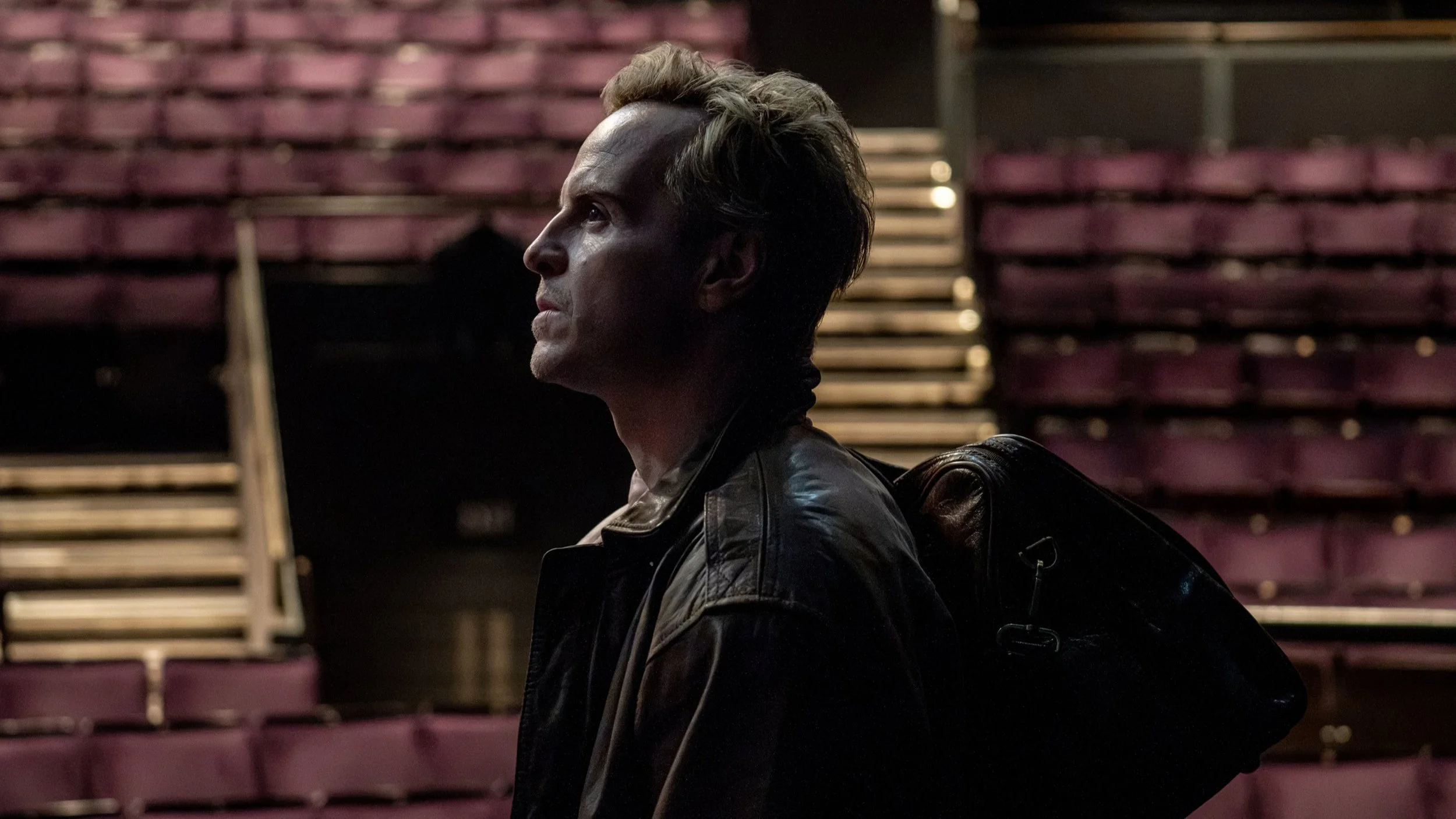
Near the beginning of Simon Stone’s Elsinore, actor Ian Charleson (Andrew Scott) explains why he wanted to return to the stage after a relatively fruitful film career, with acclaimed roles in the Oscar-winning Chariots of Fire and Gandhi. He says, “I don’t want to be chopped up,” discussing how editing can often distort a great performance given on set. The irony of that line being spoken and Stone then proceeding to chop up Scott’s performance into a series of compact, TikTok-esque montages is not lost on me. It’s also the primary reason why the film doesn’t work.
What could’ve been a psychologically riveting and emotive character study ends up being nothing more than a series of glorified “Oscar moments” for a clip to be featured on the big show, which disappointingly reduces Scott’s (probably) great performance as Charleson into nothing more than a showcase of how great he may be. Scott is one of our finest actors. I don’t need this movie to remind me of that. He gave the most layered – and complex – performance of his career in Andrew Haigh’s All of Us Strangers. When he broke down in tears after viewing a clip from Elsinore during his “In conversation with…” panel at the Toronto International Film Festival, I might have done the same.
The way he describes the responsibility and honor of portraying an actor who deeply touched him rang so true that the film felt like a necessary step for him to further perfect his craft. In several instances, one can see the sincerity in his turn as Charleson. He often takes our breath away in how he describes to Dr. Margaret Johnson (Olivia Colman) why it’s imperative for him to portray Hamlet, despite the devastating HIV diagnosis he has received. Ian knows the prognosis is not good. The disease afflicts many of his friends. He’s very likely to succumb to it. But as he says to the doctor, “I’d rather die of Hamlet than AIDS.” And when you see Scott as Charleson on stage performing Hamlet, you (kinda) know why.
Kinda, because, far too often, Stone and editor Valerio Bonelli tend to cut away from the performance when he should be the central focal point of the entire movie. In a way, Elsinore should be a pure showcase for Andrew Scott’s talents, which would, of course, lead to several awards conversations as his performance becomes the one to beat in the Best Actor category. It might be a bit too dismissive to call this movie “Oscar-bait,” but that’s what Elsinore felt like, because it never gives us a moment of true intimacy with Charlson. It’s always busy creating a series of montages to explain why it was important for him to portray Hamlet in his final months instead of making us feel the actor’s urgency. The movie lightly touches on so many subjects, but it never dives deeper than “this happened,” because it’s so insistent on trudging along and showing us a broad summary of events instead of focusing on the figure that matters.

Ian Charleson was a closeted gay man who hid his sexuality until after his death. There’s an external debate between him and director Derek Jarman (David Dawson), an openly gay and well-known figure in British cinema, who himself is afflicted by AIDS and would go on to make what is still the most personal film about living with the disease ever made, Blue, a final testament where one sees what the director saw before he passed away. I didn’t even know Dawson was portraying Jarman until a conversation they have outside a clinic, where Ian says “Derek,” because the film moves so fast. It never gives us room to breathe or know anyone beyond their broad strokes.
Screenwriter Stephen Beresford mentions Jarman going blind, which inevitably leads to the making of Blue, but that scene leaves our memory as quickly as the movie tries to get to what we think we’re going to see once Charleson finally steps on stage. That debate is integral to how both figures perceive their personal diagnosis, but there isn’t an occasion where we’re allowed to truly examine these people. Just like Ian’s relationship with his best friend Patsy Pollock (Billie Piper). Clearly, she played an important part in his life, but the character is so thinly sketched that we don’t really know her impact beyond the fact that she was very close to him.
In fact, the only real occasion we “get” to understand any character is Charleson’s father, Jack, because Peter Mullan plays him. Stone knows not to cut around that performance. That would be a massive disservice to the scene where, after reuniting with his son, bedridden and deathly ill, he breaks down in the hospital parking lot. It’s the only time the film lets us see what’s happening on the character's face and, more importantly, gives us elements deeper than the broad strokes. We understand so much about Ian’s father in that small moment. He hasn’t seen his son in a while – a son who has done quite well for himself and who he’s proud of. Seeing him sick is a massive shock, and it’s even more shocking when Ian comes out of the closet. The look on his face is devastating, but not sad. As he says, he deeply loves Ian and only wants the best for him.
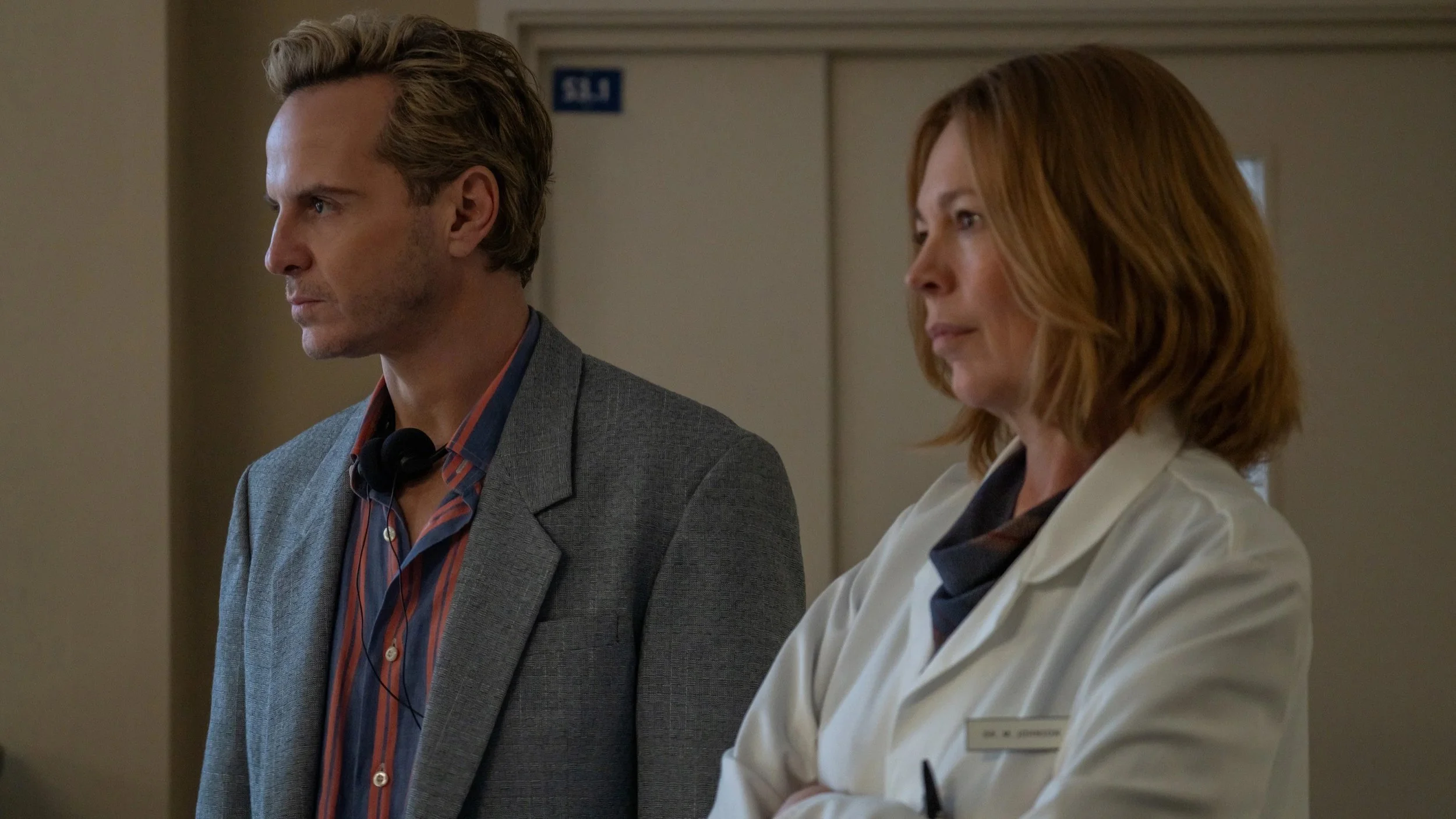
If only the entire movie were filled with sequences like these, where we understand far more about the characters than what’s on the surface. But Stone seems interested only in that surface. That’s why, instead of – gee, I dunno – making Charleson’s ultimate performances as Hamlet the centerpiece of the film, a sequence akin to the emotive, tear-jerking finale of Chloé Zhao’s Hamnet, he decides to stage the most irresponsible final twenty minutes I’ve seen of an entire movie this year. I’m not the one to say what a movie should or should not be, but the final half of Elsinore, especially during the performance, should be dedicated to Scott on stage, and that alone. We should feel the necessity of that portrayal, through his – and Dr. Johnson’s – eyes, as the film cross-cuts from what he’s doing on stage and how the doctor reacts by watching him pour his heart and soul into what he knows will be his final curtain call. It’s simple, but it’s a tried-and-true pure cinema method for a reason.
Instead, Stone does yet another montage, compiling the twenty-four performances Charleson has given as he tries to hide his illness from the public, then cutting Hamlet’s death in parallel with the actor’s actual passing. All of this happens as the loud, string-heavy music from Stefan Gregory tells us to CRY. CRY. CRY! I was moved when I saw Peter Mullan break down into tears. I was starting to get emotional once I saw Scott as Charleson on stage. As soon as the “Oscar clip edit” started, I was not only unmoved, but I desperately wanted to leave. This is a deeply insulting way to celebrate the legacy of such a storied actor whose life was sadly cut short by illness, and it’s far more insulting to think Academy voters will likely eat this pablum up. They – and the audience – deserve so much better than this. Andrew Scott’s performance deserves so much better than to be chopped and screwed like Elsinore is released on our screens.