
‘Leviticus’ Review: A Disappointing Feature Debut from Adrian Chiarella
Despite solid performances and a potent message, Adrian Chiarella’s Leviticus begins to fall apart as soon as its mechanics contradict themselves.
Horror has been having an incredible moment ever since the COVID-19 pandemic. However, this year has been particularly noteworthy for encouraging audiences to watch feature debuts from promising new voices in the genre in movie palaces, where they belong. This was the case with Obsession, which is still breaking records as an independent production and a festival acquisition, and with Backrooms, A24’s highest-grossing movie ever. NEON is now looking to capitalize on this success with Adrian Chiarella’s Leviticus, but there’s doubt it will capture the same lightning-in-a-bottle feeling Curry Barker has with his Obsession, and Kane Parsons’ formal-breaking Backrooms.
It’s a shame that the film doesn’t end up working, because the ideas Chiarella presents on screen are richer – and far more daring – for a mainstream studio like NEON to back it up than Obsession and Backrooms. The Australian writer/director presents a teenage protagonist living in a fundamentalist bubble with strict religious and social views. It makes their story more complicated than the average “coming out” drama you’d see time and again in modern (mainstream) queer cinema.
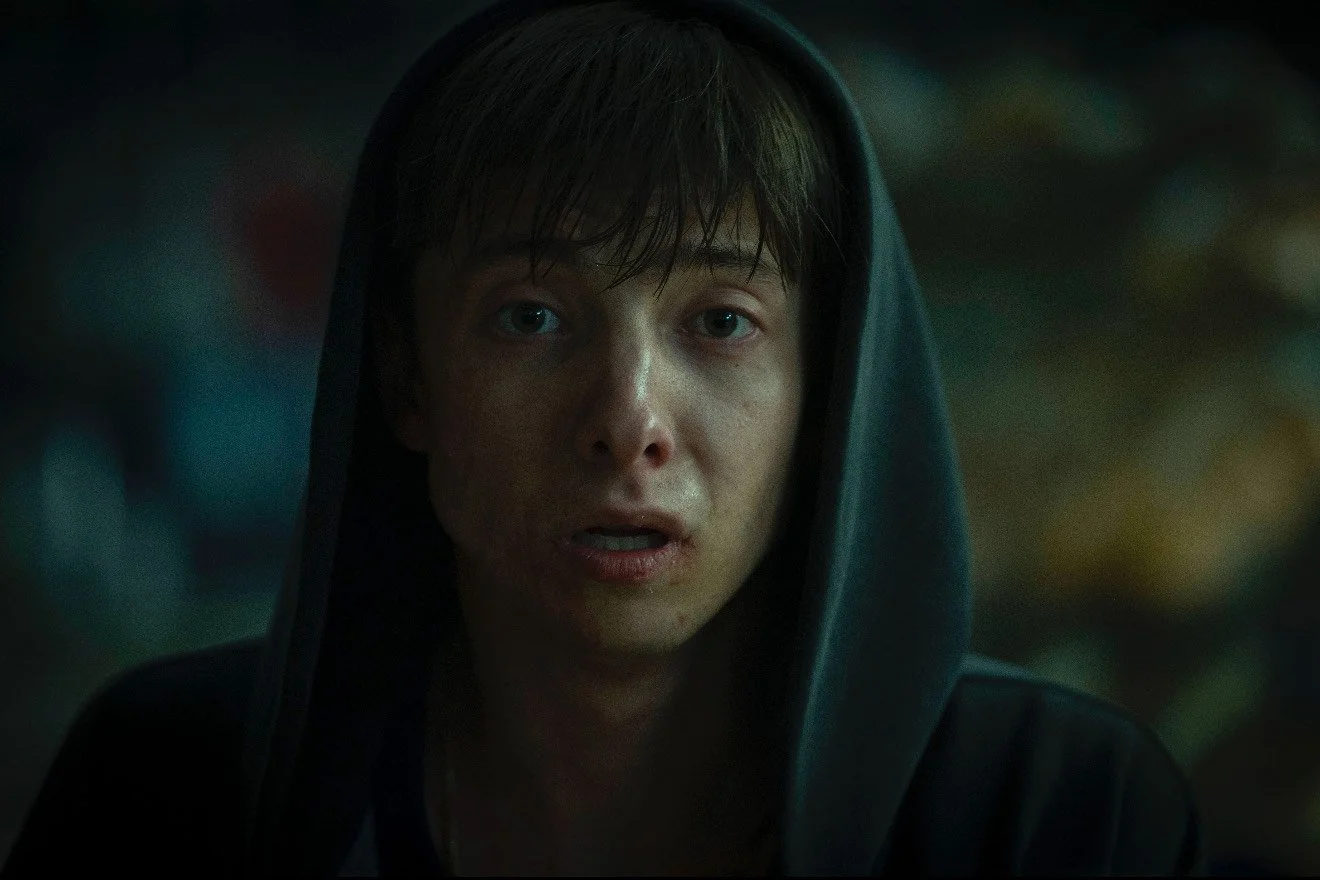
How Chiarella presents Naim’s (Joe Bird) story is honestly devastating. He begins to have feelings for Ryan (Stacy Clausen), a classmate and church friend, but can’t express them to his mother (Mia Wasikowska), due to her strong religious viewpoints, exacerbated by the homophobic evangelist church she attends regularly. Eventually, Ryan is caught making out with Hunter (Jeremy Blewitt), the son of the church’s preacher, and the two are sent to a “Deliverance Healer” (Nicholas Hope) in an attempt to “convert” their sexuality.
Instead of the age-old disturbing “conversion therapy” drama, Chiarella’s vision is distinct. The Deliverance Healer recites an old chant, which leads Hunter and Ryan to see the person they admire the most whenever they are alone. This violent supernatural entity preys on their biggest vulnerabilities and makes them succumb to the most violent, gruesome deaths. At some point, Naim’s mother begins to suspect that her son might have the same sexual desires as his two friends and has the Deliverance Healer perform his chant. This is also where the film falls apart.
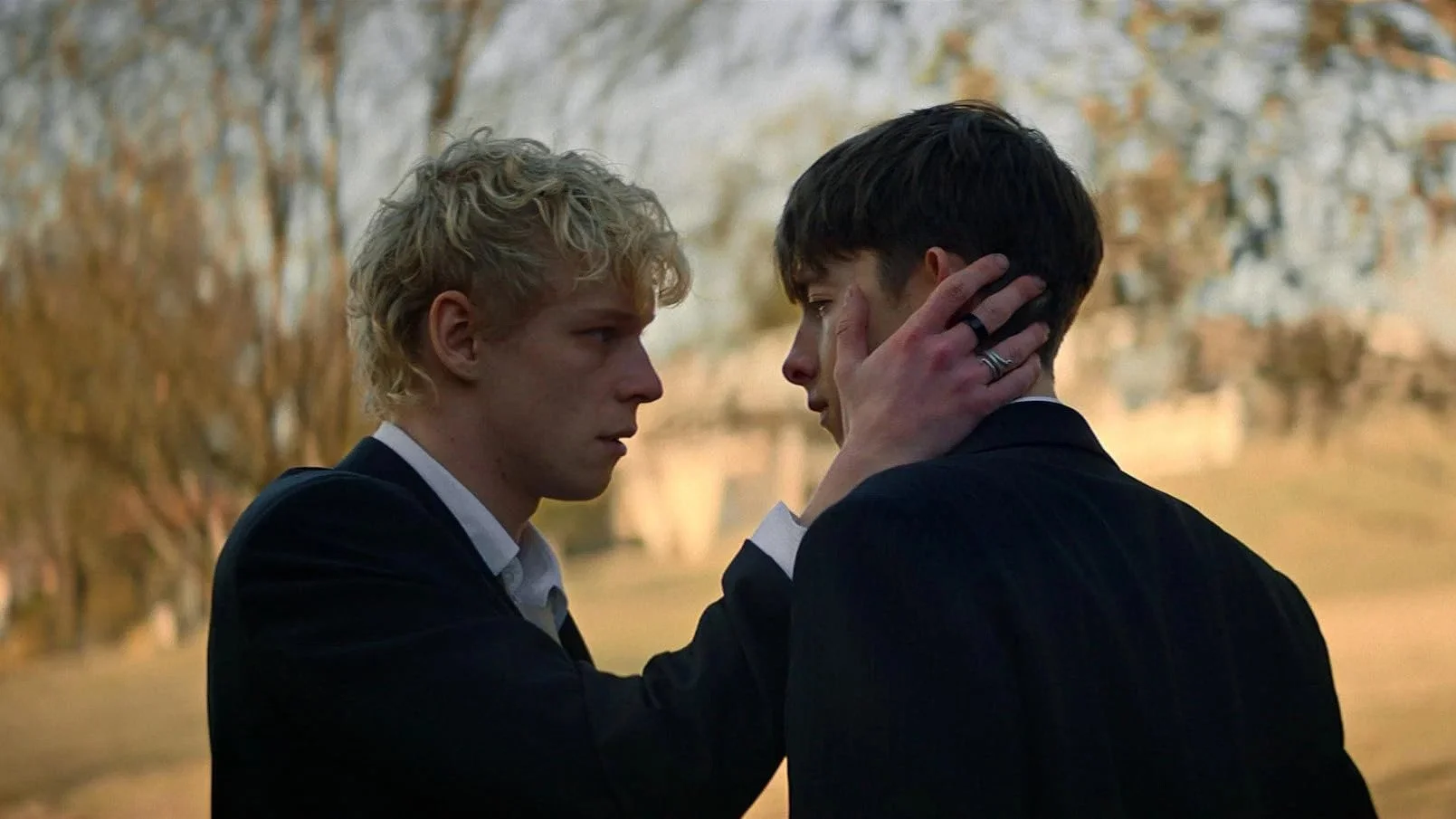
Beforehand, we see how the entity works from Naim’s subjective viewpoint. He has no idea who, or what, Ryan and Hunter are seeing. But it’s terrifying. The way Chiarella moves the camera, always focusing on Naim, works because we immediately want to know exactly what torments Ryan and Hunter so much. When we eventually do, it’s so far removed from our imagination that it’s automatically scarier. But this is where Chiarella begins to contradict the very mechanics he introduces in an attempt to salvage a painfully underdeveloped screenplay that feels more like the first draft of something truly special than another incredible Australian horror debut in the vein of Jennifer Kent’s The Babadook or RackaRacka’s Talk to Me.
Its ideas are intriguing, but don’t materialize into anything tangible. There’s a rich text Chiarella explores in the movie’s first half about how cults that pass themselves as “religions” will frequently corrupt scripture to serve their ideologies, but the film goes nowhere with that thematic thread, even when Naim’s mother takes a significant role in Leviticus’ back half. If anything, it reads more as a deus ex machina than an urgent plot device that repurposes the entire story. It’s hard to discuss this particular point without spoiling anything, as your appreciation of Leviticus will gauge in how you’ll react to the film’s multiple twists and turns. However, most of its narrative developments in the movie’s latter half falter the bulk of the narrative, even if it ends on a note that’s more hopeful than the more punishing, cruel conclusion Chiarella was leading towards, only to become a red herring.
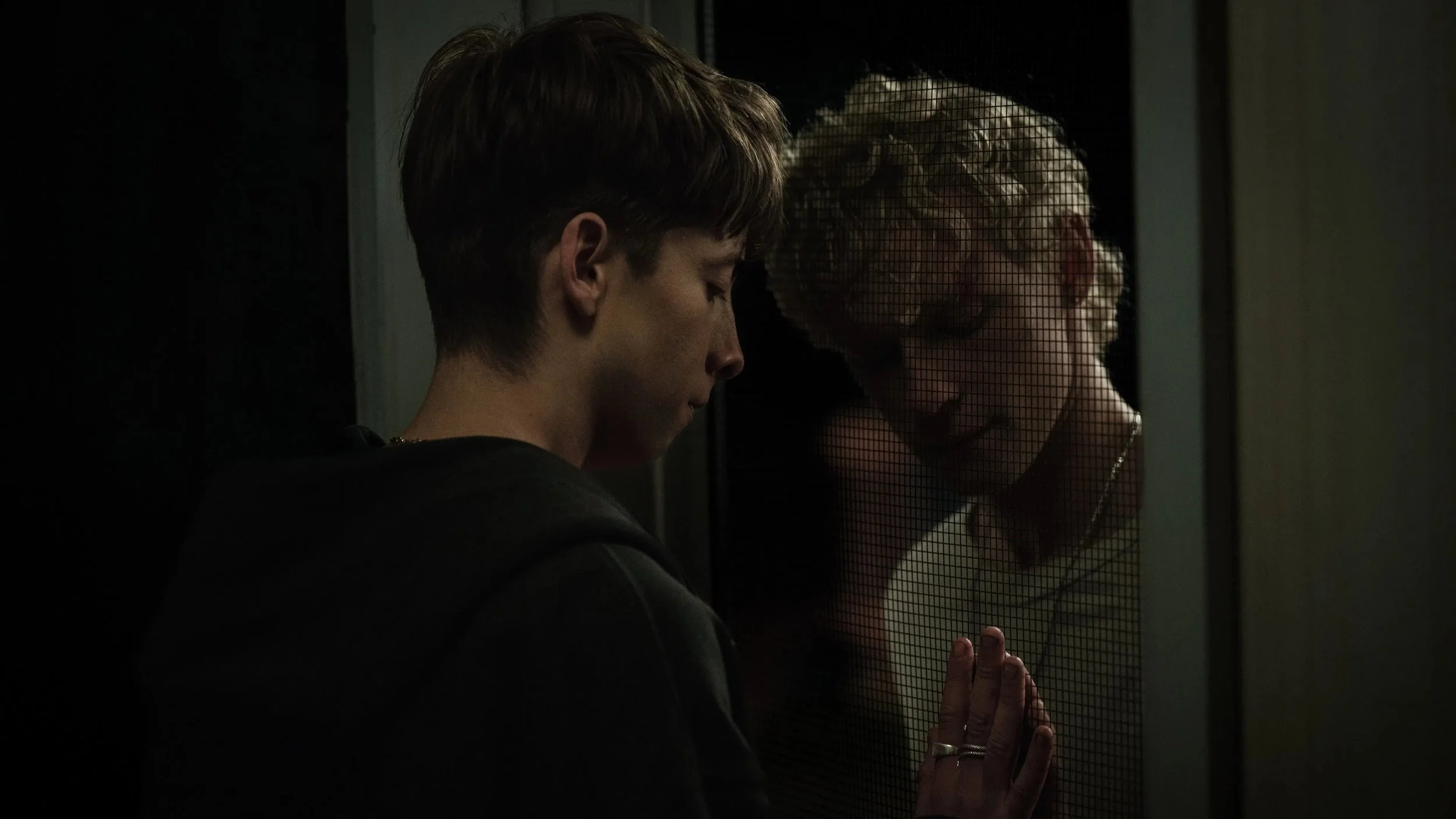
Still, one can’t fault Joe Bird and Stacy Clausen for giving their all. The two are incredible together and develop an intriguing relationship that seems poised to destroy itself after their minds are altered, until they realize none of them can imagine their lives without each other. Chiarella also knows how to craft an appropriate scare or two, but he sadly relies on a bunch of jump scares that cheapen the atmospheric nature of a demonic entity haunting the protagonists when they are alone. They always have to think about being in public with people present, because as soon as they are the sole person in a given space, the entity reappears. The jump scares don’t help establish the tension that’s so crucial for this mechanic to work.
That said, even with apparent flaws, the fact that NEON is backing up such a thematically daring queer horror movie should be more than lauded. Even if it doesn’t always work, a studio with such caliber propping Chiarella up as a new voice in horror with such a proposition is honestly commendable. Leviticus is not a terrible film, but one can’t help but think it could’ve been so much better if the filmmaker had taken another go at his screenplay and further defined the core conceit at its heart. Even still, I can’t help but wait to see what Chiarella will do next, because he is a staunch formalist when he wants to. No spoilers, but the gas station sequence alone sets him up for greatness. You’ll know it when you see it, and it will blow your mind.