‘Maddie’s Secret’ Review: A Strange and Bewildering Debut
John Early’s convincing performance as ‘Maddie’s Secret's titular character saves a rather perplexing experience that doesn’t know whether to fully lean into its satirical provocations or seriously explore the protagonist’s secret.
Viewing John Early’s Maddie’s Secret is perplexing. Early’s feature directorial debut doesn’t seem to commit to any tone, preferring to move between a satire reminiscent of Nick Corrirossi’s The Napa Boys and a serious exploration of eating disorders. It boasts a confident, enrapturing visual style with lyrical, almost otherworldly shot compositions that immediately recalls the work of Janusz Kamiński. It has an incredible lead performance by Early himself as the titular Maddie Ralph, but it also doesn’t do much beyond staying in its shitpost-like atmosphere that could’ve worked if it fully leaned into it but keeps trying to be more “elevated” than this.
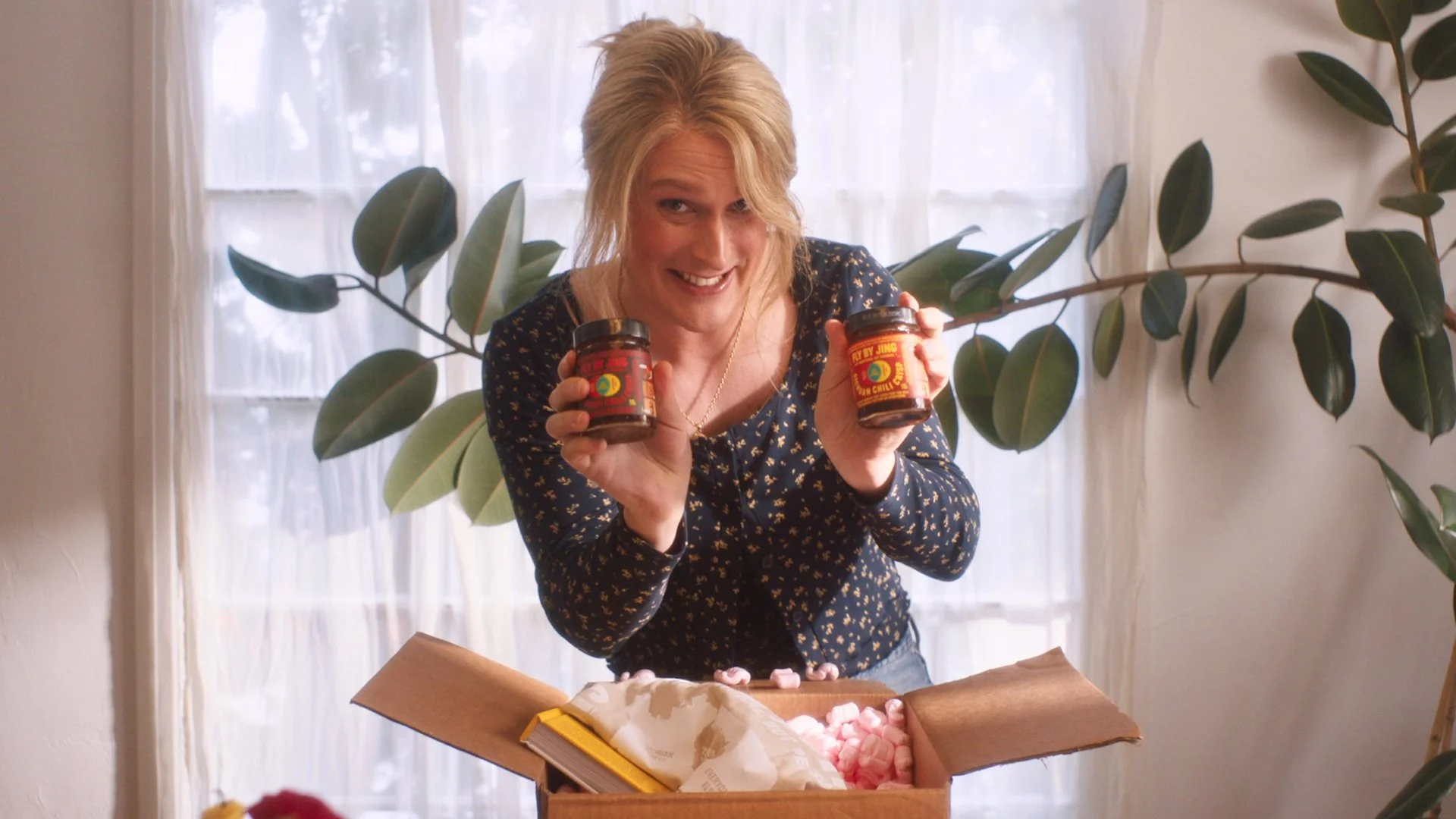
It’s not a movie that I can recommend to anyone, but it’s also such a fascinating object that it should at least warrant your attention. It satirizes many aspects of the “content creation” ecosystem by way of Conner O’Malley’s legendary supporting turn as Zach, the boss of a food-related content mill that promotes Maddie (Early) to a full-time chef after one of the videos she recorded in her home went viral. Maddie has an innate passion for food and cooking, which she hopes to share with the world. However, she also has a secret that is bound to come out after her absentee mother (Kristen Johnston) comes back to the fold.
It’s when we discover this “secret” that the movie begins to fall apart, as it puts Maddie into a medical facility to rehabilitate herself, and Early’s once-sharp screenplay begins to run around in circles. The fact that the film doesn’t really know which tone to adopt makes our investment in this fairly serious – and traumatic – story extremely difficult, even if the craft is undeniable. How in the hell did Early and cinematographer Max Lakner come up with these insane compositions? How is the blocking so refined and meticulous, and Danny Scharar's cutting so precise and genuinely emotive? The Napa Boys, which adopted a similar aesthetic, didn’t have such aesthetic pleasures.
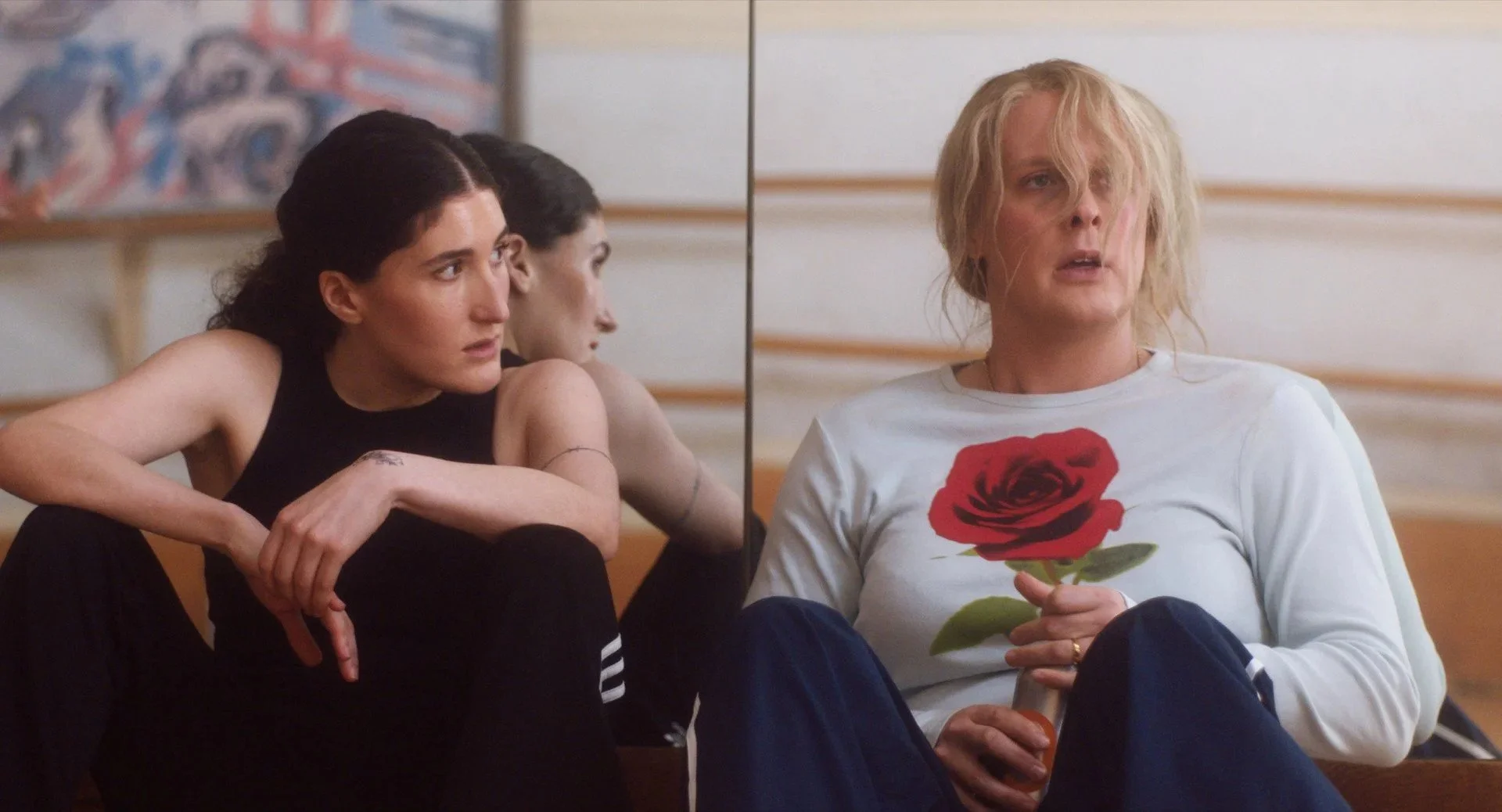
The fact that there’s so much confidence behind the camera speaks to Early’s clear visual vision to a movie that seems to be inspired by a thousand things at once. Part existentialist parable worthy of Albert Brooks, part Quentin Dupieux troll, part John Waters trash, it’s a mélange of cinematic (and televisual) influences that makes the project so alluring, and, at times, hypnotizing. There’s a specific dance sequence that is the most electrifyingly cut thing I’ve seen all year, film and television combined. It’s what predates the movie’s second half, because it puts us smack-bang inside the protagonist’s psyche for the first time. These sequences have a tangible effect, because Early has the eye for shot composition, one that few possess in this digitized ecosystem.
However, none of the ideas that Early introduces in the film – eating disorders, how “treatment” of such ailments is mostly ineffective, Maddie’s troubled relationship with her mother, and her obsessive best friend, Deena (Kate Berlant) – are barely developed. The screenplay feels like it is throwing far too many themes at a wall to see what sticks. Some of it works wonders. Every scene with Deena is a thrill, simply because there’s an undercurrent of pain that gets explored down the line. Other threads don’t work as others. Everything revolving around the eating disorder rehab clinic falls pitifully flat, but discussing more would mean spoiling things that are better left discovered on your own.
Maddie’s relationship with her mother is, bar none, the most compelling aspect of Early’s debut. Johnston’s presence in the film is limited to two scenes, but the impact she leaves on the film is undeniable. It helps us understand how Maddie’s secret came about and how she also developed an aversion to meat, beyond the “ethical reasons” she touts to everyone who asks why she switched to vegetarianism. Johnston also gives the best performance of the entire movie, portraying a cold, heartless figure from Maddie’s past that we immediately buy into the titular character’s tormented psyche.
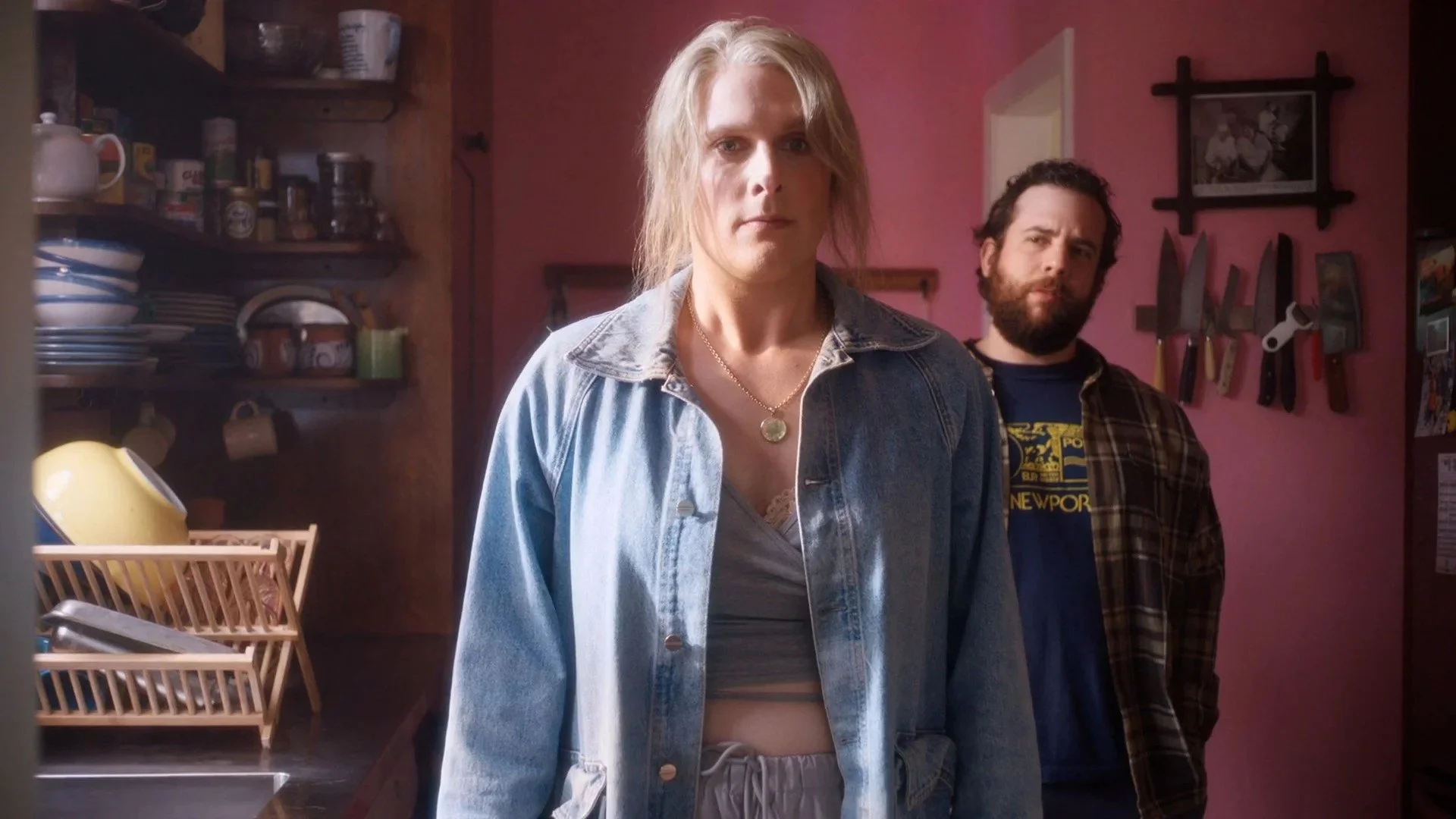
As Maddie herself, Early gives one of the most thoughtful and moving drag portrayals you might see on screen. It functions in both satirical and serious registers, which gives the movie an emotional weight that feels necessary. If it weren’t for Early sinking himself into Maddie’s idiosyncrasies, passions, and vulnerabilities, there’s no doubt that such a bemusing experience would’ve worked as much as it does. The script is often funny, but some jokes don’t work as well as others. Your mileage may vary, and that’s entirely dependent on whether or not you vibed with artists like John Waters, who wasn’t afraid to provoke, while also drawing transgressive portraits of the people he depicted on screen
Maddie’s Secret doesn’t reach the heights of films such as Waters’ Female Trouble or Beeban Kidron’s To Wong Foo, Thanks for Everything! Julie Newmar, nor does it have to. Early’s vision is singular enough on its own two feet that it promises big things from a comedian who was mostly known for HBO's Search Party prior to this. With this feature directorial debut, he promises big things for his future directorial endeavors, if the vision that he carries for this film is any indication. It might not be a film for everyone, but I’ll bet one thing: you’ve never seen anything quite like it.