
‘The Invite’ Review: A Relentlessly Funny Date Night Gone Sideways
Olivia Wilde’s latest directorial effort is just as hilarious as it is impressive, making for one of the year’s best.
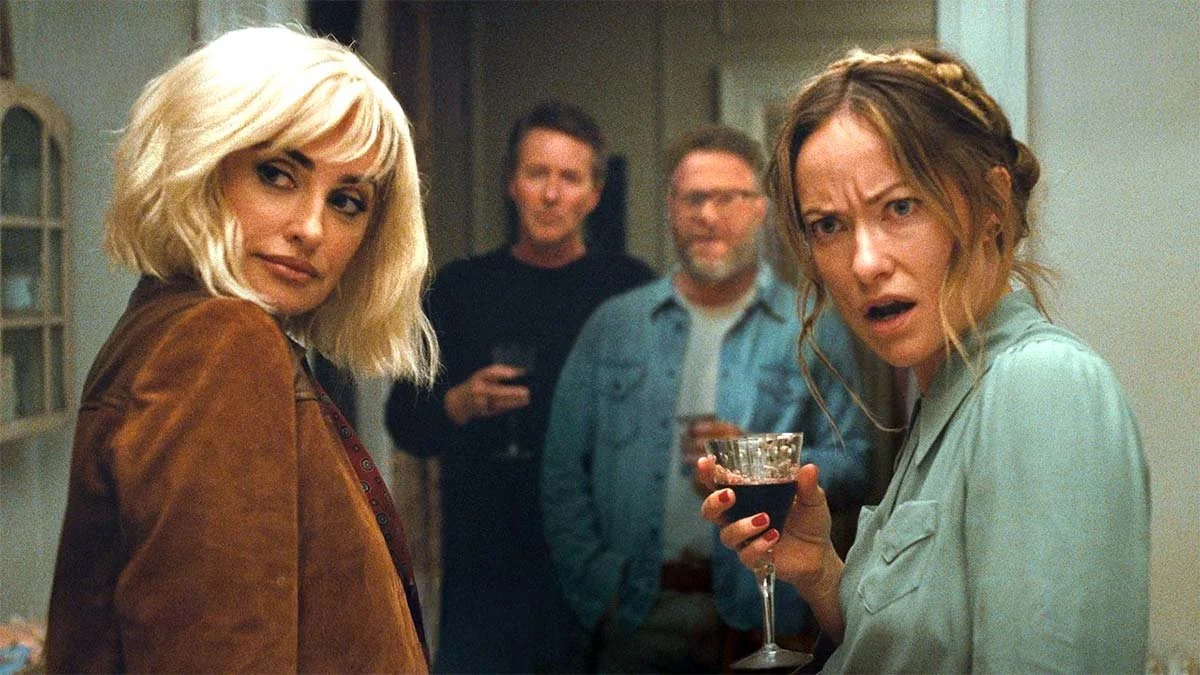
Serving as the English-language remake of Spanish film ‘The People Upstairs’ (or ‘Sentimental’), ‘The Invite’ follows Joe and Angela (Seth Rogen and Olivia Wilde), a couple in a marriage on its last legs, as they welcome new neighbors Hawk and Pína (Edward Norton and Penélope Cruz) over for dinner. Angela, a wife at her wits end, foresees a dead-end with her husband Joe, whose previous musical aspirations have been reduced to a teaching gig at an average school. Meanwhile, Hawk and Pína’s sex-crazed lifestyle creates an ever-growing rift in an already distant marriage as they visit our protagonists’ apartment. The beauty of the film stems from its character interactions, painting a brutal yet poignant picture on modern love and the eventual loss that may come with it. Paired with lightning-fast editing, swift pacing, remarkable music and production design, the film’s four best-of-the-year-worthy performances had me laughing until it hurt.
Writers Will McCormack and Rashida Jones (yes, that Rashida Jones) curate a beautifully-depressing narrative of domestic complacency as ‘The Invite’ unfurls. Joe and Angela’s marriage has stagnated to a point of no return, where their apathy towards each other continuously leads to aggression. Their dynamic as a couple is as raw as it is upsetting, with their opening scene together painting an almost complete picture of their married life. This, of course, is only elevated by career-best performances from Seth Rogen and Olivia Wilde. Rogen, who to be completely honest is playing himself, gives Joe the arrogance of perceived failure. His performance is effectively that of a man being haunted, but instead of a ghost, it’s the shadow of who he used to be. He delivers a gravitas rarely seen in previous roles, and makes an easy case for his best performance in a film. As emotional as his character is, he is also unbelievably-funny. Not much can beat Seth Rogen falling through a table at high speed after smoking a joint. On the other side, Wilde plays a role of certainty and denial. Denial that her marriage is over, but certainty that she wants something more. The balance between her character motivations, and the slow unraveling of her actions, makes her character feel incredibly real. Her interactions with Joe, and later with Hawk and Pína, were my favorite part of the film. Both reactionary and somewhat rehearsed, we see her desires for a better life peak through as the neighbors continue their visit. She is undoubtedly a scene-stealer, but so is Rogen. Any lesser actor/director would turn this into a star vehicle for themselves, but that is absolutely not the case here. Oscar-contention for either of the two is absolutely worth the consideration of voters.
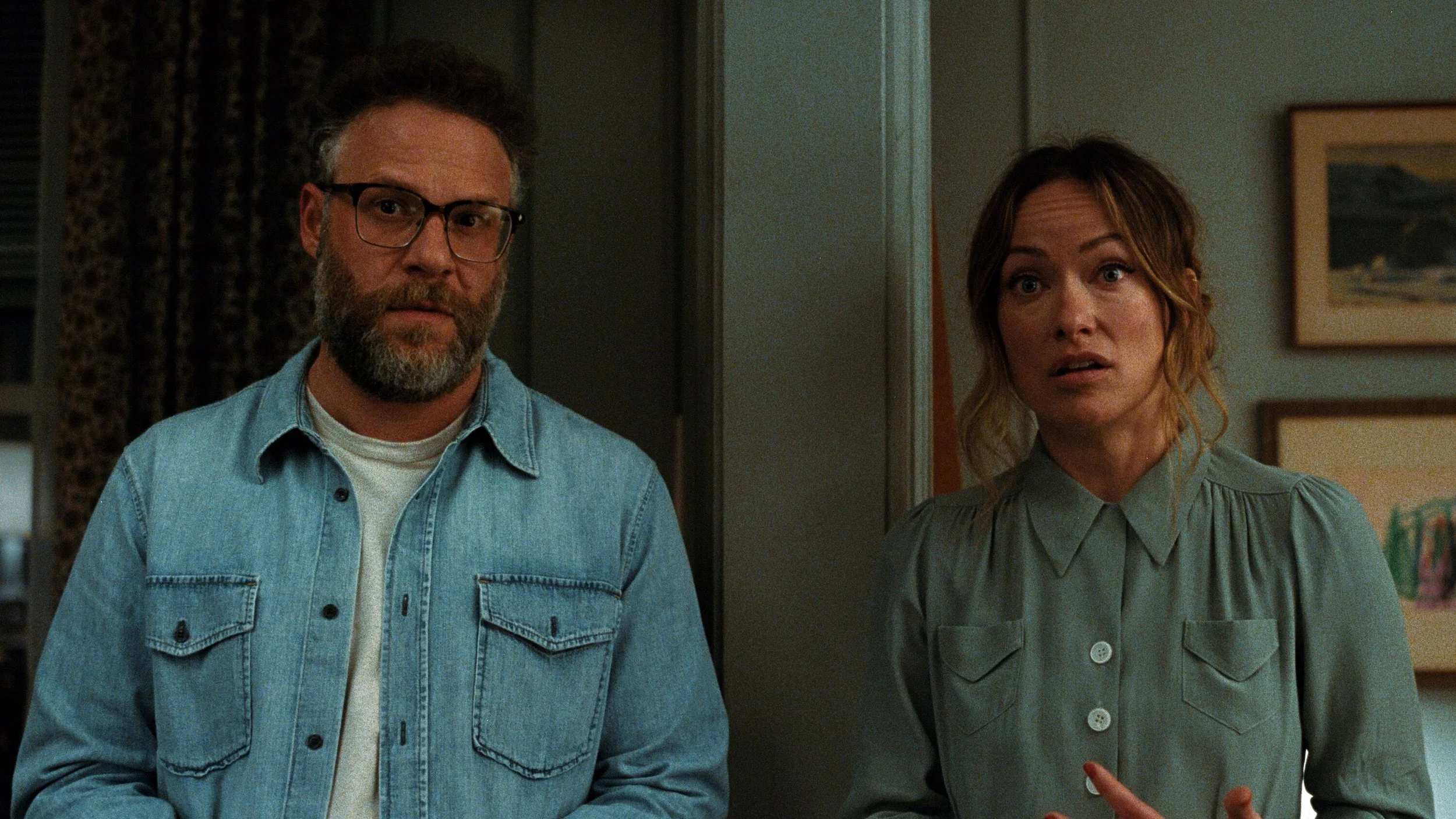
The other couple, Hawk and Pína, act as the film’s seasoning. Accompanied by performances both hilarious and exceedingly-impressive, we take them in at face value as a couple putting on their best faces for new friends. While only getting glimpses at who they are outside Angela and Joe’s apartment, Edward Norton and Penélope Cruz are both unbelievably confident and effortlessly cool. Acting as the effective antithesis to our homeowners, it’s no surprise that the mere presence of the couple contributed to their ever-growing divide. As the film goes on, we see their real inner-selves peak through their porcelain facades, which is where both performances truly shine. Rather than acting as early scene stealers, their character energy is reserved for the end, as both Cruz and Norton have career-defining scenes in the third act. You can easily make a case for performance of the year for any of our four cast members.
The final character in the film isn’t a character at all, but rather the apartment itself. Expertly-blocked by Wilde and director of photography Adam Newport-Berra, the apartment’s many windows, columns, and doorways act as narrative tools to inform the scenes at hand. Literal walls are placed between Joe and Angela during many key interactions, with the space between them showing a complete view of their marital status. Additionally, the use of negative space brilliantly isolates many moments to create an even further divide. This is quite honestly one of the best-shot films of the decade, which was achieved stunningly on 35mm Kodak film (specifically its Vision3 500T 5219 stock). The use of light and shadows, paired with celluloid noise and magnificent blocking, gives ‘The Invite’ a lot of palpable visual texture, something becoming more and more rare.
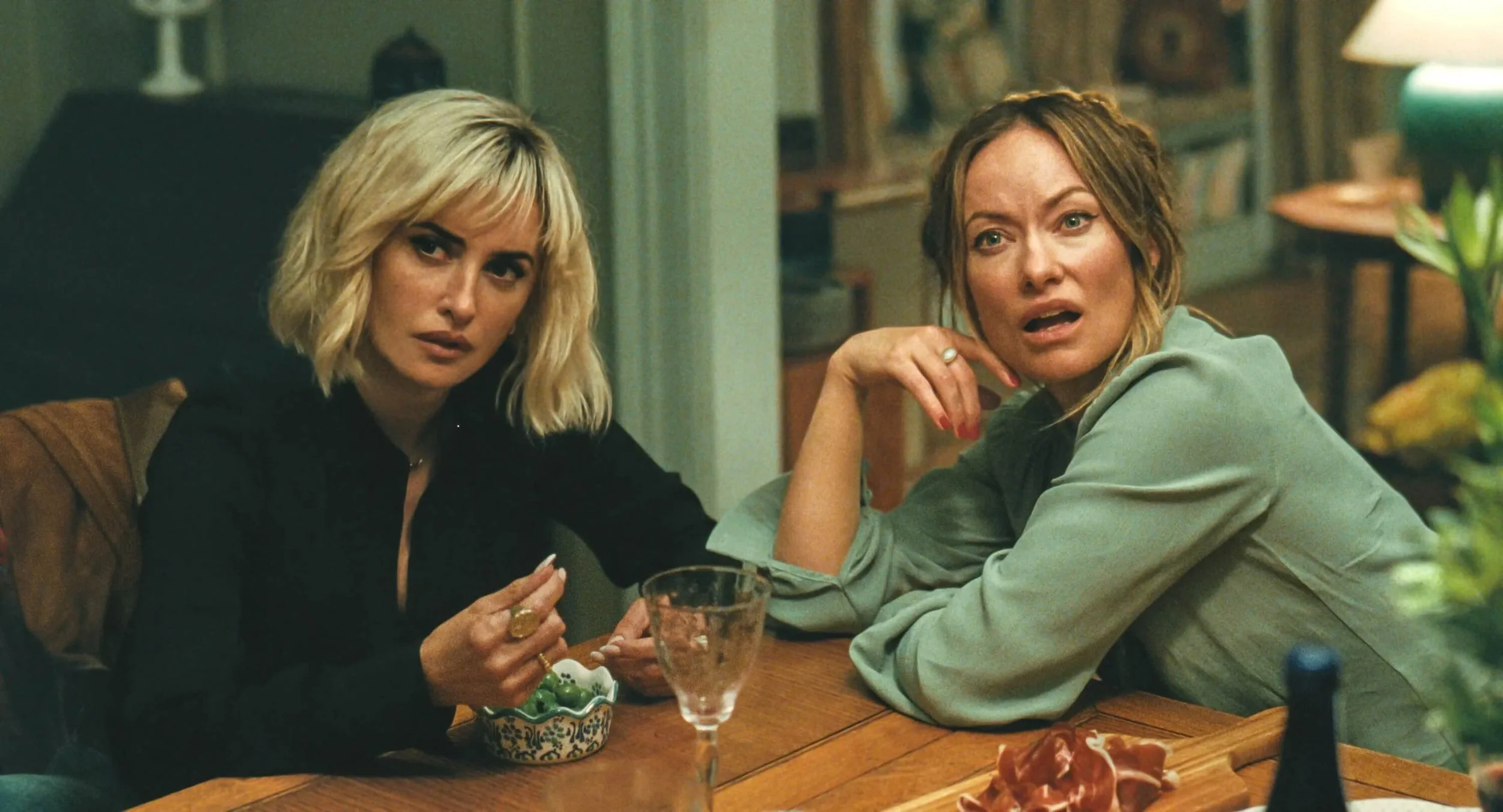
As much as it is funny, ‘The Invite’ is a beautifully-shot and remarkably-poignant story about modern marriage and the pitfalls that may occur. Combining career-best performances with unparalleled visual acuity, Olivia Wilde’s confidence as a director (and actor) extends beyond the screen, crafting a truly remarkable effort. The film is sure to open many uncomfortable conversations for couples and single moviegoers alike, so be prepared for a post-viewing debrief or two. You may need it.