'Coyote vs. Acme' Review: Art is Worth Saving
Finally released to the world, Dave Green’s Coyote vs. Acme lives up to the hype and proves to all of us that any movie is worth releasing, no matter the cost.
Hollywood is run by a bunch of anti-art idiots. That much is clear. They would rather cancel the release of something as jubilant and creative as Coyote vs. Acme than let us witness such a wonderful celebration of what makes the Looney Tunes, Warner Bros’ most prized Intellectual Property, stand the test of time. I understand that Space Jam: A New Legacy was not well received and didn’t perform commercially either, but that’s no reason to scrap the release of the best live-action/animation hybrid since Joe Dante’s Looney Tunes: Back in Action and use it as a tax write-off?
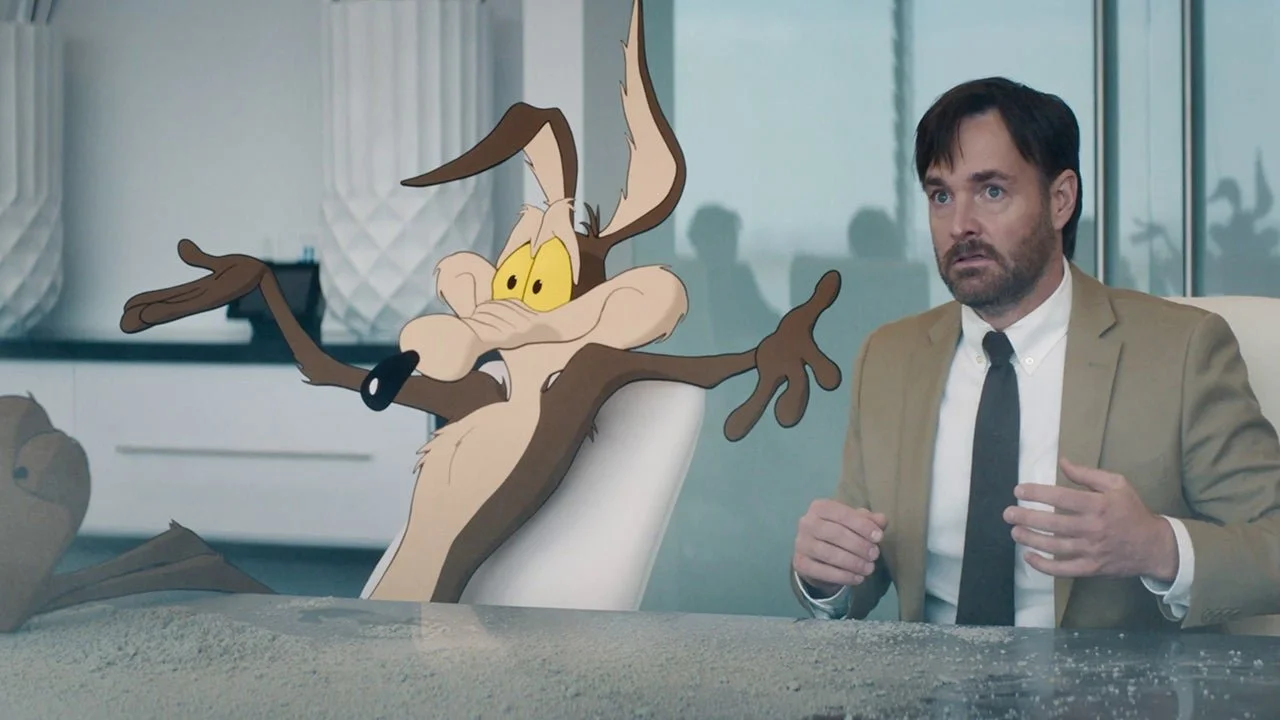
For anyone interested, Dante’s film is still ever-timely in Hollywood’s current predicament of self-destruction through media consolidation, and Coyote vs. Acme certainly follows in that trajectory. Like Dante, director Dave Green and writer Samy Burch don’t need to explain how cartoons operate in their version of the real world and immediately start with the inciting incident pertaining to Wil E. Coyote’s use of faulty ACME products that prevent him from successfully capturing the Roadrunner. The age-old story gets expanded within the conventions of a courtroom drama, as the titular Coyote teams up with attorney Kevin Avery (Will Forte) of the law firm Avery, Jones & Maltese (named after Looney Tunes animators Tex Avery, Chuck Jones and Michael Maltese), to bring down the most powerful corporation in the world.
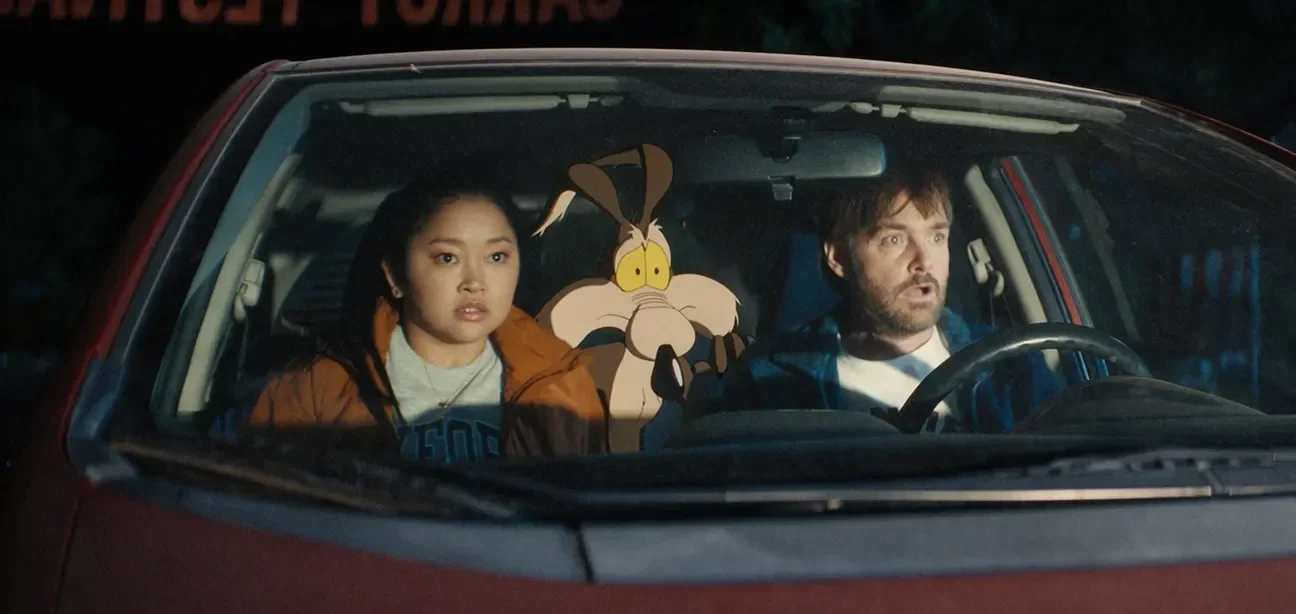
Of course, there’s a bigger conspiracy that Kevin and his assistant Paige (Lana Condor) unravel, where ACME withheld decades of activity under an operation named ‘Project Sisyphus’ from the public. The lawyer of the corporation, Buddy Crane (John Cena), attempts to buy Kevin off with a massive settlement, but he begins to understand why the Coyote wants retribution for the decades of pain, suffering, and loneliness he’s endured as a guinea pig for a company that does not value anyone testing out their products and doesn’t care about the cost of them malfunctioning.
It’s an interesting way to repurpose the recurring bit that has defined most of Wil E. Coyote’s cartoons: he wants to catch the Roadrunner, he devises a plan with the help of ACME products, but they don’t work, leading to the same visual predicaments that recur throughout the shorts. The visual gags are exactly the same as they are in these segments, too. There’s a visual precision in this film that isn’t found in Green’s other works, mainly because he knows what makes a character like Coyote funny, and what audiences hope to expect with such a figure.
Green is smart enough to know what the audience expects, but he’s also smart enough to know when to subvert expectations. It’s what makes Coyote vs. Acme stand out among the bevy of coddling family entertainment that seems afraid to take any form of risk, especially when it almost never saw the light of day. This is the most mind-boggling thing about this film: it is risky enough to break the traditional formula found in most Looney Tunes cartoons (in the grand tradition of Back in Action), while also respecting the characters’ enduring legacy. Did I shed a tear when a thoughtful montage of Coyote’s times failing to capture the Roadrunner would recur throughout the movie? Probably, and I’m one of those people who never fully gelled with these shorts while watching Looney Tunes on Saturday mornings.
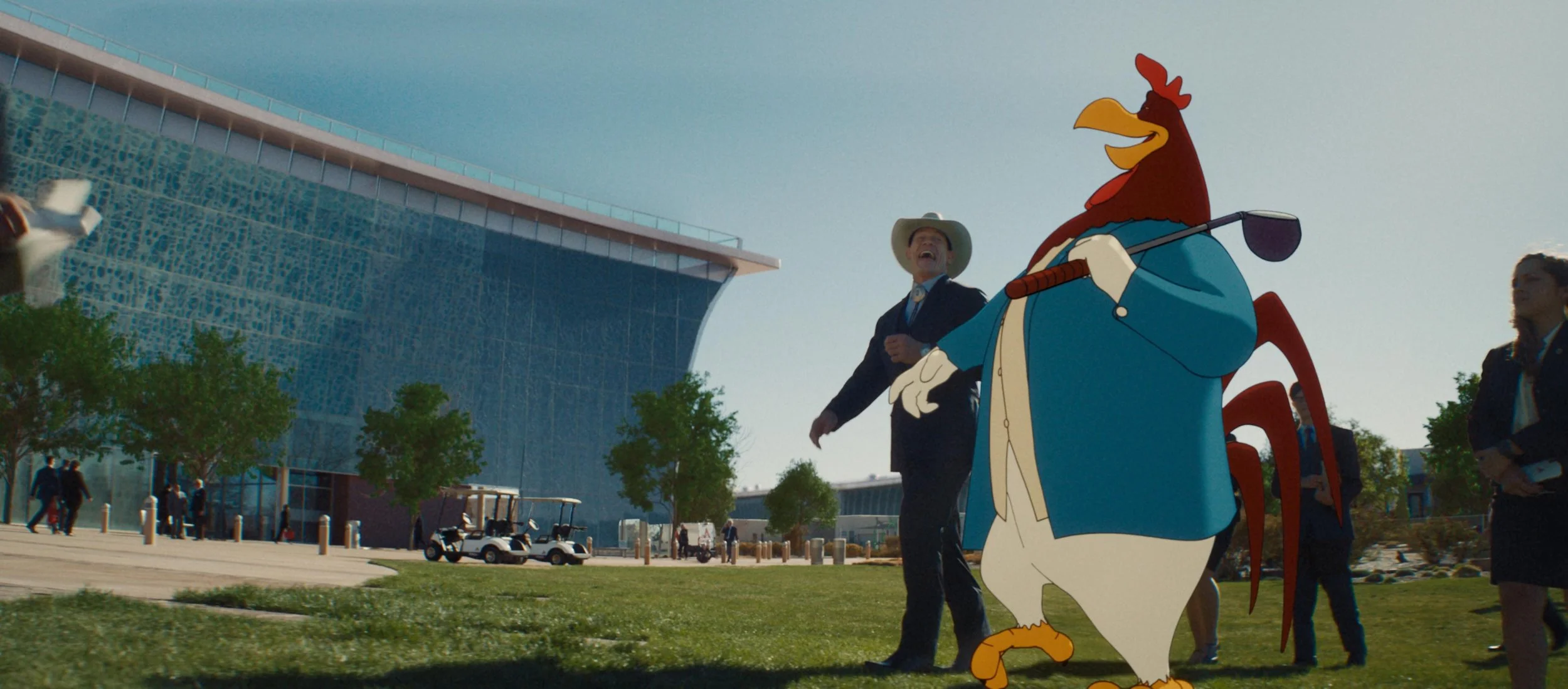
The most important thing that makes Coyote vs. Acme such a memorable affair is how much love it has for characters that have tickled our imaginations for almost a century. The way many of them are reinterpreted to fit our modern sensibilities (Pepe le Pew finally gets what he deserves) or seen in a different light keeps the film fresh and exciting, even in sections that get a tad stale. I was afraid that the movie’s climactic showdown, which sees the case go all the way to the United States Senate, would revert to conventional territory. I shouldn’t be surprised that it doesn’t, given Burch’s screenwriting talents, but it did catch me off-guard that the film refuses the ultimate “happy ending” and gets more down-to-earth, which is probably why Warner Bros. didn’t want this smart movie to see the light of day.
There is, however, nothing more anti-art than canceling a film to get a tax write-off. If David Ellison takes over Warner Bros, you can bet there will be more of these decisions that allegedly “create tremendous value for shareholders,” but don’t keep the art form of expressive cinema alive. Green’s resilience – and the support he got from the artistic community – proves that everything is possible, and that no completed (or soon-to-be-completed) movie, no matter how good or bad it is, deserves to be canceled. Let the public judge its quality, and let the artists who worked (extremely) hard on bringing Coyote vs. Acme to life deserve this happy ending.