
'Tender Loving Care' Review: A Deft Denouement For A Legend [TIFF 2026]
leigh, one of our modern greats, leaves us with a incredibly personal and aptly tender farewell film.
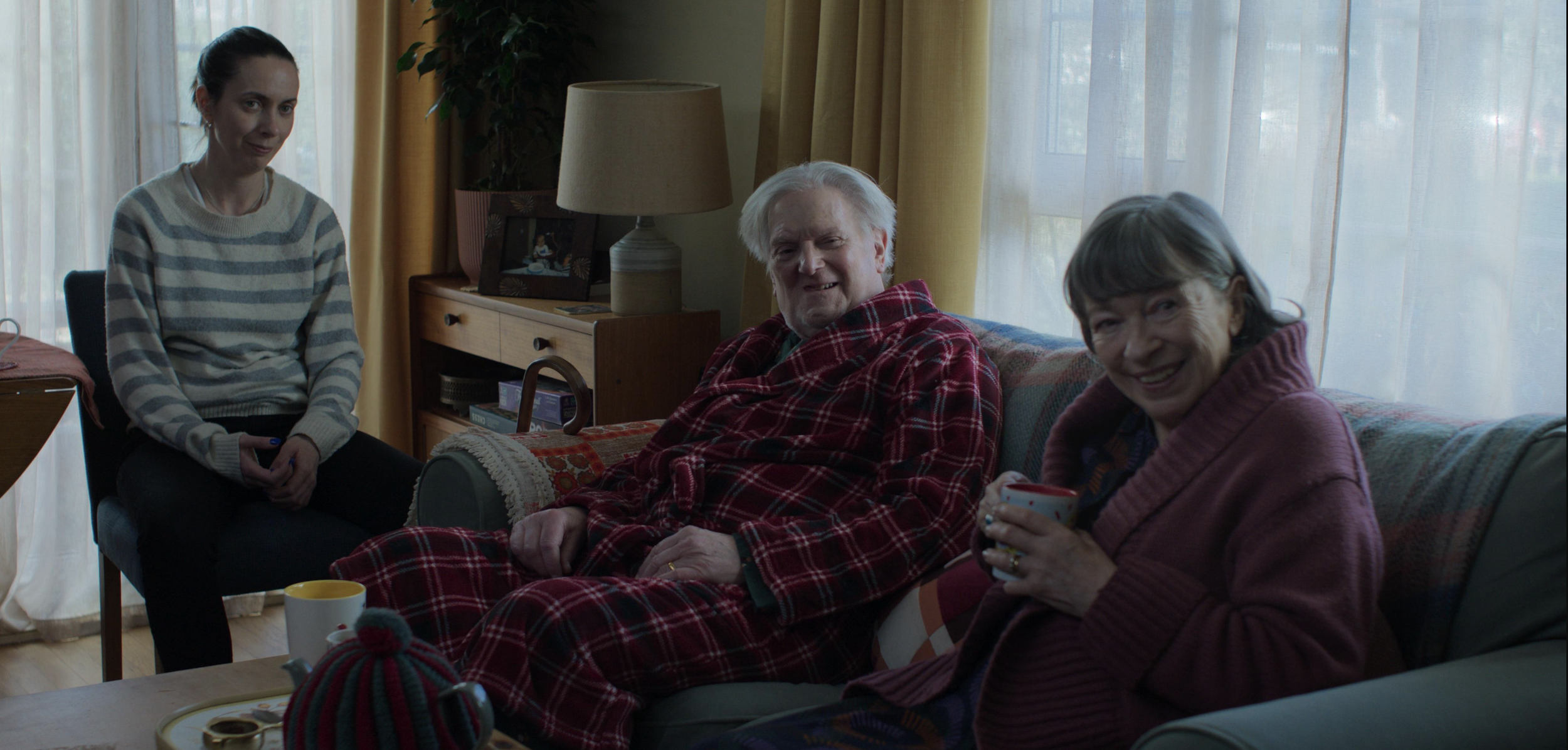
The legendary Mike Leigh, who despite his half-century worth of experience telling tremendously rich tales for the stage and screen, somehow feels underrated in larger cultural discussions of our modern great filmmakers. Leigh’s singular, character-first films are often small in scope, but massively resonant in terms of emotional impact and character study, with Leigh famously explaining that his films are often fluidly made, emphasizing collaborative input from his ensembles instead of rigid scripts or filmmaking styles. Leigh once explained that “all [his] films are tragicomedies, because life is hilarious and tragic,” and Tender Loving Care, said to be his final film, is an apt a reminder of that as anything really can be, especially given Leigh’s elaboration that his retirement from filmmaking is health-based.
Like the vast majority of Leigh’s work, Tender Loving Care follows the lives of a select few working-class characters and their intertwined lives in contemporary London. Best friends and social workers Amy (Emmy winner Kate O’Flynn) and Rosie (Alice Bailey Johnson) deal with the trials and tribulations of their respective workplaces and romantic woes, narratively measured by periodical visits to Amy’s parents, Birdie (Marion Bailey) and the ailing Geoff (Paul Jesson). The film mostly operates in classic Mike Leigh fashion, finding both pathos and laughs in the nitty-gritty details of its characters’ everyday lives, with an undercurrent of social commentary along the way.
A main reason that I believe Leigh’s work and style have successfully endured so many decades is because he understands that the personal can be universal. Few people will ever find themselves in a situation such as the leads of his 1996 masterpiece Secrets and Lies, but that doesn’t stop us from deeply empathazing with their plights, because of how much deep humanity and nuance Leigh affords his characters. Viable personal stakes drive any good story, but Leigh’s are built around them, instead of larger plots or ideas, and this time more than ever, it feels as if he’s reckoning with his own personal stakes, and telling his own final story through Tender Loving Care. What feels very striking with this film, structurally, is how it is both opened and bookended by a intently mysterious older man who has no narrative ties to the main quartet of the story, who says and does very little in his very little screentime, but has a major effect on the story. In close-ups, one might notice this old, weary observer to resemble Mike Leigh himself, and this does not feel like coincidence.
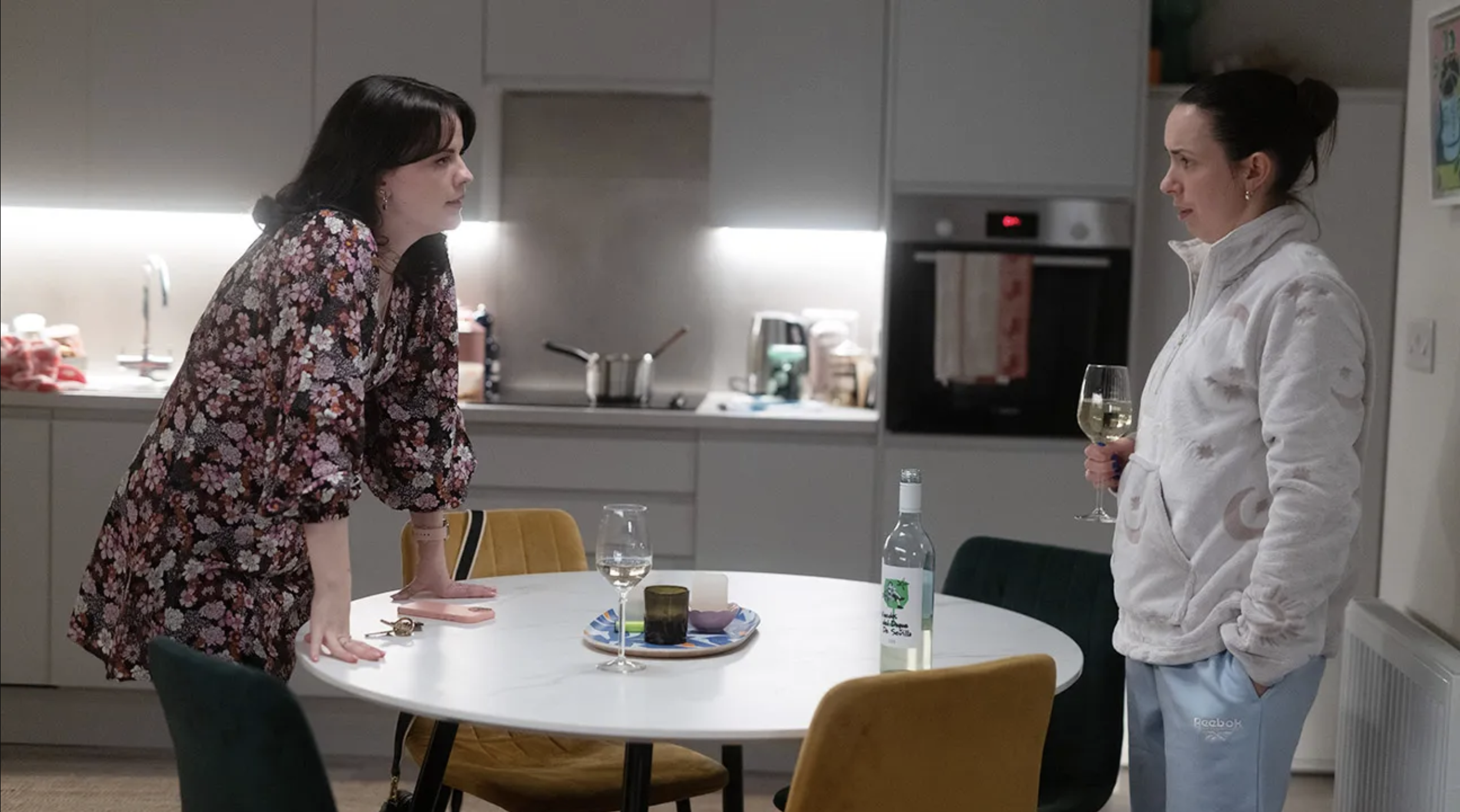
Given Leigh’s public struggles with health in his octogenarian period, casting his own wife (Marion Bailey) as a woman dealing with her husband’s deteriorating health, and step-daughter (Alice Bailey Johnson) as the family friend that they quite literally refer to as a daughter of their own, the film becomes touchingly metatextual, an emboldened choice given that most of Leigh’s films are very blunt and straightforward as realist dramedies. This isn’t to say that Tender Loving Care can only be read this way. Audiences need not be longtime Leigh fans or scholars to understand and appreciate the emotional core of the film, as the leading actors deliver such tender and caring performances (pun intended), which perfectly fit the film at its sad and gleeful moments, in equal measure.
Despite Geoff’s health deteriorating throughout the story, the film is careful not to fall into a wholly somber state, as it tackles the overall theme of deterioration. Leigh’s work has always been rooted in the lives of working-class folks, and in Tender Loving Care, the characters lament our current societal deterioration, whether it be the budget cuts to social services, universities, healthcare, or general decline in quality of life. Leigh has made many a ‘downer,’ and despite all of this, Tender Loving Care is not one of them.
Showcased so effortlessly are the eponymous acts, and in such a remedial way. Though Leigh’s canon may be remembered for some of his bigger, more avant-garde work, ie; Naked, or award winning work like Secrets and Lies, I’d argue that his greatest strength is how he’s able to work with his actors and make the most seemingly mundane conversations seem like the most exciting scenes. These kinds of conversations are the bedrock of Leigh’s contemporary work, and in his last film, I would argue that they take on a different meaning altogether, as something of an exhortation, or even parting gift. So much power lies in the way that Tender Loving Care shows very casual conversations of youthful reminiscence, romantic woes, or even the simplest of details about one’s daily life have the power to heal, and connect us all in ways that form life-long bonds. These conversations with Amy, Rosie, and Birdie rejuvenate Geoff’s ailing spirits, and give him a sense of agency and selfhood as his condition deteriorates his physical ability.
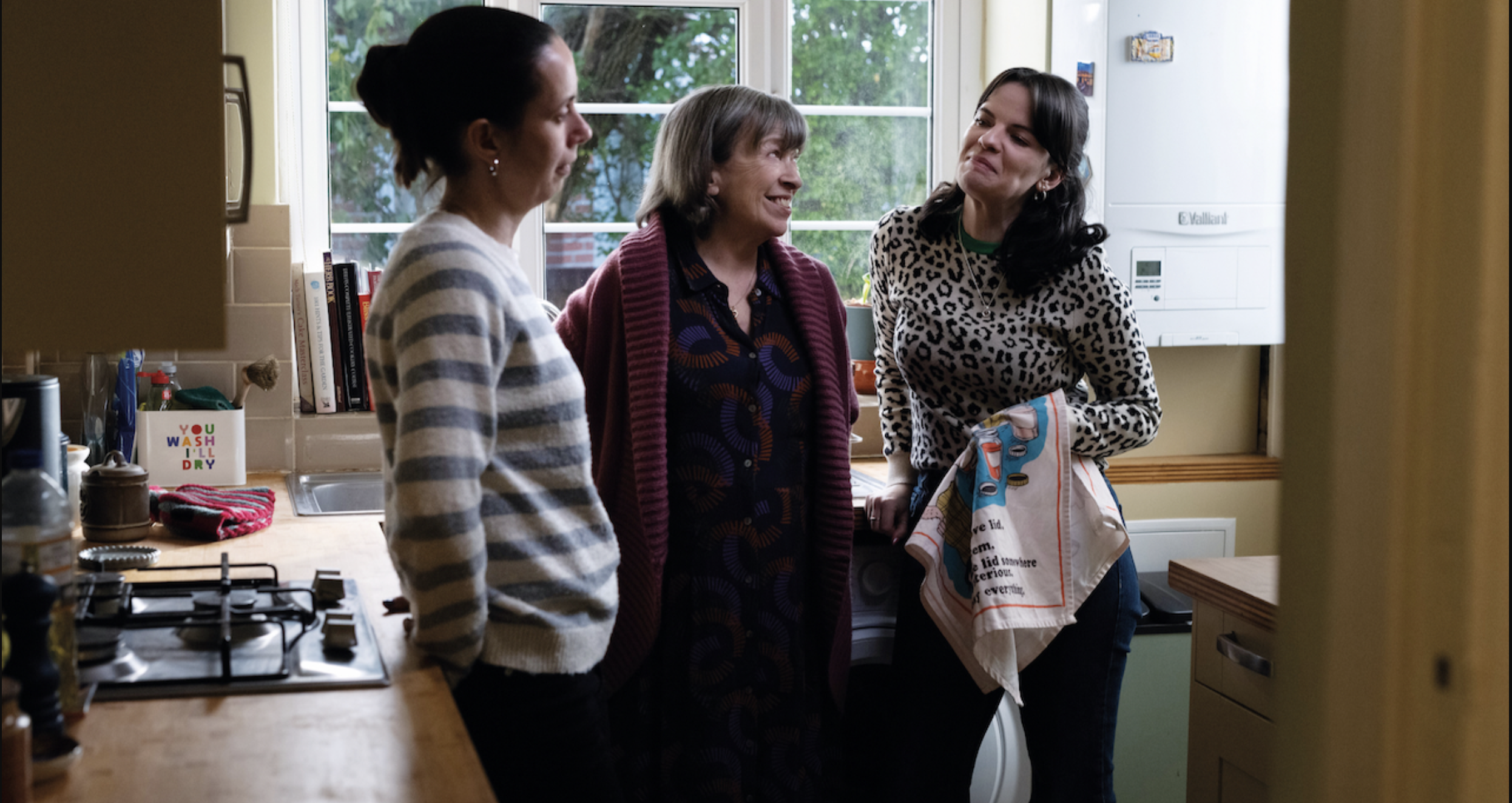
Tender Loving Care ends up revisiting a lot of hallmarks from Leigh’s body of work, but what stands out is the cinematography by Lucy Bristow. Bristow, the camera operator on some of Leigh’s previous films, takes over from the late great Dick Pope, Leigh’s longtime cinematographer and creative partner, who sadly passed away during the rollout of his last work with Leigh, 2024’s Hard Truths. Pope was known for his use of wide angles and longer takes in Leigh’s films, visual hallmarks that Bristow does incorporate. Yet, there are more noticeable close-ups and more individual coverage in Tender Loving Care, and Bristow’s presence does feel pronounced in a way that really underscores the finality and quiet boldness of the film as a whole, without ever being a distracting departure from the visual canon that defines a Mike Leigh film.
Though not his strongest work, Tender Loving Care is unequivocally a Mike Leigh film, and a strong way to end a career, filled with touching conversations, surprising laughs, and enough genuine emotional resonance to fill a cabinet worth of proverbial jars. Its more directly personal nature makes for a very touching and somber effect, and I for one can’t help but appreciate seeing such a personal coda from a filmmaker whose gaze always looked to highlight characters and situations that could not be further from his own. This tender, loving tribute to the care of the women in the film, and presumably, of Mike Leigh’s life, is undoubtably moving, and is a very fitting coda for one of our master filmmakers, whose contributions to cinema have been nothing short of immense.