
‘The Voice of Hind Rajab’ Review: A Harrowing Film of Great Urgency
Kaouther Ben Hania’s docufiction hybrid The Voice of Hind Rajab is a difficult but necessary document of the atrocities still occurring to this day in Gaza, and, most importantly, the individual human stories no one is currently talking about.
She was only six years old. She loved the sea. All she wanted was to play in the water in peace and tranquility. Her name was Hind Rajab. At six years old, to lie in a car full of bullet holes, alongside the corpses of your family members, and blatantly tell, on the phone, to volunteers of the Palestine Red Crescent Society, “They’re dead,” as her agonizing cries linger in their ears, is a horror no words can accurately convey. Volunteers attempt to ease her sorrow and to make her dream of the beach and brighter days ahead. Yet, all she’s known for the short time she’s spent on this planet is war, and living in a state where their rights are upended. She’s never known peace or freedom, but that’s all she’s ever dreamed about.
Kaouther Ben Hania’s depiction of Hind Rajab’s devastating phone call, in The Voice of Hind Rajab, could’ve been an exploitative exercise in emotional manipulation. After all, hiring actors to portray Red Crescent volunteers, whilst the voices they hear on the phone are extracted from the real recordings, automatically creates a device that the filmmaker could use to tell people how to feel at any given moment and use the recordings in sections where the dramatic tension is at its highest and bludgeon the audience’s emotions in the process. But that’s not what she does. If anyone saw her previous docufiction hybrid, Four Daughters, the same approach is taken here: she lets the developments of this tragic story (and, more importantly, Hanood’s voice) speak for themselves.
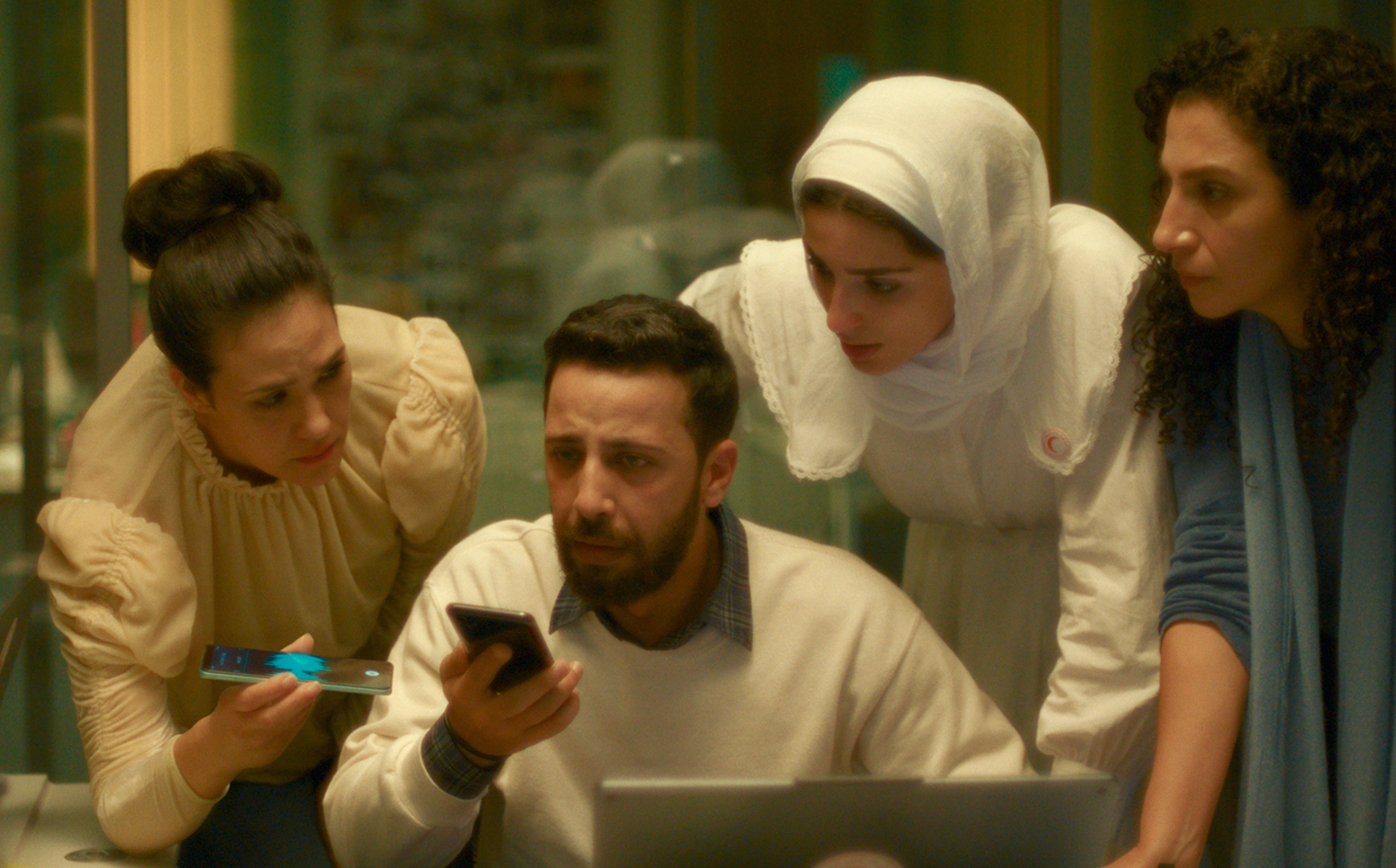
The framing device is unimportant and eventually becomes ground for Ben Hania to further the line between a “document” of the phone call and actors reenacting the conversations between volunteers Omar A. Alqam (Motaz Malhees), Rana Hassan Faqih (Saja Kilani), Mahdi M. Aljamal (Amer Hlehel), Nisreen Jeries Qawas (Clara Khoury), and Hind Rajab, stuck in a car, with no way out, as the Israeli Defense Forces are making their way within Tel al-Hawa and decimating everything on their path. As soon as Ben Hania cuts to the wave recordings of phone conversations, with a text that states, “The voices on the phone are real,” she immediately breaks the “fiction” artifice that was created to acclimate audiences inside the offices of the Red Crescent Society and frequently has actors listen to the conversations before recreating them, which gives further urgency to the situation being depicted.
What’s most impressive about the film isn’t necessarily the device being employed, but in how Ben Hania layers her thesis in three distinct throughlines that develop to an equally devastating conclusion by the time an attempt is made to rescue Hind Rajab from the shellshocked vehicle she is stuck in. All of them are important and communicate with each other, particularly during a form-blurring denouement that furthers the lines drawn between what can be considered as “documentary” and a “fictionalized reenactment” of the story. The first, of course, is the situation being illustrated: an urgent cry for help from a six-year-old girl who is fully cognizant that she is about to die, despite the volunteers attempting to appease her senses and make her think about some of the most joyous parts of a full life she will sadly never get to see come to fruition.
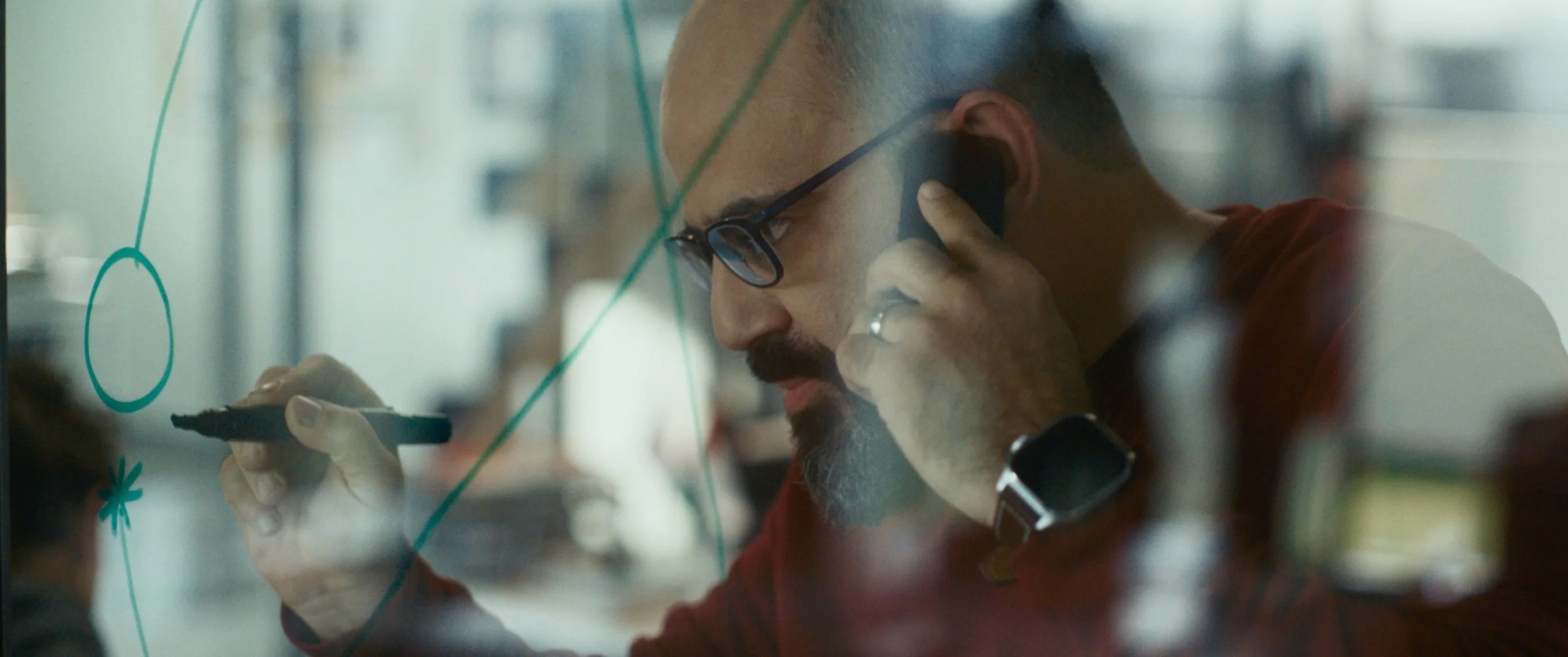
The second are the helpless volunteers trying their best to convince Hind that everything will turn out fine and coordinate with their supervisor to get her out as soon as possible. They’re feeling massive anguish at the thought of keeping communication with her when they hear the horror in her voice, and the fact that her childhood bubble has been completely evaporated in the most dehumanizing ways. The third, and most important, is seeing how this process wastes so much precious time and might have worsened the situation by waiting for a “green light” rather than immediately springing into action and sending a team to get Hind out.
This is also referred to as “administrative violence,” where, as illustrated by Mahdi, the system in place slows everything down to the point where her chances of survival have significantly decreased by the time the green light is given and a paramedic team drives to her location. He must wait for approval from the Red Cross, who have to call COGAT, a unit of the Israeli Ministry of Defense, which coordinates activities in the occupied territories. It is they who will communicate with the soldiers on the ground to send the Red Cross a route, and then a green light can be given. What could’ve taken eight minutes is stretched to endless hours, where so much time is wasted just because the Red Crescent has to go through “the proper channels,” which aren’t interested in helping the Palestinians on the ground.
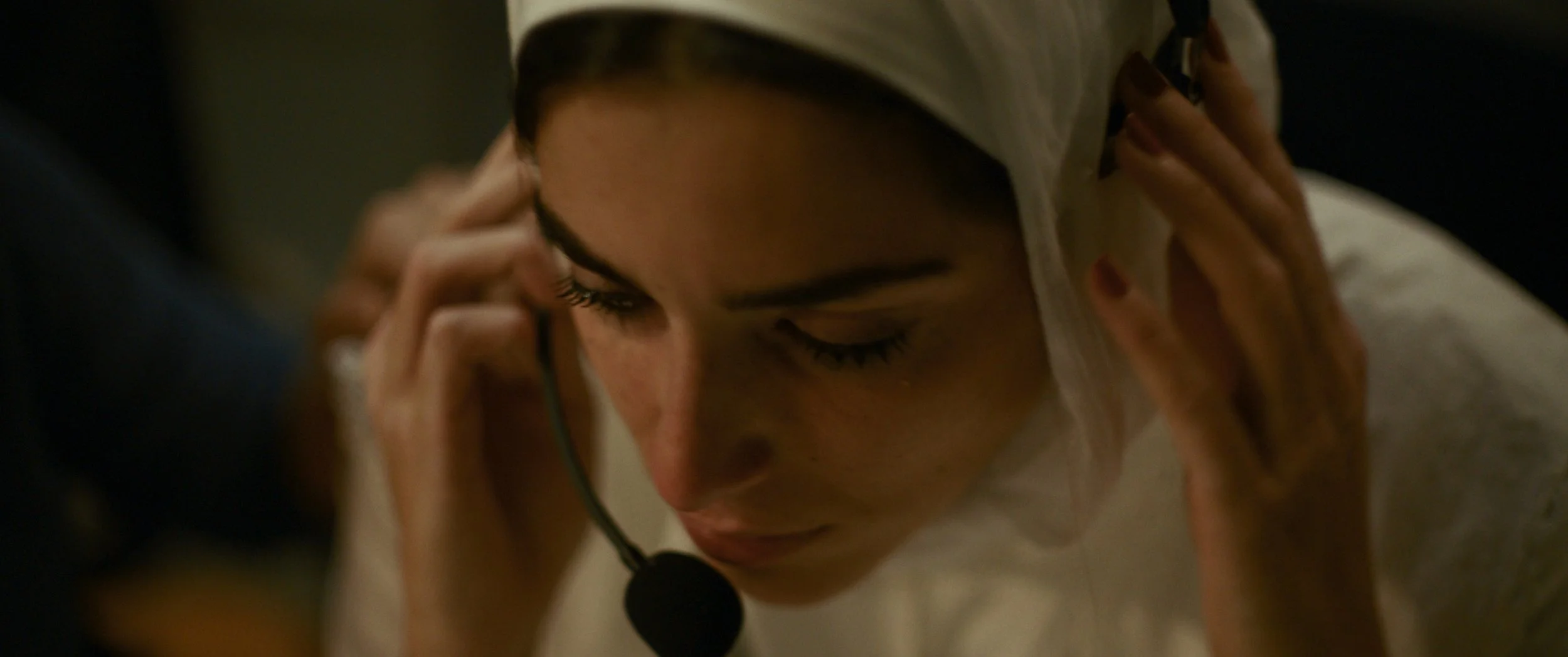
When this is explained, we know Hind’s fate is sealed, and no matter how the story turns, she will not make it out of the car alive. It’s infuriating to see it all exposed. We feel helpless knowing that, yes, she will die in the car, but it’s why The Voice of Hind Rajab is such an essential film and transcends the fiction artifice for her voice to peer into your soul, ensuring you will never forget her by the time the final shot reaches your eyes and you get a small glimpse of the joy Hind Rajab once had. A joy that is no longer there when she is stuck in a car with the bodies of her slain family. Ben Hania knows that purely documenting what happened is tragic, yes, but the impact on audiences will be minimal.
Layering the story through three distinct perspectives will illustrate exactly what’s unfolding in Gaza, and what many in the Western world have no idea is actually occurring. There’s an idea, yes, but do you really know what’s happening on the ground? There are countless stories similar to Hind Rajab's. She is one of many Palestinians who sadly suffered the same fate in the hands of an oppressive regime who have been systematically dehumanizing their very existence, way before the tragic events of October 7th, 2023.
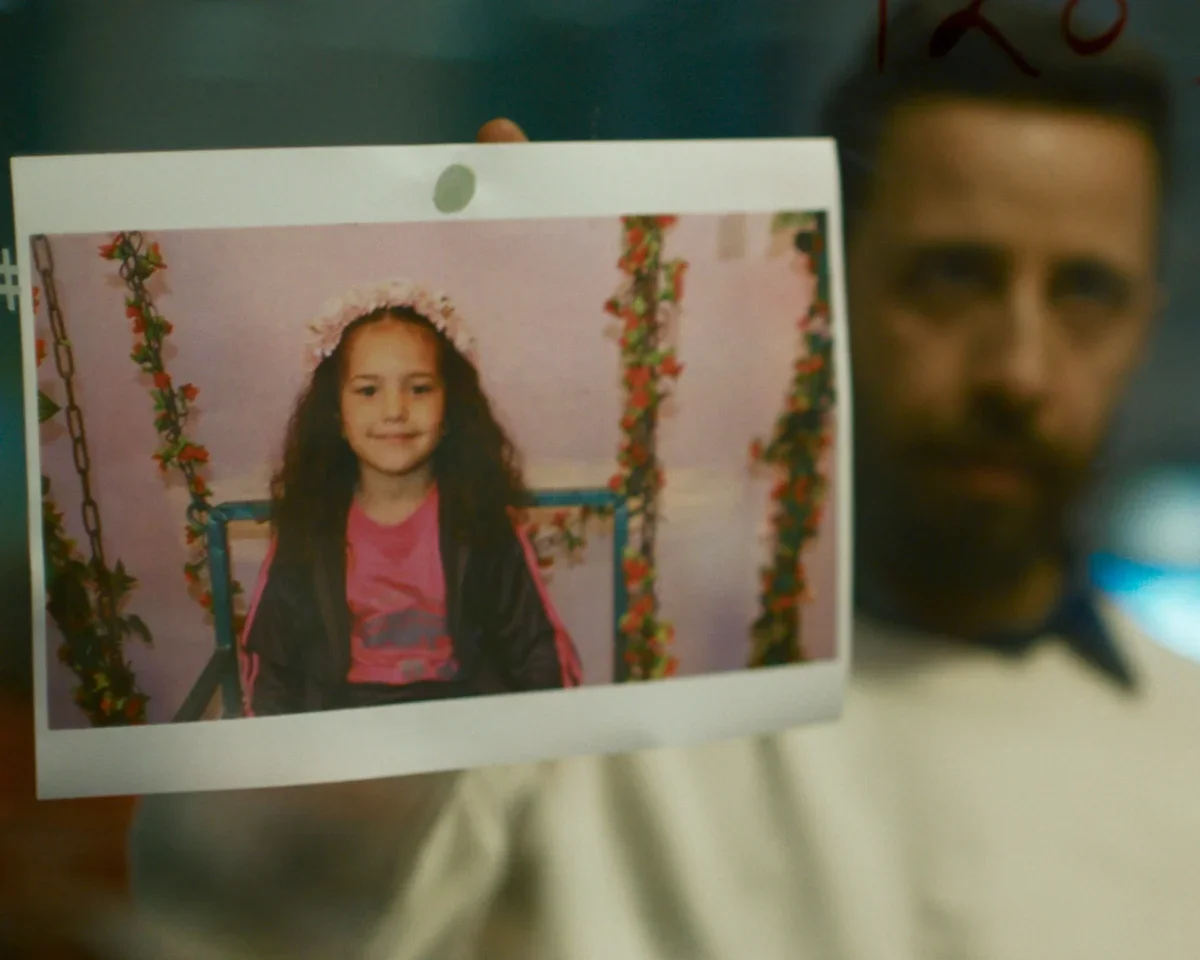
Hind’s senseless killing – a war crime, by the way – is an isolated example. So many Palestinian families are suffering the same pain and share the same stories, as they continue to live under oppression, with no tangible solution promised by anyone, letting this happen in front of our very eyes. The Voice of Hind Rajab is a harrowing, distressing watch (even if most of the real-life footage of corpses being taken out of cars is blurred, the impact remains), but a film of great urgency, perhaps the most essential document of the year.
While Ben Hania wraps the film in an artifice that makes this production more viewable than other documentaries that confront audiences with the atrocities currently ongoing in Gaza, Hind Rajab’s voice, as she cries for help, afraid of the dark, and only wanting for someone to come get her, will stay with you for the rest of your life. A voice that was fleetingly full of joy is no more, just like so many of the unheard voices – and stories – we will never learn about, but know they exist, because the crimes being committed are still occurring, and no one is doing anything tangible to stop it from going on...